


Most freelancers overpay on taxes every single year. Not because they earn too much, but because they don’t know which business expenses freelancers can deduct. A missed deduction here, a forgotten subscription there, and suddenly you’ve handed over several hundred dollars more than you legally owe.
- Why Deductions Matter More for Freelancers Than Employees
- Home Office: One of the Most Common Business Expenses Freelancers Can Deduct
- What Counts as a Qualifying Home Office Space
- Renting Instead of Owning: How the Deduction Applies to Renters
- Equipment, Software, and Technology Expenses
- Internet, Phone, and Communication Costs
- Professional Development and Education Expenses
- Marketing, Advertising, and Client Acquisition Costs
- Travel, Transportation, and Vehicle Use
- Freelance Business Setup Costs and Legal or Professional Fees
- Health Insurance Premiums: A Major Deduction Many Freelancers Miss
- How to Stay Organized Year-Round So Deductions Are Easy at Tax Time
- Tools That Make Expense Tracking Easier for Freelancers
- The Habit Stack: A Monthly Routine That Prevents Tax Chaos
- Why a Separate Business Bank Account Changes Everything
- Conclusion
This article walks through every major deductible category in plain terms. No tax code citations, no jargon, no fluff. By the time you finish reading, you’ll know exactly what to claim, how to document it, and how to stay on top of it all year long, so tax season stops being a panic and starts being a process.
Whether you’re filing for the first time or just trying to make sure you haven’t been leaving money on the table, keep this guide open when you sit down with your records.
Why Deductions Matter More for Freelancers Than Employees
Employees don’t think much about tax deductions because most of their tax work happens automatically. Their employer withholds the correct amount, pays half of their Social Security contributions, and often adds health insurance and retirement benefits on top. Freelancers get none of that.
Every dollar a freelancer earns is taxed in full, and they’re responsible for the entire self-employment tax on top of regular income tax. That combination adds up quickly. Deductions are among the very few tools available to legally bring that number down.
Here’s a simple way to see why it matters. A $500 deduction doesn’t just save you $500. It reduces your taxable income by $500. Depending on your tax bracket, that could save you $150 to $175 in actual taxes. Stack ten or fifteen of those deductions together, and the savings become significant.
How Self-Employment Tax Works and Why It Changes the Equation
In the United States, the self-employment tax rate sits at approximately 15.3%. That covers both the employee and employer portions of Social Security and Medicare, which employees split with their employer. Freelancers pay the whole thing themselves.
In the UK, Canada, and Australia, similar contributions apply through National Insurance, CPP, and Medicare levies, respectively. The specifics differ, but the core issue is the same: freelancers carry a heavier tax burden than salaried workers at the same income level.
Deductions reduce your net profit. Lower net profit means lower taxable income, which means a smaller bill across every tax category. That’s why tracking even small deductions is worth the effort.
Home Office: One of the Most Common Business Expenses Freelancers Can Deduct

If you work from home, a portion of your housing costs is deductible. Most freelancers know this vaguely but never actually claim it. The home office deduction is one of the most consistently underused deductions available to self-employed workers.
There are two ways to calculate it. The simplified method uses a flat rate per square foot of your dedicated workspace. In the US, that rate is currently $5 per square foot, up to 300 square feet. It’s quick to calculate and requires minimal recordkeeping.
The actual expense method takes more work but often produces a larger deduction. You calculate what percentage of your home is used for work, then apply that percentage to your actual housing costs, things like rent or mortgage interest, utilities, and home insurance. A freelance writer with a 120 sq ft office in a 1,200 sq ft home would deduct 10% of those costs. If monthly housing expenses total $2,000, that’s $200 a month or $2,400 a year.
The actual expense method wins when your housing costs are high. The simplified method wins when you want simplicity. Run both numbers if you’re unsure.
What Counts as a Qualifying Home Office Space
The key rule is regular and exclusive use. The space must be used consistently for work, and it must be used only for work.
A spare bedroom with a desk and no bed in it? That qualifies. A corner of your living room where you sometimes work from the couch? That’s trickier, because the space isn’t exclusively for work. A garage you’ve converted into a studio? That can absolutely qualify.
The “exclusive use” rule is where most people get into trouble. A desk in a room that doubles as a guest bedroom is a grey area. The safest approach is to have a clearly defined space that you use for work and nothing else. If it doubles as a TV room or storage, don’t claim it.
Renting Instead of Owning: How the Deduction Applies to Renters
You don’t need to own your home to claim a home office deduction. Renters qualify on the same terms.
Calculate your workspace as a percentage of your total rental square footage, then apply that percentage to your monthly rent, utilities, and renter’s insurance. If your apartment is 800 sq ft and your office space is 80 sq ft, your deductible portion is 10%.
At $1,500 monthly rent plus $100 in utilities, that 10% gives you $160 per month to deduct, or $1,920 annually. Worth claiming.
Equipment, Software, and Technology Expenses
Anything you buy to do your work is a candidate for a deduction. Laptops, external monitors, microphones, cameras, design tablets, mechanical keyboards, external hard drives, and similar items all count as business equipment.
There are two ways to handle the deduction. You can expense the full cost of an item in the year you buy it, or you can depreciate it, spreading the deduction across the item’s useful life. Expensing gives you the full deduction upfront, which is usually better for cash flow. Many tax systems allow immediate expensing for qualifying equipment, but the rules vary by country, so it’s worth checking with an accountant on larger purchases.
The critical factor is business use. If a piece of equipment is used entirely for work, 100% of the cost is deductible. If it’s shared between personal and work use, only the business-use portion counts.
Subscriptions and SaaS Tools That Qualify
Software subscriptions are deductible and surprisingly easy to forget about at tax time. The charges hit your card monthly or annually, blend in with personal subscriptions, and disappear from memory by the time you’re filing.
Common deductible subscriptions include:
- Accounting and invoicing software
- Project management tools
- Cloud storage services
- Design platforms
- Communication and video call tools
- Scheduling apps
- Website hosting and maintenance services
These are real business costs that you pay to operate as a freelancer. Keep a running list and audit it every quarter. Cancel anything you’re not actively using, and flag everything that’s work-related so it’s easy to pull at year’s end.
When a Personal Device Becomes a Business Expense
If you bought a laptop that you use for both work and personal activities, you can still deduct the business portion. The mixed-use rule lets you claim the percentage of the cost that reflects your actual work use.
If you use that laptop 70% for client work and 30% for personal browsing, streaming, or gaming, then 70% of the purchase price is deductible. You don’t need to install tracking software. A reasonable, honest estimate is enough, but write it down somewhere and keep it consistent year to year.
Internet, Phone, and Communication Costs
Your internet connection and mobile phone are probably used for both work and personal purposes. That means you can deduct the business-use percentage of both.
Start by estimating how much of your usage is genuinely work-related. Be honest. If your internet is used about 60% for work, that’s your deductible fraction. If your monthly internet bill is $80, the math works out to $48 per month, or $576 per year, which you can deduct.
Apply the same logic to your phone bill if you use your phone for client calls, project communication, or managing your business.
What to keep: monthly bills, a note in your records explaining the estimated business-use percentage, and any written communication that supports your claim. You don’t need a detailed log of every call. A reasonable estimate, documented once, is generally sufficient.
Professional Development and Education Expenses
Learning to do your job better is a legitimate business cost. Courses, certifications, workshops, and training programs that maintain or improve your existing skills are typically deductible.
The distinction that matters: education that maintains or sharpens skills you already use in your current work is deductible. Education that qualifies you for an entirely new career generally is not. A freelance web developer paying for an advanced JavaScript course is maintaining their trade. A freelance writer paying for a nursing degree is starting a new one.
When in doubt, the test is whether the education is directly connected to the work you already do and already charge for.
Online Courses, Webinars, and Industry Memberships
Platforms like Coursera, Udemy, Skillshare, and LinkedIn Learning all offer courses that can qualify as deductible education expenses, provided the subject matter is tied to your current freelance work.
Industry association memberships follow the same logic. If you’re a member of a professional body related to your field, that annual fee is a business expense. These costs are easy to overlook because they feel like background expenses rather than direct business costs, but they add up.
Keep the enrollment confirmation, the receipt, and a brief note about why it’s relevant to your work. That’s all the documentation you need.
Books, Magazines, and Research Materials
Physical books, ebooks, trade publications, and online subscriptions to industry journals are deductible when they directly relate to your freelance work.
A freelance copywriter buying books on consumer psychology is making a business purchase. A freelance developer subscribing to a technical publication is doing the same. The content has to be genuinely relevant to the work, not just vaguely interesting.
Save the receipt and note what the material is about and why it’s relevant. A short sentence is enough.
Marketing, Advertising, and Client Acquisition Costs
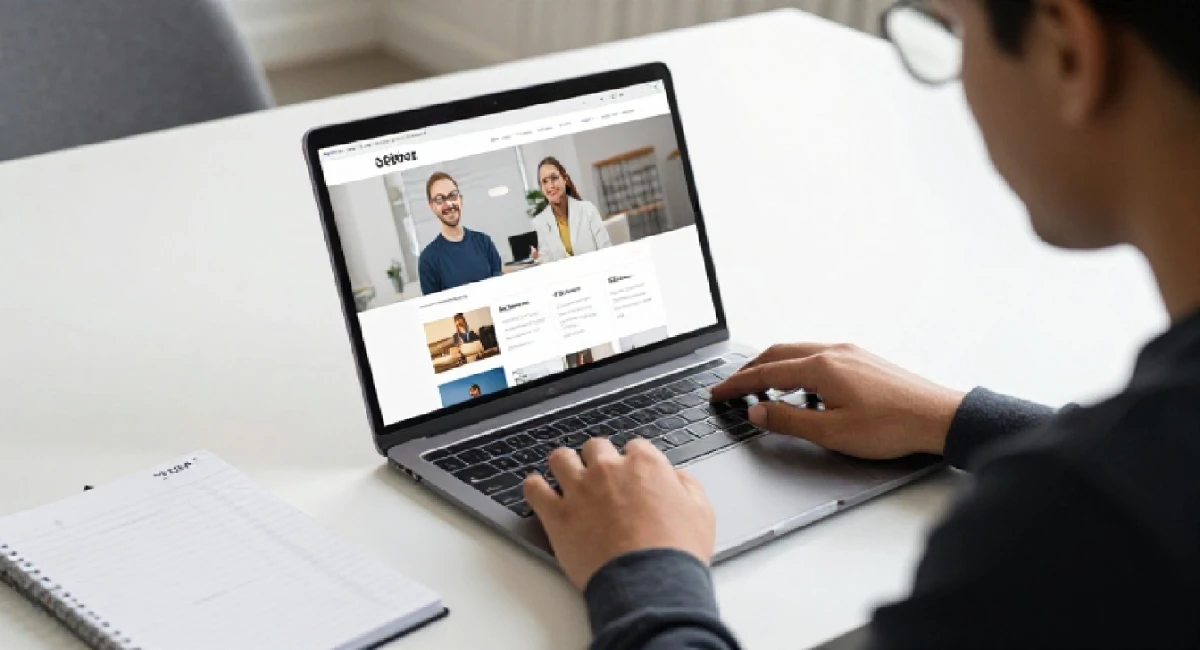
Every dollar you spend to get clients is a deductible business expense. This category covers more ground than most freelancers realize.
Your website is a marketing asset. The domain registration, hosting fees, premium theme, and any plugins or tools built into the site are all deductible. If you paid a designer to build your site, that fee is deductible too. Paid advertising on Google, LinkedIn, or social platforms qualifies. So do portfolio hosting subscriptions, business card printing, and any branded materials you’ve had made.
The guiding principle here is simple: if the expense was intended to attract clients or represent your business professionally, it belongs in this category. Track it separately from general expenses so it’s easy to total up when you need it.
Framing this as a deductible investment rather than a sunk cost matters. Every dollar you spend on your freelance business setup, including marketing, is working double duty: it grows your business and reduces your tax bill.
Website and Domain Costs as Deductible Business Expenses
Domain registration fees, annual hosting plans, website builder subscriptions, premium themes, and SSL certificates are all deductible. If you pay for a portfolio platform like Behance Pro, Dribbble, or a similar service, that’s deductible too.
If you hired a freelancer or agency to design your site, their invoice is a legitimate business expense. Keep every invoice and receipt you receive from third-party services. A folder in your email inbox labeled “Business Receipts” is all the system you need to start.
Travel, Transportation, and Vehicle Use
Business travel is deductible. Getting to a client meeting, flying to a conference, staying overnight for a project, and driving to a co-working space you don’t regularly use all qualify.
For vehicle use, there are two methods. The standard mileage rate lets you deduct a set amount per mile or kilometre driven for business. The actual expense method tracks your real vehicle costs (fuel, insurance, maintenance, depreciation) and applies a business-use percentage. The simpler method is the mileage rate. The more accurate method is actual expenses, especially if you drive a lot or have high vehicle costs.
Note that commuting from home to a regular, fixed office is generally not deductible. But since most freelancers work from home, the travel they do is mostly client visits, site work, and professional events, all of which qualify.
What Counts as a Deductible Business Trip
Flying to a client’s city, staying in a hotel while on a project, and paying for ground transport during that trip are all deductible. Meals during business travel are typically 50% deductible in most tax systems.
What doesn’t count: personal days added to either end of a business trip, meals with no business purpose, entertainment that isn’t directly connected to a client relationship, and any personal spending during travel.
If you’re on a mixed trip, part work and part vacation, you can still deduct the portions that are clearly business-related. Keep receipts and note the purpose of each expense on the day it happens, not three months later.
Freelance Business Setup Costs and Legal or Professional Fees
Starting a freelance business costs money, and many of those startup costs are deductible. Business registration fees, accountant consultations, and legal fees for contract reviews all qualify.
Whether these costs are deductible in full in the first year or spread over time depends on the amount and your local tax rules. In many countries, startup costs up to a certain threshold can be expensed immediately, with larger amounts amortized over several years. An accountant can help you make the most of this in your specific situation.
These expenses connect directly to the broader work of setting up a freelance business. Getting the structure right from the beginning, legally and financially, is a real business cost, not a personal one.
Accountants, Bookkeepers, and Tax Preparers
The fee you pay an accountant to manage your books or prepare your tax return is itself a deductible business expense. Think of it this way: if hiring an accountant costs $400 and saves you $600 in taxes you would have missed, you’re ahead on both counts, and the $400 is deductible on top of that.
Financial software used for bookkeeping falls into this category, too. Whether you use a paid accounting platform or have someone else manage your records, the cost is legitimate and claimable.
Legal Fees for Contracts and Business Formation
Freelancers deal with contracts constantly. Having a lawyer review your standard client agreement, drafting a solid NDA, or getting advice on how to structure your business are all legitimate legal expenses.
Business registration fees, trademark applications related to your freelance brand, and fees paid for business formation documents all count as deductible expenses. These aren’t luxury costs. Protecting yourself legally is as much a part of running a business as buying equipment. Treat the expense the same way.
Health Insurance Premiums: A Major Deduction Many Freelancers Miss
This one surprises a lot of people, especially those who are new to freelancing.
In the US, self-employed individuals can deduct 100% of health insurance premiums paid for themselves, their spouse, and their dependents. Crucially, this is an above-the-line deduction, meaning it reduces your gross income even if you don’t itemize your deductions. You claim it on top of everything else.
In other countries, the rules differ. Canada, the UK, and Australia each have their own frameworks for what health-related costs are deductible. The principle is similar in spirit but different in structure, so check what applies to where you file.
If you’re paying for private health coverage out of pocket because your freelance income doesn’t come with employer-sponsored insurance, there’s a strong chance a portion of that cost is deductible. It’s worth confirming with a local tax professional if you haven’t already.
How to Stay Organized Year-Round So Deductions Are Easy at Tax Time
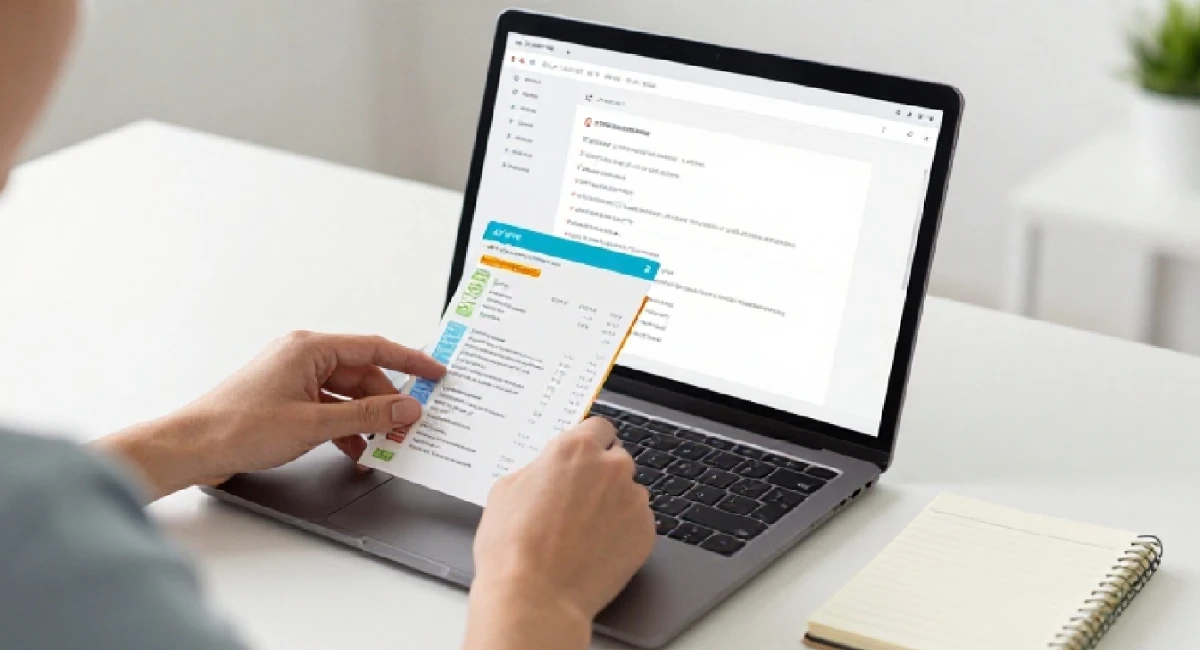
Knowing what you can deduct is only half the job. The other half has the records to prove it.
Staying organized through the year is far easier than reconstructing twelve months of spending in a weekend. The goal isn’t a perfect system. It’s a consistent one. Something simple that you’ll actually maintain is better than something sophisticated that you’ll abandon by March.
Start with a dedicated folder, either digital or physical, for every business receipt. Photograph paper receipts the day you get them. Create subfolders by category: equipment, subscriptions, travel, and marketing. At the end of each month, spend 20 to 30 minutes filing what’s accumulated and noting the business purpose of anything that could be ambiguous.
Tools That Make Expense Tracking Easier for Freelancers
Several tools can make the process less painful. The right choice depends on how many transactions you’re managing and how complex your income is.
Wave is free and works well for freelancers with straightforward income and a manageable number of expenses. QuickBooks Self-Employed is a paid option designed specifically for solo workers, with built-in mileage tracking and tax category tagging. FreshBooks leans toward freelancers who do a lot of invoicing and want everything in one place.
If your finances are genuinely simple, a well-structured spreadsheet with clear columns for date, vendor, amount, category, and business purpose will do the job. The tool matters less than the habit of using it consistently.
Choose based on two criteria: how many transactions you process each month, and how much automation you want. More transactions and more complexity push you toward a paid tool. Simpler finances can be handled manually.
The Habit Stack: A Monthly Routine That Prevents Tax Chaos
Once a month, block 30 minutes for a financial check-in. Use that time to:
- Reconcile your bank and card statements against your records
- Photograph or file any receipts you’ve collected
- Write a brief note on the business purpose of any unclear expenses
- Check that all active subscriptions are still work-related and still being used
- Add any new equipment purchases or professional fees to your records
That’s it. Thirty minutes a month, done consistently, saves you hours of panic when your filing deadline arrives. It also means you’re far less likely to miss something deductible because you simply forgot it happened.
Why a Separate Business Bank Account Changes Everything
Mixing personal and business spending in the same account is the single most common reason freelancers miss deductions or face problems if they’re ever audited.
When everything is in one account, you have to go line by line through months of transactions to separate work expenses from personal ones. It’s tedious, it’s error-prone, and you’ll miss things. A dedicated business account solves this by creating a clean boundary from the start.
You don’t need to form a company to open a business account. Many banks and fintech platforms offer free or low-cost accounts for freelancers and sole traders. Pair it with a dedicated business credit card, and your records will be clean, sortable, and audit-ready with minimal effort on your part.
Conclusion
Knowing the business expenses freelancers can deduct isn’t about finding clever workarounds. It’s about claiming what the tax rules already allow you to claim. Every category covered in this article, from your home office to your health insurance premiums, represents a legitimate cost of doing business that you’re entitled to deduct.
The freelancers who pay the least tax aren’t doing anything unusual. They’re just paying attention, keeping records, and claiming everything they’re owed.
Start with a separate bank account if you don’t have one. Set up a basic receipt filing system this week. Pick one tool for tracking expenses and commit to using it. Small habits compound over twelve months into a much cleaner tax return and a much lower bill.
If you want to go deeper on building the foundation your freelance business actually needs, read the full guide: What Do You Need to Start a Freelance Business the Right Way? It covers everything from structure and contracts to the financial setup that makes tax time manageable from day one.