
How Do TV Shows Get Cancelled So Soon?
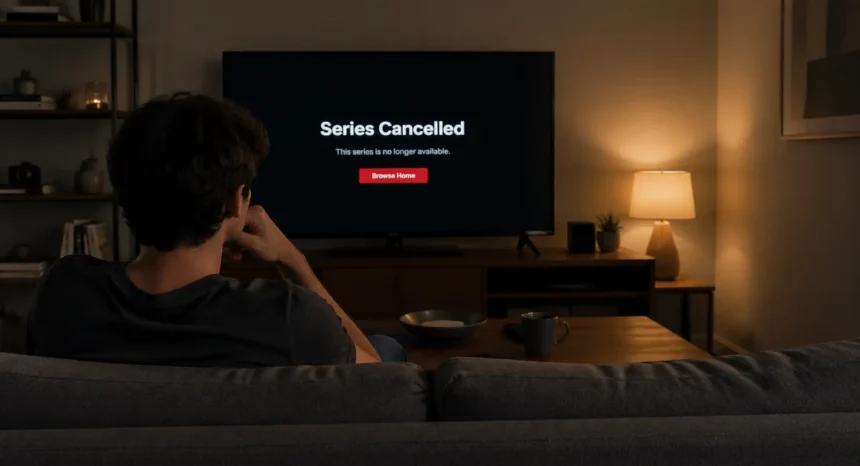
You find a show you love. The characters feel real, the storyline pulls you in, and you finish the season wanting more. Then comes the news: cancelled. No second season. No explanation. Just silence.
- What Does It Actually Mean When a TV Show Gets Cancelled?
- The Real Reasons Behind TV Show Cancellations
- Ratings and Viewership Numbers Still Drive Most Decisions
- Streaming Platforms Use Different Metrics and Share Almost None of Them
- Production Costs Can Outpace a Show’s Audience Size
- Why Do Some TV Shows Get Cancelled After Just One Season?
- How Cancelled Shows Affect Their Fanbase
- The Business Side of Cancelled Shows Nobody Talks About
- Licensing Rights and Studio-Network Conflicts
- Writers’ and Actors’ Strike Actions Can Accelerate Cancellations
- Are TV Cancellations Happening More Frequently Now?
- What Showrunners and Creators Do When Cancellation Hits
- Conclusion
TV show cancellations happen to more series than most people realise, and they often feel completely out of nowhere. But behind every cancellation is a set of decisions driven by money, metrics, and timing that never make it into the press release.
This article breaks down exactly how and why shows get cancelled so quickly, what it means for the people who made them, and what it does to the fans who loved them.
What Does It Actually Mean When a TV Show Gets Cancelled?
When a show gets cancelled, it means one thing: the network or streaming platform has decided not to order another season. The creative team is disbanded, production stops, and the story ends wherever it happened to be.
It is important to separate this from a planned series finale. Shows like Breaking Bad or Fleabag ended on their own terms because the creators chose to close the story. Cancellation is the opposite of that. It is a business decision handed down from above, not a creative one made from within.
Cancellation can happen at almost any point. A show can be pulled after a single episode if early numbers are catastrophic. It can be cancelled mid-season, leaving episodes already filmed but unaired. It can also come after a full season run, where viewers assumed renewal was coming and got silence instead.
Cancelled vs. Not Renewed: Is There a Difference?
In practical terms, no. “Not renewed” is simply a softer way of saying the same thing. Networks sometimes prefer the phrasing because it sounds less like a failure and more like a quiet administrative decision.
The frustration is that streaming platforms have made this even more ambiguous. Netflix, Amazon, and others sometimes let shows lapse without any public announcement. No statement, no confirmation, nothing. Fans are left waiting for news about a Season 2 that was never officially cancelled but will never come. Shows like The OA spent months in this grey zone before any clarity arrived.
What Happens to a Show After Cancellation?
Once cancelled, production shuts down immediately. Cast members are released from their contracts, and the sets are broken down or repurposed. Any episodes already filmed but unaired may be released at the network’s discretion or quietly shelved.
Some shows do find a second life on other platforms. A cancelled series with a passionate following and a low enough licensing cost can occasionally attract interest from a competitor. It is rare, but it happens, and we will cover that in more detail later in this article.
The Real Reasons Behind TV Show Cancellations

The easy answer is “low ratings.” But that explanation skips over most of the actual picture. TV series cancellations happen for a combination of reasons, and creative quality is often the last thing on the list.
The primary factors are viewership numbers, production cost, audience retention, and the competitive landscape. Sometimes a single factor is enough. More often, two or three stack up at once and the decision becomes unavoidable.
Firefly is still the most cited example of a good show killed by bad circumstances. Its 2002 cancellation by Fox came after poor scheduling and inconsistent episode ordering destroyed its ability to build a loyal audience. The show was not cancelled because it was bad. It was cancelled because it was mishandled.
Ratings and Viewership Numbers Still Drive Most Decisions
For broadcast networks, the number that matters most is the 18 to 49 demographic rating, measured by Nielsen. This is the age group advertisers pay the highest rates to reach, which means it directly determines how much revenue a show generates per episode.
A show with five million total viewers but a weak 18 to 49 score can be considered a failure. A show with half that total audience but a strong demographic performance can be renewed. The logic is commercial, not creative.
This is why even critically praised series get axed. NBC cancelled Hannibal after three seasons despite consistent critical acclaim because its Nielsen numbers never reached a level that justified the cost. The audience loved it. Advertisers were not convinced.
Streaming Platforms Use Different Metrics and Share Almost None of Them
Netflix does not release ratings in the traditional sense. Neither does Disney+. What they measure internally is far more granular: how many subscribers started a show, how many finished it, how long they engaged per session, and whether the show contributed to new subscriptions or reduced cancellations.
This opacity creates a real problem for fans. When a streaming show gets cancelled, there is rarely any data to explain why. Netflix cancelled The OA after two seasons without a clear public explanation, leaving its large and dedicated fanbase completely in the dark. No numbers, no reasoning, no context.
The internal logic makes sense from a business standpoint. A show with 10 million viewers who all already subscribed before it aired contributes less value than a show with 4 million viewers that directly drove new sign-ups. But none of that gets communicated publicly, which is why streaming cancellations consistently feel more abrupt than broadcast ones.
Production Costs Can Outpace a Show’s Audience Size
A show does not need to have low viewership to get cancelled. Sometimes the audience is big enough, but the cost of making the show grows faster than the revenue it brings in.
This is particularly common with high-concept, effects-heavy series. Altered Carbon was cancelled by Netflix after its second season, despite reasonable viewership, partly because the per-episode production cost had become difficult to justify at scale. The same logic ended 1899 after one season, even though it debuted strongly.
As a show gets deeper into its run, cast salaries increase, production expectations grow, and the budget required to maintain quality escalates. At a certain point, a platform has to decide whether the return still justifies the spend.
Why Do Some TV Shows Get Cancelled After Just One Season?
Single-season cancellations are the ones that sting the most. You invest in a full story arc, characters start to develop, and just as things get interesting, it is over. No continuation, no closure.
The renewal window for new shows is brutally short. Networks typically make their decision within weeks of a season finale, and they are not waiting to see whether the show finds a bigger audience over time. They need the answer now, because scheduling, budget allocation, and upfront advertising commitments all depend on it.
The First-Season Pressure Cooker
New shows are never given the grace that established ones receive. A show in its fourth season has already proven its value. A show in its first has not yet earned anything.
Networks greenlight large volumes of pilots every year knowing that most will not survive. Historically, around 40 to 50 percent of new broadcast dramas are cancelled after their first season. The economics of it are straightforward: give everything a chance, cut what does not perform, keep what does.
The problem is that some shows genuinely need time to find their audience. The Office had weak first-season ratings in the United States. Parks and Recreation was nearly cancelled before its second season improved. Both went on to become defining shows of their era. Under today’s tighter windows, neither might have survived.
Poor Scheduling Can Doom a Good Show Before It Finds Its Audience
Where a show airs and when can determine its fate before a single episode plays. A new drama placed against an established hit on a competing network starts at a serious disadvantage. Pair that with limited promotional support and a confusing timeslot, and even a genuinely good show has very little chance.
Pushing Daisies is a clear example. ABC aired the show in 2007 and 2008, and while it attracted a devoted following, its quirky tone was never properly communicated in its marketing. Scheduling disruptions from the writers’ strike of 2007 broke its momentum at a critical early stage. It never recovered.
Freaks and Geeks tells a similar story. NBC aired episodes out of order, moved the timeslot repeatedly, and gave the show almost no promotional backing. It was cancelled after one season despite becoming one of the most acclaimed one-season runs in television history.
How Cancelled Shows Affect Their Fanbase
The business conversation about TV series cancellations tends to ignore the people at the other end of the decision. Viewers are not passive consumers. They form real attachments to the characters, worlds, and stories they invest their time in. When a show ends abruptly, that investment goes unacknowledged.
Psychologists who study parasocial relationships, which are the emotional bonds people form with fictional characters and media personalities, note that unexpected show cancellations can trigger a grief response that closely mirrors the loss of a real relationship. That might sound dramatic, but it reflects how deeply story-driven television can connect with people.
Unresolved Storylines Leave Viewers Without Closure
The most common complaint after a cancellation is not the cancellation itself. It is the unfinished story.
Sense8 was cancelled by Netflix in 2017 after two seasons, leaving a deeply complex, globally connected storyline with no ending. The fan response was loud enough that Netflix commissioned a two-hour finale special to close the story. That is genuinely unusual. Most cancelled shows get no such consideration.
The Society was cancelled by Netflix in 2020 after the production of its second season was already underway. Not only did the story have no resolution, but the finished episodes were never released. Dark Matter, the sci-fi series on Apple TV+, ended its first season on a cliffhanger and was left without renewal for long enough that fans spent months uncertain whether the story would ever continue.
These are not small disappointments. For viewers who followed these shows closely, the missing ending is a permanent gap.
Fan Campaigns: Do They Ever Actually Work?
Occasionally, yes. The record, though, is not encouraging.
The earliest modern example of a successful fan campaign is Jericho in 2007. After CBS cancelled the post-apocalyptic drama following its first season, fans sent approximately 20 tonnes of peanuts to the network, referencing a line from the show’s finale. CBS reversed the cancellation and ordered a second season. It remains one of the most famous cases of fan pressure producing a real result.
More recently, Brooklyn Nine-Nine was cancelled by Fox in 2018, only to be picked up by NBC within 24 hours following an enormous social media response. Lucifer followed a similar path, cancelled by Fox and revived by Netflix for three additional seasons.
But these are the exceptions. For every Lucifer, there are dozens of shows where fan petitions, Twitter campaigns, and letter-writing efforts produced nothing. Networks and platforms make financial decisions. Fan passion does not change their cost structures.
The Business Side of Cancelled Shows Nobody Talks About
Most of the coverage around cancelled shows focuses on ratings and public reactions. The less visible factors are often just as important, and sometimes more so.
Licensing arrangements, international distribution rights, syndication windows, and the relationship between a production studio and a broadcast network all play roles that viewers never see. A show can be performing well enough to justify continuation and still be cancelled because the business arrangement around it has become unworkable.
Licensing Rights and Studio-Network Conflicts
Many shows are produced by one company and distributed by another. The studio that makes the show and the network that airs it are often entirely separate entities, each with their own financial interests.
When a network does not own the show it airs, it pays a licensing fee for the right to broadcast it. As production costs rise across seasons, those licensing fees increase. At some point, the network decides the fee is higher than the advertising revenue the show generates, and cancellation becomes the financially logical outcome, regardless of how popular the show is.
This split structure has ended shows that had every reason to continue. The arrangement can also make revival or rescue deals complicated, because any new platform that wants to pick up the show needs to negotiate with the original production studio, not just the network that cancelled it.
Writers’ and Actors’ Strike Actions Can Accelerate Cancellations
The 2023 WGA and SAG-AFTRA strikes brought Hollywood production to a near-complete halt for several months. For major flagship series with large budgets and strong platform support, production resumed when the strikes ended.
For mid-tier shows already on uncertain footing, the pause was enough to push them over the edge. Networks used the production gap as an opportunity to quietly close out shows they had been considering cancelling. A show that might have received a final decision in favour of renewal, given normal circumstances, instead found itself quietly dropped during a period when the industry was in too much disruption to attract attention.
It was not a cynical move in every case. Production delays genuinely disrupt scheduling, and some shows simply could not be worked back into a realistic timeline. But the strikes accelerated decisions that some series might otherwise have survived.
Are TV Cancellations Happening More Frequently Now?
The sense that cancellations are coming faster and in greater numbers is not just a perception. The data supports it.
According to industry tracking by outlets like Variety and The Hollywood Reporter, the total number of scripted series cancelled across broadcast and streaming platforms increased sharply between 2022 and 2024. The era of peak TV, which produced record volumes of new content, was followed by an equally sharp contraction as platforms reassessed their spending.
The Streaming Bubble and Its Aftermath
Between 2020 and 2022, streaming platforms entered an aggressive content arms race. Netflix, HBO Max, Disney+, Amazon, and Apple TV+ all invested heavily in original programming, competing to win subscribers during a period of rapid streaming growth.
By 2023, the growth had slowed. Subscriber numbers plateaued on several major platforms, and the financial logic of producing enormous volumes of content became harder to defend. Platforms began cutting their content budgets sharply.
The result was a wave of cancellations that disproportionately affected mid-budget shows. High-profile marquee series were protected. Everything else became a candidate for removal. HBO Max cancelled a number of original series and even removed some finished content entirely from its platform, a practice that had no real precedent in the broadcast era.
Broadcast TV Is Shrinking Its Risk Appetite
Traditional networks are under their own pressure. The advertising revenue that once supported a full slate of scripted drama is being drawn toward digital platforms. Broadcast viewing numbers have been declining steadily for years.
The practical outcome is that networks are ordering fewer new scripted dramas and are quicker to cancel the ones that do not perform immediately. Where a network might once have given a struggling show a mid-season adjustment and a second chance, the tolerance for underperformance has shortened considerably.
Early-era streaming showed what patience could look like. Netflix famously gave shows multiple seasons to develop audiences. That patience has since contracted substantially, which means broadcast and streaming cancellations are now operating on similarly short windows.
What Showrunners and Creators Do When Cancellation Hits

For the people who make a show, cancellation is not just a professional setback. It is an abrupt end to something they built, often over years. How creators respond depends largely on how much warning they receive, if any.
Some showrunners are given time. A network confirms that a current season will be its last, and the writing team can compress the planned story into a proper ending. Others learn about cancellation the same way the public does, and the finale that aired was never intended to be a finale at all.
Writing a Series Finale Under Cancellation Pressure
The difference between a planned ending and an accidental one is visible in the final product.
Halt and Catch Fire is a widely praised example of a creative team that knew its ending was coming and made full use of that knowledge. The final season is considered one of the strongest in the show’s run precisely because the writers could close every thread with intention.
Schitt’s Creek is another example, though different in context. Creator Dan Levy made the decision to end the show himself before cancellation became a factor, which gave the team complete control over how the story closed.
The contrast is shows where no such planning was possible. Series cancelled mid-production leave creative teams without the ability to resolve their stories at all, and audiences are left with whatever the last broadcast episode happened to be.
Can a Cancelled Show Find a New Home?
Platform rescues do happen, though the conditions that make them possible are specific and relatively uncommon.
Brooklyn Nine-Nine’s move from Fox to NBC worked because the show’s production studio, Universal Television, had an existing relationship with NBC. The licensing fees were manageable, and NBC needed a proven comedy to fill a gap in its schedule. Every condition aligned at the same moment.
Lucifer moved from Fox to Netflix because Netflix saw subscriber value in a show that already had a large, passionate fanbase. The cost of production was acceptable, the audience was proven, and Netflix could count on that audience following the show to the new platform.
Arrested Development returned on Netflix years after its original Fox cancellation because the cast and creative team were available and willing, and Netflix saw the revival as a cultural moment worth investing in.
Each of these rescues required a specific combination of factors: production rights that could be negotiated, a cast that could reassemble, a willing platform, and an audience large enough to justify the cost. Remove any one element, and the rescue does not happen.
Conclusion
TV show cancellations are rarely a verdict on the quality of a show. They are the result of decisions made in boardrooms, calculated against metrics most viewers never see, and shaped by industry pressures that have very little to do with whether a story deserved to continue.
Ratings, production costs, licensing conflicts, platform spending cycles, and labour disruptions all feed into the same machinery. The creative team’s vision, the fans’ investment, and the story’s potential are real things, but they sit further down the list than most people would like to believe.
What makes these decisions harder to accept is that the emotional cost falls entirely on the audience. You do not get a say, and you often do not get an explanation. Understanding the mechanics behind why shows get cancelled so quickly will not make the experience less frustrating, but it does make it less confusing.
If you want to build a watch list of shows that are less likely to leave you without an ending, check out the main guide on the most binge-worthy TV shows on Netflix right now. It covers series with strong completion rates and solid standing, which is the closest thing to a safe bet in an era of TV show cancellations.