

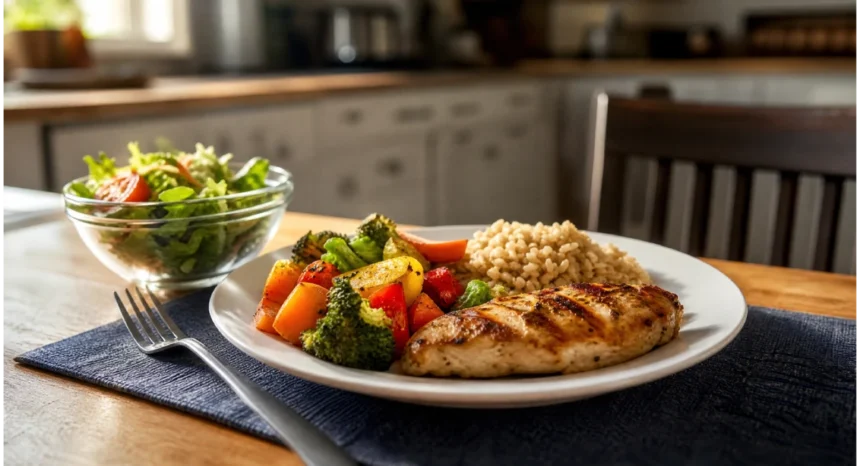
You have probably heard the advice dozens of times: eat balanced meals. But when you are standing in front of your fridge at 7 pm, tired after work, that advice does not tell you much.
- Why Most People Struggle to Picture a Balanced Meal
- What a Balanced Meal Actually Contains (Without the Jargon)
- Protein: What Counts and How Much Is Enough
- Carbohydrates: Why They Belong on a Balanced Plate
- Vegetables and Fruit: The Part Most People Under-Eat
- Healthy Fats: The Misunderstood Component
- Healthy Meal Examples for Breakfast, Lunch, and Dinner
- Balanced Breakfast Ideas That Work on Busy Mornings
- Practical Balanced Lunch Options (Including Work and On-the-Go)
- Simple Balanced Dinner Meals Without Spending Hours in the Kitchen
- Balanced Diet Basics: How to Build the Habit, Not Just the Meal
- What Balance Looks Like When Life Gets in the Way
- Simple Nutrition Guide: Common Mistakes That Throw Off Your Plate
- Portion Distortion: When Healthy Foods Still Tip the Balance
- Snacks and Drinks: The Hidden Part of the Daily Balance
- What Is a Balanced Meal for Different Life Stages and Activity Levels
- Balanced Eating for Active Adults and Regular Exercisers
- Balanced Meals for Older Adults and Lighter Appetites
- Conclusion
Understanding what a balanced meal in real life is is not about following a colour-coded food chart or counting macros on an app. It is about knowing which everyday foods to put on your plate together, and why that combination actually works for your body.
This guide skips the theory. Instead, it walks through real meals, practical habits, and honest strategies for eating well even when life is busy, money is tight, or your cooking skills are still developing.
Why Most People Struggle to Picture a Balanced Meal
Most adults have absorbed a general sense that they should eat more vegetables, less sugar, and some protein. That knowledge is not the problem. The gap is between knowing the rule and knowing what to actually cook on a Tuesday night.
Generic nutrition guidelines tend to present food in categories and percentages. A pie chart showing “30% protein, 40% carbohydrates, 30% fat” does not help you decide whether to add chickpeas or cheese to your salad. It describes a formula, not a meal.
The result is that most people either ignore the guidelines entirely or feel guilty every time their plate does not match the diagram. Neither of those is useful.
The Problem With “Perfect Diet” Models
Nutrition advice often defaults to the ideal scenario: five small meals a day, meal-prepped containers stacked neatly in the fridge, zero processed food, fresh produce at every sitting.
For most people, that picture is fiction. Real life involves skipped breakfasts, lunches grabbed between meetings, and dinners that come from a bag or a takeout box. That does not make you unhealthy. It makes you normal.
The more practical goal is not perfection. It is making a slightly better choice at each meal than you would have made without thinking. Small improvements, repeated consistently, produce real results over time.
What Nutrition Research Actually Says About Everyday Eating
Studies consistently show that adults across the US, UK, Canada, and Australia eat fewer vegetables than recommended, frequently skip breakfast, and rely on convenience foods for at least one meal per day. Portion sizes have increased significantly over the past few decades, and most people underestimate how much they eat.
None of that is moral failure. It reflects the food environment most people live in. The point is not to shame anyone but to set a realistic starting point: most people have room to shift their meals in a better direction without completely changing how they eat.
What a Balanced Meal Actually Contains (Without the Jargon)
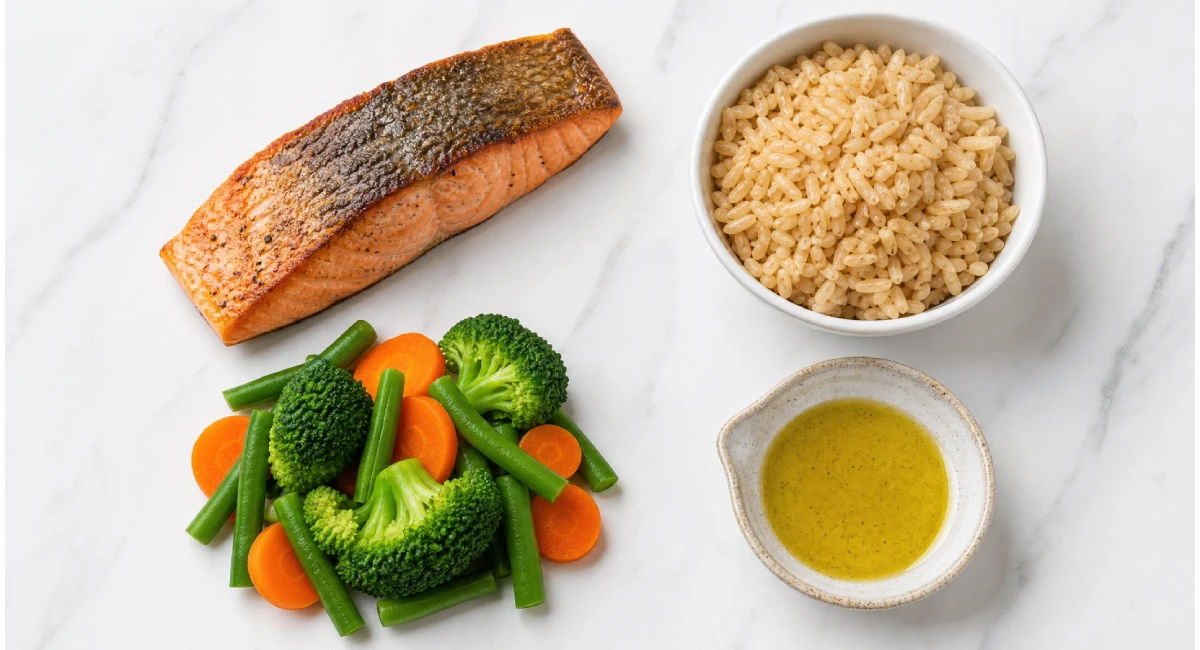
A balanced meal covers four practical components on one plate. You do not need to weigh anything or calculate anything. You just need each of these present in a reasonable amount.
Those four components are: a protein source, a carbohydrate source, vegetables or fruit, and a source of fat. When all four are on your plate, your meal keeps you full, gives your body steady energy, and provides the nutrients it needs to function.
Think of it as a plate split. Roughly half your plate is vegetables or salad. A quarter holds your protein. The remaining quarter holds your carbohydrate. Fat usually comes from how the food is cooked or from a small addition like olive oil, nuts, or avocado.
That is the whole model. Everything else is detail.
Protein: What Counts and How Much Is Enough
Protein keeps you full, supports muscle, and helps your body repair itself. It does not have to be expensive or elaborate.
Good everyday protein sources include:
- Chicken thigh or breast
- Canned tuna or sardines
- Eggs (whole eggs, not just whites)
- Lentils and chickpeas
- Tofu or tempeh
- Greek yogurt
- Cottage cheese
A reasonable portion for one meal is roughly the size of your palm, or about the size of a deck of cards. That translates to around 100 to 150 grams of cooked meat, two to three eggs, or a large scoop of legumes.
You do not need a huge amount. You just need enough to anchor the meal.
Carbohydrates: Why They Belong on a Balanced Plate
Carbohydrates have taken a lot of criticism over the years, but they are your body’s primary energy source. Cutting them entirely tends to make people tired, irritable, and more likely to overeat later.
The useful distinction is between refined carbohydrates and more whole-grain or minimally processed ones. White bread and sugary cereals digest quickly and offer little fibre. Brown rice, oats, sweet potato, whole-grain bread, and regular pasta provide steadier energy and keep you full longer.
That does not mean white rice is forbidden. It means that when you have the choice, a more whole-food carbohydrate source adds more to your meal. And when you do not have the choice, white rice with protein and vegetables is still a solid, balanced plate.
Vegetables and Fruit: The Part Most People Under-Eat
Vegetables are the most consistently under-eaten component in real-life meals, and they are also the one with the most flexibility.
Frozen vegetables count. A bag of frozen peas, broccoli, or mixed stir-fry vegetables is just as nutritious as fresh and significantly cheaper. A simple side salad counts. Roasted cherry tomatoes count. Even a banana eaten alongside breakfast counts toward your daily intake of fruit and vegetables.
You do not need to buy organic produce or find anything exotic. The goal is volume and variety over time, not hitting a specific target at every single meal.
If your plate is mostly protein and carbohydrates with very little colour, that is the easiest place to start improving.
Healthy Fats: The Misunderstood Component
Fat was blamed for many health problems for several decades, and that thinking shaped how a lot of people still eat. The evidence no longer supports cutting fat from your diet.
Fat helps your body absorb certain vitamins, supports brain function, and makes food taste satisfying enough that you do not feel hungry again an hour later. A meal without any fat tends to leave people searching for something else to eat fairly quickly.
Practical fat sources that work in everyday meals include olive oil for cooking, a few slices of avocado, a small handful of nuts, oily fish like salmon or mackerel, or seeds sprinkled over a salad. A small amount goes a long way. You are not pouring oil over everything; you are making sure some fat is present.
Healthy Meal Examples for Breakfast, Lunch, and Dinner
Knowing the components is one thing. Seeing what they look like as actual meals is more useful. Below are real examples across all three main meals, built for different schedules and budgets.
Balanced Breakfast Ideas That Work on Busy Mornings
A balanced breakfast does not require you to wake up early and cook an elaborate meal. These options take between two and ten minutes:
- Overnight oats: Mix rolled oats with milk or yogurt the night before. In the morning, add a spoonful of nut butter and half a banana. You get carbohydrates, protein, fat, and fruit in one bowl you prepared while half asleep.
- Eggs on whole-grain toast: Two eggs scrambled or fried, served on one or two slices of whole-grain toast with a handful of fresh or wilted spinach. Fast, filling, and covers every component.
- Greek yogurt with berries and granola: High-protein yogurt, a handful of frozen or fresh berries, and a small scoop of granola. Takes about ninety seconds to assemble.
None of these requires cooking from scratch every morning. The overnight oats version requires no cooking at all.
Practical Balanced Lunch Options (Including Work and On-the-Go)
Lunch is where balance most often breaks down. When you are at a desk, between meetings, or grabbing food on the move, convenience tends to win over quality.
These options are realistic for working adults:
- Brown rice bowl: Leftover or pre-cooked brown rice, grilled chicken or canned tuna, mixed salad leaves, and a drizzle of olive oil. Takes five minutes if the rice is already cooked.
- Wrap with hummus, vegetables, and cheese: A whole-grain wrap filled with hummus, sliced cucumber, tomato, grated carrot, and a little cheese. Portable, no heating required.
- Chickpea and grain salad: Cooked grains like farro, quinoa, or bulgur wheat with canned chickpeas, chopped vegetables, and an olive oil and lemon dressing. Can be made in bulk and eaten across several days.
- Dinner leftovers: The most underrated balanced lunch option. Whatever you made the night before, brought in a container, counts.
Simple Balanced Dinner Meals Without Spending Hours in the Kitchen
Dinner does not need to take forty-five minutes or require a recipe. These meals are straightforward:
- Baked salmon with roasted vegetables and potato: Season and bake. Roast a tray of whatever vegetables you have. Roughly thirty minutes, mostly hands-off.
- Tofu and vegetable stir-fry with rice: Pre-cut vegetables, firm tofu, and a simple sauce over rice. About fifteen to twenty minutes on the stove.
- Pasta with meat or lentil sauce and a side salad: Pasta cooks itself. A simple tomato-based sauce with ground beef or red lentils takes about twenty minutes. Add a salad on the side to bring in vegetables.
- Bean and vegetable curry with flatbread: Canned beans, a jar of curry sauce or a homemade one, mixed vegetables, served with flatbread or rice. Inexpensive, filling, and genuinely quick.
Balanced Diet Basics: How to Build the Habit, Not Just the Meal
One good meal does not change much. Eating roughly balanced meals most of the time does. The goal is to build a habit gradually, not to flip your entire diet over on a Monday.
A useful way to think about it: you do not need to improve every meal perfectly. You just need each day to be slightly better than your baseline. Over a few weeks, those small changes stack up into a noticeably different eating pattern.
That means you do not need to buy a new set of containers, follow a strict meal plan, or stop eating anything you enjoy. You just need a few simple habits that make balanced eating the path of least resistance.
How to Use the Half-Plate Rule in Daily Life
The half-plate rule is the simplest practical shorthand for building a balanced meal without thinking too hard.
Fill half your plate with vegetables, salad, or fruit. Fill one quarter with a protein source. Fill the remaining quarter with a carbohydrate. That is it.
This works at home, at a restaurant, and even with takeout. If you order a burger and chips, add a side salad and swap one meal component. If you are at a restaurant with limited healthy options, choose a protein main and ask for an extra side of vegetables instead of a second starchy side.
You are not trying to hit a perfect ratio. You are trying to make the plate a little more complete than it would otherwise be.
Meal Prepping Without Turning It Into a Second Job
Meal prep gets presented as a weekend-long operation involving colour-coded containers and six different recipes. That version of it is optional.
A more practical approach involves four small actions:
- Cook a large batch of grains (rice, oats, or lentils) once or twice a week
- Wash and chop a few vegetables when you have a spare ten minutes
- Keep ready proteins on hand: boiled eggs, canned beans, tinned fish, or a rotisserie chicken
- Make slightly more than you need at dinner so you have lunch the next day
None of those requires a dedicated prep session. They are small habits that reduce the number of decisions you need to make when you are hungry and tired.
What Balance Looks Like When Life Gets in the Way
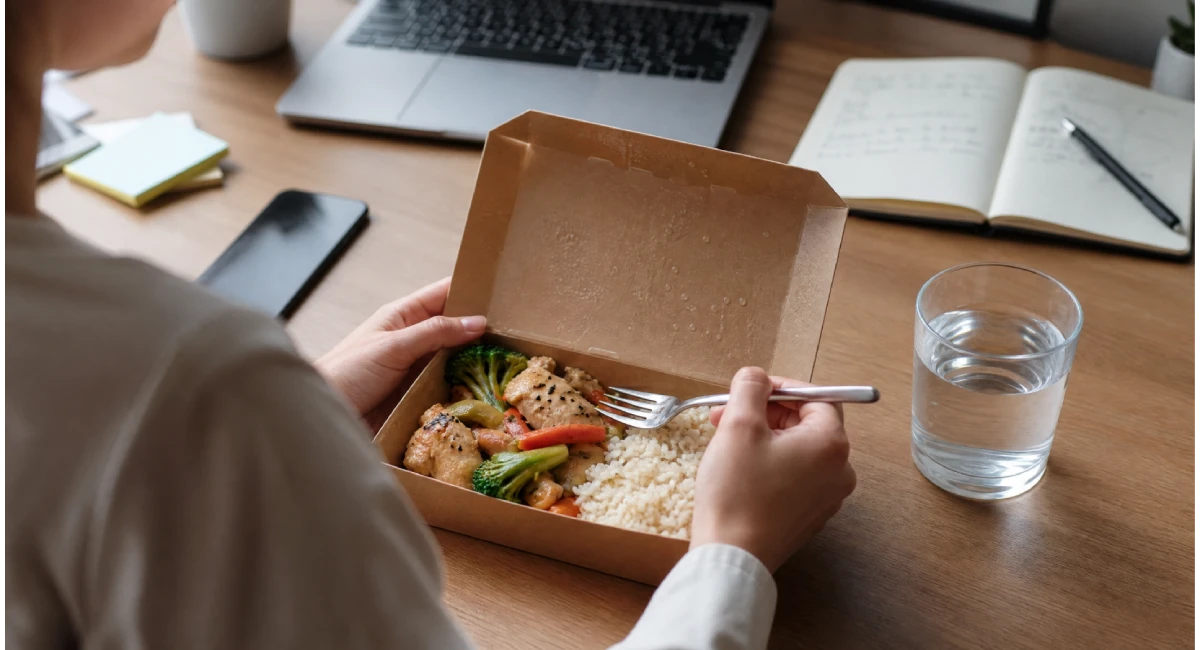
There will be days when you eat fast food, skip a meal, or have a plate that is mostly carbohydrates because that is all that was available. That does not mean your eating is broken.
Balance is a pattern across days and weeks, not a test you pass or fail at each meal. One off meal does not undo a week of good choices, and one good meal does not fix a week of poor ones.
The useful question is not “was this meal perfect?” but “what is the best choice I can make right now?”
Eating Balanced on a Tight Budget
Balanced eating is not expensive. The most nutritious, practical staple foods are also among the cheapest:
- Eggs: one of the most affordable complete proteins available
- Canned beans and lentils: high protein, high fibre, very low cost
- Frozen vegetables: as nutritious as fresh, significantly cheaper
- Oats: a slow-digesting carbohydrate that keeps you full for hours
- Brown rice or regular pasta: an inexpensive carbohydrate base for dozens of meals
- Bananas: cheap, portable fruit that pairs with almost anything
A rough example of a balanced day on a modest budget: overnight oats with banana for breakfast, a lentil and vegetable soup with bread for lunch, and egg fried rice with frozen vegetables for dinner. Each meal is filling, complete, and built from low-cost ingredients.
How to Stay Roughly Balanced When Eating Out or Ordering In
Eating out does not mean abandoning balance. It means making the best available adjustment.
A few practical approaches:
- Choose a protein-based main (fish, chicken, a bean dish) rather than a purely carbohydrate-heavy one
- Add a side salad or vegetable dish to a meal that would otherwise have none
- If ordering fast food, pick a grilled option where available and add a side salad instead of extra fries
- Swap one component rather than trying to overhaul the whole order
You are not looking for a healthy restaurant. You are looking for a meal that is a little more complete than it would be if you chose purely on taste and convenience. That is an achievable standard almost anywhere.
Simple Nutrition Guide: Common Mistakes That Throw Off Your Plate
Most eating patterns that fall short of balanced do so not because of specific bad foods but because of a few recurring habits that quietly skew the plate in one direction.
Recognizing those habits is more useful than counting calories or cutting food groups. Here are the most common ones, along with simple ways to address them.
Skipping protein at a meal leaves you hungry again within an hour or two and makes it harder to maintain muscle over time. If your breakfast is toast and jam, add eggs or Greek yogurt. If your lunch is a salad with no protein source, add chickpeas, tuna, or cheese.
Eating very few vegetables is the single most common gap in real-life eating. If your plate has protein and carbohydrates but almost no colour, add frozen vegetables, a side salad, or even a piece of fruit alongside the meal.
Relying heavily on processed foods does not automatically make a meal unbalanced, but it often means less protein, less fibre, and more sodium than a home-prepared equivalent. Shifting even two or three meals per week toward whole-food versions makes a noticeable difference.
Drinking high-calorie beverages alongside meals adds energy without adding satiety. A large sweetened coffee, fruit juice, or fizzy drink alongside a meal can double the calorie content while leaving you just as hungry.
Portion Distortion: When Healthy Foods Still Tip the Balance
It is possible to eat healthy foods in a way that is still unbalanced. A large bowl of rice with a very small amount of protein and no vegetables is mostly one food group. A smoothie made entirely of fruit with no fat or protein digests quickly and leaves you hungry soon after.
The issue is composition, not the quality of individual ingredients.
A useful check: look at your plate before eating and ask whether all four components are present. If one is missing or very small compared to the rest, add a little more of it. This habit takes about five seconds and gradually trains your eye to build more complete meals without deliberate effort.
Snacks and Drinks: The Hidden Part of the Daily Balance
What you eat between meals and what you drink during them both contribute to your overall daily balance.
Snacks that complement your meals rather than working against them include:
- Apple with nut butter (fruit plus fat and a little protein)
- Cheese with whole-grain crackers (fat, protein, and carbohydrate)
- A small handful of mixed nuts (fat and protein, portable)
- Carrot sticks with hummus (vegetables and fat)
Water is the most useful drink alongside any meal. Sugary drinks add a significant amount of energy without contributing much nutritionally, and because they are liquid, they do not trigger the same fullness signals that solid food does.
What Is a Balanced Meal for Different Life Stages and Activity Levels
The same four components apply at every life stage and activity level. What changes is the proportion and priority of each.
A teenager who is growing, an office worker who walks very little, a person who runs five times a week, and a 70-year-old with a smaller appetite all need protein, carbohydrates, vegetables, and fat. They just need different amounts, and some components matter more at certain stages than others.
Balanced Eating for Active Adults and Regular Exercisers
People who exercise regularly, particularly those doing strength training or cardio, need more carbohydrates and protein than someone who is largely sedentary. Carbohydrates fuel physical activity, and protein supports muscle repair and growth.
Practically, this means:
- A larger portion of carbohydrates before a workout (oats, rice, or bread)
- A protein-focused meal or snack within an hour or two after training (eggs, chicken, yogurt, or a protein-rich grain bowl)
- Not skipping meals on training days, as energy needs are genuinely higher
You do not need to calculate grams or time meals to the minute. You just need to eat a little more on active days, with protein and carbohydrates present at the meals around your training.
Balanced Meals for Older Adults and Lighter Appetites
Older adults often find that their appetite decreases with age, but their protein needs per meal actually increase. Muscle loss accelerates after around age 60, and eating enough protein is one of the most practical ways to slow that process.
The challenge is fitting more protein into smaller-volume meals. Protein-dense options that do not require large portions include:
- Eggs (two to three in a small omelette)
- Canned or fresh fish
- Greek yogurt or cottage cheese
- Legumes added to soups and stews
Skipping meals becomes more of a concern at this life stage than it is for younger adults. A smaller but complete meal is significantly better than no meal, especially when it includes a protein source.
Conclusion
Knowing what a balanced meal in real life is is the starting point for actually eating one. A balanced plate is not about perfect ratios or expensive ingredients. It is a protein source, a carbohydrate source, vegetables or fruit, and a small amount of fat, combined in a way that works for your schedule, budget, and cooking ability.
You do not need to fix every meal at once. Start with one meal a day and ask whether the four components are roughly present. If something is missing, add a small amount of it. Do that consistently, and your eating pattern shifts without requiring a complete life change.
If this article helped clarify things, try applying the half-plate rule to your next meal tonight. Or share it with someone who keeps saying they want to eat better but does not know where to begin.