

Simple Cash Flow Forecast For Small Business
- What a Cash Flow Forecast Actually Is (and What It Is Not)
- Why Small Business Owners Need a Simple Cash Flow Forecast
- The Core Inputs You Need Before You Start Forecasting
- A Simple Forecasting Method That Works Without Accounting Software
- How to Structure Your Forecast: Weekly vs Monthly View
- A Basic Cash Flow Forecast Example for a Small Business
- How to Estimate Income When Your Revenue Is Unpredictable
- Common Mistakes That Make a Cash Flow Forecast Useless
- How Often You Should Update Your Cash Flow Forecast
- Free Tools and Templates for Building Your First Forecast
- Conclusion
You know roughly what you earned last month. You know your rent is due. But do you know whether you will have enough cash in the bank three months from now to cover payroll, a supplier invoice, and your quarterly tax bill at the same time?
Most small business owners do not, and that gap is where businesses quietly get into trouble.
Building a simple cash flow forecast for a small business does not require accounting software or a finance degree. It requires the right inputs, an honest look at your numbers, and a habit of checking them regularly. This guide walks you through everything that goes into one, including a worked example you can follow from day one.
What a Cash Flow Forecast Actually Is (and What It Is Not)
A cash flow forecast is a forward-looking record of the money you expect to receive and the money you expect to spend over a set period, usually the next one to six months.
That is it. No complex formulas. No accounting jargon. Just: what cash is coming in, what cash is going out, and what is left at the end of each period.
What it is not is a profit and loss statement. This is where many owners get confused, and the confusion is costly.
Profit is an accounting figure. It measures revenue minus expenses, often based on when a sale is recorded, not when the money actually hits your account. Cash flow is a banking reality. It measures what is sitting in your account and when.
A business can show strong profit on paper and still run out of cash. This happens when customers pay late, when expenses fall due before income arrives, or when a large tax bill lands in a month with slower sales. The forecast helps you see those gaps before they become a crisis.
Why Small Business Owners Need a Simple Cash Flow Forecast

If you are planning money month to month, a forecast is the closest thing you have to a financial early warning system.
It lets you see a cash shortfall four to six weeks before it happens, which gives you time to act. You might chase a late invoice, delay a non-essential purchase, or arrange a short-term credit line before things get tight. Without the forecast, you find out when it is already too late.
Beyond crisis prevention, a forecast helps you:
- Time large purchases around strong cash months rather than guessing
- Identify the months where seasonal dips are likely so you can plan ahead
- Show a lender or investor a realistic picture of your business finances
- Make smarter decisions about hiring or stock without over-committing
How Cash Flow Relates to Pricing and Profit Decisions
Your pricing does not just determine how much you earn. It also affects when that money arrives.
If your prices are too low, you may not cover costs even when sales look healthy. But even if your pricing is right, long payment terms or slow-paying clients can mean the cash from those sales arrives weeks or months after the cost of delivering the work has already left your account.
A cash flow forecast makes this visible. When you can see the timing gap between spending money and receiving it, you are in a much stronger position to review your pricing, tighten your payment terms, or adjust your cost structure without needing to raise prices at all.
The Core Inputs You Need Before You Start Forecasting
Before you open a spreadsheet, gather these numbers. You cannot forecast accurately without them.
Opening cash balance: The actual amount in your business bank account on the day your forecast starts. Not what your accounting software shows, not outstanding invoices, the real bank balance.
Expected sales income: What you realistically expect to receive from customers during each period. Base this on confirmed orders, historical patterns, or active quotes, not wishful thinking.
Confirmed orders or invoices: Any sales already agreed or invoiced that have not yet been paid. Note when you expect to receive them, not when you issued the invoice.
Fixed monthly costs: Rent, salaries, software subscriptions, loan repayments, and any other costs that stay the same every month, regardless of sales.
Variable costs: Materials, shipping, sales commission, packaging, and anything else that changes based on how much you sell or produce.
Loan repayments: Any scheduled repayments on business loans, overdrafts, or equipment finance agreements.
Tax obligations: Quarterly or annual tax payments, VAT or GST liabilities, payroll taxes, and any other amounts owed to tax authorities.
Owner drawings: If you pay yourself from the business, this is a cash outflow and it needs to be in the forecast.
Cash Inflows: What Counts and What Does Not
A cash inflow is money that physically arrives in your bank account during the forecast period.
This includes:
- Customer payments received (not invoices issued)
- Loan or credit facility proceeds drawn down
- Government grants or subsidies received
- Proceeds from selling a business asset
What does not count as a cash inflow is an invoice you have sent but have not yet been paid for. The moment a lot of small business owners go wrong is treating issued invoices as income. They are not. They are potential income. The cash inflow only exists when the payment clears.
This distinction matters most for businesses that offer payment terms, since your accounting records may show strong revenue months before the cash actually arrives.
Cash Outflows: Fixed, Variable, and Easy-to-Forget Costs
Outflows fall into three groups:
Fixed outflows are the same each month: rent, employee wages, software licences, insurance premiums, and loan repayments.
Variable outflows change with your activity level: raw materials, delivery costs, freelancer fees, and advertising spend.
Irregular outflows are the ones most owners miss: annual insurance renewals, quarterly tax instalments, equipment servicing, seasonal inventory build-up before a busy period, and professional membership fees.
The irregular ones are the most dangerous to leave out. They do not appear every month, so they are easy to forget until they land on your account. Build a list of every irregular payment you made in the past 12 months and spread them into the months they are due.
A Simple Forecasting Method That Works Without Accounting Software
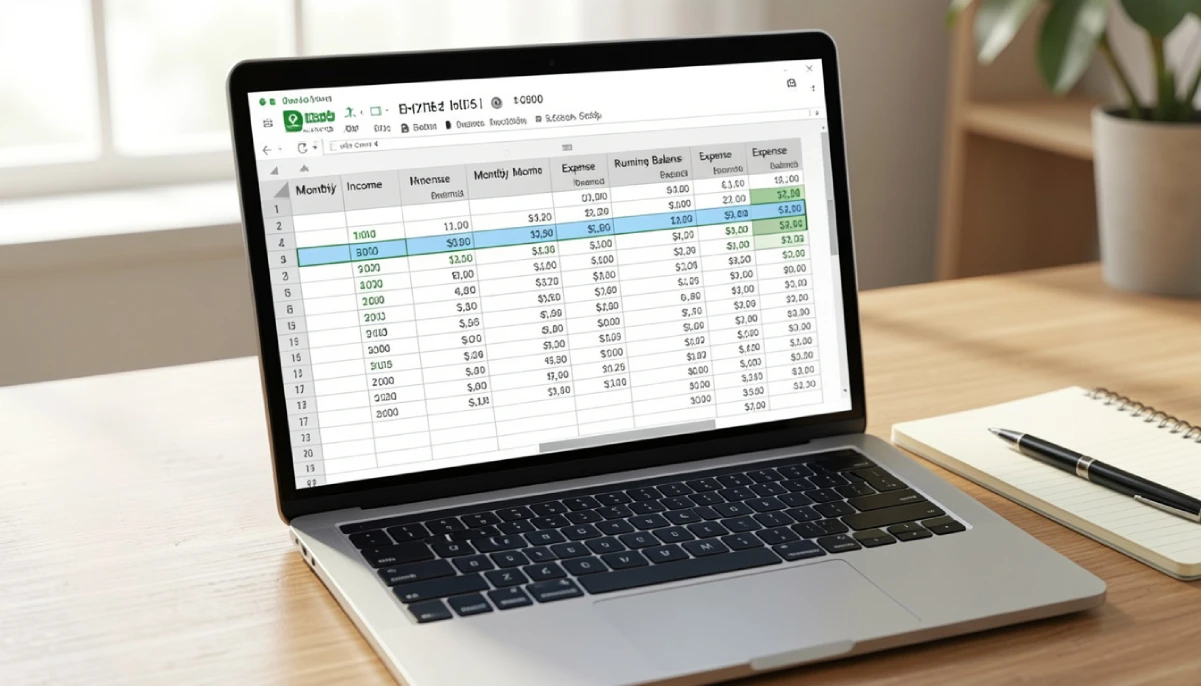
You do not need expensive software to build a useful forecast. A basic spreadsheet works well for most small businesses.
The structure is simple:
- Columns represent time periods, one column per week or month
- Rows represent categories of income and expenses
- The bottom row is your closing cash balance for each period, which becomes the opening balance for the next period
The three-step logic for each period:
- Start with your opening cash balance
- Add all expected inflows for that period
- Subtract all expected outflows for that period
The result is your closing balance. Carry it forward as the opening balance for the next column and repeat.
If any closing balance goes negative, you have just identified a potential problem before it happens. That is the entire point.
How to Structure Your Forecast: Weekly vs Monthly View
The right time frame depends on your situation.
A monthly view works well when your income is relatively stable, your payment cycles are predictable, and you are not under immediate cash pressure. For most new forecasters, starting monthly for three to six months is the right call. It gives you the big picture without getting lost in detail.
A weekly view is better when cash is tight, income is unpredictable week to week, or you can see a difficult period approaching. Switching to weekly gives you more time to react.
Start monthly. If your forecast shows a tight month ahead, break that month into weekly columns so you can see exactly when the pressure hits.
A Basic Cash Flow Forecast Example for a Small Business
Here is a straightforward example for a small consulting business.
Starting position: $8,000 in the bank at the start of Month 1.
Expected income:
- Client A: $4,500 payment due in Month 1
- Client B: $6,000 project, invoiced in Month 1 on 30-day terms, so payment expected in Month 2
- New project: $5,000 expected to start and be invoiced in Month 2, payment expected in Month 3
Monthly outflows:
- Rent: $1,200
- Owner salary: $3,500
- Software and subscriptions: $300
- Supplier invoice: $1,800 due in Month 2
- Tax instalment: $2,000 due in Month 3
| Month 1 | Month 2 | Month 3 | |
|---|---|---|---|
| Opening Balance | $8,000 | $7,500 | $9,400 |
| Income Received | $4,500 | $6,000 | $5,000 |
| Total Inflows | $4,500 | $6,000 | $5,000 |
| Rent | $1,200 | $1,200 | $1,200 |
| Owner Salary | $3,500 | $3,500 | $3,500 |
| Software | $300 | $300 | $300 |
| Supplier Invoice | – | $1,800 | – |
| Tax Instalment | – | – | $2,000 |
| Total Outflows | $5,000 | $6,800 | $7,000 |
| Closing Balance | $7,500 | $8,700 | $7,700 |
In this example, the business stays in positive cash flow throughout. But notice that Month 3 closes lower than Month 2, even though a $5,000 payment arrives. That is because the tax instalment lands in the same month. Without the forecast, that timing could have been a surprise.
How to Estimate Income When Your Revenue Is Unpredictable
Forecasting income is straightforward when you have regular contracts. It is much harder when your sales vary month to month, which is the reality for most small business owners.
Three approaches that work in practice:
1. Use a conservative percentage of the previous period. If your average monthly income over the past six months was $12,000, forecast 80 per cent of that, around $9,600. This builds in a buffer without ignoring your history entirely.
2. Split income into three buckets:
- Confirmed: Money from signed contracts, purchase orders, or invoices already issued within payment terms
- Probable: Income from active quotes or repeat clients where a sale is likely but not guaranteed
- Possible: Leads or potential work with no firm commitment yet
Include confirmed in full, include probable at around 70 per cent, and leave possible out of the base forecast. You can run a separate optimistic scenario if you want to see the upside.
3. Apply a worst-case and best-case range. Build two versions: one where income comes in 20 per cent below expectation, and one where it meets expectation. If your business can survive the worst-case version, you are in a solid position.
The most common error here is optimism. Business owners forecast the income they want rather than the income they can reasonably expect. Honest numbers, even uncomfortable ones, make for a useful forecast. Flattering numbers give you false confidence.
Using Payment Terms to Adjust Your Forecast Timing
When you issue an invoice, you earn revenue. But you do not receive cash until the invoice is paid.
If you offer 30-day payment terms, income from a March sale may not arrive until April. If your client pays late, it might not arrive until May. Your profit and loss statement will show the income in March. Your cash flow forecast needs to show it when the money actually arrives.
To adjust for this, take each expected invoice and shift it forward by your average collection time. If clients typically pay in 35 days, move that income 35 days forward from the invoice date.
This single adjustment often reveals the real reason a business that looks profitable on paper still feels like it is always short on cash. The money exists. It just has not arrived yet, and that timing gap is where forecasting earns its place.
Common Mistakes That Make a Cash Flow Forecast Useless

A forecast is only as good as the habits and inputs behind it. These are the mistakes that make even a well-structured forecast unreliable.
Using invoice dates instead of payment dates. Recording income when you invoice rather than when you are paid is the single most common error. It overstates your near-term cash position and hides gaps.
Including tax collected in your income. If you collect VAT or GST on behalf of the government, that money is not yours. Including it in your total income inflates your cash position until the day you have to hand it over, often as a painful lump sum.
Ignoring seasonal patterns. Many businesses have slower months that are predictable in hindsight but overlooked in forecasts. If your business dips every January, build that in rather than assuming an average month.
Over-estimating sales. Forecast what you have reason to believe, not what you hope for. Optimistic income figures combined with real expenses will always leave you worse off than you expected.
Treating the forecast as a one-time document. A forecast built in January and never touched again is nearly worthless by March. Markets shift, clients pay late, costs change. A forecast that is not updated is not a tool; it is a historical document.
Not including irregular costs. Annual insurance, tax instalments, equipment repairs, and membership renewals do not appear every month, but they will appear. Leave them out, and your forecast will repeatedly underestimate your outflows.
Why Confusing Profit with Cash Flow Leads to Poor Decisions
Here is a scenario that happens more often than most business owners would admit.
A small agency finishes the financial year with a solid profit. The accountant is happy. The owner feels good. But in month four of that same year, the business could not make payroll without drawing on a personal credit card.
How? Clients were paying on 60-day terms. Salaries were due every fortnight. The profit was real, but the cash to cover those wages simply had not arrived yet.
A profit and loss statement told one story. The bank account told another. A cash flow forecast would have shown the month-four crunch in month two and given the owner time to act. That is the difference between the two documents, and why you need both.
How Often You Should Update Your Cash Flow Forecast
A forecast is a living document, not a filing exercise.
At a minimum, update it once a month. At the start of each new month, compare your actual income and expenses from the previous month against what you forecast. Where did you land versus what you expected? Was income higher or lower? Did any unexpected costs appear?
Then adjust the remaining months in your forecast based on what you now know.
For businesses with tight cash positions or high month-to-month variability, a weekly update is worth the time it takes. Fifteen minutes every Monday morning to update actuals and check the next four weeks is enough.
The habit to build is simple:
- Record actuals for the period just ended
- Note any gaps between actuals and forecast
- Identify what caused the gap, whether income timing, unexpected cost, or a missed payment
- Adjust the next two to three months to reflect what you now know
The goal is not a perfect forecast. The goal is a forecast that keeps getting more accurate because you keep correcting it.
Free Tools and Templates for Building Your First Forecast
You do not need to spend money to get started. Several solid options are available at no cost.
Google Sheets is the easiest starting point for most owners. You can build a simple forecast from scratch in under an hour, share it with a bookkeeper or accountant, and access it from any device. Search “cash flow forecast template Google Sheets” and you will find several clean, free options.
Microsoft Excel has built-in forecast templates available through its template library. If you already use Excel for other parts of your business, staying in the same environment makes sense.
Wave (free accounting software) includes basic cash flow reporting tools and is a reasonable option if you are already tracking income and expenses there.
Xero and QuickBooks both offer cash flow forecasting features within their paid plans. If you already subscribe to either, check whether the forecast tool is included in your tier before building something separately.
When choosing or building a template, look for these three things:
- Separate rows for inflows and outflows, not lumped together
- A running closing balance row that carries forward automatically
- Editable time columns so you can switch between weekly and monthly views
One honest note: a simple spreadsheet you build yourself and actually understand will often serve you better than a complex template you half-understand and stop updating after two weeks. Start simple. Add complexity only when the simple version is no longer enough.
Conclusion
A cash flow forecast does not need to be complicated to be useful. What it needs to be is honest, current, and looked at regularly.
The businesses that get into cash trouble are rarely the ones that did not understand their numbers. They are more often the ones who understood them on paper but never translated that understanding into a forward-looking habit.
Start with a simple cash flow forecast for a small business, keep it updated each month, and treat any negative closing balance as a signal to act, not a reason to panic. The sooner you can see a shortfall coming, the more options you have to deal with it.
If you found this useful, the next step is to look at how your pricing decisions connect to your cash position, and whether there are ways to improve profitability without changing your prices at all.