


Where should a freelancer keep business money? You land your first client, they send payment, and you drop it straight into your regular bank account. It feels fine. You tell yourself you will sort it out later.
- Why Mixing Personal and Business Money Causes Problems
- Where Should a Freelancer Keep Business Money: The Core Options
- How to Set Up a Freelance Business Account the Right Way
- How to Handle Incoming Payments as a New Freelancer
- How Much Money Should You Keep in Your Freelance Business Account?
- Should You Open a Savings Account Alongside Your Business Checking Account?
- Tools That Work Alongside Your Business Account
- Conclusion
Six months in, you need to file taxes. Now you are scrolling through hundreds of transactions, trying to separate your grocery runs from your software subscriptions. The question of where a freelancer should keep business money suddenly feels urgent — and long overdue.
The short answer: open a dedicated business account before your first payment arrives. This guide walks through which account types make the most sense for a new freelancer, how to set one up from the start, how to handle incoming payments, and how much to keep in the account. No jargon. Just a clear path to getting your money in the right place from day one.
Why Mixing Personal and Business Money Causes Problems
Most new freelancers do not intentionally mix accounts. It just happens. You open your business before you open a business account, and by the time you think about separating things, there are already months of mixed transactions to deal with.
The problem goes beyond inconvenience. Mixed accounts create messy records, missed deductions, and questions about whether you are running a legitimate business at all.
Picture a freelance designer depositing client payments into a personal checking account for eight months. When tax time arrives, she has to comb through every transaction and label it: business or personal. A $49 charge from an online tool she vaguely remembers but cannot prove was work-related. A $55 client lunch she never recorded. These gaps cost money because unclear expenses often go unclaimed.
What Happens at Tax Time When Everything Is Mixed
Tax authorities in the US, UK, Canada, and Australia all expect self-employed people to keep clean, organized business records. The IRS, HMRC, CRA, and ATO each have their own requirements, but the expectation is the same: your business income and expenses should be clearly documented and separated from personal spending.
When they are not separated, you spend hours reconstructing records you should already have. You risk missing legitimate deductions because you cannot prove the expense was business-related. In some cases, mixed records can trigger additional scrutiny during an audit.
The time cost alone is worth avoiding. A freelancer spending five hours sorting records at tax time is five hours not working or resting.
How Separation Protects Your Professional Image
When a client pays by bank transfer, they see your account name. If that name is your personal first and last name tied to a consumer bank account, it can create hesitation — especially with corporate clients whose finance departments review payments.
A business account, whether in your business name or your own name but clearly designated for business, presents differently. It signals that you operate as a professional. The same applies to invoicing. When clients receive an invoice and pay into an account with a matching business name, the experience feels more credible. These details build trust with long-term clients.
Where Should a Freelancer Keep Business Money: The Core Options
There is no single right answer, but there are three options most freelancers work with. Each one has trade-offs depending on where you are in your freelance journey, how much income you are bringing in, and how quickly you need to get set up.
The three options are: a dedicated personal account used only for business, a traditional business checking account, and a digital or fintech business account. Understanding what each one offers helps you choose based on your situation, not what sounds most official.
Using a Dedicated Personal Account Temporarily
Some freelancers, especially those just starting with one or two small clients, open a second personal checking account at their existing bank and use it exclusively for business money. No personal spending touches it. Everything that comes in from clients goes there.
This works as a short-term bridge. It creates basic separation and costs nothing if your bank offers free accounts. The limitation is that it still carries your personal name, which can look informal to clients. It also lacks the features most business accounts include, like the ability to add employees, issue business debit cards, or integrate with accounting tools.
Think of this as a temporary placeholder, not a permanent home for your business finances. Once your income is consistent and you have more than two or three regular clients, move to a proper business account.
Opening a Business Checking Account at a Traditional Bank
A traditional business checking account gives you a proper foundation. Your business name appears on the account, you get a business debit card, and you have access to features designed for business use, including check writing, deposit records, and in some cases a direct line to a business banking adviser.
To open one, you typically need a government-issued ID, your business name (either your legal name as a sole proprietor or a registered trade name), a tax identification number or equivalent in your country, and sometimes a minimum opening deposit, which ranges widely by bank.
Requirements vary between countries and institutions, so check directly with your bank before assuming what is needed. Sole proprietors in most countries can open a business account without formal company registration, which means you do not need a limited company or LLC to get started.
Digital and Fintech Business Accounts for Freelancers
Over the past several years, digital-first banks and fintech platforms have built business accounts with freelancers and small operators in mind. These accounts are available across the US, UK, Canada, and Australia, with options in most regions.
The appeal is straightforward: setup takes minutes, there are no branches to visit, monthly fees are low or nonexistent, and many include built-in tools for invoicing, expense categorization, and payment tracking. For a new freelancer who wants to separate finances without paperwork or minimum balance requirements, these accounts are worth serious consideration.
The trade-off is that some fintech providers are newer and carry less name recognition, which occasionally creates friction with clients or on certain payment platforms. For day-to-day freelance work, most of these accounts function without issue.
How to Set Up a Freelance Business Account the Right Way
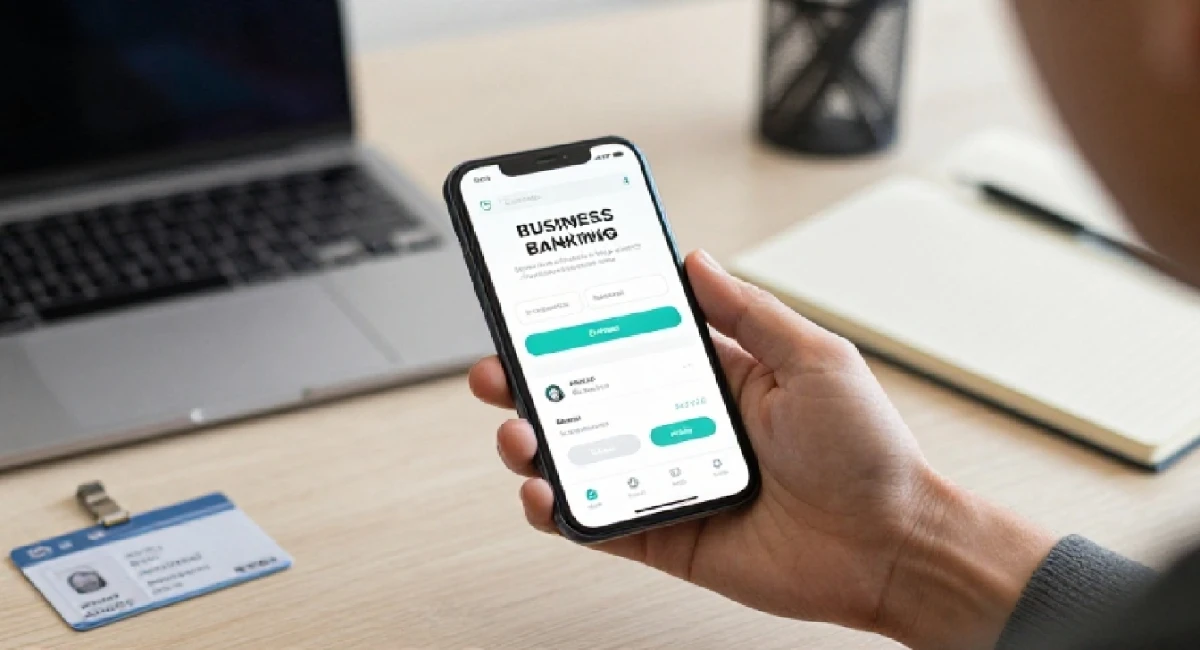
Setting up an account is not complicated, but doing it right the first time saves rework later. The goal is to have a business account ready before your first payment arrives, not scrambling to open one after the fact.
This section covers what you need to gather, how your business name appears on the account, and how to connect it to the tools you use to invoice and receive payments.
What Documents You Typically Need to Open a Business Account
Most banks and fintech providers ask for the same core set of information. Having these ready before you start speeds up the process.
- Government-issued photo ID: A passport or national ID card is standard.
- Proof of address: A recent utility bill or bank statement in your name usually works.
- Business name or trading name: This can be your legal name as a sole proprietor, or a registered trade name if you operate under one.
- Tax identification number: In the US, this is your SSN or EIN. In the UK, your UTR or NI number. In Canada, your SIN or Business Number. In Australia, your ABN or TFN.
- Business type: Sole proprietor, freelancer, or self-employed is sufficient for most accounts.
In many countries, sole proprietors can open a business account using their personal legal name without any business registration. If you have not registered a business name yet, you do not need to wait. Get the account open and adjust the details later if your situation changes.
Choosing a Business Name for Your Account
You have a few options. The simplest is using your own legal name, which works well for most freelancers. Many professionals operate under their own name, and it carries no disadvantage with clients.
If you want a distinct business identity, you can register a trade name. In the US, this is called a DBA (doing business as). Similar structures exist in the UK, Canada, and Australia under slightly different names, but the concept is the same: you register a business name separate from your personal name and use it for business purposes.
A third option is operating through a formal business entity such as an LLC or limited company. This adds legal and administrative complexity that most new freelancers do not need right away. For the purpose of opening a business account, your legal name or a registered trade name is enough to get started.
How to Handle Incoming Payments as a New Freelancer
Getting paid is the point of all of this. But payments only stay organized if you build consistent habits around where they land and what you do when something goes wrong. From the beginning, every payment from every client should flow into one place: your dedicated business account.
The problem most new freelancers face is that they set up payment platforms before they open a business account, so income starts arriving in the wrong place. Fixing that routing is the first thing to do once the business account is open.
Connecting Payment Platforms to Your Business Account
Any platform you use to collect payments needs to be linked to your business account. This includes invoicing tools, freelance marketplaces, payment processors, and digital wallets used for business transactions.
Log in to each platform and update the bank account details. Set the business account as the default destination for all payouts. Then check that the account name and number match exactly — errors in bank details are one of the most common reasons payments get delayed or rejected.
The goal is a single, clear trail: client pays, money arrives in the business account, and you can see it in your records. When income comes in from multiple sources, all of it should still funnel to the same place. Consistency makes bookkeeping much simpler down the line.
What to Do If a Client Pays Into the Wrong Account
It happens, particularly in the early weeks before you have updated all your payment details. A client pays into your old personal account because that was the number on your previous invoice.
The fix is simple: transfer the exact amount to your business account the same day, or as soon as you notice it. Add a note in your bookkeeping records with the date, amount, original account it arrived in, and the reason for the transfer.
This matters even for small amounts. A $75 payment that lands in your personal account and stays there looks like personal income unless you have documentation showing it was a business payment moved for administrative reasons. Keeping that paper trail protects you if your records are ever reviewed.
How Much Money Should You Keep in Your Freelance Business Account?
Opening the account is step one. Knowing what to keep in it is the next question. The answer depends on your income level and your expenses, but there are two numbers worth knowing at all times: your operating buffer and your tax reserve.
These two figures are not extras. They are the difference between a freelancer who feels financially stable and one who gets caught short every few months.
Building a Basic Cash Buffer for Slow Months
Freelance income is unpredictable. Some months are strong. Others are quiet — sometimes because clients take time off, sometimes because a project gets delayed, sometimes for no clear reason.
A buffer of one to two months of expected operating expenses sitting in your business account means a slow month does not force you to dip into personal savings or scramble for new work just to cover costs.
To calculate yours: add up your regular business expenses for a typical month, including software subscriptions, equipment costs, and any services you pay for regularly. Multiply that by one or two. That is your target buffer. Keep this amount in the account and treat it as untouchable for day-to-day spending.
Setting Aside Money for Taxes From Day One
This is the habit most new freelancers skip and then regret. When you are employed, someone else withholds your taxes before you see the money. When you are self-employed, that responsibility is yours entirely.
A common guideline across most markets is to set aside between 20% and 30% of every payment received, depending on your country, income level, and local tax rules. This is a starting point, not a precise number. A tax professional can give you a figure specific to your situation.
The important thing is to move that percentage somewhere safe the moment income arrives, ideally into a separate savings account. If it stays in your main business account, it is too easy to spend. Treat the tax reserve like it does not exist until tax time — because effectively, it does not belong to you.
Should You Open a Savings Account Alongside Your Business Checking Account?
The short answer is yes, eventually, once your income is consistent enough to make it practical. A checking account and a savings account together create a clean structure: the checking account handles transactions, and the savings account holds money you are not supposed to touch.
This is not about investing. It is about keeping different pools of money separate so you are never confused about what is available for spending and what is reserved for something specific.
Using a Business Savings Account for Tax Reserves
Once you decide to set aside a tax reserve, the most reliable way to protect it is to move it into a savings account rather than leaving it in your checking account. Every time income arrives, transfer the reserved percentage immediately.
This makes the reserve feel fixed rather than flexible. When your checking account shows a lower balance, you are less likely to overspend. The savings account balance grows each month, and when your tax bill arrives, the money is already waiting.
Many banks that offer business checking accounts also offer linked business savings accounts. Some fintech providers offer sub-accounts or pots specifically for this purpose, which achieves the same outcome without needing to open a separate account at a different institution.
When a Single Account Is Enough at the Start
Not every new freelancer needs two accounts right away. If your income is irregular, small, or just getting started, managing two accounts can feel like more friction than it is worth.
A practical benchmark: when your monthly income consistently covers your business expenses with a surplus left over, that is a reasonable point to add a savings account. Before that, the more important step is keeping your business money separated from your personal money. One dedicated business account beats a mixed personal account every time, regardless of whether a savings component is attached.
Tools That Work Alongside Your Business Account
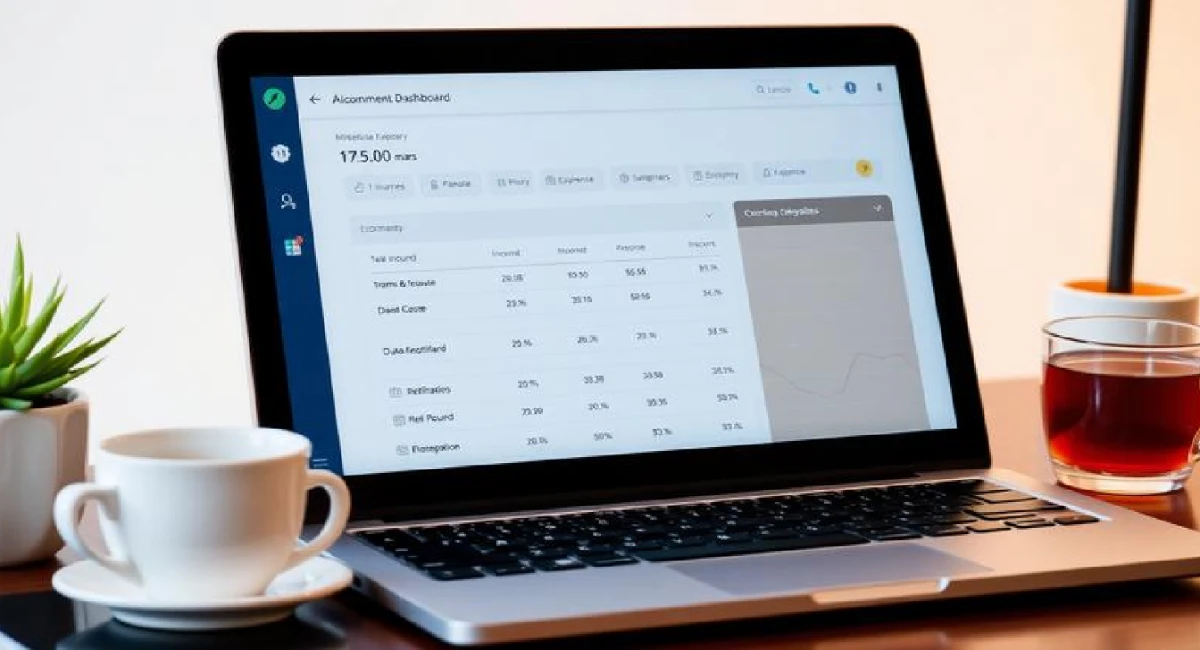
A business bank account is the foundation, but the tools you connect to it determine how much visibility you have into your finances. Connecting the right tools from the beginning makes bookkeeping simpler, invoicing faster, and tax preparation far less painful.
This is not a software review. The goal here is to understand what categories of tools to look for and what to expect from each one.
Bookkeeping and Expense Tracking Tools
Bookkeeping software connects directly to your business bank account via an automatic bank feed. Transactions come through daily and get sorted into categories: income, software costs, travel, equipment, and so on. You review and confirm the categorization rather than entering everything manually.
When choosing a bookkeeping tool, look for three things: an automatic bank feed that connects to your specific bank or fintech provider, customizable expense categories that match how your business operates, and a basic profit-and-loss report you can export at any time. These three features cover most of what a solo freelancer needs for record-keeping and tax preparation.
Invoicing Tools That Route Payments Correctly
Invoicing tools let you create professional invoices, send them to clients, and track which ones have been paid. More importantly, they connect to payment processors that deposit client payments directly into your business account.
When you configure an invoicing tool, the bank account you link should always be your business account. Some freelancers set these tools up before opening a business account and never update the bank details. The result is payments landing in a personal account for months.
Many fintech business accounts now include invoicing as a built-in feature. This removes the routing problem entirely, since the payment destination and the account are the same product. If your business account includes invoicing, start there before adding a separate tool.
Conclusion
Getting your money in the right place is one of the most straightforward things you can do when starting as a freelancer, and one of the most commonly delayed.
The question of where a freelancer should keep business money has a clear answer: in a dedicated business account, set up before your first payment arrives, with a consistent habit of routing all income to that one place. Whether you choose a traditional bank or a digital-first provider depends on your situation, but either is better than a mixed personal account.
Start with the account, connect your payment platforms, and build a tax reserve from the very first payment. Those three steps will save you hours of stress and real money by the time your first full year of freelancing is behind you.
If you are still working through the bigger picture of getting set up, the guide What Do You Need to Start a Freelance Business the Right Way? covers the full process from the ground up.