
You Can Find Quality TV Without the Big Streaming Services — Here’s Where to Look
Most people assume the best television lives exclusively on Netflix, Max, or Disney+. If it is not on one of the big four, the thinking goes, it probably is not worth watching.
- Why Cord Cutters Are Looking Beyond the Big Names
- The Cost of Stacking Multiple Major Subscriptions
- How the Big Platforms Are Narrowing Their Own Libraries
- Quality TV Shows Without Big Streaming Services — Where to Actually Look
- The Difference Between “Smaller” and “Lower Quality”
- How to Choose a Niche Platform That Fits Your Taste
- Independent Streaming Platforms Worth Paying For
- Acorn TV — British and International Drama Done Right
- BritBox — The Case for Going Straight to the Source
- Sundance Now and Topic — Independent and International in One Place
- MHz Choice — The Best Portal for European Crime Drama
- Free Ad-Supported Platforms With Genuinely Good TV
- Tubi — Surprisingly Deep Library at Zero Cost
- Kanopy — The Library Card Streaming Service
- Pluto TV and The Roku Channel — Live and On-Demand for Free
- PBS Passport — Publicly Funded Television Worth Subscribing To
- Niche TV Recommendations by Genre
- Drama — Hidden TV Gems With Strong Writing
- Crime and Thriller — Independent TV Shows With Real Tension
- Sci-Fi and Speculative Fiction — Beyond the Blockbuster Formula
- Documentary Series — Deep and Specific, Not Broadly Packaged
- Public Broadcasters as Free Streaming Alternatives
- BBC iPlayer and ITVX — World-Class TV Behind a Geo-Wall
- CBC Gem and SBS On Demand — Regional Gems for a Global Audience
- Curiosity Stream — The Dedicated Documentary Platform
- How to Build Your Own Streaming Stack on a Budget
- The Rotating Subscription Method
- Pairing Free and Paid Platforms Intelligently
- What to Do When You Miss a Title That Left a Platform
- Conclusion
That assumption is costing you some of the best TV being made right now. There is a whole landscape of quality TV shows without big streaming services that most cord cutters walk right past — and once you know where to look, you will wonder why you spent so long paying for the same five platforms everyone else uses.
This article maps out exactly where to find compelling, well-crafted television outside the mainstream. From paid niche platforms to completely free services, there is more waiting for you than you might expect.
Why Cord Cutters Are Looking Beyond the Big Names
The appeal of the major streaming platforms made sense when there were only one or two of them. One reasonable monthly fee, one login, and access to most of what you want to watch.
That deal has quietly fallen apart over the past few years. Prices have climbed steadily across every major service, catalogue libraries shift without notice, and the recommendation algorithms have become so narrow that most viewers end up cycling through the same genres and the same familiar names. Discovering something genuinely new takes more effort than it used to.
None of that means the big platforms have nothing to offer. It just means they are no longer the only option worth considering, and for a growing number of viewers, they are no longer even the best one.
The Cost of Stacking Multiple Major Subscriptions
To watch Netflix, Max, Disney+, and Apple TV+ on their standard ad-free tiers, you are currently looking at roughly $55-$65 USD per month, depending on your region. That works out to between $660 and $780 per year for four platforms.
Many households subscribe to at least two or three of these simultaneously, often out of habit rather than genuine need. When you add those numbers up across a full year, the figure is striking enough to make most people pause and ask what they are actually getting for it.
How the Big Platforms Are Narrowing Their Own Libraries
Here is something that often goes unnoticed: major streaming services have been quietly removing content from their own libraries. Licensing agreements expire, original productions get cancelled after one season to reduce costs, and entire show catalogues disappear without any announcement.
At the same time, the algorithms that power recommendation systems on these platforms tend to surface content that already performs well with broad audiences. Niche genres, international productions, and slower-paced character dramas get buried. The result is that even a platform with thousands of titles can feel surprisingly thin if your tastes sit outside the mainstream.
Quality TV Shows Without Big Streaming Services — Where to Actually Look
The alternatives to the major platforms fall into three broad categories: smaller paid services built around specific genres or regions, free ad-supported platforms, and the streaming arms of major public broadcasters.
Each of these serves a different kind of viewer. Some are better for drama fans, some for documentary enthusiasts, and some for people who want something on in the background without paying for it. Understanding which category fits your habits is the first step toward building a genuinely satisfying viewing setup.
The good news is that finding quality TV shows without big streaming services is not a compromise. In many cases, it is an upgrade.
The Difference Between “Smaller” and “Lower Quality”
A smaller platform does not mean a lower standard. Some of the most critically praised television of the past decade has come from services most casual viewers have never heard of.
“Broadchurch” and “Happy Valley” built devoted international audiences through BritBox. “Deutschland 83” became a word-of-mouth phenomenon through MHz Choice. “The Bridge” and “Spiral” drew viewers who had never watched a subtitled drama before. None of these needed a massive marketing push to earn their reputations. They earned them through strong writing, committed performances, and stories that respected the viewer’s intelligence.
How to Choose a Niche Platform That Fits Your Taste
Before subscribing to anything new, it helps to answer a few honest questions about your viewing habits:
- Genre preferences: Do you gravitate toward crime drama, character-led drama, documentary, or comedy?
- Country of origin: Are you open to international productions, or do you prefer English-language content?
- Subtitles: Are you comfortable with subtitled viewing? Many of the strongest niche platforms carry European and Scandinavian series.
- Release format: Do you prefer full season drops for binge-watching, or are you happy watching week by week?
- Ad tolerance: Would you rather pay a small monthly fee, or are you comfortable sitting through occasional ad breaks in exchange for free access?
Answering these honestly will save you from subscribing to something that does not actually fit how you watch.
Independent Streaming Platforms Worth Paying For
The niche paid platforms listed below are not trying to compete with Netflix on volume. Each one has a distinct identity and serves a specific audience well. Monthly costs are modest, and the content-to-price ratio compares favourably with the major services once you factor in how much you actually watch.
Acorn TV — British and International Drama Done Right
Acorn TV specialises in British, Australian, and Canadian television, with a particular strength in crime drama and mystery series. It costs around $6 to $7 USD per month, which makes it one of the more affordable paid niche options.
Two titles that often go unmentioned: “Stonemouth,” a quiet Scottish crime drama adapted from an Iain Banks novel, and “Jack Irish,” an Australian detective series with a melancholic atmosphere that sets it apart from most crime procedurals. Acorn TV rewards viewers who prefer writing and atmosphere over spectacle.
BritBox — The Case for Going Straight to the Source
BritBox is jointly operated by the BBC and ITV, which means it holds the most complete archive of British television available in one place. Classic series sit alongside newer exclusives, and the platform regularly adds content that either never made it to other services or was removed from them.
Pricing sits at approximately $8 to $9 USD per month. BritBox is available in the US, Canada, and Australia, with a separate domestic version available to UK subscribers through their television providers.
Sundance Now and Topic — Independent and International in One Place
Sundance Now focuses on independent and international crime drama, carrying a strong selection of Nordic noir and European thrillers alongside some North American indie productions. “The Sinner” (original seasons) and “Riviera” are among its better-known titles.
Topic, run by First Look Media, carries a more curated international selection with a leaning toward prestige drama. “We Are Who We Are” and “The Head” have both earned strong critical attention through the platform. Both services offer monthly plans under $10 USD.
MHz Choice — The Best Portal for European Crime Drama
MHz Choice is specifically designed for viewers who want Scandinavian, French, German, Italian, and other European crime series with English subtitles. Its library is not enormous, but it is carefully selected.
At around $8 USD per month, it is priced fairly for what it offers. The key difference from general international platforms is that MHz Choice focuses almost entirely on the crime and thriller genre from European public broadcasters, which means the production quality is consistently high and the storytelling follows regional traditions rather than a globalised formula.
Free Ad-Supported Platforms With Genuinely Good TV
Free ad-supported streaming gets dismissed too quickly. The assumption is that if it does not cost anything, the content must not be worth much. That is not accurate, and a few of these platforms carry material that surprises even committed TV fans.
The ad experience varies. Some platforms run ads at the same frequency as broadcast television; others are lighter. Knowing what to expect before you commit to a long watch session makes the experience considerably less frustrating.
Tubi — Surprisingly Deep Library at Zero Cost
Tubi carries over 50,000 titles, which makes it one of the largest free streaming libraries available. The quality is uneven across the full catalogue, but the areas where it performs well are worth knowing: classic foreign-language films, cult TV series, and older prestige drama that has left major platforms.
One underrated title available on Tubi: “The Kettering Incident,” an Australian mystery series with a genuinely unsettling atmosphere that received strong critical reviews but limited mainstream exposure. Ads run at roughly the same frequency as standard broadcast television, typically around four to five minutes per hour.
Kanopy — The Library Card Streaming Service
Kanopy is free to access if your local public library or university participates in its programme. There are no ads. You simply log in with your library card and watch.
The library focuses on arthouse cinema, international television, and documentary series rather than mainstream entertainment. It is available through participating libraries in the US, UK, Canada, and Australia, though coverage varies by city and region. If your library supports it, it is one of the most undervalued free resources in streaming.
Pluto TV and The Roku Channel — Live and On-Demand for Free
Pluto TV takes a different approach from most streaming services. It offers hundreds of live linear channels alongside an on-demand library, mimicking the channel-surfing experience of traditional broadcast television. It performs best for classic reality TV, network crime procedurals, and documentary channels. The Roku Channel offers a similar mix, with a slightly stronger on-demand section for viewers who own a Roku device.
Both are genuinely free with no subscription required, and both are well-suited to viewers who want something comfortable and familiar without making an active choice about what to watch.
PBS Passport — Publicly Funded Television Worth Subscribing To
PBS Passport gives subscribers access to an expanded library of PBS content, including a large selection of drama series produced in partnership with the BBC. The Masterpiece strand alone carries decades of British drama, from classic Agatha Christie adaptations to newer productions like “Endeavour” and “Victoria.”
Access requires a donation to a local PBS member station, typically starting at around $5 USD per month. Ad interruptions are minimal, and the content catalogue tends to skew toward carefully made, long-form drama and documentary.
Niche TV Recommendations by Genre
If you know what kind of TV you enjoy most, this section cuts straight to the recommendations. Every title listed below is available on a niche or free platform, and none of them requires a major streaming subscription to access.
Drama — Hidden TV Gems With Strong Writing
These series are worth seeking out specifically because of their writing. Character depth, dialogue, and structure are what separate them from standard network drama.
- “Deadwater Fell” (BritBox, UK) — A four-part Scottish drama starring David Tennant that examines a village tragedy with patience and moral complexity. One of the most underrated recent British dramas.
- “The Twelve” (MHz Choice, Belgium) — A courtroom drama that follows twelve jurors through a murder trial while exploring each juror’s private life in parallel. Exceptionally constructed.
- “Stateless” (SBS On Demand / Tubi, Australia) — A four-part series examining life inside an immigration detention centre through interconnected stories. Won several Australian television awards and deserves a much larger audience.
- “The Commons” (SBS On Demand, Australia) — A near-future drama about climate policy and personal relationships, grounded and character-led in a way that most speculative drama avoids.
Crime and Thriller — Independent TV Shows With Real Tension
The crime series on major platforms tend to follow a familiar template: high production budgets, fast pacing, and resolutions that arrive predictably. The titles below take a different approach, prioritising atmosphere, regional texture, and character over formula.
- “Bordertown” (Tubi / MHz Choice, Finland) — A Finnish crime drama set on the Russian border, with a detective whose obsessive logic creates as many problems as it solves. Two seasons available.
- “Montalbano” (MHz Choice / Acorn TV, Italy) — A long-running Italian series about a Sicilian detective that manages to be warm, funny, and genuinely suspenseful simultaneously. One of the best crime series ever made.
- “Acceptable Risk” (Acorn TV, Ireland) — An Irish thriller about a woman who discovers her husband’s hidden life after his death. Well-paced, with a strong central performance.
- “The Sounds” (Acorn TV, New Zealand/Canada) — A co-production mystery set in the Marlborough Sounds of New Zealand, with an ending that divides viewers in the best possible way.
Sci-Fi and Speculative Fiction — Beyond the Blockbuster Formula
The strongest speculative fiction on smaller platforms tends to prioritise ideas over production scale. These series are built around interesting questions rather than visual effects, which makes them more durable viewing.
- “Utopia” (original UK version, available on various free platforms) — A visually distinctive thriller about a manuscript that predicts real-world catastrophes. Directed with unusual style by Marc Munden. Far bolder than most genre television.
- “Years and Years” (BBC iPlayer / Tubi, UK) — A near-future family drama set across fifteen years of political and technological change. Written by Russell T Davies, it holds up as one of the most thought-provoking series of the past decade.
- “Occupied” (Topic, Norway) — A Norwegian political thriller about a near-future Russian occupation of Norway. Grounded, believable, and genuinely tense across three seasons.
Documentary Series — Deep and Specific, Not Broadly Packaged
The documentary landscape on major platforms has narrowed considerably toward true crime and celebrity-adjacent storytelling. The titles below take longer-form, subject-specific approaches that reward patient viewing.
- “Once Upon a Time in Iraq” (available via BBC iPlayer, Kanopy in some regions) — A five-part oral history of the Iraq War told entirely through the testimonies of Iraqi civilians and US soldiers. One of the most powerful documentary series made in the past ten years.
- “Speed Cubing” (Curiosity Stream) — A close examination of the competitive Rubik’s Cube community that becomes genuinely moving. An example of what a documentary can do when it commits to a very specific subject.
- “The Last Survivors” (Kanopy) — A documentary following the last living witnesses of the Holocaust. Quiet, carefully made, and essential.
Public Broadcasters as Free Streaming Alternatives
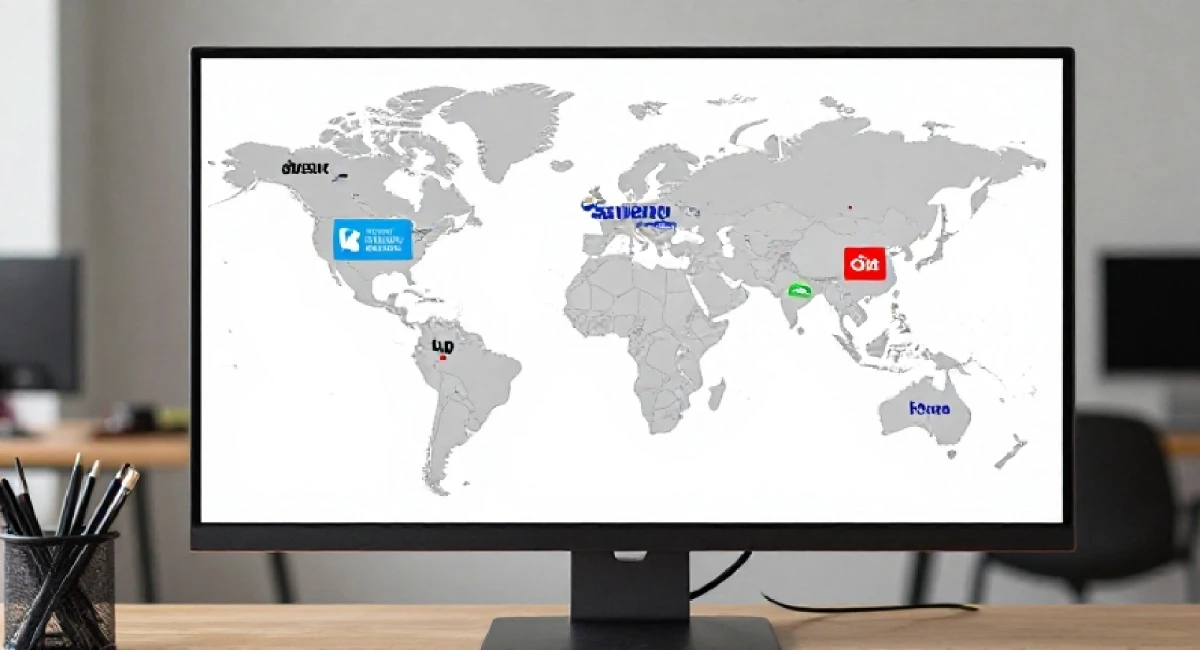
Public broadcasters often go completely unnoticed by viewers outside their home country, even when their streaming platforms are partially accessible internationally. Between them, the BBC, ITV, the CBC, and Australia’s SBS carry a substantial volume of original television that rivals anything produced by the major commercial platforms.
The catch is geo-restriction. Most public broadcaster platforms are designed for domestic audiences, which means viewers outside the relevant country will encounter access limitations.
BBC iPlayer and ITVX — World-Class TV Behind a Geo-Wall
BBC iPlayer and ITVX, between the,m hold the most significant library of British television available online. iPlayer carries BBC originals going back several decades alongside current series, while ITVX holds ITV’s catalogue,ue including older Downton Abbey seasons, Vera, and a growing number of ITVX-exclusive productions.
Both platforms are free to use within the UK. Viewers outside the UK cannot access them through a standard connection. Some viewers use virtual private network tools to access geo-locked content, but doing so may breach each platform’s terms of service, and that choice sits with the individual viewer.
CBC Gem and SBS On Demand — Regional Gems for a Global Audience
CBC Gem is Canada’s free national broadcaster streaming platform. It carries Canadian original drama, comedy, and documentary, alongside a selection of international co-productions. A premium tier removes ads and adds additional content for around $4 to $5 CAD per month.
SBS On Demand is Australia’s free streaming platform from the Special Broadcasting Service. Its international programming catalogue is genuinely impressive,ive given that it is publicly funded, and it includes a strong selection of European drama, Korean series, and Australian originals. Both platforms are free to access, ad-supported, and partially available to international visitors, though not all content clears geo-restriction outside their home countries.
Curiosity Stream — The Dedicated Documentary Platform
Curiosity Stream is built entirely around documentary and non-fiction content. It covers science, history, nature, technology, and society across thousands of titles, and its monthly cost sits at around $4 USD, making it one of the most affordable paid options in streaming.
The platform pairs particularly well with Nebula, an independent creator platform that carries long-form documentary content from video essayists and journalists with established audiences. A bundled subscription to both costs around $10 USD per year through certain promotional offers, which represents exceptional value for documentary-focused viewers.
How to Build Your Own Streaming Stack on a Budget
Knowing which platforms exist is useful. Knowing how to combine them without overspending is where the real value comes from. A well-chosen stack of two or three services can cover more of what you actually want to watch than four major subscriptions, at a fraction of the annual cost.
The Rotating Subscription Method
The rotating subscription method works like this: subscribe to one paid niche platform, watch through the content that interests you over the course of one or two months, then cancel before the next billing cycle and move to a different platform.
A practical example across a year might look like: two months on Acorn TV, two months on MHz Choice, two months on Sundance Now, and the remaining six months relying on free platforms. Total annual cost: approximately $40 to $50 USD. That is less than most single-month major platform bundles, and the variety across those three services is substantial.
Pairing Free and Paid Platforms Intelligently
The strongest combinations tend to pair one paid niche service with two free options that cover different use cases:
- Drama and mystery focus: Acorn TV (paid) + Kanopy (free, library card) + Tubi (free, ad-supported)
- Documentary and international focus: Curiosity Stream (paid) + Kanopy (free) + Pluto TV (free)
- British television focus: BritBox (paid) + PBS Passport (low donation) + Tubi (free)
Each of these combinations costs between $10 and $20 USD per month at most, and each covers different enough ground that you will rarely find yourself looking for something to watch.
What to Do When You Miss a Title That Left a Platform
Content moves between platforms regularly, and occasionally, a title you wanted to watch disappears before you get to it. The most practical response is to check whether it has moved to a free platform first, since content often surfaces on Tubi or Pluto TV after leaving a paid service.
If it has not moved, digital rental through services like Apple TV, Google Play, or Amazon’s rental store typically costs between $3 and $5 USD per title. Buying a digital copy outright runs $8 to $15 and means you have permanent access regardless of where the title migrates. For a series you genuinely love, that is usually worth the spend.
Conclusion
The idea that quality television only exists behind a Netflix or HBO Max login is a comfortable assumption, but it does not hold up once you start looking at what is actually available elsewhere.
Finding quality TV shows without big streaming services is not a compromise. It is a different approach to watching, one that tends to produce more satisfying results because you are choosing with more intention rather than scrolling past the same algorithm-picked suggestions every evening.
Pick one platform from this article this week and give it a month. Whether that is Acorn TV for its British crime drama, MHz Choice for European thrillers, or Kanopy for completely free arthouse viewing, there is something here for every kind of viewer.
And if you are also looking for the best of what the major services do offer, check out our guide on the most binge-worthy TV shows on Netflix right now for a complete picture of what is worth your time across both worlds.