
How Music Is Shaping Pop Culture in 2026 — And Why It Matters
Music is not just soundtracking 2026 — it is driving culture at a pace we have not seen before. The shift is not about which songs top the charts. It is about who gets to define culture, how fast it spreads, and what happens when a sound goes global overnight.
- Why Music Still Drives Pop Culture in 2026
- Future Music Trends Rewriting the Rules of Fame
- Music and Culture — How Artists Build Social Movements
- 2026 Pop Culture and the AI Music Question
- Music and Fashion — The 2026 Style Feedback Loop
- Global Sounds Shaping a Connected Pop Culture
- How Social Media Platforms Compete for Music’s Cultural Power
- Music Is the Map — Here Is How to Read It
Music has always led cultural change. But the speed at which it moves in 2026 — and the number of spaces it reaches at once — is new. Artists are not just releasing records. They are starting conversations, shaping fashion, and building fan communities that operate like movements.
This article breaks down the forces driving that shift — from streaming algorithms and AI-generated tracks to fan armies and Afrobeats crossing continents. If you want to understand where culture is heading, start with the music.
Why Music Still Drives Pop Culture in 2026
Music was supposed to lose ground. Short-form video, gaming, podcasts, and social content were all meant to eat into its dominance. Instead, music absorbed all of them.
Global recorded music revenues crossed $30 billion in 2024 according to the IFPI, and live music has continued to break records year after year. Concert touring revenue in 2024 alone surpassed previous highs, with Taylor Swift’s Eras Tour generating an estimated $1 billion in direct revenue. These are not just numbers — they confirm that music still holds the strongest emotional hold on people’s time.
What makes 2026 different is not that music is more popular. It is that music is now embedded in every other cultural channel at once. A song drops on a Friday, and by Saturday it is a TikTok trend, a fashion reference, a meme format, and a political talking point. No other medium moves that fast across that many spaces.
The Attention Economy and Music’s Competitive Edge
Every form of media is competing for the same shrinking slice of human attention. A film needs two hours. A TV series needs a season. A podcast needs thirty minutes before it gets interesting. Music needs about fifteen seconds.
That is music’s structural advantage in 2026. A hook catches you instantly. It works while you are doing something else. It can flip from background noise to a full emotional experience in a single chorus. Gaming has tried to replicate this with dynamic soundtracks. Podcasts have tried it with signature jingles. Neither comes close.
When culture moves fast, the medium that travels lightest wins. Music travels the lightest of all.
How Streaming Reshaped the Cultural Conversation
Radio used to decide what was mainstream. A handful of programmers in a handful of cities chose what millions of people heard, and those choices defined pop culture for decades. Streaming ended that arrangement.
Today, Spotify’s “daylist” updates throughout the day based on your listening habits, while Apple Music’s personal mixes build a portrait of your taste so specific it borders on uncanny. Culture no longer flows from the top down — it bubbles up from millions of individual listening sessions and gets amplified when the algorithm spots a pattern.
This means a song from Lagos or Seoul can reach a teenager in Manchester before any label or radio station has even acknowledged it exists. The cultural pipeline has been permanently rewired.
Future Music Trends Rewriting the Rules of Fame
The traditional path to fame in music was straightforward: sign a deal, record an album, go on tour, and do press. That path still exists, but it is no longer the main road. In 2026, fame is built on a different architecture — one where the audience is involved before the album even exists.
Charli XCX’s “brat” era is the clearest proof of this. The album arrived with a defined visual language, a cultural attitude, and a built-in internet argument about what “brat” actually meant — all of which generated more cultural momentum than any traditional promo cycle could have. The fans finished building the moment the artist started.
Sabrina Carpenter showed a parallel strategy: consistent, personality-driven single releases that kept her in the cultural conversation continuously rather than in one concentrated burst. The album cycle is not dead, but it has been restructured around constant presence rather than a single launch event.
Short-Form Audio and the 60-Second Cultural Moment
A song used to need to win over a listener in the first thirty seconds. Now it needs to do something remarkable in the first eight. TikTok, Instagram Reels, and YouTube Shorts have made the hook — not the album, not the artist’s catalog — the primary unit of value.
Many producers and songwriters now work backward from the hook. They identify the fifteen-second moment most likely to be clipped and shared, then build the rest of the track around it. The tension is real: songs written for virality often feel thin when you listen to them all the way through, while deeply crafted songs sometimes struggle to find their viral entry point.
This is not a problem with a clean solution. It is the creative constraint of the moment, and the artists navigating it most skillfully are the ones defining what music culture looks like right now.
Spatial Audio and Immersive Listening as a Cultural Signal
Dolby Atmos and spatial audio have moved from a technical feature to a genuine cultural signal. When you hear a spatially mixed track through a quality pair of headphones, the music does not just come at you — it surrounds you. Instruments have a location. Vocals breathe in three dimensions. The experience is fundamentally different.
This matters because it deepens how personally you connect with a song. Spatial audio makes listening feel more intimate at home and more communal at live events, where venues are increasingly built or retrofitted to support immersive sound. That physical quality — the sense that music is occupying shared space — is making music a stronger social and identity signal than it has been in years.
Music and Culture — How Artists Build Social Movements
Music has always reflected politics. In 2026, it is often ahead of politics. Artists are shaping public conversations around mental health, climate, identity, and inequality in ways that reach audiences long before traditional media or government policy catches up.
Olivia Rodrigo used her platform explicitly during the 2024 US election cycle, registering voters and speaking directly about reproductive rights — not as a side project but as an extension of her artistic identity. Beyoncé’s pivot to country music with “Cowboy Carter” was not just a genre experiment. It was a direct statement about Black artists’ historic contributions to a genre that had long erased them. The cultural debate that followed was itself a cultural event.
Music and culture in 2026 are inseparable because the artists most people are listening to have decided they will not keep those two things in separate boxes.
Genre Crossover as a Statement, Not a Strategy
Genre blending used to be a commercial tactic — a way to reach a wider audience by pulling from multiple fan bases. In 2026, it reads as something more deliberate. When a Black artist dominates country charts, or when a K-pop group releases an Afrobeats-influenced track, or when a Latin trap producer samples a classical Indian raga, those choices carry a message about belonging.
The Afropop-electronic crossover that artists like Tems and Rema have pushed into mainstream global streaming is one clear example. These are not genre experiments — they are cultural assertions. They tell audiences that the center of pop music is not where it used to be, and that the borders between traditions are open.
The artists who understand this are not just making interesting music. They are redrawing the map of who owns what in culture.
Fan Communities as Cultural Architects
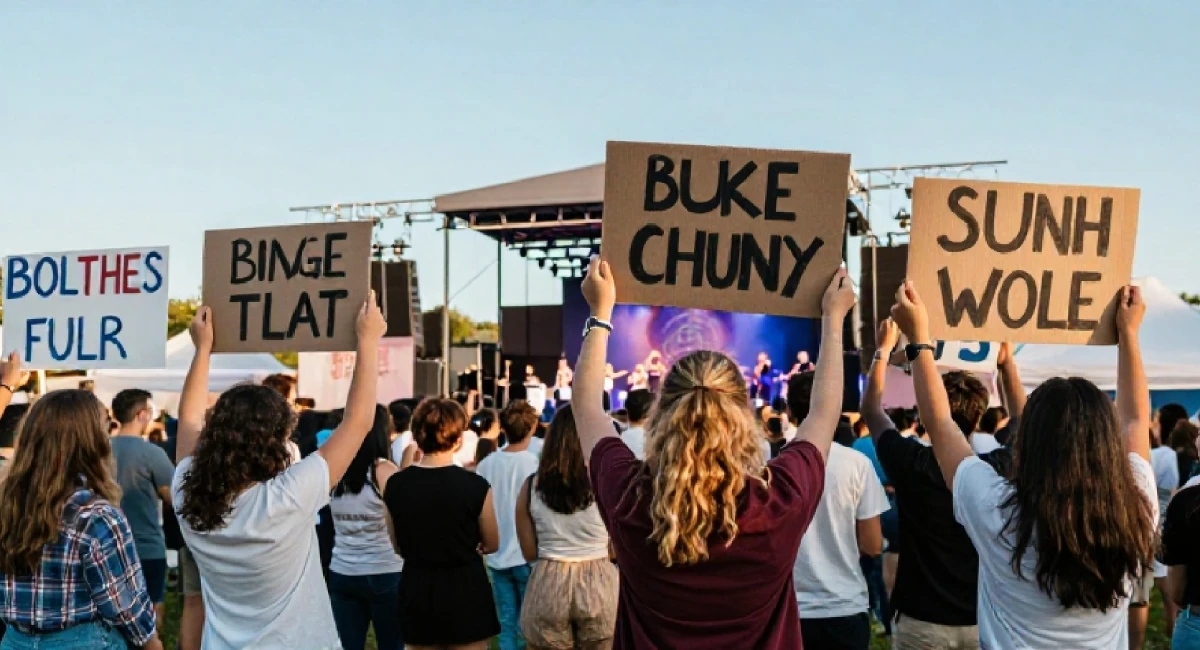
The Swifties who flooded social media during the Eras Tour were not passive fans watching something happen. They were organizers, designers, and political actors. They coordinated friendship bracelet trades that became a global social phenomenon. They tracked ticket sale irregularities and pushed them into mainstream news. They showed up for voter registration campaigns because their artist asked them to.
BTS ARMYs have run coordinated chart campaigns, purchased bulk album copies to influence sales data, and mobilized around social causes with the kind of discipline that would impress a political campaign. The Beyhive has driven streaming spikes, brand boycotts, and cultural conversations large enough to affect how brands and media outlets approach their coverage of Black artists.
Fandom in 2026 is not a hobby. It is a distributed creative institution with real cultural power.
2026 Pop Culture and the AI Music Question
Any discussion of 2026 pop culture has to confront AI-generated music. Tools like Suno and Udio have made it possible for anyone to generate a fully produced track in minutes from a text prompt, with no musical training required. The results are often convincing. Sometimes they are genuinely good.
The music industry’s response has been a mix of legal action, lobbying, and quiet experimentation. Major labels have filed lawsuits against AI music platforms for training on copyrighted recordings without permission. At the same time, some of those same labels are running internal AI projects, testing how the technology can reduce production costs. The contradiction is intentional — nobody wants to be left behind, but nobody wants to admit they are embracing the thing they are publicly fighting.
When AI Writes the Hit — Who Owns the Culture?
If an AI generates a song that goes viral, who gets the cultural credit? This is not hypothetical anymore. Several AI-assisted or AI-generated tracks have accumulated millions of streams, and the attribution question has followed them everywhere.
Historically, music carried cultural weight because it was a human act. A song was someone’s grief, someone’s joy, someone’s story. When an algorithm generates that song from a prompt, the authenticity question gets complicated. Audiences are asking it. Artists are demanding answers. Legislators in the US, UK, and EU are drafting frameworks to address AI authorship, but the legal process moves more slowly than the culture.
The most honest answer right now is that the culture has not decided yet. And that unresolved tension is itself shaping what music means in 2026.
Human Artists Responding to the AI Moment
The most interesting cultural counter-movement of 2026 is not against any political figure or social trend. It is against sonic perfection. A growing number of artists are deliberately leaving imperfections in their recordings — the slight breath before a lyric, the room noise behind an acoustic guitar, the cracked vocal note that reveals something true.
This is not accidental. It is a response to AI’s ability to produce technically flawless music on demand. When perfection becomes free and instant, human imperfection becomes rare and valuable. Live performance is surging in cultural importance for exactly this reason — it is the one format AI cannot replicate in real time, in a room, with a crowd.
The artists leaning hardest into personal storytelling and physical presence are not just performing. They are making a case for what music is for.
Music and Fashion — The 2026 Style Feedback Loop
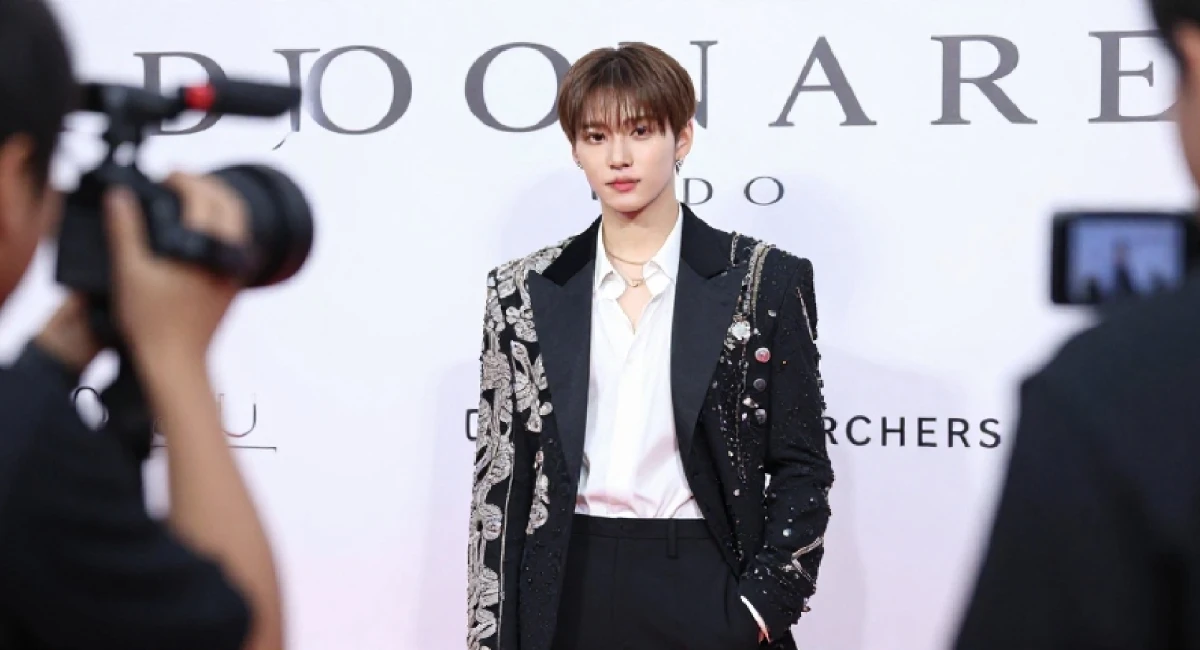
In 2026, the line between a music release and a fashion event has essentially disappeared. When Pharrell took the creative director role at Louis Vuitton Men’s, he did not leave music behind — he brought music’s cultural logic into fashion. His shows are concerts. His collections carry the aesthetic DNA of his discography. The industries are running on the same frequency.
K-pop has operated this way for years. Idol groups maintain brand partnerships with luxury houses as a core part of their artistic identity, not as an add-on. BLACKPINK members hold ambassador roles with Chanel, Saint Laurent, and Celine simultaneously. These are not endorsements in the traditional sense — they are co-authored cultural statements blurring the line between music and fashion.
Cardi B’s fashion moments are timed to musical eras with a precision that makes each one feel like a chapter opening rather than a red carpet appearance. The outfit tells you what the music is about before you hear a note.
Merch Culture and the Album-as-Brand Cycle
The traditional promotional tour has been largely replaced by the merch drop as the primary cultural event surrounding a music release. Limited-edition hoodies, vinyl variants, signed lithographs, and capsule collections tied to album releases sell out in minutes and immediately appear on resale platforms at multiples of their original price.
This is not an accident. Artists and labels have studied Supreme’s scarcity model and applied it to music. When something is hard to get, wanting it becomes a social statement. Owning the tour hoodie from a sold-out drop signals that you were there, that you care enough, that you are part of the inner circle of that artist’s world.
The merch drop has turned a music release into a full cultural moment with a visual identity, a shopping event, and a community ritual built around scarcity and belonging.
Visual Identity as a Musical Instrument
Taylor Swift’s “eras” concept demonstrated something important: a consistent, intentional visual language can carry as much meaning as the music itself. Each era has its own color palette, typography style, visual motif, and fashion logic. Fans can identify which era a photo belongs to without reading a caption. That level of visual coherence is not styling — it is communication.
Bad Bunny operates the same way. His visual approach across album cycles builds a distinct aesthetic world that his music inhabits. The album covers, music video cinematography, and live show design are all parts of a single artistic statement. The music is the audio layer of something designed to be experienced across every sense.
In 2026, artists who treat visual identity as an instrument in its own right are the ones whose cultural footprint extends farthest beyond the speakers.
Global Sounds Shaping a Connected Pop Culture
For most of recorded music history, pop culture meant Western pop culture. The United States and the United Kingdom set the agenda, and the rest of the world consumed it, adapted it, and occasionally fed something back. That arrangement is finished.
Music in 2026 is globally influential in both directions. Afrobeats is charting in countries where Nigeria is barely taught in schools. Amapiano is soundtracking fashion weeks in Paris. Latin trap is the default sound of sports montages worldwide. Arabic pop is building massive streaming numbers across Europe. K-pop has become one of the most powerful cultural export machines any country has ever produced.
Western pop has not disappeared, but it is no longer setting the table. It is sharing a seat with everyone else.
Afrobeats and Amapiano — From Lagos and Johannesburg to Everywhere
Ten years ago, Afrobeats was a regional genre with a passionate diaspora following. Today, Burna Boy sells out arenas in London, New York, and Toronto. Tems has won a Grammy and collaborated with Beyoncé and Drake. Rema’s “Calm Down” became one of the most-streamed songs in Spotify history, crossing language barriers that most pop songs never clear.
Amapiano followed a similar path from South Africa’s townships to global playlists, carried by diaspora communities who shared it online before any label spotted it. Streaming algorithms then picked up the signal and amplified it. Major label deals and international co-signs followed.
What is happening with these genres is not assimilation into Western pop. It is the world’s listening culture expanding to recognize what was always there.
K-pop’s Blueprint for Cultural Export
No music industry has been studied more intensely by outsiders than K-pop. The idol training system, which can involve years of dance, vocal, language, and media training before a public debut, produces artists who are technically polished and culturally fluent in ways that most Western pop stars are not asked to be.
The fan engagement model is equally deliberate. Weverse, Bubble, and Lysn give fans direct messaging access to their favorite artists in a structured way that makes followers feel personally connected. Album releases are packaged with photo cards, digital content, and fan club exclusives that turn buying music into a participation ritual.
Other music industries — from Latin pop to Afrobeats to Western pop — are actively borrowing elements of this system. The idol model, the fandom architecture, and the cross-cultural fluency K-pop has built are increasingly treated as a template rather than a novelty.
How Social Media Platforms Compete for Music’s Cultural Power
Every major social media platform in 2026 wants to be the place where music culture happens first. TikTok wants discovery. Spotify wants ownership. YouTube wants the full video experience. Instagram wants the artist’s identity. They are all competing for the same thing: the moment a song becomes a cultural fact rather than just an audio file.
This competition has produced some genuine drama. TikTok and Universal Music Group clashed publicly in early 2024 over licensing fees, briefly removing Universal’s entire catalog from the platform. The standoff was resolved, but it revealed how much leverage both sides believe they hold and how much the music-platform relationship is still being negotiated.
TikTok vs. Spotify — Two Different Definitions of a Hit
TikTok calls something a hit when a sound gets used in enough videos that it creates its own visual genre. Spotify calls something a hit when it accumulates enough streams over enough weeks to register as a sustained cultural preference. These are genuinely different measurements, and they often produce different results.
A song can be inescapable on TikTok for three weeks and then vanish completely, having never crossed over into Spotify’s long-tail listening culture. A different song can grow slowly on Spotify playlists for months, never trend on TikTok, and end up being one of the most culturally resonant tracks of the year. Ten years ago, these two definitions would have pointed to the same songs. In 2026, they are separate markets producing separate kinds of cultural meaning.
Live Streaming Concerts and the New Global Stage
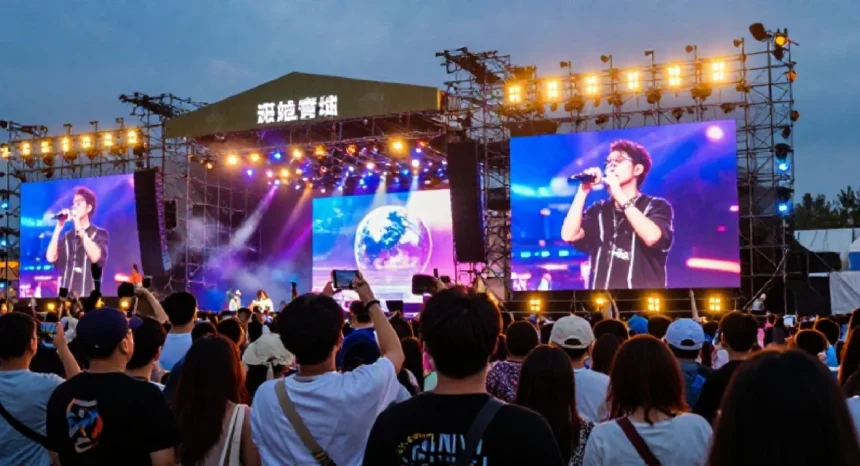
Geography used to limit how many people an artist could reach in a single performance. A sold-out arena holds around 20,000 people. A live-streamed concert on YouTube or a spatial platform holds everyone with an internet connection.
Artists like BTS pioneered this with their BANG BANG CON events during the pandemic, which drew millions of concurrent viewers from dozens of countries. That format did not disappear when in-person shows returned — it evolved into a parallel event economy. Now, major tours often include a live-stream component, and some artists have held live-stream-only events specifically designed for the format rather than adapted from a physical show.
This is changing touring economics in real time. A live stream can generate revenue from ticket sales, merch, and in-stream purchases without the logistical cost of physical production. More importantly, it is creating simultaneous global cultural moments — shared experiences that cross time zones and language barriers in a way that traditional touring never could.
Music Is the Map — Here Is How to Read It
Music has always told you where a culture is heading before anything else does. The sounds breaking right now, the arguments around AI authorship, the fan communities organizing political campaigns, the genre lines being deliberately crossed, the fashion drops tied to album cycles — these are not separate stories. They are all the same story told in different registers.
The forces driving music’s role in 2026 pop culture are more distributed, more global, and more contested than at any previous point in history. No single country owns the sound. No single platform owns the moment. No single industry owns the meaning.
That is exciting if you pay attention. The next cultural shift is already in someone’s playlist, bubbling up through an algorithm, being shared in a fan forum at 2 am. If you want to understand where the world is going, keep listening — and keep asking what the music is actually saying.
What artist or trend do you think is most defining music culture right now? Drop it in the comments.