


What Evidence Do I Need for Small Claims Court?
Most people preparing a small claims case spend their energy writing down what happened. That part matters, but it is the evidence for the small claims court that actually decides the outcome.
- What Counts as Evidence for Small Claims Court?
- Documentary Evidence — The Strongest Proof You Can Bring
- Contracts, Receipts, and Invoices
- Written Communications — Emails, Texts, and Letters
- Bank Statements and Payment Records
- Photographic and Video Evidence — Visual Proof That Speaks for Itself
- Witness Evidence — When Another Person Can Support Your Case
- Strong Evidence vs. Weak Evidence — A Practical Comparison
- How to Organize and Present Your Evidence Effectively
- Building an Evidence Bundle the Judge Can Follow
- Labeling and Referencing Exhibits During the Hearing
- Court Preparation — What to Do Before Hearing Day
- Reviewing and Testing Your Own Evidence
- Understanding What the Other Party Might Argue
- Checking Court-Specific Rules on Evidence Submission
- Evidence You Cannot Use — Common Mistakes That Hurt Your Case
- Conclusion
Judges do not rule based on who tells the most compelling story. They rule based on who can back their version of events with reliable, relevant proof. If your opponent has a signed contract and you have a memory, you are already at a disadvantage.
This article walks you through every type of evidence that works in small claims proceedings, shows you the difference between strong and weak proof with real examples, and explains how to organize everything so your case is easy for a judge to follow.
What Counts as Evidence for Small Claims Court?
Evidence is anything that helps prove your version of events is accurate. In small claims proceedings, that includes:
- Written documents such as contracts, invoices, and receipts
- Photographs and video recordings
- Text messages, emails, and letters
- Bank and payment records
- Physical objects relevant to the dispute
- Witness testimony or written witness statements
What courts care about most is not how much you bring, but how relevant and reliable each item is. A single clear contract beats a stack of loosely related papers every time.
The sections below cover each type in detail. By the end, you will know exactly what to gather, how to present it, and what to leave at home.
The Difference Between Evidence and Opinion
Judges want verifiable facts, not how something made you feel.
Saying “the contractor was completely unprofessional” tells a judge nothing they can act on. Showing a printed email chain where you raised a specific complaint on a specific date and received no response tells a clear and documented story.
Here is the difference in practice:
- Opinion: “They knew the product was faulty and just didn’t care.”
- Evidence: A screenshot of your message sent on March 4th asking about the defect, followed by the seller’s reply confirming they were “aware of some issues.”
The second version gives the judge something concrete to work with. The first is just noise.
Why Small Claims Courts Have a Lower Evidentiary Bar
Small claims courts exist specifically so ordinary people can resolve disputes without hiring a lawyer. Because of that, the rules around evidence are much more relaxed than in higher courts.
A judge in small claims will not throw out your photos because they were not formally authenticated. They will not dismiss a text message because it was not submitted through a specific legal process. They will look at everything you provide, weigh it against what the other side brings, and make a practical decision based on the full picture.
This works in your favor, as long as your proof is clear, organized, and directly related to the claim.
Documentary Evidence — The Strongest Proof You Can Bring
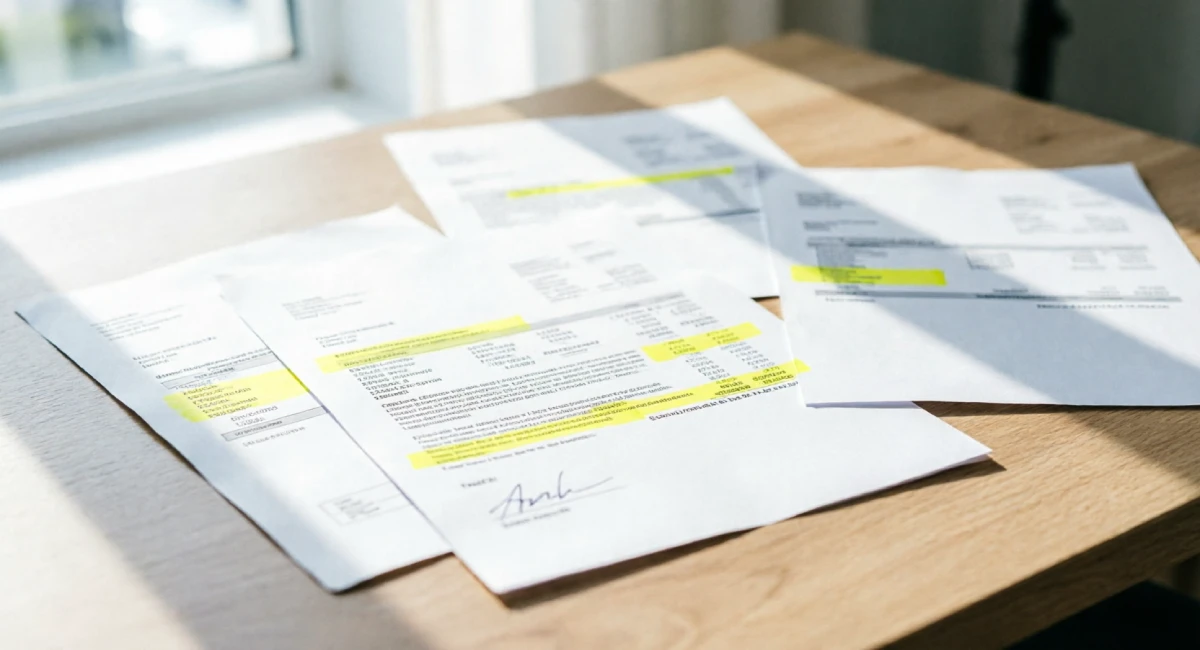
Written and printed documentation forms the foundation of most successful small claims cases. Paper trails are difficult to dispute, easy for a judge to review, and they establish facts without requiring anyone to take your word for it.
When building your documentation for claims, think chronologically. What was agreed, what happened, and what went wrong should each have at least one document to support it.
Contracts, Receipts, and Invoices
A signed contract is the clearest possible proof of what two parties agreed to. If the other side claims they never promised something that is written in the contract, the contract wins.
Receipts and invoices confirm that money moved. In a contractor dispute, for example, you might have:
- A signed quote showing the agreed scope of work and price
- An invoice is sent after completion
- A bank transfer record showing you paid in full
Together, those three documents tell the complete story. Each one on its own is useful. All three together make your case very difficult to argue against.
If you paid in cash and have no receipt, that is a gap worth noting. Where possible, follow up cash payments with a confirming message asking the other party to acknowledge receipt in writing.
Written Communications — Emails, Texts, and Letters
Email threads, SMS exchanges, and formal letters are some of the most useful evidence you can bring. They record what was said, when it was said, and who said it.
When printing email chains, include the full header showing the sender’s address, recipient, and date. For text messages, capture the screen in a way that shows the contact name or number alongside the message content and timestamp.
Arrange written communications in date order and number each page. A judge reading through 12 printed emails in chronological sequence can follow your story clearly. The same emails printed out of order in a disorganized pile make the same story confusing.
Bank Statements and Payment Records
Financial records are particularly valuable when the other party denies receiving payment, claims a refund was issued, or disputes the amount involved.
Print the relevant pages of your bank statement and use a highlighter or pen to mark the specific transaction. Add a handwritten note next to it, such as “Payment to ABC Contractors, 14 Feb,” so the judge does not have to hunt for it.
If a refund was promised but never arrived, a bank statement covering that period is straightforward proof. The absence of a credit entry does the work for you.
Photographic and Video Evidence — Visual Proof That Speaks for Itself
Photos and videos are some of the most persuasive examples of legal evidence you can present in a small claims hearing, particularly in disputes involving physical damage, property conditions, or defective products.
Visual evidence does not require interpretation. A photo of a cracked wall, a flooded room, or a product that arrived broken shows the judge exactly what you saw. Words describing the same thing will always be less convincing.
How to Take Photographs That Hold Up in Court
Not all photos carry the same weight. A blurry image taken weeks after the incident, with no timestamp visible, gives a judge almost nothing to work with. A clear, well-lit photo taken the same day, with the device’s automatic timestamp showing in the metadata or on the image itself, is a different matter entirely.
When photographing damage or defects:
- Photograph immediately after the incident, if at all possible
- Take wide shots to establish context, then close-up shots to show detail
- Shoot from multiple angles so nothing looks cherry-picked
- Keep the originals on your phone or device so metadata can be checked if questioned
If your phone’s camera adds a date and time stamp automatically, use that setting. If it does not, check your device’s photo metadata, which records the exact date and time the image was taken.
Video Footage and Surveillance Records
Video adds context that photos cannot always capture. A clip showing water actively leaking through a ceiling or a defective appliance failing to operate is compelling in a way that still images are not.
If relevant footage exists on a third-party system, such as a building’s CCTV cameras or a landlord’s doorbell camera, request it in writing as soon as possible. Many systems overwrite footage automatically every 7 to 30 days. Waiting even two weeks can mean the footage is gone.
Send a written request by email so you have a record of asking. If the footage is refused without good reason, that refusal itself can be noted during your hearing.
Witness Evidence — When Another Person Can Support Your Case
A witness who can independently confirm what happened adds significant weight to your case. Their account does not replace your documents, but it fills gaps, corroborates your version of events, and shows the judge that more than one person observed what you are claiming.
What Makes a Witness Credible
The most credible witness is someone who:
- Was physically present when the event occurred
- Has no financial interest in the outcome of the case
- Can describe specifically what they saw or heard, not just a general impression
A building manager who witnessed a handover, a neighbor who saw the damage the day it happened, or a colleague who was present during a disputed conversation all make strong witnesses.
A close friend who did not witness anything directly but “knows what happened” because you told them is not a witness in any useful sense. Judges are generally skeptical of testimony from people with close personal ties to the claimant, particularly when that person was not present at the relevant time.
Written Witness Statements vs. In-Person Testimony
Some courts allow witnesses to submit a written statement rather than attend in person. Others require the witness to appear so the other party can respond to their account.
Check the rules for your specific court before relying on a written statement. If written statements are accepted, format them clearly:
- Full name of the witness
- Their relationship to you and whether they have any financial interest in the outcome
- A clear, factual account of exactly what they personally saw or heard
- Date and signature
Keep the statement factual and specific. A written statement that reads like an opinion piece rather than an account of observed events will carry little weight with a judge.
Strong Evidence vs. Weak Evidence — A Practical Comparison
The difference between winning and losing a small claims case often comes down to the quality of your proof for the court case, not just the facts of the dispute. Two claimants can have equally valid claims. The one with better-documented evidence is more likely to walk away with a judgment.
Examples of Strong Evidence and Why It Works
1. A signed written contract. This removes ambiguity entirely. If the agreement is in writing and both parties signed it, there is very little room for the defendant to claim the terms were different.
2. A text message where the defendant admits fault “Sorry about the damage, I’ll sort it out” sent in writing is an admission. The judge does not have to take your word for what the other party said.
3. A dated photo of property damage taken the same day This proves the damage existed at a specific point in time and links it to the incident you are claiming about. The timestamp is key.
4. A bank statement showing no refund was issued. If a refund was promised verbally but never processed, a bank statement covering the relevant months is clean, objective proof.
5. An expert repair quote confirming the extent of damage. A written quote from a qualified tradesperson that details the repairs needed and their cost gives the judge a specific figure to work with, rather than your estimate.
6. A formal written complaint that went unanswered. Sending a complaint by email or recorded post, and receiving no reply, shows the judge you gave the other party a reasonable opportunity to resolve the matter before court.
Examples of Weak Evidence and How to Strengthen It
1. A verbal-only agreement with no witnesses. This is your word against theirs, and judges cannot rule in your favor based on that alone. If you still have time, follow up any verbal agreement with a confirming message: “As we discussed, you’ll complete the work by Friday for $800.” That message becomes evidence.
2. Photos taken weeks after an incident. Without a timestamp or supporting context, the other side can argue the damage existed before the incident or was caused by something else. Take photos immediately, and if you missed the window, gather supporting context, such as a repair quote or a neighbor’s statement confirming when the damage appeared.
3. Informal notes with no dates. A handwritten note saying “He said he’d pay me back” is nearly useless. If you took notes during or after a relevant conversation, date them and add details: who was present, what was said, and where it happened.
4. Screenshots that cut off the sender’s name or date. A message without visible sender information or a timestamp can be questioned. Recapture the screenshot to include the full conversation header, or export the chat history through the app’s settings for a more complete record.
How to Organize and Present Your Evidence Effectively
Gathering good evidence is only part of the job. If you walk into the hearing with a disorganized folder and spend the first five minutes searching for the right page, the judge’s confidence in your case drops before you have said a word.
The way you present your evidence signals how prepared and reliable you are. A claimant who can quickly and calmly refer to numbered exhibits tells a very different story than one shuffling through loose papers.
Building an Evidence Bundle the Judge Can Follow
Put together a physical bundle of all your printed evidence before the hearing. Here is a straightforward system:
- Create a cover sheet listing each document: its exhibit number, what it is, and the date
- Arrange documents in chronological order behind the cover sheet
- Number every page so you can refer to specific pages clearly
- Use dividers or tabs to separate different document types (e.g., contracts, communications, photos)
Bring at least three copies of the complete bundle: one for the judge, one for the other party (courts often require you to share evidence with them), and one for yourself to reference during the hearing.
Staple or clip each copy separately. Do not bind the full set together in a way that makes it hard to page through.
Labeling and Referencing Exhibits During the Hearing
When you refer to a document during the hearing, do it in a way that is easy to follow. For example:
“Exhibit 2 is the invoice dated March 10th. As you can see on page 3, the total agreed was $1,200.”
That is far more effective than saying “I have the invoice here somewhere” while flipping through pages. Practice referencing your exhibits before the hearing so you can do it naturally under pressure.
Judges move through cases quickly. The claimant who makes their evidence easy to follow saves time, builds credibility, and keeps the judge’s attention on the facts.
Court Preparation — What to Do Before Hearing Day

Strong evidence matters. So does being ready to use it. The days before your hearing are when you move from gathering proof to rehearsing how you will present it. This is an essential part of court preparation that many claimants skip.
Reviewing and Testing Your Own Evidence
Go through your evidence bundle as if you are the judge seeing it for the first time. Ask yourself: does this tell a complete, consistent story?
Then do a dry run. State your claim out loud, referencing only your documents. If you reach a point in the story where you cannot point to any supporting evidence, that is a gap. You still have time to fill it before the hearing, whether through an additional document, a witness, or a follow-up message to the other party requesting written confirmation of a disputed fact.
This process also helps you identify anything in your bundle that does not actually support your case. Removing irrelevant documents before the hearing keeps your bundle focused and saves the judge’s time.
Understanding What the Other Party Might Argue
Think about the strongest argument the defendant could make. What will they deny? What evidence might they bring that could contradict yours?
If you can anticipate their argument, you can prepare a response that is backed by a document rather than just a counter-claim. For example, if you expect them to argue that the damage was pre-existing, make sure your dated photographs and any prior inspection records are clearly included in your bundle.
Being prepared for their version of events does not mean assuming the worst. It means making sure you can respond calmly and factually to whatever they raise.
Checking Court-Specific Rules on Evidence Submission
This step is easy to miss and can be costly. Some courts require both parties to submit their evidence bundle to the court and to each other several days before the hearing. Others allow you to bring everything on the day.
If you miss a pre-submission deadline, a judge may refuse to accept certain documents during the hearing. Check the instructions on your case paperwork, or visit the court’s official website to confirm the rules that apply to your specific filing.
When in doubt, call the court clerk and ask directly. They cannot give legal advice, but they can confirm procedural requirements.
Evidence You Cannot Use — Common Mistakes That Hurt Your Case
Knowing what not to bring is just as important as knowing what to include. Some claimants arrive with folders full of material that a judge cannot consider, or that actively undermines their credibility. Keeping your bundle focused and relevant is part of presenting a strong case.
Hearsay and Second-Hand Accounts
Hearsay means telling the court what someone else said, rather than what you personally witnessed. In plain terms, you cannot give evidence on behalf of someone who is not there to speak for themselves.
A common example is a claimant saying, “My neighbor told me the landlord admitted the roof was leaking before I moved in.” That statement tells the judge nothing they can rely on. The neighbor is not present, cannot be questioned, and may have misunderstood, misremembered, or been told a different version.
If what the neighbor witnessed is important to your case, either bring the neighbor as a witness or obtain a written statement from them directly. Second-hand summaries carry no weight.
Irrelevant Documents and Character Attacks
Some claimants arrive with documents showing a pattern of bad behavior by the other party that has nothing to do with the specific dispute. Old complaints, social media posts, or records of unrelated incidents may feel relevant to you, but a judge is focused on one question: did the defendant breach the agreement or cause the harm you are claiming?
Evidence of their general character, past disputes with other people, or behavior in unrelated situations typically does not help your case. It can actually hurt it by suggesting you are not focused on the facts of the matter before the court.
Stick to documents and records that relate directly to your claim. Everything else stays home.
Conclusion
Building a strong small claims case is not about having the most paperwork. It is about having the right proof, organized clearly, and presented in a way a judge can follow without effort.
The most important things to take away are these: gather your evidence for small claims court as early as possible, prioritize documents and communications over verbal accounts, and test your bundle before the hearing to make sure it tells a complete story on its own.
Every section of this article connects back to one practical goal: giving yourself the best possible chance of walking into that courtroom prepared, credible, and ready.
If you are filing your claim without legal representation, the next step is understanding the full process from start to finish. Read the main guide on how to file a small claims case without a lawyer for everything you need to know before you set foot in court.