


You found the house. The price fits your budget. You run the numbers, and it all seems to work. Then, settlement day arrives, and suddenly you owe tens of thousands more than you planned.
- Why the Purchase Price Is Only the Beginning
- What Are Closing Costs and How Much Should You Budget?
- Legal Fees and Conveyancing Costs You Cannot Skip
- Inspection Costs That Protect You Before You Commit
- Property Taxes: The Annual Cost Most Buyers Underestimate
- Homeowner’s Insurance and Mortgage-Related Insurance Costs
- Moving Costs, Utility Setup, and Immediate Repairs
- HOA Fees and Community Living Costs
- A Realistic Budget Template for Hidden Home Buying Costs
- How to Prepare Financially So Hidden Costs Do Not Derail Your Purchase
- Conclusion
This is the reality for most first-time buyers. The hidden costs when buying a house catch people off guard every day. This article walks you through every major cost category you need to know about before you make an offer, so you can budget accurately.
You will have a clear picture of what to expect at closing, what you owe in the first weeks of ownership, and how much to set aside beyond your down payment.
Why the Purchase Price Is Only the Beginning
Here is how it plays out. A buyer sets a budget of $300,000, finds a home listed at exactly that price, and thinks they have planned well. By the time they get the keys and settle in, the total cost lands somewhere between $315,000 and $325,000.
That extra $15,000 to $25,000 did not come from one big surprise. It came from a dozen smaller costs that nobody grouped clearly. Lender fees, legal work, inspections, insurance deposits, and moving costs all stack up quietly in the background.
The purchase price is just the number on the listing. What you actually pay is that number plus everything this article is about to cover.
What Are Closing Costs and How Much Should You Budget?
Closing costs are the fees that come due on the day you officially take ownership of a property. They are separate from your down payment and from your mortgage. They are the cost of completing the transaction.
In most markets, closing costs run between 2% and 5% of the purchase price. On a $350,000 home, that is $7,000 to $17,500 that you need to have ready in cash on settlement day. Most are non-negotiable. Some can be reduced by shopping around or negotiating with the seller, but most are fixed fees tied to legal and administrative processes.
Lender Fees and Loan Origination Charges
When a lender processes your mortgage application, they charge for the work involved. These charges typically fall into three categories: the application fee, the underwriting fee, and the loan origination charge.
Together, these typically add up to $800 to $1,500 in the US. Some lenders bundle all three into a single origination fee shown as a percentage of the loan. Others break them out line by line on your loan estimate document, which you will receive within three business days of submitting an application. Either way, ask your lender to explain every fee before you agree to anything.
Title Search and Title Insurance
Before your lender releases funds, they require a title search. This is a review of public records to confirm that the seller actually owns the property outright and that no one else has a legal claim to it. It checks for unpaid liens, ownership disputes, boundary errors, and unresolved legal matters tied to the property.
Title insurance comes in two forms. Lender’s title insurance protects the bank. Owner’s title insurance protects you. The lender will require their policy; the owner’s policy is optional but strongly recommended. Combined, these policies typically cost $500 to $1,500, depending on the property value and your location.
Prepaid Interest, Escrow Deposits, and Reserve Accounts
Three items on your closing statement consistently surprise buyers.
First, prepaid daily interest. Mortgage payments are paid in arrears, meaning your first payment covers the previous month. If you close on the 15th of the month, you owe interest from the 15th to the end of that month upfront at closing.
Second, escrow deposits. Most lenders collect two to three months of property tax and homeowner’s insurance at closing to seed your escrow account. On a $350,000 home with $4,200 in annual property taxes, that is $700 to $1,050 deposited before you even make your first payment.
Third, the reserve cushion. Many lenders require an additional buffer in the escrow account beyond the deposit. Add all three together, and this line item alone can reach $2,000 to $4,000.
Legal Fees and Conveyancing Costs You Cannot Skip

No matter where you buy, you will need a legal professional to handle the transfer of ownership. In the US, this is typically a real estate attorney. In the UK and Australia, it is a licensed conveyancer or solicitor. The terminology differs; the requirement does not.
In the UK, legal fees generally run between £1,000 and £2,500. In the US, expect to pay between $1,500 and $3,500, depending on complexity and location. These fees cover the legal work that makes your ownership official and protected.
What a Real Estate Lawyer or Conveyancer Actually Does
The job is more involved than most buyers realise. Your legal representative reviews the purchase contract line by line, conducts or coordinates the title search, communicates with the seller’s legal team, handles the transfer of funds, and prepares all settlement documents.
They are also your first line of defence against contract terms that work against you. Choosing the cheapest conveyancer you can find might save you $300 upfront and cost you $15,000 later if a contract clause is missed or a title problem goes undetected.
Stamp Duty, Transfer Tax, and Government Registration Fees
Most governments charge a transfer tax when a property changes hands. What it is called varies by country:
- In the UK: Stamp Duty Land Tax (SDLT)
- In Canada: Land Transfer Tax (varies by province)
- In Australia: State-based stamp duty
- In the US: State and county transfer taxes
Rates typically fall between 1% and 5% of the purchase price, though this varies by location, property value, and buyer status. First-time buyers in many regions qualify for partial exemptions or concessions. In the UK, for example, first-time buyers pay no Stamp Duty on the first £425,000 of a property’s value under current rules.
Check what applies in your specific location before budgeting. This can be one of the largest single-line items you face.
Inspection Costs That Protect You Before You Commit
Some buyers skip inspections to keep costs down or to make their offer more attractive in a competitive market. This is one of the most financially risky decisions a first-time buyer can make.
A few hundred dollars spent on inspections can reveal defects that cost tens of thousands to fix. A documented inspection report also gives you negotiating power. If an inspector finds a problem, you can ask the seller to fix it, reduce the price, or provide a credit at closing.
General Home Inspection: What It Covers and What It Costs
A standard home inspection covers the major systems and structural components of the property:
- Roof condition and remaining life
- Foundation and structural integrity
- Plumbing systems and visible pipes
- Electrical panel and wiring
- Heating and cooling systems (HVAC)
- Windows, doors, and insulation
In the US, expect to pay $300 to $600. In Canada and Australia, $400 to $800 is typical. The inspector does not open walls or dig up foundations, but they flag visible defects and anything that warrants a closer look.
A real example: a buyer in Ohio waived the inspection to win a bidding war. Three months after moving in, they discovered the foundation had a major crack. Repairs cost $22,000. The inspection would have cost $450.
Specialist Inspections You May Need Beyond the Basics
Depending on the property’s age, location, and type, additional specialist inspections may be appropriate:
- Pest and termite inspection: Important in humid climates and older properties. Cost: $75 to $150.
- Mold testing: Warranted if you see water damage or the property has been vacant. Cost: $200 to $400.
- Radon testing: Recommended in high-radon regions of the US and Canada. Cost: $100 to $200.
- Sewer scope: Essential for older homes. A camera checks the sewer line for blockages or tree root damage. Cost: $100 to $300.
- Pool inspection: Required if the property has a pool. Cost: $100 to $200.
Not every property needs every test. A newer home in a dry climate with no basement likely does not need a radon or mold test. A 1960s home in a coastal area with mature trees almost certainly needs a pest and sewer inspection.
Property Taxes: The Annual Cost Most Buyers Underestimate
Property taxes are not just a future monthly obligation. For most buyers, they arrive as an immediate cost at closing, and the ongoing annual bill has a direct effect on how much house you can actually afford.
Many transactions require the buyer to reimburse the seller for prepaid property taxes. Here is how it works: if the seller paid the full year’s taxes upfront and you close on July 1st, you owe them the portion covering July through December. On a home with $6,000 in annual property taxes, that is $3,000 due at the closing table.
How Property Tax Rates Vary by Location
Property tax rates vary widely across markets. Some examples:
- New Jersey and Illinois (US): effective rates often exceed 2% of assessed value
- Texas (US): effective rates typically run 1.6% to 1.9%
- UK Council Tax: structured differently, based on property bands rather than assessed value
- Australia: varies by state and council
To estimate what you will owe, find the property’s assessed value on the county or council website, then apply the local tax rate. A $300,000 home in a 1.5% tax rate area costs $4,500 per year in property taxes, or $375 per month. Always request the most recent tax bill directly from the seller before making an offer.
What Happens When Property Taxes Are Escrowed
In the US, most lenders include property taxes in your monthly mortgage payment through an escrow arrangement. Each month, a portion of your payment is held in a separate account. When the tax bill arrives, the lender pays it directly.
This sounds straightforward, but it affects your upfront costs. At closing, the lender typically collects two to three months of property taxes upfront to build the account balance. If your annual bill is $4,800, that is $800 to $1,200 collected at closing before your regular monthly contributions begin.
Homeowner’s Insurance and Mortgage-Related Insurance Costs
Insurance is not optional when you have a mortgage. Lenders require proof of homeowner’s insurance before they release funds. And depending on your down payment size, they may also require mortgage insurance. These are two entirely different products that protect two entirely different parties.
What Homeowner’s Insurance Actually Costs and What It Covers
Homeowner’s insurance covers the structure of your home and your personal belongings against damage from fire, storm, theft, and certain other events. In the US, the average annual premium runs $1,200 to $2,000, though coastal properties and older homes can push that higher.
Standard policies exclude floods and earthquakes. If your property sits in a flood zone or earthquake-prone region, separate coverage is required. That additional policy can cost $500 to $2,500 per year on top of your base premium.
Lenders typically require you to prepay the first full year of homeowner’s insurance at or before closing. This means it is a Day 1 cost, not a monthly cost you ease into.
Private Mortgage Insurance and Lenders Mortgage Insurance
When you put down less than 20% of the purchase price, the lender takes on more risk. To offset that, they require mortgage insurance. In the US, this is called Private Mortgage Insurance (PMI). In Australia, it is called Lenders Mortgage Insurance (LMI).
Costs typically run 0.5% to 1.5% of the loan amount per year. On a $280,000 loan, that is $1,400 to $4,200 annually, or $117 to $350 per month added to your payment.
A quick example: a buyer in Canada puts 10% down on a $400,000 home, leaving a $360,000 mortgage. At a 1% PMI rate, they pay $3,600 per year until their equity reaches 20%. Over five years without significant appreciation, that adds up to $18,000 in insurance premiums paid to protect the lender, not the buyer.
Moving Costs, Utility Setup, and Immediate Repairs
Most buyers think about moving costs as an afterthought. They figure out the mortgage, budget for closing, then realize three weeks before settlement that moving their entire household across town or across the country is not free.
These first-week costs arrive all at once.
Professional Moving Services vs. DIY: What It Really Costs
A full-service moving company, where they pack, load, transport, and unload your belongings, typically costs $1,500 to $5,000 for a local move. Long-distance moves can exceed $10,000 depending on volume.
A self-managed move using a rental truck runs $300 to $800 for a local move, not counting the value of your time, the cost of packing materials, or the risk of damage to furniture.
Moving during peak periods costs more. Summer months and the last three days of any month are the most expensive times to hire movers. If your settlement date gives you any flexibility, even shifting your move-in by a few days can reduce costs noticeably.
Get at least three quotes from licensed moving companies before you book. The range between the cheapest and most expensive quotes often surprises people.
Connecting Utilities, Changing Locks, and Initial Maintenance
On your first day in the house, you will start spending money before you have even unpacked.
Connecting utilities can involve activation fees for electricity, gas, internet, and water services. These vary by provider and location but can add $100 to $300 in setup charges across all services.
Changing the locks is a security standard that most new homeowners eventually do, but not everyone budgets for. A locksmith replacing exterior deadbolts and knobs on a typical home costs $150 to $400.
Add in basic cleaning supplies, a mailbox key replacement, minor caulking or patching from the inspection report, and a few small hardware fixes, and a reasonable buffer for the first week of ownership runs $500 to $1,500.
HOA Fees and Community Living Costs
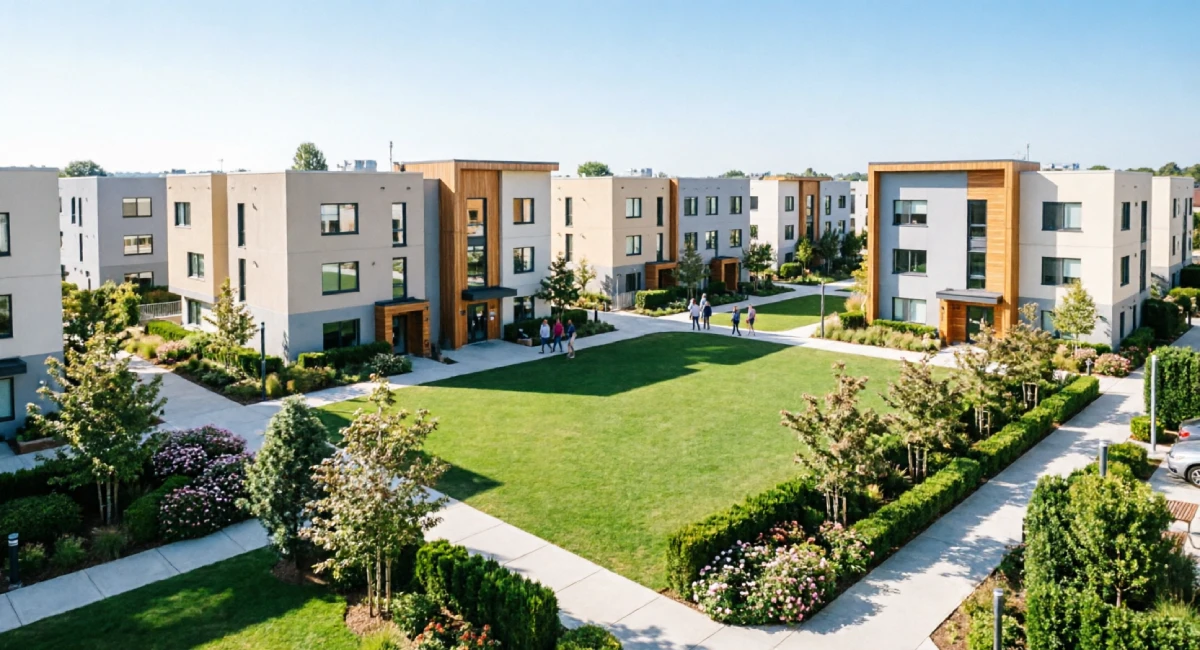
If the property you are buying sits within a planned community, condominium building, or townhome development, there is a strong chance it comes with Homeowners Association (HOA) fees. These fees are mandatory, ongoing, and can stretch your budget.
Many first-time buyers discover the HOA fee only after their offer is accepted.
How HOA Fees Are Calculated and What They Cover
HOA fees are set by the association’s board and reviewed annually. They typically range from $100 to $700 per month, though luxury buildings and amenity-rich communities can charge more.
These fees fund shared services and common area maintenance. What they cover varies by community, but generally includes:
- Landscaping and exterior maintenance
- Building insurance for common areas
- Amenities like pools, gyms, or concierge services
- Reserve contributions for future large-scale repairs
Before you make an offer, request the HOA’s financial statements and the most recent board meeting minutes. If the reserve fund is underfunded, a large special assessment could be coming. That is a risk worth knowing about in advance.
Special Assessments: The HOA Charge Nobody Warns You About
A special assessment is a one-time charge that HOA boards levy when the reserve fund cannot cover a major repair or capital improvement. Common triggers include roof replacement on a shared building, parking lot resurfacing, elevator overhaul, or structural repairs.
These assessments can reach several thousand dollars per unit and come with relatively little advance notice. Most HOA boards can pass an assessment with a board vote rather than a full homeowner vote, depending on the governing documents.
Before closing, ask your real estate agent or attorney to confirm in writing whether any special assessments are currently under discussion or pending approval. This is a non-negotiable due diligence step for any condo or townhome purchase.
A Realistic Budget Template for Hidden Home Buying Costs
Here is a consolidated view of every cost category covered in this article, applied to a $350,000 home purchase. Use this as a starting framework and adjust the figures based on your specific location and circumstances.
| Cost Category | Low Estimate | High Estimate |
|---|---|---|
| Closing costs (2–5%) | $7,000 | $17,500 |
| Legal/conveyancing fees | $1,000 | $3,500 |
| Stamp duty/transfer tax | Varies | Varies |
| Inspection costs | $400 | $1,500 |
| Property tax proration | $500 | $2,500 |
| Homeowner’s insurance (first year) | $1,200 | $2,000 |
| Mortgage insurance (if applicable) | $0 | $3,500 |
| Moving costs | $500 | $5,000 |
| Immediate setup and repairs | $500 | $1,500 |
| HOA fees / special assessments | $0 | $5,000+ |
Even at the conservative end, a $350,000 purchase realistically requires $11,100 to $42,000 beyond the down payment. That range is wide because every market, property type, and lender is different. The point is not to scare you. It is to make sure you budget for the full picture before you get to the closing table.
How to Prepare Financially So Hidden Costs Do Not Derail Your Purchase
Planning is the best defense against closing day surprises. Buyers who treat the down payment and closing costs as two separate savings goals rarely get caught short.
Building a Dedicated Closing Cost Reserve
Your down payment account and your closing cost reserve should be two separate buckets with two separate targets.
The down payment is the percentage of the purchase price your lender requires upfront, often 5% to 20%. Your closing cost reserve is a separate fund, ideally 3% to 6% of the purchase price, set aside specifically for the fees, taxes, insurance deposits, and legal costs covered throughout this article. Mixing the two leads to the most common first-time buyer mistake: arriving at settlement with enough for the down payment but not enough for everything else.
Questions to Ask Your Real Estate Agent and Lender Before Making an Offer
These questions are standard due diligence items that every buyer should confirm before signing anything:
- What are the estimated total closing costs for this property?
- Is there an active HOA, and what are the monthly fees?
- When were the property taxes last reassessed?
- Are there any pending special assessments in this building or community?
- Are there utility connection or activation fees in this area?
- What will my lender collect at closing for escrow reserves?
Write the answers down. Add the numbers to your budget. Adjust your offer or your timeline if the total picture does not work.
Conclusion
The hidden costs when buying a house are not a mystery once you know where to look. Most of these costs are predictable, and with the right preparation, none of them need to be a surprise.
Work through each category covered in this article. Use the budget template as your baseline. Ask your lender for a full loan estimate and review every line. Ask your agent to confirm whether the property has an HOA, pending assessments, or unusual transfer taxes that apply in that area.
First-time buyers who walk into this process prepared spend the same money as those who do not. They just do not have a panic attack at the closing table.
If you found this article useful, read the full guide: What Should First-Time Home Buyers Know Before Starting the Process? It covers everything that comes before the costs, including how to assess your readiness, choose a lender, and make a competitive offer.