
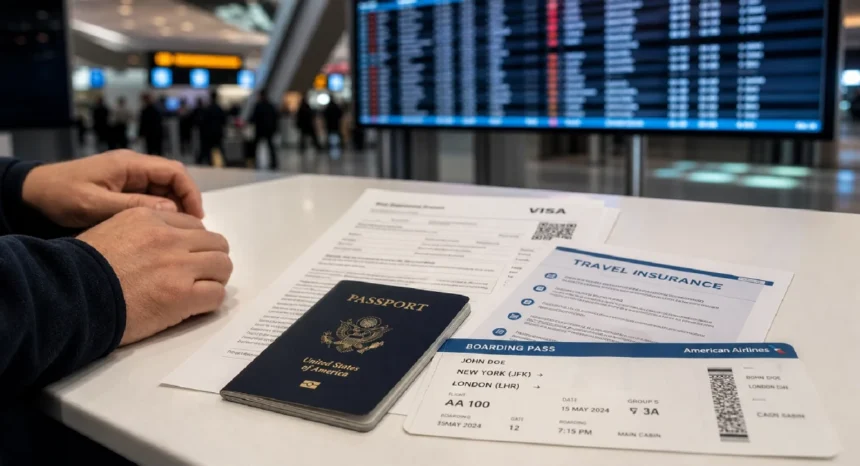
Every year, thousands of travelers get stopped at the gate, turned away at immigration, or hit with last-minute panic at the airport — not because they booked the wrong flight, but because a document was missing, expired, or simply not what the destination country required.
- Why Travel Document Requirements Changed in 2026
- Core Travel Documents Every International Traveler Needs
- Digital Travel Authorizations — The New Layer in 2026 Entry Requirements
- Health and Safety Documents Required for International Travel
- Entry Requirements for Specific Traveler Types
- Passport Visa Checklist — How to Prepare Before You Leave
- How to Store and Carry Travel Documents Safely
- Country-Specific Entry Requirements — How to Check Before You Book
- Getting Your Documents Right Is What Makes a Trip Actually Happen
If you are planning any international trip this year, understanding the exact documents needed for international travel in 2026 should be your first step before you pack a single bag. Requirements have shifted, new digital authorization systems are in play, and what worked two years ago may not be enough today.
This guide covers everything: the core documents every traveler needs, health paperwork, traveler-specific requirements, and a practical checklist to help you prepare from six months out to the night before departure.
Why Travel Document Requirements Changed in 2026
Travel requirements have shifted significantly since the world reopened. Several forces reshaped what travelers need to carry or arrange before crossing a border.
The biggest change has been the arrival of pre-travel digital authorization systems. The European Union’s ETIAS program, the UK’s Electronic Travel Authorisation, and similar schemes in other countries have added a new layer between “visa-free” and “just show up.” These are not visas, but they are mandatory for eligible nationals and must be approved before travel.
Countries have also tightened entry enforcement since the relaxed post-pandemic border period. Immigration officers in many destinations now more consistently ask for proof of onward travel, travel insurance, and sufficient funds compared to 2022 or 2023.
A checklist from even a few years ago may leave gaps that cause real problems at the border. This guide reflects what is current as of 2026.
Core Travel Documents Every International Traveler Needs
Before getting into specialized requirements, these are the foundational documents that apply to almost every international traveler. Without them, nothing else matters.
A Valid Passport — Validity Rules That Catch Travelers Off Guard
Your passport is the most important document you carry — but having one is not always enough. Most countries require your passport to remain valid for at least six months beyond your departure date from their country, not just your arrival date.
If your passport expires in four months and your trip lasts two weeks, you may be denied boarding or entry even though your passport has not technically expired. Airlines check this during check-in because they are held responsible for passengers who are refused entry.
Beyond expiry, some countries require a minimum number of blank pages for stamps or visa stickers. Morocco and South Africa, for example, require at least two to three blank pages. Check this before you travel, especially if your passport is well-used.
If your passport needs renewal, start the process at least three to four months before departure. Processing times have stretched in many countries, and expedited renewal adds cost you can avoid.
Visas — When You Need One and When You Do Not
A visa is official permission from a destination country to enter. Whether you need one depends on your passport nationality and where you are going.
There are four main types to understand:
- Visa-free entry: Your nationality qualifies for entry without any prior arrangement, up to a permitted number of days.
- Electronic visa (e-visa): Applied for online before travel, usually processed within a few days to two weeks.
- Visa on arrival: Granted at the border upon entry, sometimes requiring advance documentation or a fee.
- Embassy visa: Applied for in person or by post through the destination country’s consulate, often required for longer stays or complex purposes.
US and UK passport holders, for example, can enter the Schengen Zone without a visa, and many nationalities enjoy free movement across ASEAN countries. However, these rules are tied to your specific passport. Always verify by nationality, not by what you read in a general travel article.
Return or Onward Ticket Proof
Immigration officers in many countries want proof that you intend to leave. A printed or digital copy of your return flight booking or connecting itinerary satisfies this in most cases.
Countries that check for this include Thailand, the Philippines, Costa Rica, and others popular with long-term travelers. If you are traveling with an open-ended itinerary and no fixed return ticket, consider using a flight reservation service that provides a verifiable booking for 24 to 72 hours without full payment.
Proof of Sufficient Funds
Some border agents ask travelers to prove they can support themselves financially during their stay. This is particularly common in Southeast Asia and parts of Latin America.
A recent bank statement showing a reasonable balance, or a credit card with available funds, is usually accepted. Some countries publish minimum per-day thresholds on their official government websites. Keep a printed bank statement from the last 30 days in your document folder just in case.
Digital Travel Authorizations — The New Layer in 2026 Entry Requirements
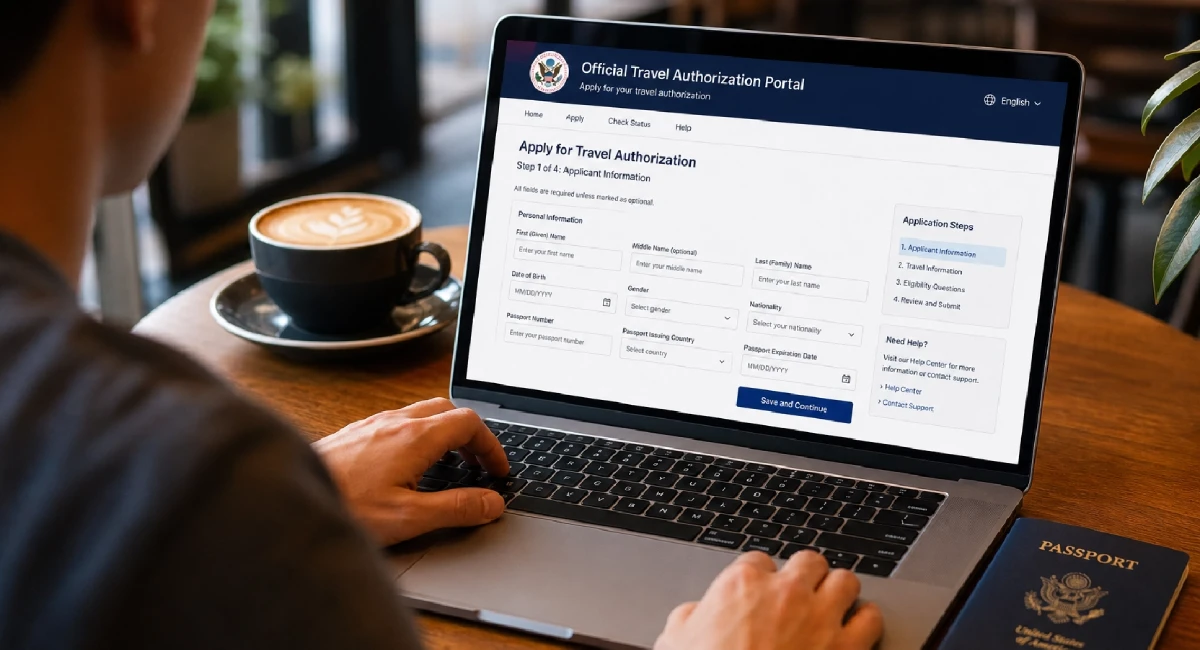
The rise of Electronic Travel Authorization systems is one of the biggest changes to international travel in recent years. These fall into their own category: they are not visas, they do not require an embassy appointment, but they are required for entry and must be approved in advance.
Missing one of these authorizations means denied boarding — your airline will not let you on the plane without it.
ETIAS — What European Travel Authorization Means for Non-EU Travelers
The EU’s European Travel Information and Authorization System (ETIAS) targets nationals from countries that currently enjoy visa-free access to the Schengen Area — including the United States, Canada, Australia, the United Kingdom, and dozens of others.
Once fully active, ETIAS will require travelers to apply online before visiting any of the 30 participating European countries. The application covers basic personal information, passport details, and a few security-related questions. The fee is expected to be around 7 euros. Approved authorizations should be valid for three years or until the passport expires, covering multiple trips.
As of 2026, check the official ETIAS website for the confirmed launch date and whether applications are open, as the rollout timeline has been adjusted more than once.
UK ETA — Who Needs It and How to Apply
The United Kingdom’s Electronic Travel Authorisation (ETA) applies to nationals from countries that do not need a visa to visit the UK. This includes citizens of the United States, Canada, Australia, and the Gulf Cooperation Council countries, among others.
The ETA is applied for through the UK’s official GOV. UKUK website or the UK ETA app. The fee is 10 GBP, and most applications are decided within three working days, though some take longer. It is valid for multiple trips over two years, or until your passport expires, whichever comes first.
Without a valid ETA, eligible nationals will be refused boarding for UK-bound flights. Apply well in advance of your travel date.
Other ETAs Worth Knowing — Canada, Australia, and Beyond
Canada requires an Electronic Travel Authorization (eTA) for visa-exempt foreign nationals flying into or transiting through Canadian airports. It costs CAD 7, is linked digitally to your passport, and is valid for up to five years. US citizens are exempt from this requirement.
Australia operates a similar system through the Australian ETA app, available to passport holders from certain countries including the US, UK, and Canada. Other nationalities may require an eVisitor or a full visa depending on their passport.
New Zealand’s Electronic Travel Authority (NZeTA) applies to most visa-waiver countries. Japan launched its own advance registration system for some nationalities in 2024. The pattern is consistent: check the specific entry requirements for each country on your itinerary, and do not assume that visa-free means no advance action required.
Health and Safety Documents Required for International Travel
Most COVID-era entry requirements have been phased out, but health documentation remains a hard requirement in several destinations. These are not formalities. Border agents check them, and missing the correct paperwork can result in denied entry or quarantine.
Vaccination Certificates — Which Destinations Still Ask for Them
The yellow fever vaccination certificate is the most widely enforced health document in international travel. Countries in sub-Saharan Africa and parts of South America require proof of yellow fever vaccination — either from all incoming travelers, or from those arriving from countries where yellow fever is present.
The document you need is the International Certificate of Vaccination or Prophylaxis (ICVP), commonly called the Yellow Card. It is issued by certified vaccination centers and must be stamped and signed by the administering health authority. Some countries will not accept a photo of it on your phone — carry the original.
Countries including Kenya, Ghana, Brazil, Peru, and Cameroon enforce this requirement strictly. Check the WHO’s International Travel and Health guidelines or your destination’s official health authority page for current rules.
Travel Health Insurance Documentation
Several countries require proof of travel health insurance as an entry condition — not just a recommendation.
For a Schengen visa application, insurance covering a minimum of 30,000 euros in emergency medical costs is required. Cuba requires all visitors to hold travel medical insurance and may request proof at the border. Some Caribbean island nations have introduced similar requirements.
Your insurance document should state the coverage amount, valid dates, countries covered, and whether it includes emergency evacuation and repatriation. Some insurers provide a summary card specifically for border presentation — ask your provider for one.
Prescription Medication Letters from a Doctor
If you travel with prescription medication, carry a signed letter from your prescribing doctor confirming your name, the medication name and dosage, and the medical reason for the prescription. Keep medications in their original labeled packaging where possible.
This matters especially for controlled substances such as certain painkillers, ADHD medications, or anxiety treatments. Countries including Japan, the United Arab Emirates, and Indonesia have strict laws on importing such medications, and a prescription alone may not be enough. Check the destination country’s customs rules well before travel and, if required, apply for a permit in advance.
Entry Requirements for Specific Traveler Types
The standard checklist applies to most travelers, but certain groups need additional paperwork. Skipping this step is one of the most common reasons families, business travelers, and those with medical needs face problems at the border.
Documents for Traveling with Children — Especially Across Borders Alone
When a child travels internationally with only one parent or a non-parent guardian, many countries require a notarized consent letter from the absent parent or legal guardian. Without it, immigration officers may deny the child entry or even boarding.
South Africa has some of the strictest rules in this area and requires an original birth certificate for the child in addition to the consent letter. Countries including Mexico, Canada, and several European nations also ask for supporting documentation in these situations.
If you are a single parent traveling with your child and the other parent is not present, carry proof of sole custody or a death certificate, if applicable. Carry more documentation than you think you need.
Dual Citizens — Which Passport to Use and Why It Matters
If you hold two passports, the general rule is to enter and exit each country on the passport of that country’s nationality. A US-French dual citizen should enter the US on their US passport and France on their French passport.
Complications arise in transit or when those rules conflict. Mixing passports mid-trip — entering a country on one and attempting to leave on the other — can cause serious problems with immigration records and airline systems.
Some countries do not officially recognize dual citizenship. Entering those countries on a foreign passport while holding their nationality can lead to legal complications. Research your specific situation before travel and consult your country’s foreign affairs office if you are unsure.
Business Travelers — Additional Documentation You May Need
Business travel often requires more than a standard tourist visa. Depending on the destination and the nature of the work, you may need a business visa, an invitation letter from the host company on official letterhead, and proof of your company affiliation.
If you are carrying product samples, trade show materials, or professional equipment such as cameras, drones, or specialist tools, some countries require a customs document called an ATA Carnet. This acts as a temporary import/export passport for goods and prevents you from paying customs duty on equipment you are bringing back home.
Check with the destination country’s embassy and your own country’s chamber of commerce well in advance.
Travelers with Disabilities or Medical Equipment
Traveling with medical devices requires some paperwork planning. If you use a CPAP machine, insulin pump, portable oxygen concentrator, or travel with a power wheelchair, carry a letter from your doctor confirming the medical need.
Airlines require advance notification and, in some cases, approval forms for certain devices. Some countries also flag unusual equipment at customs. A clear physician’s letter on clinic letterhead, along with the device’s instruction manual and manufacturer documentation, addresses most of these situations. For battery-powered medical devices, check the airline’s specific watt-hour limits as well.
Passport Visa Checklist — How to Prepare Before You Leave

Knowing what you need is only useful if you have a plan to get it in time. This passport visa checklist breaks the preparation into three stages so nothing slips through.
6 Months Before Departure — What to Check First
Start by checking your passport expiry date and counting forward. If your passport will have less than six months of validity beyond your return date, begin the renewal process immediately. Passport agencies are handling high volumes in many countries, and standard processing can take six to ten weeks.
At the same time, research the visa requirements for every country on your itinerary. Some visas — particularly for countries like China, India, Russia, and certain African nations — require applications weeks or months in advance, supporting documents, and in some cases a consular appointment.
If your trip requires vaccinations like yellow fever, hepatitis A, or typhoid, book an appointment with a travel health clinic now. Some vaccines require multiple doses over several weeks to be effective.
4 to 6 Weeks Before Departure — Applications and Confirmations
With your passport in hand and visa timeline confirmed, this is the window to apply for ETAs (ETIAS, UK ETA, Canada eTA, Australia ETA), book and confirm your travel health insurance, and secure your onward or return flight booking if you have not already.
Print or save digital copies of every document: visa approval, insurance certificate, flight itinerary, hotel confirmation, and vaccination certificate. Store digital copies in a cloud folder you can access offline, and email copies to yourself and one trusted contact.
48 Hours Before Departure — Final Document Review
Run through this list the day before or morning of departure:
- Passport (check it is actually in your bag, not a shelf at home)
- Visa or ETA approval printout or digital copy
- Travel insurance certificate
- Return or onward ticket confirmation
- Vaccination certificate if required
- Prescription medication letter if applicable
- Parental consent letter if traveling with children
- Bank statement or proof of funds if relevant to your destination
Keep originals and copies in separate parts of your luggage. Never put all documents in a single bag that goes into the hold.
How to Store and Carry Travel Documents Safely
Getting your documents in order is half the work. Keeping them safe and accessible throughout your trip is the other half.
Digital Backup Methods That Actually Work
Scan or photograph every document before you leave: passport bio page, visa, insurance certificate, vaccination card, and any authorization approvals. Upload these to a secure cloud service like Google Drive or IDrive that you can access from any device, even if your phone is lost.
Email a complete copy of your document folder to yourself and to a family member or trusted friend. If your phone is stolen, you can access everything from any browser.
One important note: some countries, particularly in Eastern Europe and parts of Asia, do not accept digital passport copies at official checkpoints. A physical photocopy of your passport bio page, kept separately from your original, is still the most universally accepted backup.
Government travel apps like the US State Department’s Smart Traveler Enrollment Program (STEP) or equivalent services in other countries can also store basic travel information and alert you to emergency situations abroad.
What to Do If Your Passport or Visa Is Lost Abroad
Stay calm and follow these steps:
- Report the loss to the local police and get a written police report. This is required by most embassies before they process emergency documents.
- Contact your country’s nearest embassy or consulate as soon as possible. They can issue emergency travel documents or an emergency passport to get you home.
- Notify your travel insurer. Many travel insurance policies cover the cost of emergency passport replacement and associated hotel stays.
- If your visa was lost along with your passport, the embassy will guide you on whether it can be re-issued or whether a new one needs to be arranged with the destination country’s authorities.
Having digital copies of your documents makes this process significantly faster.
Keeping Documents Secure During Transit
Carry your passport, visa, and primary insurance documents in a flat travel wallet that sits close to your body — a neck pouch or a slim inner-pocket wallet works well. RFID-blocking wallets are worth considering, particularly in crowded transit hubs.
Store your original documents in the hotel safe whenever you are not actively traveling. Carry a photocopy of your passport for day-to-day use in destinations where ID may be requested. Never leave all documents in a single bag, especially not in luggage stored in an overhead bin or left unattended.
Country-Specific Entry Requirements — How to Check Before You Book
This guide gives you a solid foundation, but no single article can capture every entry requirement for every country and every passport nationality. The only way to be certain is to check official sources for your specific situation.
Official Sources to Trust for Entry Requirement Verification
Start with your own government’s foreign affairs portal. These are updated regularly and include visa requirements, safety advisories, and health notices:
- United States: travel.state.gov (US State Department)
- United Kingdom: gov.uk/foreign-travel-advice (FCDO)
- Canada: travel.gc.ca (Global Affairs Canada)
- Australia: smartraveller.gov.au (DFAT)
For a cross-referenced check of visa requirements between any two countries, the IATA Travel Centre is one of the most comprehensive tools available and is used by airlines to verify passenger eligibility.
Always check the official embassy website of the destination country in your country of residence for the most authoritative visa and entry information. Travel blogs and online forums can be useful for context, but they are frequently out of date and should never be your primary source for entry requirement decisions.
How Far in Advance to Check Entry Requirements
Entry requirements can change quickly. A diplomatic dispute, a public health event, or a change in reciprocity policy can alter requirements within days. A safe schedule looks like this:
- At the time of booking: verify visa requirements, application timelines, and any health document needs
- Eight weeks before departure: confirm all requirements are still current and begin any applications not yet submitted
- Seventy-two hours before departure: do a final check of official sources for any last-minute advisories or requirement changes.
This three-point check takes minutes and eliminates significant risk.
Using Airline and Booking Platform Checks as a Starting Point
Tools like Sherpa, VisaHQ, and IATA’s Timatic system (which powers many airline check-in systems) offer useful overviews of entry requirements by passport and destination. These are good starting points for a quick scan during the planning phase.
Treat them as a first look, not a final answer. Always cross-check with official government and embassy sources before submitting any application or making a booking decision.
Getting Your Documents Right Is What Makes a Trip Actually Happen
International travel documents in 2026 cover more ground than they did a few years ago. A valid passport is still the foundation, but layered on top are visas, digital travel authorizations, health certificates, traveler-specific paperwork, and destination-specific requirements that vary by nationality.
None of this is complicated once you know what to look for. Work through the checklist sections in this guide, start your checks and applications early, and use official government sources to verify the specifics for your passport and destination.
Getting this right before you leave means you spend zero time worrying about it once you are traveling.
If you are building this trip from scratch without a travel agent, the full process — from picking a destination to booking flights, accommodation, and planning your itinerary — is covered in the parent guide: How Do You Plan a Trip From Scratch Without Using a Travel Agent? Start there if you are at the beginning of your planning.