

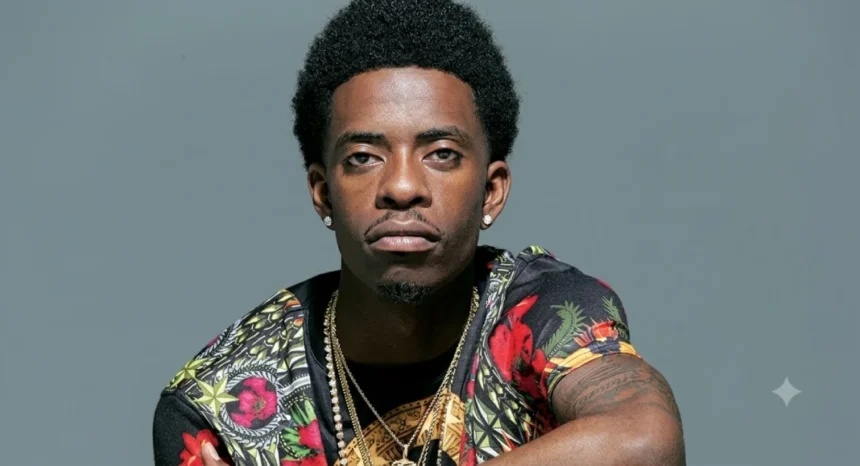
Rich Homie Quan, born Dequantes Devontay Lamar, went from Atlanta street corners to the Billboard Hot 100 in less than two years. By the time of his passing in 2024, he had built an estimated net worth of $3.5 million through music sales, touring, features, and one of the most successful group projects of the trap era.
That number tells a specific story about how artists in that era turned viral moments into lasting income — through mixtapes, guest verses, live shows, and a group deal that outperformed almost anyone’s expectations. This article walks through exactly where the money came from, which songs earned the most, and what his career shows about the business side of rap.
What Was Rich Homie Quan’s Net Worth?
At the time of his passing, Rich Homie Quan’s net worth was estimated at $3.5 million. That figure reflects more than a decade of music releases, live performances, collaborative projects, and streaming royalties.
For context, that number reflects the reality of an artist who dominated Atlanta’s streets and clubs between 2013 and 2015, but whose commercial peak was relatively short. Unlike rappers who build long-term label deals or branch into other businesses, Quan’s income came almost entirely from music — songs, shows, and features.
How His Earnings Compared to His Influence
Here’s what makes his net worth worth studying: his cultural reach went far beyond his financial peak. In 2013, you could walk into almost any car, club, or house party in Atlanta and hear his music — and it wasn’t always the same song. Tracks like “Type of Way,” “Differences,” “Pass Around,” and “Walk Thru” were everywhere. But the economics of the mixtape era meant many of those free releases didn’t generate direct income the way a studio album would.
That gap between influence and income is one of the defining threads of his career.
How Did Rich Homie Quan Make His Money?
His income came from five main sources. Looking at each one gives a clearer picture of how rappers actually earn — and why some artists with huge audiences don’t end up with huge bank accounts to match.
1. Music Sales and Streaming
Quan’s biggest songs earned money through digital sales and, later, streaming. His breakthrough single “Type of Way” reached No. 50 on the Billboard Hot 100, which translated into real revenue from downloads, radio royalties, and eventual streaming payouts.
| Song | Key Achievement | Revenue Impact |
|---|---|---|
| “Type of Way” | No. 50 on Billboard Hot 100 | Breakout hit; strong download sales |
| “Flex (Ooh, Ooh, Ooh)” | Multi-platinum certification | His highest-certified solo single |
| “Lifestyle” (with Young Thug) | No. 16 on Billboard Hot 100 | Major crossover success |
| “$ave Dat Money” (with Lil Dicky) | No. 71 on Billboard Hot 100 | Feature credit on a viral track |
His later compilation Legacy of Hits — released on vinyl and CD with 15 career-defining tracks — added further catalog revenue. Catalog income rarely makes headlines, but for artists with a handful of songs still in rotation, it’s a dependable stream.
2. Touring and Live Performances
Live shows were a major revenue source, especially in 2013 and 2014, when Quan was one of the hottest names coming out of Atlanta. Festival bookings, club appearances, and concert dates all added directly to his annual income.
His music — energetic, melodic, built for crowds — made him a natural draw live. Songs like “Type of Way” and “Lifestyle” weren’t just radio hits; they were songs people wanted to hear in a room full of other fans shouting the hook back.
3. Feature Appearances
One of the smartest moves in Quan’s career was becoming a go-to feature artist. His voice had a distinctive quality — equal parts passion and pain — that improved almost any track he appeared on. Labels and artists took notice.
Notable feature credits include:
- YG’s “My Nigga” — Quan’s hook helped turn this into one of the biggest club records of its era
- Yo Gotti’s “I Know” — another collaboration where his voice carried the chorus to mainstream success
- Lil Dicky’s “$ave Dat Money” — a viral comedy-rap hit that debuted at No. 71 on the Hot 100
Each feature brought an upfront fee plus ongoing royalties from sales and streams. For an in-demand artist, features alone could add up to six figures a year.
4. Rich Gang and Group Projects
In 2014, Quan joined Rich Gang alongside Young Thug and Birdman, forming what many considered the most exciting new trio in hip-hop at the time. Their single “Lifestyle” went platinum, peaking at No. 16 on the Hot 100.
The Rich Gang: The Tour Pt 1 mixtape drew widespread critical praise, with Complex calling it one of the best debut mixtapes ever released. For Quan, the Rich Gang project meant higher visibility, bigger show guarantees, and a share of a project that was outperforming either artist’s solo work at the time.
Birdman was, in effect, investing in Quan and Thug as the future of Cash Money — an investment that came with advances, marketing budgets, and performance opportunities neither artist would have had on their own.
5. Royalties and Ongoing Catalog Income
Even after his commercial peak, Quan kept earning from his back catalog. Every time “Type of Way” played on a hip-hop playlist, every time “Flex” showed up in a TikTok video, every time a DJ spun “Lifestyle” in a club, royalties kept accumulating.
Performance rights organizations track these plays and distribute payments. For an artist with multiple platinum and gold records, that can add up to tens of thousands of dollars a year, even without new releases.
What Were Rich Homie Quan’s Biggest Hits?
Not all hits earn the same way. Some generate a big upfront payout and fade quickly, while others earn slowly over years through constant replay.
“Type of Way” — The Song That Started Everything
Released in 2013, “Type of Way” was the record that changed Quan’s life. It spread from Atlanta outward, eventually reaching a national audience once Drake publicly named it a song of the summer. Drake reportedly considered remixing it around the same time he remixed “Versace,” a move that could have pushed it into an entirely different commercial tier.
The song appeared on Still Goin In (Reloaded) and showed that Quan had a genuine gift for melody — hooks that stuck whether listeners wanted them to or not.
“Lifestyle” — The Rich Gang Anthem
“Lifestyle” grew bigger than any single artist on the track. Young Thug’s murmured opening and Quan’s hook combined into something that felt hard to explain but impossible not to sing along to. The song hit No. 16 on the Hot 100 and reached No. 1 on the Mainstream R&B/Hip-Hop Songs chart — the first chart-topper on that list for both Quan and Young Thug.
“Flex (Ooh, Ooh, Ooh)” — The Multi-Platinum Solo Hit
While “Type of Way” introduced him and “Lifestyle” proved he could carry a group project, “Flex (Ooh, Ooh, Ooh)” showed Quan could take a solo record all the way to platinum. It became one of his highest-earning singles and remains the song most associated with his solo career.
The Mixtape Era: Where the Streets Connected
Before studio albums, Quan built his following through a run of well-received mixtapes. I Promise I Will Never Stop Going In proved he wasn’t a one-hit wonder. Tracks like “They Don’t Know,” “Cash Money,” “WWYD,” “Get TF Out My Face,” “Man of the Year,” “Walk Thru,” and “Blah Blah Blah” all got heavy play across Atlanta.
These mixtapes were free downloads, so they didn’t generate direct sales revenue. But they built something more valuable: a fan base that would later buy concert tickets, stream new releases, and show up whenever Quan dropped an official project.
How Did Atlanta Shape His Career and Earnings?
Rich Homie Quan’s net worth can’t be separated from the city that shaped him. Atlanta’s hip-hop scene — built on mixtape culture, club dominance, and producer-driven innovation — was the ideal setting for someone with his particular talents.
The Atlanta Advantage
Atlanta in 2013 was the undisputed capital of hip-hop. The city’s infrastructure, from local radio stations breaking new records to producers shaping the sound of a generation, gave emerging artists a direct line to national attention. Quan didn’t need to move to New York or Los Angeles to get noticed — he built his following from the ground up, in the city where trap music was born.
His sound reflected Atlanta’s character: southern, melodic, with an energetic bounce built for a car with the windows down. That authenticity was both his artistic identity and his commercial edge — labels and fans trusted it.
The Future Comparisons
One early challenge was the constant comparison to fellow Atlanta star Future. Before Desiigner faced similar criticism for his own breakout, it was Quan being accused of sounding like Future on “Type of Way.” The two had vocal similarities, but Quan’s fans — and the market — recognized that the comparison didn’t take away from the quality of his hits. What mattered commercially was that “Type of Way” was undeniably a hit. It didn’t matter whose voice it echoed if the song was everywhere. And it was.
How Did His Net Worth Compare to Peers?
| Artist | Estimated Net Worth | Peak Era | Primary Revenue Source |
|---|---|---|---|
| Rich Homie Quan | $3.5 million | 2013–2015 | Music sales, features, touring |
| Young Thug | ~$8 million (at a similar career stage) | 2014–2018 | Music, touring, features |
| Future | ~$40 million (peak) | 2012–present | Albums, touring, label deals |
| Lil Dicky | ~$8 million | 2015–present | Music, TV, comedy tours |
Quan’s net worth reflects an artist whose commercial peak was shorter than some of his contemporaries. Young Thug, his Rich Gang partner, went on to sign larger deals and stay mainstream-relevant for longer. Future built a lasting career through consistent album releases and touring.
The difference often comes down to timing and consistency. Quan’s most productive and profitable years were concentrated in a narrow window — roughly 2013 to 2015 — while the business of hip-hop tends to reward artists who can sustain output over a decade or more.
Key Takeaways: What His Career Teaches About Music Money
1. Mixtapes build fans, but albums build wealth.
Quan’s free mixtapes created massive demand, but the money came from official releases, features, and touring. The gap between cultural reach and financial return is real for mixtape-era artists.
2. Features are a business strategy, not just a creative choice.
Quan’s hooks on songs by YG, Yo Gotti, and Lil Dicky weren’t favors — they were paid collaborations that grew his audience and his income at the same time.
3. Group projects can multiply earning power.
Rich Gang’s “Lifestyle” outperformed either Quan or Young Thug’s solo work at the time. The right collaboration at the right moment can lift everyone’s income.
4. Catalog value is long-term income.
Songs like “Type of Way” and “Flex” kept earning royalties years after release. For an artist’s long-term wealth, the catalog is the real asset.
5. The window of peak earning is often shorter than expected.
Quan’s most commercially productive period lasted roughly two to three years. That’s not unusual in hip-hop, which is exactly why financial discipline during those years matters so much.
Frequently Asked Questions
What was Rich Homie Quan’s net worth?
Rich Homie Quan had an estimated net worth of $3.5 million at the time of his passing in 2024.
How did Rich Homie Quan make most of his money?
His income came primarily from music sales and streaming, touring and live performances, feature appearances on other artists’ tracks, and his work with the group Rich Gang.
What was Rich Homie Quan’s biggest hit?
“Type of Way” was his breakout hit, reaching No. 50 on the Billboard Hot 100. “Lifestyle” with Rich Gang was his highest-charting song, peaking at No. 16. “Flex (Ooh, Ooh, Ooh)” became his most commercially successful solo single, earning multi-platinum certification.
Was Rich Homie Quan part of Rich Gang?
Yes. He joined Rich Gang alongside Young Thug and Birdman in 2014, and their single “Lifestyle” became a platinum hit.
What songs made Rich Homie Quan famous?
His best-known songs include “Type of Way,” “Flex (Ooh, Ooh, Ooh),” “Lifestyle” (with Young Thug), “Differences,” “Walk Thru,” and “Blah Blah Blah.”
Final Thoughts
Rich Homie Quan’s $3.5 million net worth tells the story of an artist who captured a moment in Atlanta hip-hop and turned it into a career — even if that career’s peak was briefer than his talent suggested it should have been. He arrived in 2013 with a voice nobody could ignore, ran alongside some of the biggest names in rap, and left behind a catalog that still earns money today.
In hip-hop, the songs are the real currency. The right hook at the right time can generate income for decades. And for Rich Homie Quan, those hooks — raw, melodic, and hard to forget — were worth every dollar.