

Why Do People Still Love 90s Music? The Real Reasons It Still Resonates
You press play on a song you haven’t heard in twenty years. Within seconds, something shifts. You’re back in a specific room, wearing a specific outfit, feeling something you thought you’d long forgotten. That’s the quiet power of 90s music nostalgia, and it happens to people every day.
- What Made 90s Music Different From Every Other Decade
- The Science Behind 90s Music Nostalgia
- Why 90s Hits Keep Appearing in Films, TV, and Advertising
- The Best 90s Songs Still Dominating Playlists Today
- How 90s Music Connects Identity, Belonging, and Memory
- Why 90s Music Still Resonates in a World of Streaming and Short Attention Spans
- What Today’s Artists Are Still Borrowing From 90s Music
- How the Music Industry Is Profiting From 90s Nostalgia
- Conclusion
Understanding why 90s music still resonates takes more than saying “it was a great decade.” The answer lives between brain chemistry, cultural timing, and the fact that those songs were built to last. Here’s how.
Whether you’re a longtime fan rediscovering old favorites or someone trying to understand why those albums keep showing up on every platform and in every film, this article breaks it down.
What Made 90s Music Different From Every Other Decade
The 90s were not just another decade for music. They were a collision point. Multiple genres reached their creative peaks at almost the same time, and the technology of the era meant listeners were all tuned into the same cultural conversation through MTV, commercial radio, and music video channels.
Before the 90s, the 80s had been defined by big production, synthesizers, and a polished, almost theatrical sound. After the 90s, the 2000s brought digital production and the early disruption of the internet. The 90s sat between those two worlds and produced something distinct from both.
Radio was still powerful enough to make a song inescapable, but artists were pushing back against the manufactured sounds of the previous decade. The result was a body of work that felt both widely heard and personally authentic — a combination almost no other decade pulled off at that scale.
The Genre Explosion That Defined a Generation
No other decade produced so many distinct genre movements simultaneously and had each of them reach mainstream audiences.
Nirvana pulled alternative rock into the global spotlight. Tupac and The Notorious B.I.G. were rewriting what hip-hop could say and how it could say it. TLC and Destiny’s Child were redefining R&B as something emotionally complex and commercially unstoppable. The Spice Girls were turning pop into a worldwide cultural event. Britpop was giving the UK its own answer to American grunge.
What this meant in practice was simple: almost everyone could find something in the 90s that felt made for them. The decade did not ask listeners to choose a single lane. You could own a Nirvana album and a Whitney Houston album and feel no contradiction. That breadth of connection is a big part of why so many people still feel tied to this music today.
When Authenticity Replaced Polish
The shift from 80s pop to 90s alternative was not just a change in sound. It was a change in values.
Grunge, at its core, was a rejection of performance. Kurt Cobain recorded in ways that prioritized feel over technical perfection. Alanis Morissette’s Jagged Little Pill was confessional in a way that felt almost uncomfortable for mainstream pop — writing directly about anger, betrayal, and contradiction without softening the edges.
That directness was new. And it still sounds different today because most modern pop production moves in the opposite direction, layering sounds to create something polished and controlled. When a 90s track comes on, there is a rawness that cuts through. It sounds like a real person recorded it, and that impression holds.
The Science Behind 90s Music Nostalgia

There is a reason 90s music nostalgia hits differently than nostalgia for other things. It is not purely sentimental. Researchers have studied why certain music from our past produces such strong emotional responses, and the findings are consistent.
Music absorbed during your teenage and early adult years gets stored differently than music you encounter later. It does not just sit in memory. It becomes attached to identity, emotion, and a dense web of personal associations that remain accessible for decades.
How the Brain Stores Music From Your Teenage Years
Psychologists use the term “reminiscence bump” to describe a well-documented pattern: experiences from roughly ages 12 to 25 are recalled with more emotional intensity and detail than experiences from almost any other period of life.
The reason comes down to brain development. During adolescence, the brain is forming its strongest neural pathways, and emotional experiences during this period get encoded more deeply. Music, which already has strong links to the brain’s limbic system and emotional processing centers, becomes especially powerful when experienced during these formative years.
Research published in journals including Memory and Cognition has shown that when people hear music from their adolescence, it activates autobiographical memory more reliably than almost any other trigger. The song does not just remind you of the era in a general sense. It can bring back specific people, specific feelings, and specific moments with a clarity that other memory cues rarely match.
Why Nostalgia Feels Good and Why 90s Listeners Chase It
There is a common assumption that nostalgia is primarily a sad emotion. Research from the University of Southampton, led by psychologist Constantine Sedikides, found the opposite across multiple studies.
Nostalgia is predominantly a positive emotional state. It increases feelings of social connectedness, strengthens a sense of personal continuity, and can temporarily raise a person’s sense of self-worth. When you listen to a song connected to a meaningful period of your life, the emotional reward is real and measurable.
This explains why 90s music fans do not simply remember the music passively. They actively seek it out. They build playlists, attend tribute concerts, buy anniversary vinyl reissues, and join online communities dedicated to keeping that sound alive. Returning to it produces a genuine psychological benefit, and once people discover that, they keep coming back.
Why 90s Hits Keep Appearing in Films, TV, and Advertising
The creative industries have figured out what music psychologists already knew: 90s tracks carry enormous emotional shorthand. A single song can instantly communicate an era, a mood, and a shared cultural reference point without a word of explanation.
This is why music supervisors, advertising directors, and film producers consistently return to 90s catalogs. The songs do not need to be introduced. Audiences already have a relationship with them. That relationship saves time and does something a newly commissioned track cannot: it imports pre-existing emotion.
When Nirvana’s “Something in the Way” appeared prominently in The Batman (2022), it saw a massive streaming surge — decades after its original release. The placement worked because the song already carried meaning for millions, and the film added a new layer without erasing the old one.
Streaming Algorithms and the 90s Playlist Revival
Platforms like Spotify, Apple Music, and YouTube do not simply surface new music. They surface music with strong engagement histories, and 90s tracks have decades of those built up.
When a listener plays a 90s track, the platform registers high engagement signals: songs played to completion, saved, added to playlists, and shared. These signals push the algorithm to recommend similar tracks, which means the platform actively keeps the 90s catalog circulating. Spotify has reported year-over-year growth in streams for 90s-themed playlists through the early-to-mid 2020s, reflecting not just loyalty from original fans but genuine discovery by newer listeners.
How 90s Soundtracks Are Shaping Younger Audiences
Gen Z listeners, many of whom were not born when the 90s ended, are actively connecting with this music and making it their own.
The path often starts with a screen. A 90s track in a Netflix series, a TikTok video set to a sample-heavy 90s R&B beat, or an Instagram reel using a familiar guitar riff introduces the song to someone hearing it for the first time. Fleetwood Mac’s “Dreams” going viral in late 2020 after appearing in a skateboarding video showed how a classic song can reach an entirely new audience through short-form video. The same pattern plays out repeatedly with 90s R&B and hip-hop tracks.
The Best 90s Songs Still Dominating Playlists Today
When you look at streaming data and playlist behavior rather than personal preference, a clear picture emerges. Certain 90s tracks have not just survived. They have maintained a level of cultural presence that other songs from the same era could not. The best 90s songs share specific qualities: emotional clarity, strong song structure, and themes that haven’t aged.
Chart returns, sync placements, and sustained streaming numbers are better measures of lasting appeal than any critic’s list. By those standards, the tracks that still perform are the ones built around feelings that do not change, no matter the year.
90s Rock and Alternative Tracks That Never Left the Rotation
Nirvana’s “Smells Like Teen Spirit” has appeared on more “greatest songs of all time” lists than almost any track from its decade, and it still streams tens of millions of times annually. The reason is not nostalgia alone. The song’s themes of alienation, confusion, and restless energy speak to adolescence in a way that has no expiration date.
Pearl Jam’s “Black” and The Cranberries’ “Zombie” follow similar paths. Both have appeared in film and television soundtracks repeatedly through the 2010s and 2020s, introduced to new audiences each time. “Zombie” saw a particular resurgence after Dolores O’Riordan died in 2018, returning to charts and racking up streaming numbers that proved the song had a global audience far beyond its original 1994 release.
90s R&B and Hip-Hop Songs That Defined a Sound
The production style of 90s R&B is one of the clearest markers of the era, and it sounds unlike almost anything made today. Live instrumentation, layered vocal harmonies, and sample-heavy beats created a warmth and texture that digital-first production tends to strip out.
Lauryn Hill’s The Miseducation of Lauryn Hill is regularly cited as one of the greatest albums ever made and continues to draw listeners across generations. Missy Elliott’s production work from the late 90s still sounds like nothing else before or after it. TLC’s “Waterfalls” and Jay-Z’s Reasonable Doubt are treated less as period pieces and more as reference points against which current music is measured. That is what a lasting catalog looks like, and it explains why 90s R&B and hip-hop hold a uniquely strong position in modern music culture.
How 90s Music Connects Identity, Belonging, and Memory

Music from the 90s does something beyond personal memory. It functions as a shared language. Two strangers who grew up in the same decade can hear the same song in a public place and immediately have something in common that needs no explanation.
This social dimension of 90s music is underappreciated. The decade created enough shared cultural touchpoints — through MTV, Top 40 radio, and limited channel television — that a consistent set of songs became the background soundtrack to an entire generation’s formative experiences. That shared experience now works as a form of social shorthand.
Music as a Marker of Who You Were at 16
The music a teenager loved in the 90s was rarely just entertainment. It was identity.
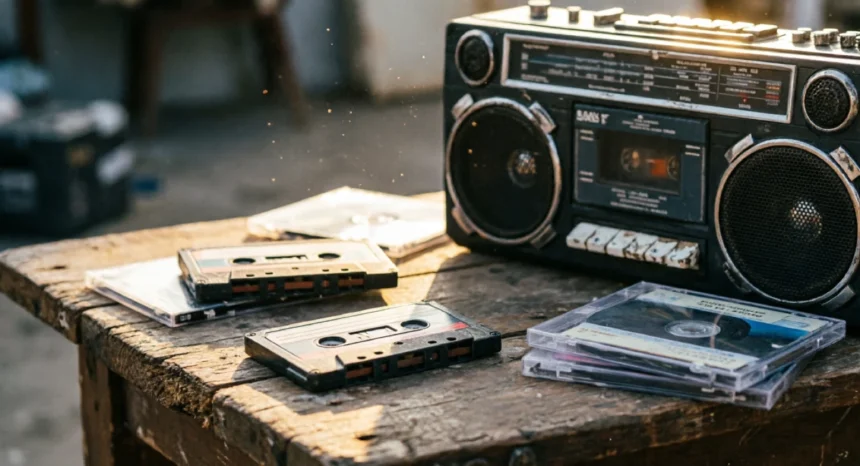
The band T-shirt you wore to school, the cassette tape you rewound until the ribbon stretched, the CD you played at a friend’s house until everyone in the room knew every word — these were not passive choices. They were statements about who you were and who you wanted to be around.
When adults return to that music now, they are not just enjoying a song. They are reconnecting with a version of themselves that existed before mortgages, careers, and adult complexity. That reconnection is often described as comforting, and it is. But it is also more meaningful than comfort. It is a reminder that there was a time when music felt urgent and central to daily life in a way it rarely does for most adults.
Why 90s Fan Communities Are Growing, Not Shrinking
If 90s music nostalgia were simply a fading sentiment, the communities built around it would be shrinking. They are not.
Tribute festivals centered on 90s music regularly sell out. The Backstreet Boys’ DNA World Tour, which ran from 2019 through the early 2020s, became one of the highest-grossing tours of that period for a legacy act. Nelly’s continued festival bookings draw crowds that include both original fans and younger listeners discovering the music for the first time. On Spotify, 90s-themed group playlists and fan-curated collections have grown in follower counts year over year.
Anniversary reissues of major 90s albums, including limited vinyl pressings and expanded editions with bonus tracks, consistently outperform projections. The market for 90s music is not contracting with time. It is broadening.
Why 90s Music Still Resonates in a World of Streaming and Short Attention Spans
Here is something that surprises people: 90s music is not competing with the modern streaming environment. It is thriving inside it. The reason comes down to how those songs were originally built.
Radio in the 1990s was ruthless. A song had to prove itself within seconds, or a DJ would fade it out. Producers and artists learned to front-load hooks, make choruses memorable on first listen, and deliver a clear emotional payoff early. Those skills produced music almost perfectly suited to a world where a Spotify listener decides whether to skip within the first fifteen seconds.
Song Structure in the 90s vs. Today
The standard structure of a 90s pop or rock song follows a clear logic: intro, verse, pre-chorus, chorus, second verse, chorus, bridge, final chorus. Every section has a job. None wastes the listener’s time.
Modern pop has moved toward shorter run times, sometimes cutting bridges entirely, and in some cases abandoning traditional verse-chorus structures for loop-based or more ambient arrangements. This reflects how music is consumed on short-form platforms, but it also means those songs can feel structurally thin during a longer listening session.
90s tracks, built for radio play, were designed to reward full listens. The bridge of a Mariah Carey ballad or the outro of a Pearl Jam deep cut often contains some of the most emotionally charged moments on the entire recording. Those structural rewards are part of why people still listen all the way through.
Emotional Directness as a Competitive Advantage
90s lyrics had a quality harder to find in current mainstream music: they said exactly what they meant.
“I Will Always Love You” does not require interpretation. “Waterfalls” states its message plainly in every chorus. “One Week” by Barenaked Ladies is playfully direct in its emotional confusion. Even grunge, which often dealt in abstraction, grounded its imagery in recognizable feelings of alienation and frustration that any teenager could decode without effort.
In an era where listeners are often distracted, multitasking, or half-listening, this emotional directness works in the music’s favor. A song that communicates its emotional core within the first thirty seconds does not need the listener’s full attention to leave an impression. It lands even when heard in passing, and that is how most streaming music gets consumed.
What Today’s Artists Are Still Borrowing From 90s Music
The influence of 90s music is not locked in the past. It moves through the present in ways that are sometimes obvious and sometimes subtle. Contemporary artists across pop, hip-hop, and alternative consistently return to 90s production choices, song structures, and emotional approaches — not out of imitation but because those tools still work.
When listeners hear a new song that carries a 90s quality, they often respond to it positively without fully understanding why. The familiarity operates below conscious recognition. What they are hearing is a set of decisions with a proven track record of connecting with people, applied again in a new context.
Producers and Artists Who Cite 90s Music as a Blueprint
Olivia Rodrigo has spoken in interviews about the pop-punk influences of artists like Alanis Morissette and Paramore, an early 2000s band that drew heavily from late 90s alternative. Her debut album, SOUR, drew explicit comparisons to 90s confessional pop in both structure and emotional directness, and that connection was widely credited with broadening her audience beyond Gen Z.
Billie Eilish has acknowledged the influence of 90s alternative music on her approach to mood and texture. Her brother and producer Finneas has cited bands from that era as part of the sonic language he uses when building tracks. Drake has built entire projects around samples and sonic references from 90s R&B, and his audience has responded positively regardless of whether they recognized the sources.
How Sampling Culture Keeps 90s Tracks Alive in New Releases
When a producer samples a 90s original, something interesting happens to the streaming numbers for the source material. They climb.
A listener who hears a new track built around a sample will often search for the original. The original gets added to playlists, shared on social media, and recommended by the platform’s algorithm alongside the newer track that brought it back to attention. This feedback loop has kept dozens of 90s R&B and hip-hop tracks in active rotation for years longer than they might have survived on legacy listeners alone.
Drake’s use of samples drawn from late 90s and early 2000s R&B, including references connected to artists like Aaliyah, has repeatedly sent listeners back to explore that era’s catalog. The same pattern plays out with producers in the trap and UK rap scenes who draw from 90s soul and hip-hop sources. Sampling culture is one of the most effective distribution channels for 90s music.
How the Music Industry Is Profiting From 90s Nostalgia
90s music nostalgia is not just a cultural phenomenon. It is a documented investment category. Record labels, venture-backed music funds, and streaming platforms have all put significant money into 90s-era catalogs, based on hard data rather than sentiment.
The commercial case is straightforward: these catalogs generate consistent, predictable revenue across multiple channels — streaming royalties, sync licensing for film and TV, merchandise, and live performance rights. Audiences for this music have disposable income, strong emotional attachment, and a willingness to pay for experiences connected to the era.
The Catalog Acquisition Boom and What It Tells Us
In the early 2020s, catalog acquisition became one of the most competitive areas in the music business. Hipgnosis Songs Fund, before its restructuring in 2024, spent hundreds of millions acquiring the rights to songs from the 90s and early 2000s. Universal Music Group, Sony Music, and Warner Music all accelerated their own catalog investment strategies during the same period.
The reasoning was transparent: a well-performing 90s catalog produces royalty income across streaming platforms, sync deals, and broadcast licensing, and that income is far more predictable than revenue from new artists who may or may not succeed. Investors treated proven 90s catalogs like infrastructure assets — reliable, recurring, and resistant to the unpredictability that affects newer music.
Reunion Tours, Anniversary Albums, and the Economics of Nostalgia
The 30th anniversary reissue of Nirvana’s Nevermind in 2021 was a commercial and cultural event. The expanded edition included unreleased demos, alternate mixes, and live recordings, and it attracted attention from both longtime fans and music journalists who used the occasion to reexamine the album’s place in history.
Reunion tours from 90s acts consistently outperform industry expectations. The Backstreet Boys’ return to touring generated revenue that rivaled many active contemporary artists. Spice Girls reunion events sold out arenas across multiple countries. These are not nostalgia tours limping through smaller venues. They are major commercial productions drawing audiences ready to spend significantly for the experience.
What this tells us is something the industry has quietly known for years: 90s listeners, now in their 30s and 40s, have the disposable income and the emotional motivation to invest in experiences connected to the music of their youth. That combination is commercially valuable in a way that a new artist’s audience — younger and with less spending power — cannot yet match.
Conclusion
90s music has lasted not because people are stuck in the past, but because the music was genuinely well-built. Strong structures, emotionally direct lyrics, a range of genres that let everyone find a personal entry point, and a production era that valued feel over perfection created a body of work that keeps performing across new contexts and new generations.
The science backs it up: music absorbed during your formative years does not fade the way other memories do. The industry data backs it up: catalogs from this era are treated as serious long-term assets. The streaming numbers back it up: these tracks are not just remembered — they are actively played, shared, and discovered.
Understanding why 90s music still resonates is ultimately understanding what makes music last. It is not the era that does the work. It is the combination of authenticity, emotional clarity, and structural craft that this particular era produced in unusual abundance. If you want to explore how that legacy connects to the broader story of music’s role in shaping culture, the parent article on how music shapes pop culture in 2026 is the next natural step.