

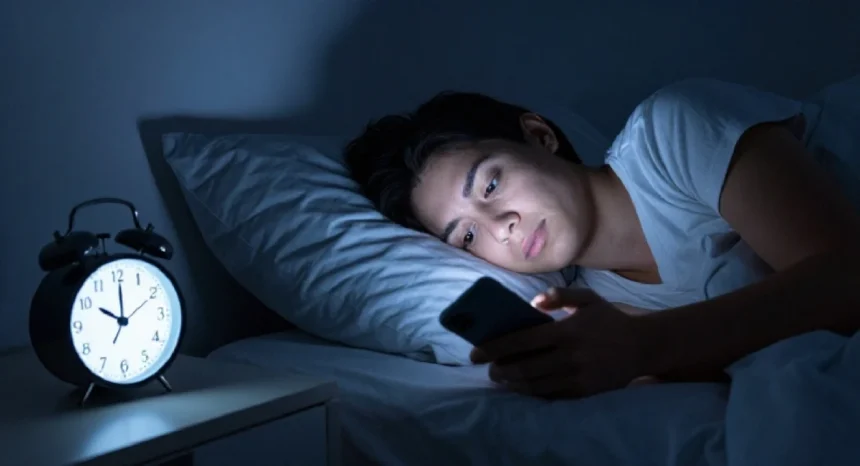
Does Using Your Phone Before Bed Really Affect Sleep Quality?
Most of us have been there: you tell yourself five more minutes, and suddenly it is midnight. The question of whether phone use affects sleep quality is not just a wellness talking point — it is something researchers have been studying closely, and the findings are worth understanding.
- What Happens to Your Brain When You Use Your Phone at Night
- The Real Science Behind Blue Light Sleep Impact
- Screen Time Before Bed and Its Effect on Sleep Quality Across Age Groups
- Does Phone Use Affect Sleep Quality Even If You Fall Asleep Quickly?
- Sleep Disruption Causes Beyond the Screen Itself
- Realistic Alternatives to Scrolling Before Bed
- How to Build a Pre-Sleep Phone Routine That Actually Sticks
- Conclusion
This is not about guilt-tripping you into locking your phone in another room. It is about giving you a clear, honest picture of what happens neurologically when screens come with you to bed, and what small changes actually make a difference. By the end of this article, you will know exactly where the science stands and have a realistic set of options to work with.
What Happens to Your Brain When You Use Your Phone at Night
Your brain is constantly receiving information from the environment, and light is one of the most powerful signals it uses to track time. The moment you look at a bright screen in a dark room, a specific region of your brain called the suprachiasmatic nucleus (SCN) receives a message: it is daytime, stay alert.
The SCN sits in the hypothalamus and acts like your body’s internal clock. It coordinates almost every biological process tied to the day-night cycle, including when you feel drowsy, when your core body temperature drops, and when certain hormones are released. The problem is that the SCN cannot tell the difference between sunlight and the light coming from your phone screen. It responds to light wavelength and intensity, not source.
Think of it like a smoke alarm that cannot distinguish between a kitchen fire and burnt toast. The alarm sounds either way. Your brain’s alertness response fires up whether it is noon sunlight or a phone screen at 11 PM.
What makes evening exposure particularly disruptive is timing. Your brain’s sensitivity to light shifts dramatically in the hours before sleep. A signal that barely registers at 2 PM can push your entire sleep cycle back by an hour or more at 10 PM.
How Your Brain Decides When to Release Melatonin
Melatonin is the hormone responsible for signaling that sleep is approaching. Your brain starts releasing it roughly two hours before your natural sleep time, and its presence in the bloodstream is what produces that familiar feeling of heaviness and slowed thinking.
Light exposure, especially in the blue wavelength range, suppresses melatonin production directly. Research published in the Journal of Clinical Endocrinology and Metabolism found that people who read on a light-emitting device before bed had significantly lower melatonin levels than those who read printed books, with melatonin peaking later and taking longer to rise to sleep-inducing levels.
In practical terms, someone who reads a physical book before bed might start feeling genuinely sleepy by 10:30 PM. Someone scrolling their phone during the same window may not feel that same level of drowsiness until midnight or later, even if their body originally wanted to sleep earlier.
Why Nighttime Light Exposure Hits Harder Than Daytime Exposure
During the day, your body is already in a high-alert hormonal state. Cortisol is elevated, melatonin is suppressed naturally, and the additional light from your phone adds very little to an already-activated system. The net effect on your sleep cycle is minimal.
At night, the situation reverses completely. Your body is preparing to wind down, melatonin is beginning to rise, and the SCN becomes significantly more reactive to light signals. Even relatively dim light exposure during this window can delay the entire process by 30 to 90 minutes.
This is why the hour before your intended bedtime is the highest-risk period for sleep disruption from screens. It is not just about how much time you spend on your phone overall. It is specifically about when that exposure happens.
The Real Science Behind Blue Light Sleep Impact
When people talk about blue light sleep impact, they are referring to the specific wavelength of light that phone screens emit most intensely. Visible light exists on a spectrum, and blue light sits in the 400 to 490 nanometre range. It is the same type of light that dominates a clear daytime sky, which is precisely why your brain reads it as a strong daytime signal.
Phone screens, tablets, and laptops emit far more blue-spectrum light than warm incandescent bulbs or candles. A standard warm household bulb emits light concentrated in the red and yellow wavelengths, which your SCN does not interpret as a strong alertness cue. A phone screen is a different story.
Harvard Medical School researchers found that blue light suppresses melatonin for roughly twice as long as green light and shifts the circadian clock by up to three hours under certain exposure conditions. That is not a minor adjustment to your sleep schedule. That is the difference between falling asleep at 10:30 PM and lying awake until 1:30 AM.
Is Blue Light Actually the Main Problem?
Here is where many articles oversimplify things: blue light is real and significant, but it is not the only reason your phone disrupts sleep.
Two other mechanisms are just as important. The first is cognitive arousal. Scrolling through social media, reading news, or managing work emails keeps your brain actively processing information, comparing, reacting, and forming responses. This state of mental engagement is nearly the opposite of what the brain needs to transition into sleep.
The second is behavioral pull. The design of most apps is built specifically to keep you engaged for one more post, one more video, one more message. The habit of “just five more minutes” is not a personal weakness. It is the intended result of how these platforms function.
Blue light reduction helps. But without addressing cognitive arousal and the behavioral loop, even switching your screen to warm mode will only get you part of the way there.
What Research Says About Sleep Architecture Changes
Sleep is not a single uniform state. It cycles through distinct stages, including light sleep, deep slow-wave sleep, and REM sleep. Each stage serves a specific function, and they are not interchangeable.
Late-night phone use has been shown to reduce both REM sleep and slow-wave sleep, the two stages most critical for cognitive recovery and memory consolidation. A study published in PNAS found that participants who used light-emitting devices before bed spent less time in REM sleep and reported feeling significantly sleepier the following morning despite sleeping the same total number of hours.
The next-day consequences include slower reaction times, impaired short-term memory, elevated cortisol, and reduced ability to regulate mood. You might sleep eight hours and still feel exhausted. The problem is not the duration; it is the quality of what happened during those hours.
Screen Time Before Bed and Its Effect on Sleep Quality Across Age Groups
Screen time before bed does not affect everyone equally. Age plays a significant role in how sensitive the body is to light exposure, how easily sleep is disrupted, and what drives the behavior in the first place.
Why Teenagers Are More Vulnerable to Sleep Disruption From Phones
Adolescents face a unique biological challenge: their circadian rhythm naturally shifts later during puberty. This is not a choice or a bad habit. It is a hormonally driven phase delay that makes teenagers genuinely sleepier later at night and less alert in early mornings.
Phone use compounds this delay. When a teenager who already has a biologically later sleep phase adds two hours of evening screen time, their effective sleep window can shift so late that school start times cut their total sleep dramatically short.
Research tracking teen sleep patterns over the past two decades shows a consistent decline in average sleep duration that closely parallels the rise in smartphone ownership. The American Academy of Sleep Medicine recommends 8 to 10 hours for teenagers. Most are getting significantly less. Phone use is not the only factor, but studies consistently identify it as a measurable contributor.
How Working Adults Experience the Trade-Off Between Wind-Down and Sleep Loss
For many working adults, the hours between 9 PM and midnight are the only personal time available in the day. Work is done, children are asleep, and the phone offers entertainment, social connection, and a genuine sense of autonomy. Researchers call this “revenge bedtime procrastination” — the act of staying up later than intended as a way to reclaim time the day did not offer.
This is a completely understandable response to a real problem. The tension is that the behavior designed to feel restorative is also quietly eroding the quality of sleep, which then makes the following day harder, which increases the need to decompress at night. It is a cycle that does not fix itself without a deliberate interruption.
Understanding this trade-off honestly is more useful than simply telling adults to put their phones down. Any realistic alternative has to acknowledge what the phone is providing, not just what it costs.
Does Phone Use Affect Sleep Quality Even If You Fall Asleep Quickly?
This is one of the most common reasons people dismiss advice about nighttime phone use. If you can close your eyes after scrolling and be asleep within minutes, does any of this actually apply to you?
The short answer is yes, and here is why. Sleep onset and sleep quality are separate things. Falling asleep quickly tells you that your body was tired enough to override the alertness signals from your screen. It does not tell you anything about what happened to your sleep architecture during the night.
A person can fall asleep in five minutes and still spend far less time in deep, restorative sleep stages than their body actually needs. The fragmentation happens silently, often without any memory of waking.
The Hidden Cost of Keeping Your Phone in the Bedroom
Active phone use before sleep is one variable. Physical proximity is a separate one.
Even when the screen is dark and notifications are silenced, the presence of a phone in the bedroom creates low-level psychological engagement. The awareness that messages might be waiting, that you could check the time, or that a sound might come through keeps part of the brain in a lighter state of readiness. Researchers describe this as elevated sleep-related arousal, a measurable increase in how easily sleep is disrupted by minor stimuli.
The single most straightforward behavioral change supported by sleep research is charging your phone outside the bedroom. Not because the device itself emits harmful signals while idle, but because removing it removes the stimulus entirely. An alarm clock handles the one legitimate bedroom function most phones serve.
How Sleep Tracking Data Reveals Disruption People Do Not Feel
Consumer sleep trackers have added an interesting layer to this conversation. People who report sleeping well despite heavy evening phone use often show a different picture when their sleep data is reviewed.
Clinical polysomnography, the gold standard for measuring sleep stages, consistently shows reduced slow-wave and REM sleep in people who use phones in bed, even when those people rate their own sleep quality as satisfactory. The gap between subjective experience and objective measurement is significant.
This is not surprising from a neuroscience standpoint. You are not conscious during the brief micro-arousals that fragment deep sleep, so you have no memory of them. The only signals you might notice are the ones that carry over into waking hours: fatigue that coffee fixes temporarily, slightly slower thinking, or a general sense of not feeling quite rested despite a full night in bed.
Sleep Disruption Causes Beyond the Screen Itself
Phone use is a meaningful contributor to poor sleep, but it exists within a broader picture. Presenting it as the single cause of sleep problems would be both inaccurate and counterproductive.
Other well-documented sleep disruption causes include irregular sleep and wake times, which prevent the circadian rhythm from stabilizing; caffeine consumed too late in the day, which has a half-life of five to seven hours in the body; chronic psychological stress, which elevates cortisol and keeps the nervous system in a heightened state; and room temperature that is too warm, since the body needs to drop its core temperature slightly to initiate deep sleep.
Phone use often overlaps with several of these. Scrolling late means sleeping later, which creates schedule irregularity. Stress-driven phone checking in the evening adds cognitive arousal on top of an already activated stress response.
How Stress and Content Type Work Together to Keep You Alert
Not all phone use before bed is equally disruptive. Watching a familiar, low-stimulation show is meaningfully different from reading political news or checking work messages. The distinction matters because cognitive arousal is content-dependent.
When the brain processes threatening, emotionally charged, or socially comparative content, it activates the amygdala and triggers cortisol responses. This increases sleep latency, meaning the time it takes to fall asleep, independently of any blue light effects. You could use a perfectly warm-filtered screen and still struggle to sleep after reading something upsetting.
Pre-sleep cognitive arousal is one of the strongest predictors of how long it takes a person to fall asleep. The content you consume in the 30 minutes before sleep has a more direct effect on this than almost any other variable within your control.
When Phone Use Is a Symptom, Not the Root Cause
Here is a nuance that often gets overlooked: not everyone is on their phone at night because of habit or entertainment. Some people are on their phones because they cannot sleep in the first place.
Lying awake in the dark with an active mind is genuinely unpleasant. Reaching for a screen provides stimulation and distraction from the frustration of not sleeping. In this case, the phone is not causing the initial sleep difficulty; something else is, and the phone is a coping response.
This bidirectional relationship matters for how you approach any changes. If your phone use at night is driven by already-existing wakefulness or anxiety, addressing only the phone will not solve the underlying problem. That is an important thing to be honest about with yourself, and it is a good reason to keep reading about root causes rather than stopping at symptoms.
Realistic Alternatives to Scrolling Before Bed
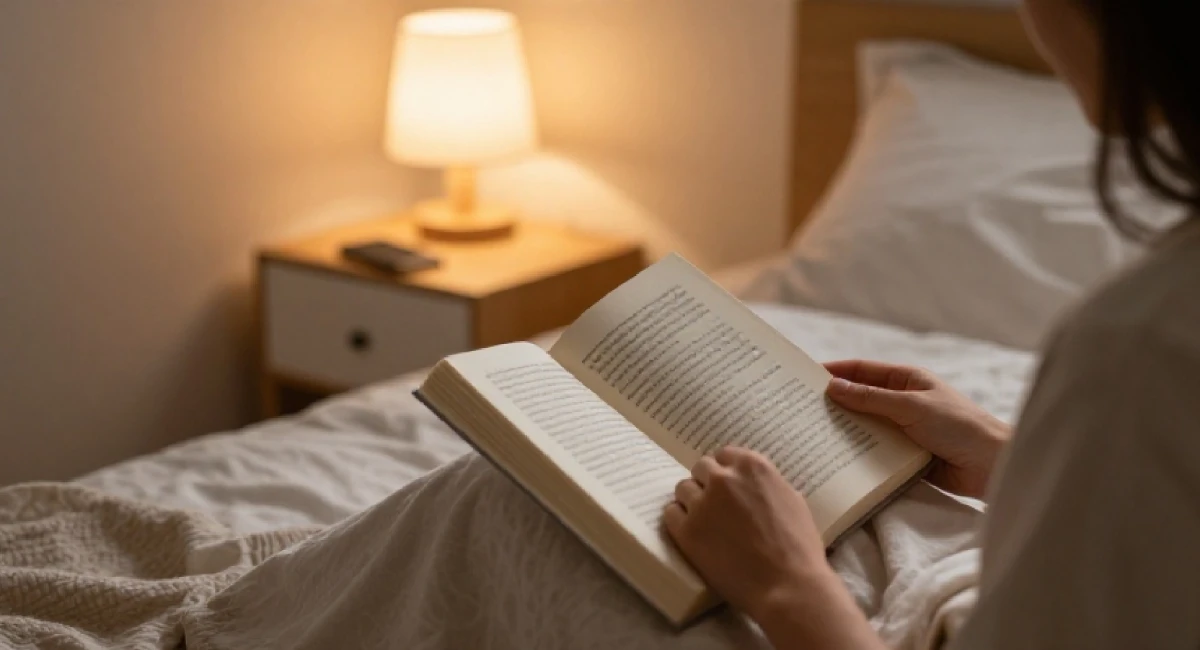
The goal here is not perfection. It is small, realistic adjustments that fit into an actual life.
Screen-Based Alternatives That Are Less Disruptive
If removing screens from your evening routine entirely is not realistic right now, there are harm-reduction steps worth taking. They will not eliminate the problem, but they will address the most measurable contributors.
For blue light exposure specifically:
- Enabling your phone’s warm color mode (Night Shift on iPhone, Night Mode on Android) shifts the screen away from the blue-heavy spectrum toward warmer tones. Research suggests this reduces melatonin suppression, though it does not eliminate it.
- Reducing screen brightness to the lowest comfortable level decreases the overall light intensity hitting your retina, which reduces the SCN signal even if the wavelength remains the same.
For cognitive arousal specifically:
- Switching from active scrolling to passive audio content, such as podcasts or audiobooks on topics you find genuinely relaxing, keeps some level of stimulus without demanding the same level of active processing that social media or news requires.
- Setting a hard stop on news and social apps 45 minutes before bed, while allowing lower-stimulation content like nature documentaries, addresses the content problem without requiring a full-screen ban.
These are not perfect solutions. They are practical steps in the right direction.
Non-Screen Wind-Down Habits Backed by Sleep Research
For those who want to move further away from screens in the evening, there are well-researched alternatives that work through clear neurological mechanisms, not just habit advice.
Reading a physical book lowers heart rate and cortisol levels within six minutes, according to research from the University of Sussex. Unlike screen reading, it does not suppress melatonin. For many people, it also carries a conditioned association with sleepiness that builds over time.
Light stretching or yoga activates the parasympathetic nervous system, shifting the body from a stress-response state toward physical relaxation. Even 10 minutes of gentle movement signals the nervous system to begin settling.
Slow breathing exercises, specifically patterns with longer exhales than inhales, directly reduce heart rate by stimulating the vagus nerve. A simple pattern of breathing in for four counts and out for six counts has measurable physiological effects within a few minutes.
Journaling before bed, particularly writing down concerns or a short to-do list for the next day, has been shown to reduce pre-sleep cognitive arousal by essentially completing a mental task the brain would otherwise continue processing in the background.
Low-stimulation audio, such as ambient sound, instrumental music, or a familiar audiobook, provides enough background engagement to prevent restlessness without activating the alertness response that visual content triggers.
How to Build a Pre-Sleep Phone Routine That Actually Sticks
Knowing what to do and actually doing it consistently are two different challenges. The most well-designed routine fails if it requires more willpower every night than most people realistically have at 10 PM after a full day.
The most practical approach is to make the desired behavior easier than the default behavior, rather than relying on motivation. This is sometimes called environmental design, and it is more effective than intention alone.
Start with one change, not five. Choosing a single adjustment, such as moving your phone charger to the hallway, creates a low-resistance entry point. Once that change feels normal, adding a second one becomes far easier. Trying to restructure your entire evening at once is the most common reason people revert to old patterns within a week.
Implementation intentions also help significantly. Research by psychologist Peter Gollwitzer found that people who planned exactly when and how they would perform a new behavior were far more likely to follow through than those who simply intended to. “I will plug my phone in outside the bedroom at 9:45 PM” is measurably more effective than “I will try to use my phone less at night.”
The Role of Consistency in Resetting Your Sleep Signals
Earlier in this article, we covered how the SCN regulates melatonin based on environmental cues. What science also tells us is that the brain responds well to predictability.
A consistent pre-sleep routine, done at roughly the same time each evening, becomes a conditioned cue for the body to begin its wind-down process. Over time, the routine itself starts triggering melatonin release, not just the darkness and the hour. This is the same mechanism that makes certain environments, or rituals, feel instantly sleepy to people who associate them with sleep.
The consistency of your wind-down timing matters as much as what you do during it. Irregular bedtimes, even with good individual habits, prevent the circadian system from stabilizing. Regularity is not rigid; it is a general window. Keeping your pre-sleep routine within a 30-minute range each night is enough to signal stability to your internal clock.
When to Consider Talking to a Doctor Instead of Just Changing Habits
Habit adjustments are a reasonable starting point for most people. But there are situations where they are not enough, and recognizing those situations matters.
If you have consistently struggled to fall asleep, stay asleep, or feel rested despite making genuine changes to your evening routine over several weeks, that is worth discussing with a doctor. Chronic insomnia has multiple possible causes, including sleep apnea, anxiety disorders, or other medical conditions that do not respond to habit changes alone.
Sleep apnea in particular is frequently undiagnosed. It interrupts breathing during sleep, causes repeated micro-arousals, and results in exhaustion despite apparent full nights of sleep. It has nothing to do with phone use, and changing your screen habits will not address it.
Mood-related sleep disruption, particularly the kind linked to depression or anxiety, similarly requires proper evaluation. Using this article as a starting point is completely reasonable. Using it as a replacement for medical assessment when symptoms are persistent is not.
Conclusion
So, does phone use affect sleep quality? Yes, clearly and measurably, through at least three distinct pathways: blue light suppression of melatonin, cognitive arousal from content, and the behavioral pull of app design. The good news is that you do not have to make dramatic changes to see real improvement. Even a single adjustment, such as moving your charger out of the bedroom or switching to audio content in the last hour before sleep, can shift things meaningfully.
Start with one change tonight. See how your mornings feel after a week. If you want to go further, our guide on how to fix your sleep schedule without medication covers the full picture, from circadian reset strategies to what actually works for long-term sleep improvement.
Small adjustments, done consistently, tend to compound. That is as true for sleep as it is for anything else.