

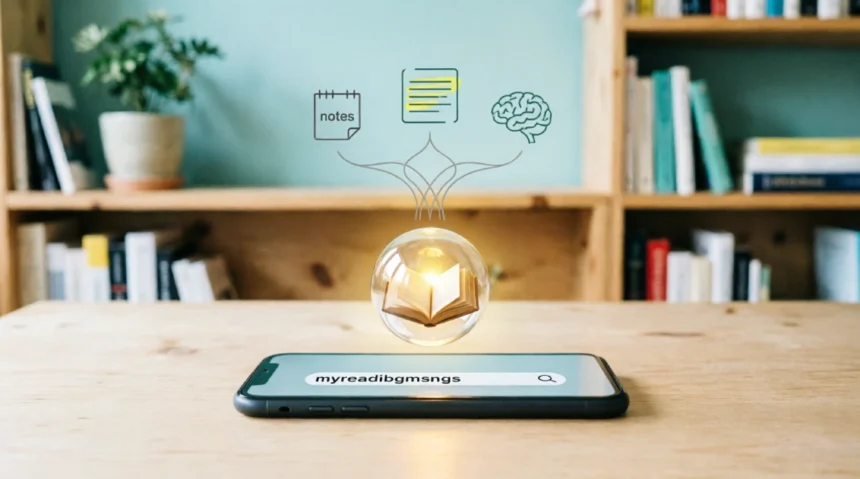
You typed “myreadibgmsngs” into a search bar. Maybe autocorrect failed you, or your thumb slipped on a phone keyboard. Before you close the tab, stay — because that small typo opens the door to something genuinely useful.
- What Is Myreadibgmsngs? (The Short Answer)
- How This Typo Happens — and Why It’s More Common Than You Think
- What Myreadibgmsngs Actually Points To — Your Personal Reading System
- Why Most People Lose What They Read (The Real Problem)
- How to Build Your Myreadibgmsngs — Step by Step
- Best Tools to Manage Your Reading Notes in 2026
- “I Have Thousands of Old Highlights — What Do I Do?”
- Common Mistakes That Kill Your Reading System
- Real Benefits — What Changes When You Use This System
- FAQs
This article explains exactly what that term means, why it happens, and then walks you through building a personal reading system so nothing you read ever truly disappears.
What Is Myreadibgmsngs? (The Short Answer)
“Myreadibgmsngs” is a typing error for “my readings” — the word “myreadings” mangled by a mobile keyboard. It is not an app. It is not a tech protocol. It is not a secret productivity brand. If you landed here hoping to download a platform, you won’t find one.
What you will find is the concept this typo points toward: a personal system for capturing, organizing, and actually using what you read. Some call it a reading log, a knowledge hub, or part of a “second brain.” Beneath all the labels, it’s simply a place where your highlights, notes, and reflections live — so you never lose a valuable insight again.
If you’ve ever highlighted a brilliant paragraph in a book, saved an article, or listened to a podcast and thought “I need to remember this,” then you already need what myreadibgmsngs represents. The typo just brought you here faster.
How This Typo Happens — and Why It’s More Common Than You Think
On a standard QWERTY keyboard, the letters B and N sit right next to each other. When you type “myreadings” quickly on a phone, your thumb can easily hit B and then N, turning “readings” into “readibgmsngs.” It’s a simple slip — fingers drifting one key over. Autocorrect often misses such compound misspellings, so the jumbled word gets logged thousands of times every month across search engines. You’re in good company.
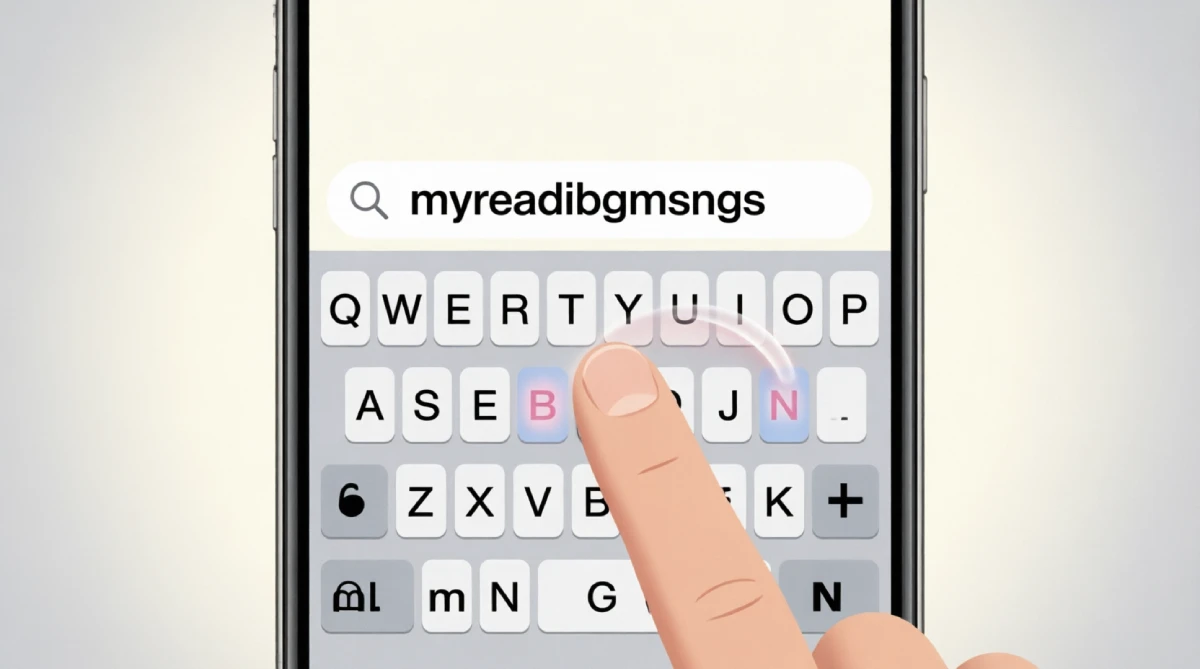
The prevalence of this error reveals something deeper: people want a reading system but don’t know where to start. The search itself is a signal that, after we read, something feels incomplete. That insight is far more important than the typo.
What Myreadibgmsngs Actually Points To — Your Personal Reading System
Strip away the garbled spelling, and you’re left with the idea of owning your reading life. A personal reading system is simply a consistent method to:
- Save highlights and quotations from books, articles, podcasts, and videos
- Add your own thoughts or a one-sentence summary
- Review those notes regularly so your memory doesn’t discard them
- Connect ideas across different sources
This isn’t about hoarding information. It’s about closing the gap between consumption and retention. Without a system, you might read 20 books a year but remember tangible lessons from only a handful. With a system, every book becomes raw material for better conversations, sharper decisions, and long-term growth.
Psychologists point to the Zeigarnik effect — unfinished tasks linger in our minds — and loss aversion: we hate losing ideas we once found meaningful. A reading system resolves both tensions. You get to complete the “task” of processing a book, and you stop losing insights that could have changed your thinking.
Just imagine a single digital notebook where your reading life is searchable, organized, and actually useful. That’s the destination the typo wanted you to reach.
Why Most People Lose What They Read (The Real Problem)
Before you build a system, it helps to understand the enemy: forgetting.
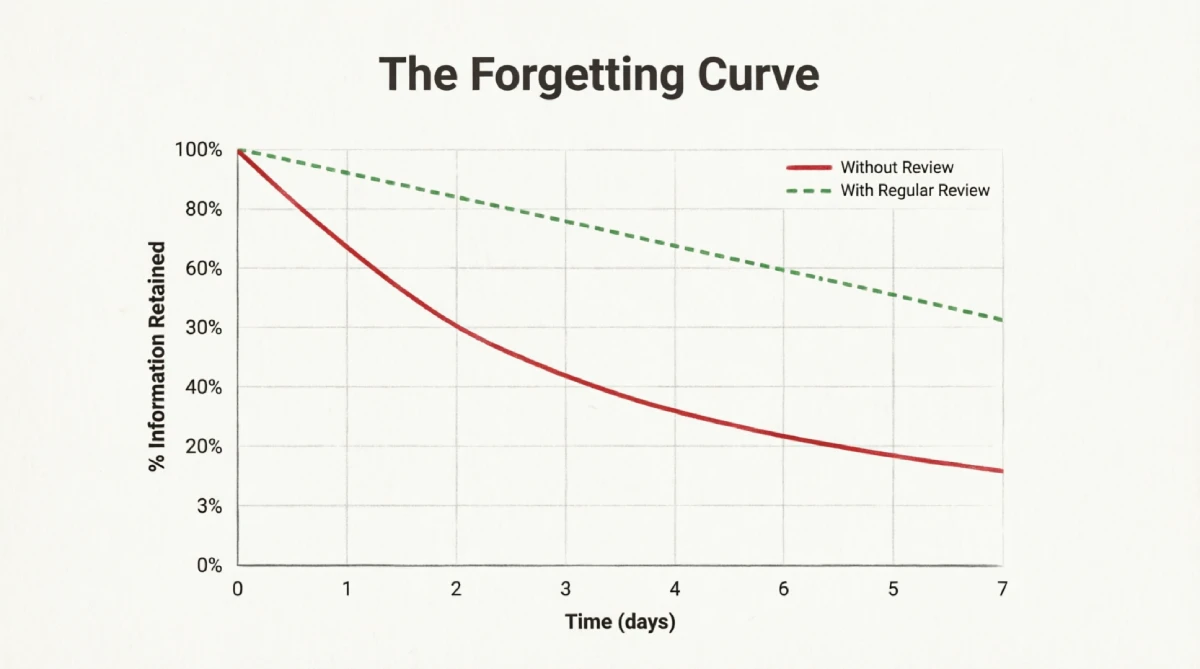
Hermann Ebbinghaus, a 19th-century psychologist, mapped out the “forgetting curve” — showing that without review, we lose up to 70% of new information within 24 hours and roughly 90% within a week. This isn’t a personal flaw; it’s how human memory works. When you read a powerful insight and do nothing with it, your brain treats it like disposable noise.
The modern reading landscape makes things worse. You might highlight sentences in a Kindle while commuting, save articles in a read-it-later app on your laptop, scribble notes in a physical book at home, and try mentally to hold onto a podcast quote from a run. Scattered across devices and apps, these fragments never meet. Months later, you half-remember something you read but can’t recall the source or exact point. That’s the problem a personal reading system solves — it gives those fragments a single home.
How to Build Your Myreadibgmsngs — Step by Step
You don’t need complicated apps or a 14-step framework. Here’s a straightforward, five-step process that works for anyone.
Step 1: Choose One Capture Tool
Pick a single home for all your reading notes. It could be Notion, Obsidian, Apple Notes, a simple Google Doc, or even a physical notebook. The tool matters far less than consistency. For beginners, I recommend a single cloud-based document (like Google Docs or Notion) — it’s free, accessible everywhere, and requires zero learning curve.
Step 2: Create a Simple Template for Every Book or Article
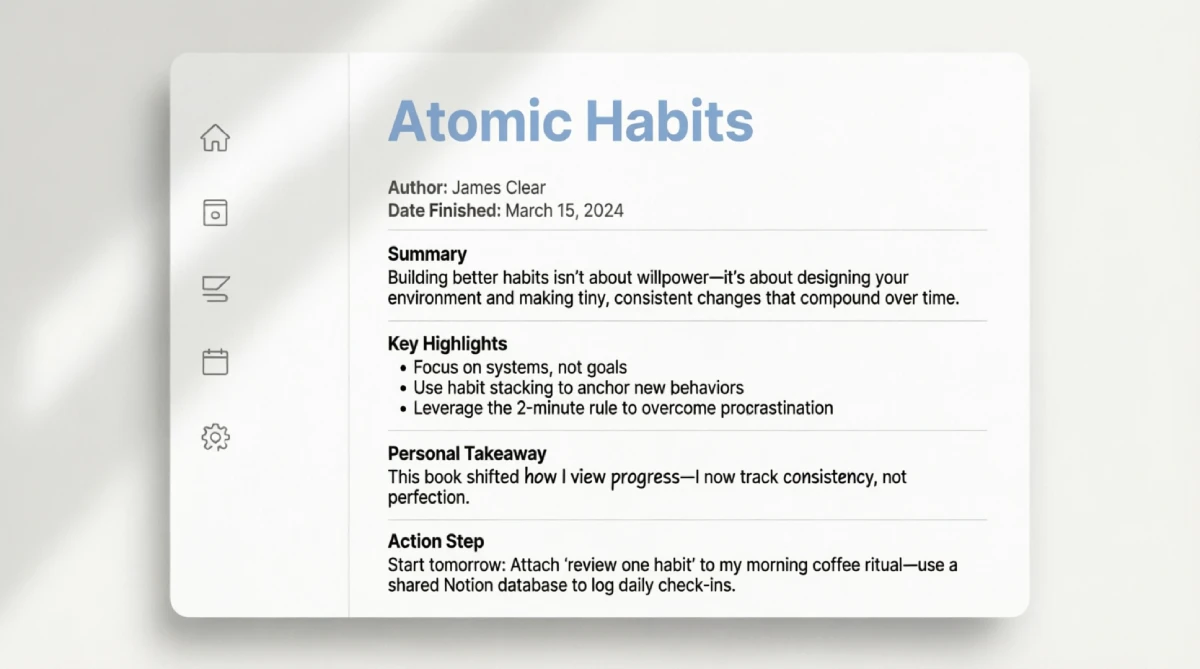
Use this copy-paste template. Replace the bracketed details each time you finish something:
Title / Source: [Book title or article link]
Author / Creator: [Name]
Date Finished: [Date]
One-Sentence Summary: [What this is about in a single breath]
Key Highlights:
- [Highlight or big idea #1]
- [Highlight or big idea #2]
- [Highlight or big idea #3]
My Takeaway: [“This matters to me because…” in 1–2 sentences]
Action / Thought: [One thing I will think about or do differently]
This template forces you to move beyond mindless highlighting. Writing a one-sentence summary locks in the core idea. Adding a personal takeaway connects the insight to your life.
Step 3: Process Immediately After Finishing
Don’t let a week pass. Within 24 hours of finishing a book or a long-form article, fill out the template. If you have Kindle highlights, export them or have the Kindle app open beside your note. For physical books, use your phone’s camera to capture key pages and transcribe the two or three that matter most. For podcasts, pick one or two quotes instead of entire transcripts.
Step 4: Review Weekly (5 Minutes Only)
Set a recurring 5-minute appointment. Open your reading notes, scroll to a random entry, and read your takeaway. This light touch reverses the forgetting curve almost effortlessly. You don’t need spaced repetition algorithms — just casual re-encounters work wonders.
Step 5: Connect Ideas Across Sources
Once you have 10–15 entries, start noticing patterns. Maybe three different authors are saying the same thing about habits. Add a “Connections” line at the bottom of an entry: “Similar to the idea in [Book X] about ___.” Over time, you’ll build a web of interconnected knowledge that’s uniquely yours.
Best Tools to Manage Your Reading Notes in 2026
Tool choice matters only when it gets in your way. Here’s a realistic comparison of what’s available right now, with a focus on ease and long-term usefulness.
| Tool | Free Tier | Learning Curve | Best For | Rating (out of 5) |
|---|---|---|---|---|
| Notion | Yes (generous) | Moderate | All-in-one databases and visual organization | 4.5 |
| Obsidian | Yes (local storage) | Higher | Linking ideas, graph view, and offline-first users | 4.7 |
| Readwise | Limited free trial | Low | Automatically syncing Kindle, article highlights | 4.8 (premium) |
| Apple Notes | Yes | Very low | Quick captures, iOS/Mac users | 4.0 |
| Mem.ai | Limited free | Low | AI-organized notes, automatic tagging | 4.2 |
| Reflect | Paid (no free tier) | Low | Voice notes and networked thought | 4.3 |
| Google Docs | Yes | Very low | Simplicity, collaboration, no app lock-in | 4.0 |
Top recommendation: Use Readwise to gather all your Kindle, article, and tweet highlights automatically, then sync them into Obsidian or Notion for your own templates and linking. This combo saves hours. If you’re on a tight budget, a single Google Doc with the template above will outperform any complex tool you don’t use consistently.
“I Have Thousands of Old Highlights — What Do I Do?”
This is the pain point almost every other guide ignores. Maybe you’ve been using Kindle for years and have 1,200 untouched highlights. Or a graveyard of saved articles in Pocket. The task feels so big that you avoid it entirely. Here’s how to recover without losing your mind.
Option 1: Import and Triage (Readwise method)
If you spring for Readwise, it’ll pull in all your past highlights from Amazon, Instapaper, and more. Set the daily review to show you five highlights. For each one, decide in 10 seconds: keep and tag, or delete. You’ll cut the noise by half in a week, and the keepers will gradually feed into your main note system.
Option 2: The “Start Fresh” Rule
Accept that your old highlights are a backlog you may never fully process — and that’s okay. Create a single note called “Legacy Highlights Vault” and paste everything there. Then, from today onward, commit to using your new template for each finished book. You’ll benefit more from processing three new books thoroughly than from guilt-spiraling over a thousand fragments. You can search the vault when you need something, but you won’t let it block forward motion.
Option 3: The Triage Sprint
Set a timer for 30 minutes. Scan your Kindle highlights list, and for each book, pick only the top 3 highlights that still resonate. Transfer those into your new system and trash the rest. In one session, you might recover the souls of 10 books. It’s not perfect, but it’s productive.
Common Mistakes That Kill Your Reading System
A good system can fail quickly if you fall into these traps.
- Highlighting everything. If every sentence seems important, none are. Highlight only the 3–5 points per book that genuinely shift your thinking.
- Never reviewing. Saving notes alone is filing, not learning. Without a brief weekly look, you’ll be back to 90% forgetting within days.
- Tool-hopping every month. Building the perfect setup in three different apps before processing a single book is procrastination in disguise. Pick one tool and use it for three months before you consider switching.
- No personal context. A highlight that says “habits are identity-based” is forgettable. “This connects to my struggle with my morning routine — maybe I need to focus on identity, not behavior” stays with you. Always add your own voice.
- Saving without source. A note that just says “compound effect” is useless later. Always include the title and the author.
Real Benefits — What Changes When You Use This System
When you actually follow a reading system for a few months, the effects feel almost like a cognitive upgrade.
Research on active recall and spaced repetition consistently shows that structured review improves long-term retention by 50–70% compared to passive re-reading alone (Roediger & Karpicke, 2006). You’re not just storing facts; you’re building a personal library of ideas you can draw on at will.
Concretely, you’ll notice:
- Better conversations. You’ll be able to say, “I just read something that relates to this,” and actually articulate the point.
- Clearer decision-making. When multiple authors converge on similar principles and you see the pattern in your notes, you trust certain insights more.
- Professional growth. People who consistently learn and apply insights tend to get recognized. It’s not magic — it’s having a pool of knowledge that most colleagues let evaporate.
- Reduced anxiety. The nagging feeling that you’ve “lost” something important fades because you know everything has a home.
The mechanism is straightforward: capture, process, review. Do that, and your reading becomes a compounding asset.
FAQs
Is myreadibgmsngs a real app I can download?
No. It’s a common typo for “my readings.” There is no platform with that name. The systems described here can be built with free tools you already have.
What if I only read physical books and don’t use a Kindle?
Keep a small notebook or a notes app on your phone. After each reading session, jot down the page number and a quick phrase. When you finish the book, transfer your top highlights into your digital template. A little friction is okay.
Can I include podcasts and YouTube videos in my reading system?
Absolutely. Use the same template. For podcasts, note the timestamp of a key idea. For videos, you can even paste a screenshot or a link. If you learned something, it belongs in your system regardless of format.
How much time does this take per week?
For one book: roughly 5 minutes to fill out the template after finishing, and 5 minutes total across your weekly reviews. It’s less time than scrolling social media, and far more valuable.
I’m a beginner with no technical skills. Where do I start?
Open a Google Doc. Title it “My Reading Notes.” Paste the template from this article. Use it for the very next book you finish. Don’t install anything else until you’ve done that 10 times.
What if I stop doing it for a month?
Life happens. Don’t scrap everything. Simply resume with your next book. Your old notes are still there waiting. Consistency over perfection.
Is there a way to automatically capture highlights from physical books?
Apps can scan text via your phone’s camera (like Google Lens), but manual entry is often faster. Highlight your book, snap a photo of the marked paragraph, and paste the photo into your note until you can transcribe it.
Does this system work for fiction?
Yes, though you’ll capture different things — a beautiful passage, a character insight, or a clever plot device. Adjust the “Action/Thought” section to “Emotional Impact” or “Why This Scene Stayed With Me.”
One small action now beats a perfect plan later. The typo that brought you here isn’t random; it’s proof you care about what you read. Your reading life doesn’t need a miracle — it just needs a simple container. Open whatever notes app you have right now. Create a note titled “My Reading Notes.” Type the sentence: “This is where I keep what matters.” You’ve just started.