

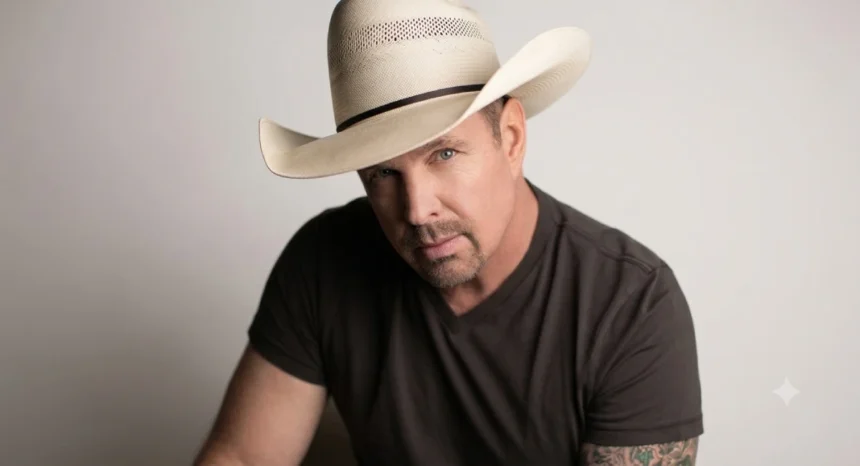
You hear the name Garth Brooks, and you think packed stadiums, cowboy hats, and “Friends in Low Places.” What you probably don’t think about is how the music industry actually pays its artists — and why Brooks figured out that system better than almost anyone alive.
- What Is Garth Brooks’ Net Worth Right Now?
- How Did Garth Brooks Go From Oklahoma to $400 Million?
- Where Does Garth Brooks’ Money Actually Come From?
- How Does Garth Brooks’ Net Worth Compare to Other Country Stars?
- What Financial Lessons Can You Learn From Garth Brooks’ Career?
- Frequently Asked Questions About Garth Brooks’ Net Worth
- The Bottom Line: How Garth Brooks Turned Country Music Into a $400 Million Fortune
Here’s the uncomfortable truth: in 2017, the music industry pulled in $43 billion. Artists, the people who actually make the music, saw only about 12% of that. Streaming services and labels took the rest. So how does a country singer from Tulsa, Oklahoma, end up worth $400 million?
The answer has almost nothing to do with Spotify plays.
This article breaks down exactly how Garth Brooks built his fortune, where his money comes from, and what sets his financial playbook apart from that of artists who struggle to stay profitable. If you’ve ever wondered how much Garth Brooks is really worth — and more importantly, why — this is the breakdown you’ve been looking for.
What Is Garth Brooks’ Net Worth Right Now?
Garth Brooks has an estimated net worth of $400 million, a figure he shares with his wife, fellow country star Trisha Yearwood. The majority of that combined wealth — roughly $300 to $350 million — is generally attributed to Brooks himself.
That $400 million makes him the second-richest country singer in the world, trailing only Dolly Parton, whose net worth is approximately $650 million. He ties with Shania Twain at $400 million, and sits ahead of George Strait (~$300M), Kenny Rogers (~$250M), and Tim McGraw (~$200M).
What makes this number stand out isn’t just its size — it’s how it was built. Brooks didn’t inherit wealth. He didn’t launch a tech company. He sang country songs and performed them live, better and bigger than almost anyone before him.
How Did Garth Brooks Go From Oklahoma to $400 Million?
Early Life and the Long Road to Nashville
Troyal Garth Brooks was born on February 7, 1962, in Tulsa, Oklahoma, and raised in Yukon. His mother, Colleen McElroy Carroll, had been a country singer in the 1950s who recorded for Capitol Records — so music ran in the family long before he picked up a guitar seriously.
But Brooks didn’t chase music right away. He was an athlete first, competing in football, baseball, and track and field at Oklahoma State University, where he threw javelin and earned a marketing degree in 1984. He sang in local bars and clubs during college, building stage confidence one small crowd at a time.
His first trip to Nashville lasted about a day before he turned around and drove home. The second attempt, in 1987, stuck. He signed with Capitol Records and released his self-titled debut album in 1989. That record produced hits like “If Tomorrow Never Comes” and “The Dance,” and quickly made him one of the fastest-rising newcomers in country music.
The Albums That Changed Everything
Brooks’ career took off with the release of No Fences in 1990. The album included “Friends in Low Places,” “Unanswered Prayers,” and “The Thunder Rolls” — and became one of the best-selling country albums ever released.
Then came Ropin’ the Wind in 1991, which debuted at #1 on the main Billboard 200 chart — the first time a country artist had ever done that. Albums like The Chase, In Pieces, Sevens, and Double Live followed, each selling in numbers that are almost impossible to replicate in the streaming era.
Brooks has sold more than 200 million albums in the United States alone. He’s the only artist in history with 10 Diamond-certified albums — each one selling over 10 million copies. Worldwide, his record sales exceed 170 million.
Those sales alone generated hundreds of millions in revenue. But album sales are only part of the story.
Where Does Garth Brooks’ Money Actually Come From?
This is where most articles stop — at the net worth number. Let’s go further.
1. Touring: The Dominant Income Stream
If there’s one thing every music industry analysis agrees on, it’s this: artists make the bulk of their money from live performances and touring, not recordings. U2 made $54.4 million in 2017, and roughly 95% of that — about $52 million — came from touring alone. Metallica, ranked third on Billboard’s Money Makers list that year, earned 71% of its income from touring.
Nobody in country music tours like Garth Brooks does. In a single touring year, he has earned as much as $90 million — making him the highest-paid country act on Forbes’ rankings and, at times, one of the highest-paid entertainers on the planet. Between June 2014 and June 2015, he earned that $90 million figure, a record for any country music act in Forbes’ history at the time, selling more than 2.5 million tickets during that same stretch.
Touring pays disproportionately well because concert tickets are sold directly to fans at premium prices, with far less revenue splitting than recorded music goes through. A single arena show can gross millions, and Brooks filled arenas and stadiums night after night for years.
2. Album Sales and Recordings
With over 200 million albums sold in the US alone, Brooks earned massive revenue from physical and digital sales throughout the 1990s and 2000s. His catalog includes some of the best-selling albums in American music history.
Here’s the key detail: Brooks has maintained long-term control over his own music catalog. That’s a significant financial decision. When an artist owns their masters and publishing rights, they keep a much larger share of revenue from every sale, license, and stream. Plenty of artists sign those rights away early in their careers and never get them back.
3. Streaming Revenue
Brooks was famously resistant to streaming for years, and his music wasn’t available on Spotify or Apple Music for a long stretch. Even now, streaming revenue across the music industry remains modest compared with touring and licensing income. Streaming has grown steadily, but on its own, it still isn’t enough to support most full-time music careers.
For Brooks, streaming acts as a complement to his income rather than the foundation of it.
4. Publishing and Royalties
As both a performer and a songwriter, Brooks earns royalties every time his songs are played, covered, licensed, or broadcast. His publishing catalog is one of the most valuable in country music, generating recurring income year after year with minimal ongoing effort on his part.
5. Business Ventures and Endorsements
Beyond music, Brooks has built a varied business portfolio. He holds a stake in multiple ventures, including a restaurant (Brooks and Dunn Kitchen), a spring water brand (Pure Rain), a pawn shop in Texas, and a hotel in Las Vegas. He has also written songs recorded by other artists, including hits like “Ain’t Nothing ‘Bout You” and “My Love.”
These ventures give him income streams that are entirely separate from his music career — a practical hedge against the unpredictability of the entertainment business.
6. Residencies and Special Performances
Like many top-tier artists, Brooks has earned meaningful income from residency-style shows and special one-off performances. These events tend to command premium pricing while carrying lower overhead than a full touring production.
How Does Garth Brooks’ Net Worth Compare to Other Country Stars?
| Artist | Net Worth (Est.) | Primary Income Driver |
|---|---|---|
| Dolly Parton | ~$650 million | Songwriting, Dollywood, licensing |
| Garth Brooks | ~$400 million | Touring, catalog ownership, business ventures |
| Shania Twain | ~$400 million | Album sales, residencies, touring |
| Toby Keith | ~$400 million | Music, restaurants, and beverage brands |
| George Strait | ~$300 million | Touring, catalog royalties |
| Kenny Rogers | ~$250 million | Music, acting, and restaurants |
| Tim McGraw | ~$200 million | Music, film, touring |
| Kenny Chesney | ~$180 million | Stadium tours, endorsements |
| Luke Bryan | ~$160 million | Music, television, touring |
| Alan Jackson | ~$150 million | Music, endorsements, touring |
The table reveals something worth noting: the wealthiest country artists share a common trait — they built income beyond album sales early. Touring, business ownership, licensing deals, and brand partnerships are what separate a comfortable musician from a genuinely wealthy one.
What Financial Lessons Can You Learn From Garth Brooks’ Career?
You don’t need to sell 200 million albums to apply these principles. Brooks’ financial path offers real takeaways that reach well beyond the music business.
Lesson 1: Own your assets whenever possible. Brooks kept control of his music catalog instead of signing it away. In any business, owning the rights to your work means keeping more of the revenue it generates over time.
Lesson 2: Build more than one income source. Brooks didn’t rely on album sales alone. He turned touring into a massive revenue engine, invested in businesses, and licensed his music carefully. If one income stream slows down, others keep it going.
Lesson 3: Scarcity can create demand. Brooks’ multi-year break from touring didn’t hurt his career — it set up a bigger comeback. When he returned to the road in 2014, demand was so strong that he sold 2.5 million tickets in a single year. Sometimes stepping back makes coming back even bigger.
Lesson 4: Reinvest in what you control. Rather than chasing every trend, Brooks put money into ventures he could own and manage directly — restaurants, a water brand, and real estate. These businesses generate income regardless of album release cycles.
Lesson 5: Build a name, not just a career. Brooks’ name alone carries commercial weight. That reputation took decades to build, but it now opens doors to endorsement deals, partnerships, and premium pricing other artists simply can’t match.
Frequently Asked Questions About Garth Brooks’ Net Worth
What is Garth Brooks’ net worth in 2026?
Garth Brooks has an estimated net worth of approximately $400 million, shared with his wife Trisha Yearwood. The majority of that wealth — roughly $300 to $350 million — is generally attributed to Brooks himself.
How much does Garth Brooks make per concert?
Exact per-show figures vary, but based on his reported $90 million in earnings from a single touring year with over 2.5 million tickets sold, Brooks can earn anywhere from several hundred thousand dollars to over a million dollars per show, depending on venue size, ticket pricing, and merchandise sales.
Is Garth Brooks the richest country singer?
No. Dolly Parton holds that title, with an estimated net worth of $650 million. Brooks ranks second, tied with Shania Twain at $400 million.
How many albums has Garth Brooks sold?
Brooks has sold over 200 million albums in the United States and more than 170 million worldwide, making him one of the best-selling music artists in American history.
Does Garth Brooks own his music?
Brooks has maintained long-term control of his music catalog, including his masters and publishing rights. This ownership is a major factor behind his continued wealth.
What businesses does Garth Brooks own?
His business portfolio includes a restaurant (Brooks and Dunn Kitchen), a spring water company (Pure Rain), a pawn shop in Texas, and a hotel in Las Vegas.
How much did Garth Brooks earn from his comeback tour?
Between June 2014 and June 2015, Brooks earned an estimated $90 million — one of the highest single-year totals Forbes had recorded for a country music act at the time. He sold more than 2.5 million tickets during that period.
The Bottom Line: How Garth Brooks Turned Country Music Into a $400 Million Fortune
Garth Brooks’ net worth of $400 million didn’t come from streaming royalties or a single hit song. It came from decades of deliberate decisions — owning his catalog, touring relentlessly, building businesses outside of music, and knowing when to step away and when to come back.
The music industry has changed a great deal since Brooks released his debut album in 1989, but the fundamentals of building wealth in entertainment haven’t changed much at all. Touring still generates more income than streaming. Ownership still beats giving rights away. And a strong name still opens doors that talent alone cannot.
If there’s one takeaway from Brooks’ financial story, it’s this: the artists who build lasting wealth are the ones who treat their careers like businesses, not just creative pursuits. Brooks understood that from the start — and $400 million later, the results speak for themselves.