

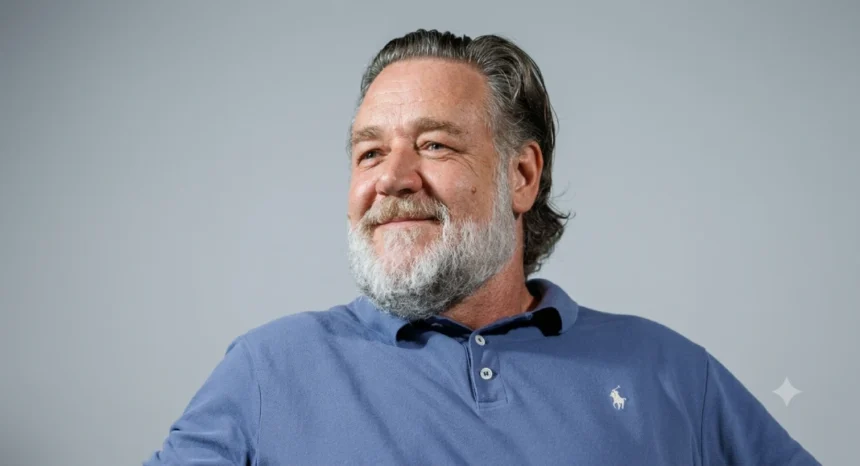
If you search for Russell Crowe’s net worth right now, you’ll get different answers depending on which site you land on. Some say $95 million. Others say $120 million. A few older estimates float as high as $150 million. That kind of inconsistency can be frustrating when all you want is a straight answer.
- What Is Russell Crowe’s Net Worth Right Now?
- How Did Russell Crowe Build His Fortune?
- What Are Russell Crowe’s Most Notable Films (Financially)
- How Much Does Russell Crowe Earn From Endorsements and Business Ventures?
- What Real Estate and Assets Does Russell Crowe Own?
- Why Do Russell Crowe’s Net Worth Estimates Vary So Much?
- Frequently Asked Questions
- Key Takeaways
Here’s the honest picture: as of 2026, Russell Crowe’s net worth is most commonly estimated at $100–120 million, with recent figures from Celebrity Net Worth and other trackers landing around $120 million, and more conservative estimates (often citing Forbes) putting the number closer to $95–100 million. The gap exists because celebrity net worth calculations rely on public data — film salaries, known business stakes, and reported property sales — and much of a high-net-worth individual’s financial life stays private.
This article breaks down how Crowe built that fortune, where the money comes from, and why his wealth tells a bigger story about long-term financial strategy in Hollywood.
What Is Russell Crowe’s Net Worth Right Now?
Most current profiles place Crowe’s net worth around $120 million, though some conservative trackers put it closer to $95–100 million. Either way, he ranks among the wealthier actors of his generation.
What sets Crowe’s financial story apart from many peers is diversification. He hasn’t relied solely on acting paychecks. Over three decades, he’s layered income from producing, directing, endorsement deals, a professional sports team, hospitality, farming, and real estate — building a structure that keeps generating money even between film roles.
How Did Russell Crowe Build His Fortune?
Picture the early 2000s. Russell Crowe has just won the Academy Award for Best Actor for playing Maximus in Gladiator. His phone won’t stop ringing. Studios want him for their next blockbuster. But instead of simply chasing the highest flat fee, Crowe — like many top-tier actors of that era — starts negotiating for something more valuable than a one-time salary: a share of the profits.
That shift in approach is a big part of the difference between actors who earn well and actors who build lasting wealth.
Acting Salaries and Backend Deals
Crowe’s acting career has been the primary engine of his fortune. He’s appeared in more than 50 films across three decades. During his peak earning years in the 2000s and early 2010s, he commanded fees that reportedly reached $20 million per film — notably for Robin Hood and Master and Commander — and his highest-paid role is widely reported to be Noah (2014), at around $30 million.
Gladiator itself grossed well over $450 million worldwide. A film performing at that level is exactly the kind of project where backend profit participation, on top of a base salary, can meaningfully increase an actor’s total payday.
Films like A Beautiful Mind and Robin Hood followed similar patterns — strong box office paired with fees that reflected Crowe’s box-office draw.
Producing and Directing Revenue
In 2014, Crowe stepped behind the camera. His directorial debut, The Water Diviner, was a film he also produced and starred in. That wasn’t just an artistic choice — it was a financial one.
As a producer, Crowe earns a share of a film’s revenue across theatrical, streaming, and licensing channels — income that isn’t tied to being on screen. Acting fees are transactional: paid per project, and the money stops when the project wraps. Production revenue, especially on titles with a long shelf life on streaming platforms, can generate income for years.
What Are Russell Crowe’s Most Notable Films (Financially)
While exact per-film compensation is rarely disclosed in full, these titles stand out as the biggest contributors to his career earnings:
- Gladiator (2000) — His Oscar-winning role, and the film most associated with his peak stardom and any backend arrangement he may have had.
- A Beautiful Mind (2001) — An Oscar-nominated performance that reinforced his ability to command top-tier fees.
- Robin Hood (2010) and Master and Commander (2003) — Reported fees around $20 million, among his highest.
- Noah (2014) — His reported career-high payday was at roughly $30 million.
- Man of Steel (2013) — His role as Jor-El put him inside a major franchise ecosystem.
Beyond these, Crowe has earned income from a long list of other credits, including L.A. Confidential, The Insider, Cinderella Man, American Gangster, Les Misérables, The Nice Guys, Thor: Love and Thunder, The Pope’s Exorcist (2023), and Nuremberg (2025). Individually, some paid modestly by his standards. Collectively, they represent a huge share of his lifetime earnings.
How Much Does Russell Crowe Earn From Endorsements and Business Ventures?
Acting alone doesn’t account for the full picture. Crowe has earned meaningful income from ventures entirely outside the film industry.
Brand Partnerships
Crowe has been associated with several recognizable brands over the years. Deals of this caliber for an Oscar-winning actor typically combine upfront fees, retainers, and bonuses — arrangements that can be worth well into seven figures annually when a partnership is active.
What makes Crowe attractive to brands isn’t just fame — it’s credibility built over three decades of serious dramatic work, which lets brands position him alongside heritage-style messaging.
The South Sydney Rabbitohs and Other Investments
One of Crowe’s most notable business moves came in 2006, when he became co-owner of the South Sydney Rabbitohs, a club in Australia’s National Rugby League. It’s one of the oldest and most storied teams in Australian rugby, and Crowe’s involvement has been both personal and financial — professional sports team ownership tends to appreciate significantly in value over time.
Beyond the Rabbitohs, Crowe has been linked to hospitality ventures in Sydney, a cattle operation in New South Wales reportedly running several hundred head of Black Angus cattle, and other business interests. These aren’t vanity projects — they’re income-producing or appreciating assets that diversify his financial exposure away from the entertainment industry alone.
What Real Estate and Assets Does Russell Crowe Own?
Real estate has been a consistent part of Crowe’s financial strategy. He has held properties connected to New Zealand, Australia, and the United States over the years, and has been reported to be marketing a well-known Sydney penthouse for a substantial sum.
While specific current valuations aren’t public, holdings of this kind — spread across more than one country — typically represent a large share of a celebrity’s total net worth once appreciation is factored in. Real estate also serves a different purpose than film income: it’s a store of value that isn’t tied to how many roles someone books in a given year.
In 2018, Crowe also drew attention for auctioning off personal items and memorabilia, reportedly bringing in several million dollars in a single sale — a reminder that even personal collections can become a meaningful, one-time source of income for someone with a high public profile.
Why Do Russell Crowe’s Net Worth Estimates Vary So Much?
This is one of the most common questions people have, and the answer is fairly simple.
Celebrity net worth figures are calculated by outside trackers and media outlets — not by celebrities themselves. These estimates typically rely on:
- Publicly reported salaries (often incomplete)
- Known business stakes (which fluctuate in value)
- Property records (which show purchase price, not current market value)
- Estimated endorsement income (rarely disclosed in full)
Here’s how a few current sources compare:
| Source Type | Estimated Net Worth | Basis |
|---|---|---|
| Celebrity Net Worth-style trackers | ~$120 million | Acting, producing, endorsements, and real estate |
| Forbes-cited / conservative estimates | ~$95–100 million | Confirmed acting income and known assets |
The gap isn’t a contradiction so much as a difference in method. Some trackers count only confirmed income; others try to estimate total asset value, including real estate and business equity that’s harder to verify. The most reasonable takeaway is that Crowe’s net worth sits somewhere in the $95–120 million range, with the exact number depending on how conservatively you value his non-liquid assets.
Frequently Asked Questions
What is Russell Crowe’s net worth in 2026?
Most estimates place it between $95 million and $120 million, depending on the source and how business/real estate assets are valued.
How did Russell Crowe make his money?
Primarily through acting fees on major studio films, supplemented by producing and directing income, brand partnerships, ownership of the South Sydney Rabbitohs, hospitality and farming ventures, and real estate.
What was Russell Crowe’s highest-paid role?
Noah (2014) is widely reported as his highest-paid film, at around $30 million.
What businesses does Russell Crowe own?
He’s a co-owner of the South Sydney Rabbitohs NRL team and has been linked to hospitality and farming ventures in Australia.
Is Russell Crowe still acting?
Yes — recent credits include The Pope’s Exorcist (2023) and Nuremberg (2025).
Key Takeaways
Russell Crowe’s financial story isn’t just about a famous actor getting paid well for movies. It’s about how someone in a volatile industry built a durable, multi-part financial foundation over more than 30 years.
A few things stand out:
- Backend deals and top-tier fees matter as much as base salary. His highest-earning roles came from projects where the fee itself reflected serious box-office pull.
- Diversification softened the effect of any slow years. Producing income, a sports team, and real estate kept money flowing even when fewer blockbuster roles came his way.
- Owning assets tends to outlast a single paycheck. Sports team stakes, property, and business ventures all behave differently than a per-film salary — they can keep producing value long after the cameras stop rolling.
If there’s one lesson to take from Crowe’s financial path, it’s that earning well is only part of the equation. Building income from things you own — rather than only from work you do — is what tends to create lasting financial stability, whether you’re an A-list actor or building a career in any other field.