


Most people have tried to build a better habit at least once. They start strong, feel good for a few days, then quietly drop it by week two. Sound familiar?
- Why Most Habits Fail Before They Begin
- How to Build Habits That Stick: A Step-by-Step Framework
- The Role of Cues, Routines, and Rewards in Habit Formation
- Consistency Strategies That Keep Habits Alive Through Setbacks
- Habit Formation Tips for Building Multiple Habits at Once
- The Identity Shift: Why Long-Term Habits Require a Change in Self-Perception
- Tools, Trackers, and Resources to Support Behavior Change
- Conclusion
The problem is not a lack of willpower. It is the approach. Learning how to build habits that stick does not require a personality overhaul or a perfect schedule. It requires a clear process, a realistic starting point, and strategies that work with human psychology instead of against it.
This guide covers the science of why habits break down and gives you a simple framework you can apply today. Every section is built for beginners who want results that last.
Why Most Habits Fail Before They Begin
Research from Duke University found that roughly 45% of daily actions are habitual. Nearly half of what you do each day runs on autopilot. The trouble is, most people try to interrupt that autopilot without understanding how it works.
There are three core reasons habits collapse before they take root: unrealistic expectations, dependence on motivation, and trying to change too many things at once. Once you understand each one, you can build around them.
The Motivation Trap
Motivation feels like the engine of behavior change. It is not. It is more like a spark. It gets things started, but it burns out fast.
Every January, gym memberships spike. By February, most new members have disappeared. The habit did not fail because the goal was wrong. It failed because it was built on motivation rather than structure. When the excitement fades — and it always does — there is nothing left to keep the behavior going.
The solution is to build systems that make the habit happen regardless of how you feel. Routine structure beats willpower every time.
The “Too Much, Too Fast” Problem
A common pattern: decide to fix everything at once. New diet. Daily exercise. Earlier wake-up. Journaling. Meditation. All starting Monday.
Within two weeks, the whole stack collapses because the mental and physical load is too high. Behavior change research shows that adopting multiple new habits at the same time lowers the success rate of each one.
The better path is simpler. Pick one behavior. Build it until it feels normal. Then add the next.
How to Build Habits That Stick: A Step-by-Step Framework

The following four steps form a repeatable process for building any habit from scratch. Work through them in order.
Step 1: Start Smaller Than You Think You Should
Stanford researcher BJ Fogg spent years studying behavior change and arrived at a counterintuitive conclusion: the smaller the starting habit, the more likely it is to last.
He calls them Tiny Habits. The idea is to make the behavior so small that there is no friction, no excuse, and no reason to skip it. If your goal is to read more, start with one page per night, not a chapter. If you want to exercise, start with five minutes, not an hour.
This feels too easy at first. That is the point. Small wins create momentum, and momentum carries a habit past the first two weeks.
Step 2: Anchor New Habits to Existing Ones
Habit stacking pairs a new behavior with something you already do automatically.
The formula: “After I [existing habit], I will [new habit].”
A few examples:
- After I pour my morning coffee, I will write one sentence in my journal.
- After I sit down at my desk, I will review my top three tasks for the day.
- After I brush my teeth at night, I will do two minutes of stretching.
The existing habit acts as a reliable trigger. You do not need to remember or find motivation. The sequence does the work for you.
Step 3: Design Your Environment to Make the Habit Easy
Your environment shapes your behavior more than you probably realize. If healthy snacks are at eye level in the fridge, you eat them more. If your running shoes are by the door, you are far more likely to use them.
This is called environmental design. The goal is to reduce friction for habits you want to build and increase friction for habits you want to break.
Want to drink more water? Put a full bottle on your desk before you sit down. Want to read before bed? Place the book on your pillow in the morning. Small physical cues act as constant reminders without requiring mental effort.
Step 4: Track Progress Without Obsessing Over Perfection
Tracking a habit makes it visible, and visible progress is motivating. A simple paper calendar where you cross off each completed day creates what psychologists call a “don’t break the chain” effect.
The key rule here is the “never miss twice” principle. Missing one day is human. Missing two days in a row starts to build a habit of skipping. When you miss a day, the only goal is to show up the next day, even in the smallest possible form.
Habit tracker apps or a basic notebook work just as well as any complex system. The tool matters less than the consistency of using it.
The Role of Cues, Routines, and Rewards in Habit Formation
In his book “The Power of Habit,” Charles Duhigg described a three-part loop at the core of every habit: cue, routine, reward. Understanding this loop separates people who build lasting habits from those who keep restarting.
The cue triggers the behavior. The routine is the behavior itself. The reward is what the brain receives afterward, which reinforces the loop and makes it more likely to repeat.
How to Identify Your Habit Triggers
Most habits are driven by one of five types of cues: time of day, location, emotional state, other people, or an immediately preceding action. To understand your current habits, trace each behavior back to its trigger.
Try this quick self-audit. Pick one habit you already have, good or bad, and ask yourself:
- What time does this usually happen?
- Where am I when it happens?
- How do I feel just before it happens?
- Who is around, if anyone?
- What did I just do before this?
The answer will almost always point to a clear trigger. Once you know the cue, you can strengthen it for habits you want to keep or disrupt it for habits you want to change.
How to Build a Reward That Actually Reinforces the Behavior
The reward in the habit loop must come immediately after the behavior to work. A reward you receive three days later does not teach the brain to associate it with the habit.
Rewards come in two forms. External rewards include a small treat, a short break, or five minutes of something enjoyable. Internal rewards include the sense of completion, satisfaction, or the quiet confidence that comes from following through.
One important warning: choose rewards that do not cancel out the habit. Rewarding a morning run with a heavy, unhealthy meal sends mixed signals. The reward should feel like a natural extension of the effort, not a trade-off against it.
Consistency Strategies That Keep Habits Alive Through Setbacks
Starting a habit is the easy part. The real test comes around week three, when the novelty wears off and real life gets in the way. This is where most beginners quit, and it is where the right consistency strategies matter most.
The goal is not to be perfect. The goal is to keep returning.
How to Handle Missed Days Without Quitting
Missing a day feels worse than it is. Research in habit psychology shows that a single missed day has little to no measurable impact on long-term habit formation. What matters is what you do the day after.
The “never miss twice” rule is simple: treat one missed day as a normal part of the process. Treat two consecutive missed days as a warning sign and respond immediately, even if the response is just doing the habit in its smallest possible form.
If you miss a workout, do not wait until you feel ready for a full session. Put on your shoes and walk for five minutes. That act of showing up, however small, keeps the identity intact and the habit loop from breaking.
How to Stay Consistent When Motivation Drops
Motivation will drop. Count on it. What you need instead is a plan for the days when it does.
Implementation intentions are one of the most well-researched consistency strategies available. The format: “If [situation], then I will [habit].” For example: “If I feel too tired to exercise after work, I will do a ten-minute walk instead of skipping entirely.”
Another approach is identity reframing. Instead of telling yourself “I am trying to be healthier,” shift to “I am someone who moves every day.” Language shapes behavior. When the habit becomes part of how you see yourself, skipping it feels inconsistent with who you are, not just with your to-do list.
Habit Formation Tips for Building Multiple Habits at Once
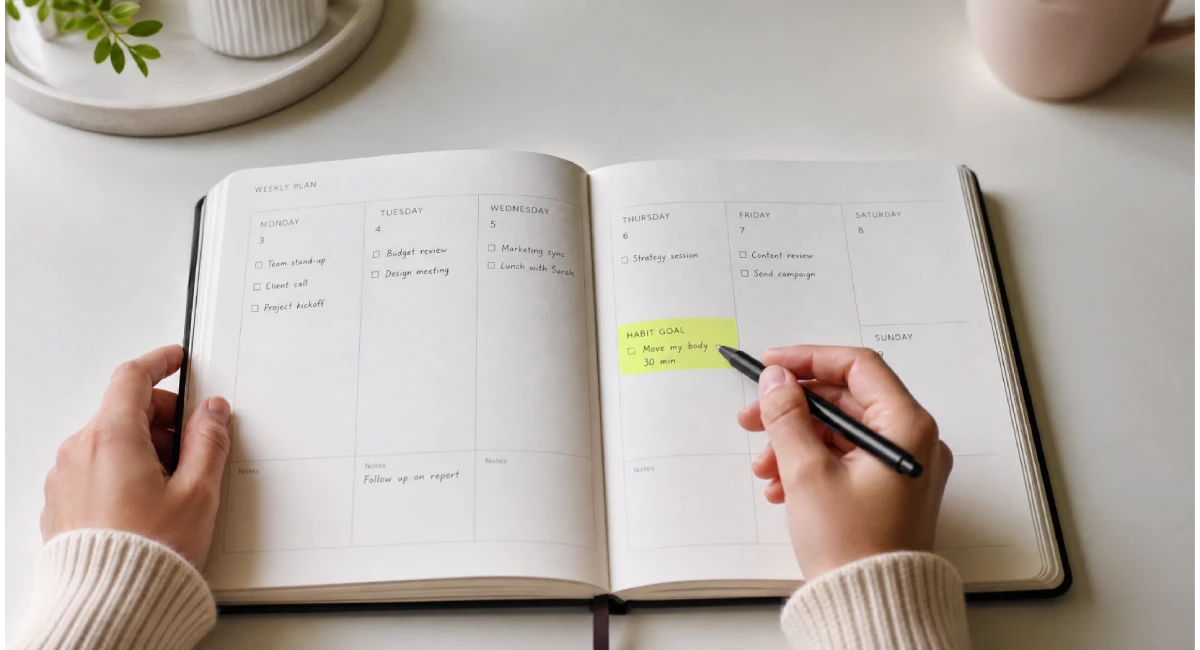
One of the most common beginner mistakes: deciding to build several habits at the same time and treating them as a single project. They are not. Each habit requires its own mental resources during the formation period.
The practical rule: build one habit at a time. Once it feels automatic — typically after 30 to 60 days of consistent repetition — add the next one. Patience here is not passive. It is the strategy.
The 30-Day Rule: What the Research Actually Says
You have probably heard that it takes 21 days to form a habit. That number comes from a loose interpretation of work by plastic surgeon Maxwell Maltz in the 1960s, and it has been repeated so often that it became accepted as fact.
A 2010 study by Phillippa Lally at University College London told a different story. After tracking 96 participants over 12 weeks, the study found that habit formation takes anywhere from 18 to 254 days, with an average of around 66 days. The range depends on the complexity of the habit and the individual.
This does not mean habits are hard to build. It means the timeline is realistic and varies by person. A habit as simple as drinking a glass of water after breakfast can become automatic within a few weeks. A complex exercise routine may take several months. Neither outcome is a failure.
How to Prioritize Which Habit to Build First
Not all habits carry the same weight. Some produce a ripple effect across multiple areas of life. These are called keystone habits, a term Charles Duhigg introduced to describe behaviors that naturally trigger other positive changes.
Daily exercise is the classic example. People who build a consistent exercise habit often find that their sleep improves, their diet shifts, and their focus at work sharpens — changes they never aimed for directly.
To find your keystone habit, ask yourself:
- Which habit, if built consistently, would make other goals easier to reach?
- What is the one behavior I keep meaning to start but never do?
- Which area of my life would have the broadest positive effect if I improved it first?
Start there.
The Identity Shift: Why Long-Term Habits Require a Change in Self-Perception
Habits built purely on goals tend to collapse once the goal is reached or when progress stalls. Habits built on identity tend to last because they are no longer just things you do. They are part of who you are.
James Clear writes in “Atomic Habits” that every action you take is a vote for the type of person you want to become. The goal is not to run a 5K. It is to become someone who runs. That shift in framing changes everything.
How to Use “I Am” Statements to Reinforce New Behaviors
The language you use when talking about yourself has a measurable effect on behavior. Saying “I am trying to read more” positions reading as an aspiration. Saying “I am someone who reads every day” positions it as an identity.
This is not a feel-good affirmation. It is a practical tool. When you define yourself as someone who does a behavior, you create an internal standard to live up to. Skipping the habit starts to feel inconsistent with who you are, and that discomfort pushes you back toward the behavior.
Start by swapping one “I’m trying to” statement for one “I am someone who” statement, applied to the habit you are currently building.
How Small Wins Build a Stronger Habit Identity Over Time
Every time you complete a habit, even a tiny one, you add a piece of evidence that the identity is real. One completed habit is one vote. Ten completed habits are ten votes. One hundred is one hundred.
This is why starting small works at a deeper level than just reducing friction. When you do one page of reading each night and you do it consistently for 30 days, you have cast 30 votes for the identity of “someone who reads.” That accumulation changes how you see yourself in a way that a single ambitious reading session never could.
The identity comes from the pattern, not the scale.
Tools, Trackers, and Resources to Support Behavior Change
The right tools will not build your habits for you, but they make it easier to stay consistent and track your progress. Here are some options, both digital and analog.
Best Habit Tracking Apps for Beginners
A few apps have earned strong reputations among people focused on behavior change:
- Habitica turns habit tracking into a game, assigning experience points and rewards for completed habits. It works well for people who respond to visual progress and light competition.
- Streaks (iOS) is built around maintaining daily chains of completed habits, with a clean interface and a limit of 12 habits to prevent overloading.
- Loop Habit Tracker (Android, free and open source) offers detailed charts and statistics for each habit without any subscription cost.
- Notion templates are a flexible option for people who prefer to build their own tracking system inside a tool they already use daily.
None of these requires a paid subscription to be effective. Start with whichever one creates the least friction to use daily.
Low-Tech Methods That Work Just as Well
Digital apps are not for everyone. A wall calendar with a large X marked on each completed day is one of the simplest tracking systems you can use. It is visual, requires zero setup, and never needs charging.
Bullet journals and printable habit trackers serve the same purpose for people who prefer writing by hand. Many people find that the physical act of marking a checkbox or drawing an X reinforces the completion more than tapping a screen does.
The method you choose matters far less than how consistently you use it. A paper calendar you actually mark is worth more than a sophisticated app you open twice and forget.
Conclusion
Building habits that stick has nothing to do with being disciplined 100% of the time. It comes down to starting with something small enough to actually do, building a structure around it, and recovering quickly when life interrupts your streak.
The steps in this guide are not theoretical. They are drawn from behavior research and practical experience, and every one can be applied today without buying anything, clearing your schedule, or waiting for the right moment.
Your next step is simple: pick one habit. Apply Step 1 from the framework above. Start smaller than feels necessary, and do it once today.
That is how to build habits that stick. Not with a grand plan. With one small action, repeated.