


You know exercise is good for you. That isn’t the problem. The problem is that knowing and doing are two different things — and when motivation is low, even putting on workout clothes feels like too much effort.
- Why Starting Feels So Hard When You’re Unmotivated
- How to Start Exercising When Unmotivated: The Minimum Viable Approach
- Beginner Workout Tips That Require Almost No Equipment or Preparation
- Removing the Friction That Stops You Before You Start
- Building Motivation for Exercise Through Small Wins
- What to Do When Motivation Disappears Mid-Habit
- How Social Support and Accountability Speed Up the Process
- Conclusion
If you’ve been trying to figure out how to start exercising when unmotivated, you’re not lazy. The resistance you feel is real, and it has a biological explanation. You don’t need willpower, a gym membership, or a lifestyle overhaul to get started.
This article gives you practical entry points into regular movement — designed for people who feel stuck. By the end, you’ll have a clear first step you can take today.
Why Starting Feels So Hard When You’re Unmotivated
Here’s something most fitness advice skips: your brain isn’t designed to love effort. It’s designed to conserve energy. So when you think about starting a workout routine, your brain runs a quick cost-benefit calculation — and if the perceived cost is high, it signals you to stay put.
This isn’t a character flaw. It’s called activation energy — a concept borrowed from chemistry that behavioral scientists now use to explain habits. The more steps, decisions, and discomfort a task involves, the more mental energy it takes just to begin. Exercise, especially for someone inactive, comes loaded with all three.
Add all-or-nothing thinking (“if I can’t do it properly, why bother?”) and the discomfort of starting something new, and it’s easy to see why so many people stay on the couch even when they genuinely want to change.
The “Too Much, Too Soon” Trap Most Beginners Fall Into
The most common mistake beginners make is starting too hard, too fast. They sign up for a six-day gym schedule, buy new gear, and plan an hour of exercise every morning. It feels good to plan. Then day three arrives, the soreness kicks in, life gets busy, and the whole thing collapses.
Compare a 5-minute walk around the block with a 60-minute HIIT class five times a week. One feels doable right now. The other feels like a future version of you. Starting small isn’t giving up on your goals — it’s the fastest route to reaching them.
Why Waiting to “Feel Ready” Usually Backfires
Most people believe motivation comes first, then action follows. In reality, it works the other way around. You take a small action, you feel slightly better, and that feeling creates the next bit of motivation. Waiting until you feel ready is like waiting for the room to warm up before you turn on the heater.
Behavioral research supports this: the act of starting, no matter how small, is what generates momentum. You don’t need to want to exercise. You just need to begin.
How to Start Exercising When Unmotivated: The Minimum Viable Approach
“Minimum viable exercise” is simple: it’s the smallest amount of intentional movement that still counts as showing up. It’s not about burning calories or hitting targets. It’s about building the habit of moving.
This approach works because it removes the biggest obstacle between you and exercise: the decision cost. When the bar is low enough, there’s almost nothing left to negotiate.
The Two-Minute Rule for Getting Off the Couch
Commit to just two minutes of movement. That’s it. March in place for two minutes. Walk to the end of your street and back. Do a few slow stretches on the floor. Two minutes is so small that refusing it feels unreasonable.
What usually happens is that once you start moving, you keep going. The body shifts out of rest mode, the initial resistance fades, and five minutes becomes ten without extra effort. But even if you stop at two minutes, you still showed up — and that’s the whole point at this stage.
Choosing Movement You Actually Don’t Hate
Nobody said exercise has to look like a gym session. If the idea of running fills you with dread, don’t run. If lifting weights feels boring, skip it for now.
Your job at this stage is to find something you don’t mind doing. Walking, cycling at an easy pace, dancing in your kitchen, swimming, or slow stretching all count. The “best” workout for you right now is the one you’ll actually do. Enjoyment matters more than trends when you’re just getting started.
Beginner Workout Tips That Require Almost No Equipment or Preparation
One of the most common barriers is the belief that real exercise requires a gym, equipment, or dedicated space. None of that is true when you’re starting. The beginner workout tips that work best are the ones with zero setup cost.
You don’t need a membership, a mat, or a single piece of equipment to build a real movement habit from scratch.
Home-Based Movements Anyone Can Start Today
These six movements require no equipment, no experience, and less than ten minutes of space:
- Chair squats: Stand in front of a chair, lower yourself until you almost sit, then stand back up. Easy on the joints.
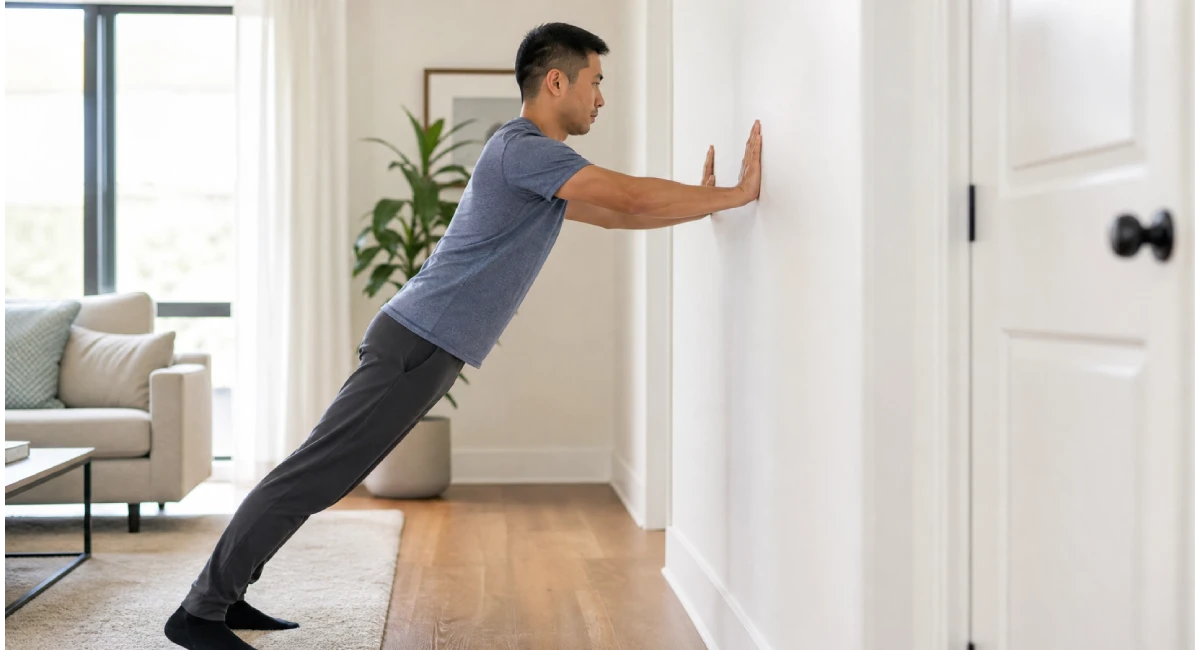
- Wall push-ups: Place your hands on a wall at shoulder height and push your body away and back. Easier than floor push-ups.
- Standing marches: Lift your knees one at a time while standing in place. Simple and effective for beginners.
- Calf raises: Stand near a wall for balance, rise onto your toes, and lower back down. Low-impact and straightforward.
- Seated leg lifts: Sit on a chair and slowly lift one leg at a time. Works well for those with limited mobility.
- Slow shoulder rolls and neck stretches: Gentle, but they get the body moving and reduce stiffness.
Ten minutes of these movements three times a week is a completely legitimate start. Don’t underestimate it.
Short Outdoor Walks: The Most Underrated Starting Point
Walking gets dismissed because it feels too easy. That’s exactly why it works. Studies show that regular brisk walking improves heart health, sleep, and mood.
For a sedentary adult, a 15-minute walk five days a week produces measurable physical and mental benefits. It requires no skill, costs nothing, and can be done at any pace. Consistency at this level matters far more than intensity. Walking isn’t a placeholder for “real” exercise. For most beginners, it is the real exercise.
Removing the Friction That Stops You Before You Start
Here’s the truth: most people who struggle to exercise aren’t lazy. They face too many small decisions between where they are and where they need to be. What to wear, where to go, what to do first, whether to warm up, how long to go for. Each decision drains a little energy. Enough of them together, and the whole thing feels exhausting before it starts.
The solution isn’t more willpower. It’s removing the decisions entirely.
Preparing Your Environment the Night Before
This single habit removes more friction than almost anything else. The night before, spend three minutes doing the following:
- Lay out your workout clothes where you’ll see them in the morning
- Place your trainers by the door or at the foot of the bed
- If you follow a video workout, pre-load it on your phone or laptop
When you wake up, there’s nothing to figure out. The clothes are there, the shoes are there, the decision has already been made. Your brain no longer has to run the cost-benefit calculation — the path of least resistance now points toward movement instead of away from it.
Attaching Exercise to Something You Already Do
Habit-stacking means pairing a new behavior with one you already do consistently. It reduces the mental load of remembering and deciding, because the existing habit acts as a trigger.
Three examples that work well:
- After your morning coffee, walk around the block once before going back inside.
- While watching a television show in the evening, do slow stretches or seated movements during it.
- Whenever you go to a building with both stairs and a lift, take the stairs as a default.
None of these require extra time. They slot into what you already do, which makes them much easier to maintain.
Building Motivation for Exercise Through Small Wins
This is an important shift: you don’t need motivation before you start. You build it by starting. Every time you complete even a small bout of movement, your brain registers a small win. Over time, those small wins accumulate into a genuine pull toward the habit.
The trick is making sure your early wins are frequent enough to feel real.
Tracking Progress Without Obsessing Over Numbers
At this stage, track consistency, not performance. You don’t need to measure distance, calories, or speed. You need to see that you showed up.
Simple tracking methods that work:
- A paper checklist on the fridge with one tick per day you moved
- A note on your phone titled “Movement Streak”
- A free habit-tracking app set to one daily goal: “Did I move today? Yes or no?”
Seeing a row of completed days builds its own momentum. Missing one feels noticeable, which quietly builds the identity of someone who exercises. That identity shift is more powerful than any single workout.
Recognizing and Rewarding Early Consistency
Reward the behavior, not just the result. If you wait until you’ve lost ten pounds or run a 5K to feel good about your progress, you’ll be waiting a long time. The behavior worth rewarding is showing up.
After your first full week of daily movement, do something small but deliberate that you genuinely enjoy. A new book, a specific playlist you save for walks, an extra hour of guilt-free rest. These rewards don’t need to be big. They just need to be intentional and tied directly to the consistency you built.
What to Do When Motivation Disappears Mid-Habit

Even after a good start, motivation will drop. Something comes up at work, a cold knocks you out for a week, or you have a string of days where nothing feels appealing. This is normal, and it doesn’t mean the habit is broken.
What determines long-term success is not whether you drop off. It’s how quickly and easily you return.
The One-Day Rule: Getting Back Without Starting Over
When you miss a day or even several days, the goal is simple: return tomorrow. Not next Monday, not after a proper reset plan, not with a bigger commitment. Just the next day.
A lapse is not a failure. It’s a pause. The habit isn’t gone; it’s waiting. The worst thing you can do is treat a three-day break as evidence that you’re not the kind of person who exercises. You are — you just hit a speed bump. One day back is all it takes to restart the streak.
Scaling Up Gradually Without Losing the Habit
Once you have three to four weeks of consistent movement behind you, you can start to add a little more. A slightly longer walk, one extra set of chair squats, a second short session during the week. This is where a small habit starts becoming something more.
The warning here is real: don’t jump too far, too fast. The most common reason people fall off a habit they built is increasing intensity or frequency too quickly and burning out again. Add ten percent more effort at a time, not fifty.
How Social Support and Accountability Speed Up the Process
You don’t need a workout partner to build an exercise habit. Many people do it successfully on their own. But if staying motivated alone feels hard, low-pressure social support can help.
The keyword is low-pressure. The goal is encouragement, not competition.
Finding a Workout Companion Who Matches Your Level
If you decide to exercise with someone else, choose a person at a similar starting point — not someone already fit who runs 10K every morning. A big fitness gap creates subtle pressure and comparison, both of which make beginners feel worse, not better.
A friend who’s also just getting started, or someone returning to movement after a long break, brings shared experience instead of performance pressure. You encourage each other through the same struggles rather than measuring yourself against someone further ahead.
Using Online Communities Without Getting Overwhelmed
Online fitness communities can be a useful source of encouragement, but they can also intimidate beginners if you land in the wrong space. Look for communities specifically aimed at beginners or people returning to activity.
Beginner fitness subreddits, local walking groups on community apps, or low-key forums focused on habit-building rather than performance tend to be more welcoming. You’re not looking for a place to compete. You’re looking for a place where people understand what it feels like to start from zero.
Conclusion
Getting started is the hardest part, and the reason it feels hard isn’t a personal failing. It’s how habits work before they’re established. The approach that actually works is not a bigger commitment or stronger willpower. It’s a smaller first step, a lower barrier, and a system that makes showing up easier than staying still.
Pick one thing from this article. Just one. Maybe it’s laying out your clothes tonight. Maybe it’s a two-minute walk after your next coffee. Whatever it is, do it today — not as the start of a transformation, but as proof that you can move.
That’s how to start exercising when unmotivated: not with a perfect plan, but with one honest, small action repeated until it becomes part of who you are.