

Most people know Oprah Winfrey as a media icon. Fewer know the specific details of what she came from, or the particular decisions that changed the direction of her life before any camera crew showed up.
- Who Was Oprah Winfrey Before the World Knew Her Name?
- The Years Nobody Talks About: Milwaukee, Abuse, and Survival
- Nashville and Her Father: The Turning Point Nobody Expected
- Her First Microphone: Radio and TV Before Anyone Watched
- Baltimore, the Breakdown, and the Rebirth of Her Voice
- Chicago Changed Everything: How AM Chicago Became The Oprah Winfrey Show
- The Business Mind Behind the Public Persona
- The Decisions That Separated Her Story from Oprah Winfrey Childhood Poverty
- Conclusion
The story of Oprah Winfrey’s childhood poverty and rise to success is not a simple one. It is not a story of one big break or one moment of clarity. It is a story of structural disadvantage, survival, a few adults who showed up at the right time, and a woman who made specific choices under impossible pressure.
This article goes past the highlights reel. We are covering her earliest years in Mississippi, the abuse she experienced and later named publicly, the father who gave her discipline when she needed it most, and the professional missteps that accidentally placed her exactly where she was always supposed to be.
Who Was Oprah Winfrey Before the World Knew Her Name?
Orpah Gail Winfrey — her name misspelled on her birth certificate and eventually simplified to Oprah — was born on January 29, 1954, in Kosciusko, Mississippi. Her mother, Vernita Lee, was 18 years old and unmarried. Her father, Vernon Winfrey, was a soldier stationed elsewhere at the time. There was no family unit waiting to receive her. There was a grandmother, a farm, and very little else.
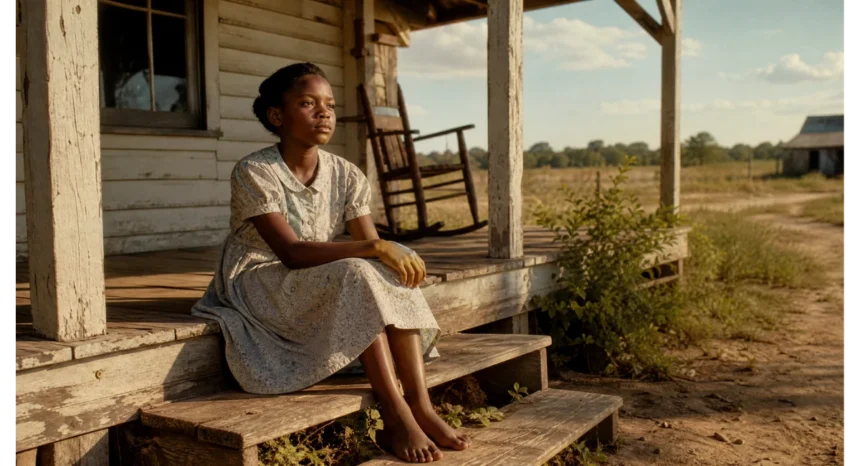
For the first six years of her life, Oprah was raised by her maternal grandmother, Hattie Mae Lee, on a farm outside Kosciusko. The family had no running water, no indoor plumbing, and no electricity. This was not a temporary condition. It was simply life.
Life on Her Grandmother’s Farm in Mississippi
Hattie Mae was strict, religious, and deeply serious about education. She taught Oprah to read before her third birthday. She took her to church every week, where Oprah was put in front of congregations to recite Bible verses from memory. By age three, she was being called “the little speaker.”
This matters more than it might seem. In those early years, before trauma and instability arrived, Oprah was being trained in the one skill that would define everything that came after: the ability to use language in front of people and hold their attention.
Hattie Mae was not warm in a conventional sense. She was firm, demanding, and operated on the belief that strict discipline was the only tool available to protect a Black girl in 1950s Mississippi. Oprah has said in multiple interviews that her grandmother saved her life, even if the methods felt harsh at the time.
What “Poor” Actually Looked Like in Kosciusko
It is worth being specific about what poverty meant here, because the word alone does not carry enough weight.
The family wore dresses made from potato sacks. There were no toys. Meals came from what the land produced. According to census data from that period, the median income for Black families in rural Mississippi in the 1950s was roughly one-third of the national median for white families, and access to basic infrastructure like clean running water was not guaranteed.
This was not a family going through a rough patch. This was a community locked out of basic resources by law and by design. Oprah’s early poverty was systemic, not circumstantial. Understanding that is important before we talk about what she did with it.
The Years Nobody Talks About: Milwaukee, Abuse, and Survival
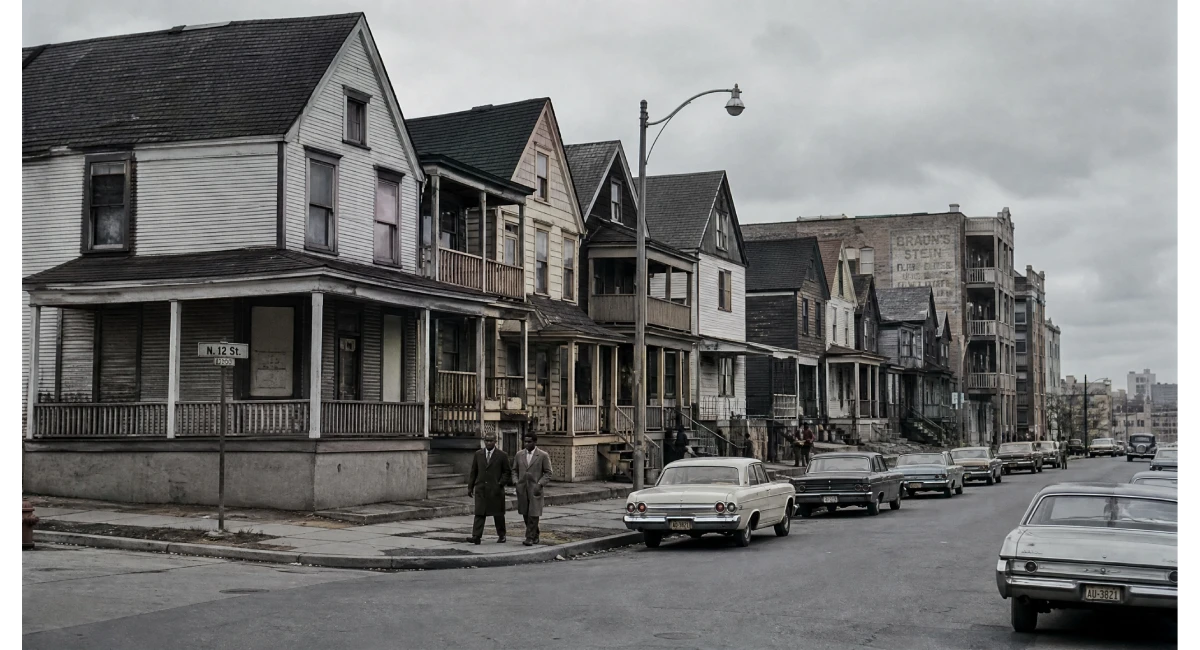
When Oprah was six years old, she was sent to live with her mother Vernita in Milwaukee, Wisconsin. Vernita had moved north looking for work, as many Black Southern families did during the Great Migration. What Oprah arrived into was not a stable home. It was a crowded apartment, multiple half-siblings, and a mother working long hours with little energy left for parenting.
The structured, demanding world of Hattie Mae’s farm was gone. What replaced it was chaos, inconsistency, and the absence of anyone paying close attention.
Moving to Milwaukee and Losing Stability
Vernita’s household was not cruel in any obvious, deliberate way. It was simply overwhelmed. There were other children, limited money, and a mother who was surviving rather than parenting.
For Oprah, the loss was specific. In Mississippi, she had been told every day that her words mattered, that her mind was sharp, that she had something worth developing. In Milwaukee, that feedback stopped. School continued, and she remained a strong student, but the intentional scaffolding that Hattie Mae had built around her was gone.
Children do not always understand what they have lost until much later. For Oprah, she was six years old and living in a city apartment with strangers who happened to share her last name.
The Abuse She Named Out Loud
Beginning at age nine, Oprah was sexually abused by a 19-year-old cousin who was babysitting her. The abuse continued and involved other male relatives and a family friend over the following years. No adult intervened. No adult was told, because Oprah believed, as many children in those situations do, that she was somehow responsible.
She carried this in silence for years. It shaped the adolescent behavior that followed: running away, acting out, becoming increasingly difficult to manage. At 14, she became pregnant. The baby, born prematurely, died shortly after birth.
Oprah did not speak publicly about any of this until 1986, when she disclosed the abuse on her own television show, during an episode about sexual abuse. She later described it as an unplanned admission that came out before she had fully processed it herself. She was not following a publicist’s strategy. She was simply telling the truth, perhaps for the first time in front of witnesses.
We will come back to what that disclosure did for her career and her audience. For now, it is enough to know that she carried this alone from age nine through her early thirties.
Nashville and Her Father: The Turning Point Nobody Expected
In 1968, after the pregnancy and increasingly erratic behavior in Milwaukee, Vernita made the decision to send Oprah to live permanently with her father, Vernon Winfrey, in Nashville, Tennessee. Oprah was 14.
She has described this as the moment her life changed. Not because Nashville was glamorous or because Vernon was wealthy, but because he was consistent. That consistency, applied firmly and without compromise, is what she credits with turning her life around.
What Vernon Winfrey Gave Her That Money Couldn’t
Vernon Winfrey ran a small barbershop and had remarried. He was not rich. But he operated his household with a level of discipline and expectation that Oprah had not experienced since Hattie Mae’s farm.
His rules were specific:
- A book report had to be submitted to him every single week
- Five new vocabulary words had to be learned and used in sentences daily
- No social activities until schoolwork was complete
- Church attendance was not optional
Oprah has said, in her own words, that her father’s rules saved her life. Not in a metaphorical sense. She means that the structure he imposed redirected the trajectory she was on. She came to Nashville as a teenager who had experienced profound trauma and responded to it with chaos. She left as a scholarship student.
Vernon’s approach was not about resources. He gave her time, structure, and the message that her mind was the most important thing she owned.
Academic Success as a Way Out
At East Nashville High School, Oprah came into her own. She joined the drama club and the student council. Her verbal ability, sharpened first by Hattie Mae’s church recitations and then by Vernon’s vocabulary drills, made her a standout in every setting that rewarded speaking.
She won a speech contest that caught the attention of Tennessee State University, earning a full scholarship to study communication. The line from Hattie Mae’s Bible recitations to Vernon’s vocabulary drills to that scholarship is not subtle. It is almost perfectly direct.
She was not yet 18. She had already survived things most adults never face. And she was about to pick up a microphone for the first time.
Her First Microphone: Radio and TV Before Anyone Watched
At 17, Oprah entered a speech contest sponsored by Nashville’s WVOL radio station. The prize was a small scholarship. What she walked away with was a part-time job reading the news on air. The station managers heard her audition and hired her before the contest results were even finalized.
She was still in high school.
The Radio Job at 17 and What It Confirmed
This moment confirmed something that Vernon’s drills and Hattie Mae’s recitations had been building toward: Oprah’s voice was not just a personal skill. It was a professional asset in a specific, monetizable industry.
She was earning a paycheque before she graduated. She was learning how broadcast journalism worked from the inside. Every vocabulary word Vernon had made her use in a sentence was now being used in front of a microphone. The connection is not incidental.
The radio job also gave her something that cannot be taught in a classroom: confidence under pressure in front of an audience. That confidence would carry her through every awkward early moment in television, and there were several.
First TV Anchor: and Why She Almost Turned It Down
While attending Tennessee State University, Oprah was approached by Nashville’s WTVF-TV with an offer to join as a co-anchor for the evening news. She became the first Black female news anchor in Nashville at 19. She was also ambivalent about accepting the role, because it meant reducing her class load and stepping away from the degree she was working toward.
A faculty member at Tennessee State reportedly gave her the advice that moved her forward: an opportunity to do the work you have been studying for is not something you defer. You take it.
She took it. The role was not without friction. Television news in 1970s Nashville was not a welcoming environment for a young Black woman with an unconventional style. But she was in the room. That mattered.
Baltimore, the Breakdown, and the Rebirth of Her Voice
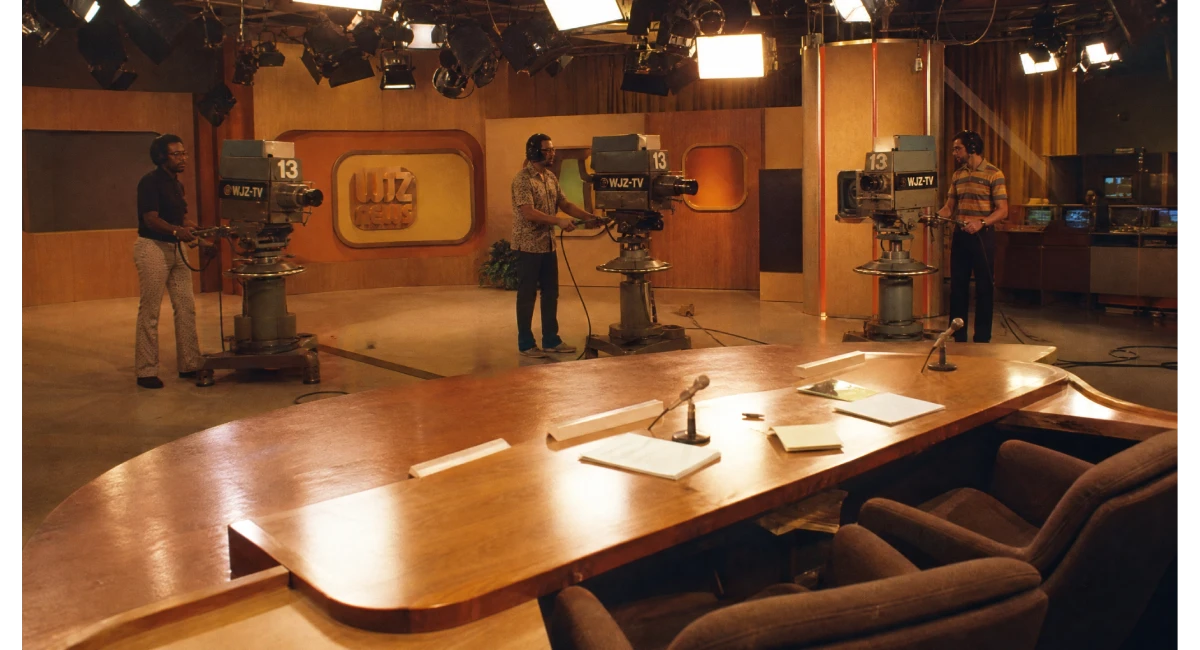
In 1976, WJZ-TV in Baltimore recruited Oprah to co-anchor their evening news. It was a significant step up in market size, and it looked, from the outside, like a clear advancement.
It did not go well.
Within months, producers began raising concerns about Oprah’s style. She was described as too emotionally involved with her stories. She connected personally with subjects in a way that was seen as unprofessional for a hard news format. She was moved off the anchor desk and reassigned to a local daytime talk show called “People Are Talking,” which was not considered a desirable posting.
Why She Was “Too Emotional” for Hard News
Hard news journalism in the 1970s operated on a code of deliberate detachment. Anchors were not supposed to react visibly to what they were reporting. They were not supposed to ask questions that went off the prepared script. They were not supposed to seem personally affected.
Oprah broke every one of those conventions, not out of recklessness but out of genuine engagement. She cried during emotional stories. She went off script to ask the follow-up question she actually wanted answered. She behaved, in a hard news context, like someone who genuinely cared what the person across from her was saying.
This was, in the language of 1970s television news, a liability. It was also, as it turned out, a description of exactly what daytime talk television needed.
“People Are Talking”: Finding the Right Room
“People Are Talking” debuted in August 1978. On the same morning, Phil Donahue’s nationally syndicated talk show was airing in the same time slot in Baltimore. The comparison was deliberate and somewhat unflattering to the local production.
Oprah sat down in that studio and felt, by her own account, that she had found what she was meant to do. The format gave her permission to do everything that hard news had penalized her for: ask personal questions, respond genuinely, take the conversation where the human moment was pointing.
Her co-host Richard Sher later recalled that Oprah had an instinctive ability to make guests feel they were having a private conversation even with cameras rolling. That ability was not new. It had been present since she was reciting Bible verses in Kosciusko. Hard news had been the wrong room for it. Talk television was the right one.
The show ran successfully for seven years. Baltimore knew who she was. Chicago was about to find out.
Chicago Changed Everything: How AM Chicago Became The Oprah Winfrey Show
In January 1984, Oprah moved to Chicago to host AM Chicago on WLS-TV. The show was in last place in its time slot. The station was not expecting a miracle. They were hoping for modest improvement.
Within four weeks, AM Chicago was the highest-rated show in its time slot in Chicago. Within a year, it was expanded from 30 minutes to an hour and renamed The Oprah Winfrey Show.
What She Did Differently in the First 30 Days
Oprah was not trying to replicate Phil Donahue, who had built the daytime talk format and was considered its unchallenged master. She was not trying to follow any playbook. She brought herself into the conversation in a way that daytime television had not seen.
She shared her own experiences. She responded to guests with visible, unscripted emotion. She treated every audience member as someone whose perspective mattered. She asked questions that felt personal because they were personal.
Chicago audiences did not feel like they were watching a television show. They felt like they were in a room with someone who was genuinely interested in them. That distinction is harder to manufacture than it sounds, and it translated immediately into ratings.
The Color Purple, Quincy Jones, and a Wider Stage
In 1985, while AM Chicago was redefining local television, Oprah auditioned for Steven Spielberg’s adaptation of Alice Walker’s novel The Color Purple. She had no formal acting training. She had not been pursuing a film career. She simply went after a role she wanted.
Quincy Jones, the producer on the project, had seen Oprah on AM Chicago and argued for her casting. Spielberg was persuaded. She was cast as Sofia, a role that earned her an Academy Award nomination for Best Supporting Actress.
The film was released in December 1985. Her national syndication deal followed in 1986. Both events arrived simultaneously, which meant that when America discovered The Oprah Winfrey Show as a national broadcast, they were also watching an Academy Award-nominated actress. The two things reinforced each other in a way that no PR strategy could have planned.
The Business Mind Behind the Public Persona
By the mid-1980s, Oprah Winfrey was the most-watched daytime television host in America. Most people in that position would have negotiated a better salary and called it a success. Oprah did something different. She structured herself as a business owner.
Why She Founded HARPO Instead of Staying an Employee
In 1986, Oprah founded HARPO Productions, named by reversing her own first name. This was not a vanity project. It was a strategic move to own the rights to her own show, her own content, and her own income stream.
At the time, talent rarely owned the shows they appeared in. The network or production company owned the format, the archive, the syndication rights, and the majority of the revenue. Oprah renegotiated her arrangement with King World Productions and with her ABC affiliate to ensure that HARPO held ownership.
This meant that every episode of The Oprah Winfrey Show ever broadcast was an asset she owned. Every syndication deal paid her company, not a network. Every production decision went through her desk. She was not an employee of her show. She was its owner.
Talk show hosts who did not make this distinction watched their income plateau. Oprah’s grew compoundingly.
The Wealth Milestone and What It Meant
In 2003, Forbes confirmed that Oprah Winfrey had become the first Black woman billionaire in history. The assets that produced that figure included HARPO Productions, syndication revenue from The Oprah Winfrey Show, the launch of O, The Oprah Magazine in 2000, her stake in the Oxygen Network, and later the OWN cable network.
None of these were accidents. Each one was an extension of the same principle she applied in 1986: own the asset, not just the income from it. The billion-dollar figure was the long-term result of a structural decision made at the beginning of her national career, when most people in her position would have accepted a salary and been grateful.
The Decisions That Separated Her Story from Oprah Winfrey Childhood Poverty
This is the section where the full picture comes together.
Oprah’s story is often told as a triumph of personal will over circumstance. That framing is not wrong, but it is incomplete. The more accurate version is this: exceptional ability, placed inside the right structural conditions at specific moments, produced an exceptional outcome.
Access vs. Talent: Why Both Had to Be Present
Oprah had remarkable verbal intelligence from the time she could speak. That is not in question. But that intelligence was suppressed during her Milwaukee years, when no one was investing in it. It was redirected during her Nashville years, when Vernon Winfrey built a structure around it. It was almost buried by the wrong professional format in Baltimore, until an accidental demotion placed her in the right one.
Talent without access produces a different story. There are millions of people born into rural Mississippi poverty with extraordinary abilities who never had a Hattie Mae teaching them to read at two years old, or a Vernon Winfrey enforcing vocabulary drills, or a television executive in Baltimore who accidentally fixed a casting error by moving a misfit anchor to a talk format.
This is not an argument against Oprah’s effort. Her effort was real and relentless. But honesty about what made that effort usable is also important.
Why She Talked About the Hard Parts: and What That Did
When Oprah disclosed her childhood sexual abuse on live television in 1986, she had not planned to do it. She described watching a guest talk about their own experience and feeling the words come out before she had decided to say them. She told the truth in front of an audience, and the audience responded in a way that changed the nature of daytime television.
The disclosure was not a strategy. But its effect was strategic in scale. Millions of viewers who had carried their own private traumas in silence watched a powerful, successful woman name hers out loud. The trust that created was not something advertising or production budgets could have built. It was the result of radical honesty in a medium that had been built around performance.
That trust became a commercial force. When Oprah recommended a book, it sold millions of copies. When she endorsed a product, it sold out. When she launched a magazine, it became one of the most successful magazine launches in American publishing history. None of that worked without the trust. And the trust was built, in significant part, by her willingness to be publicly, verifiably human.
Conclusion
Oprah Winfrey’s path from Kosciusko, Mississippi to a billion-dollar media company was not a straight line, and it was not primarily a story of individual genius. It was a story of compounding decisions made under difficult conditions, structural placements that either suppressed or released her abilities, and a form of public honesty that built something no marketing plan could replicate.
The story of Oprah Winfrey’s childhood poverty rise to success is worth understanding in full, not in summary, because the full version contains something the summary does not: specific, replicable logic about what changes outcomes and what does not. Structure matters more than resources. Format fit matters more than raw talent. Ownership matters more than salary. And telling the truth, even when it costs something, tends to build more than silence ever does.
If this story interests you, read next about how others rebuilt from early hardship, including figures like Howard Schultz, J.K. Rowling, and Jim Carrey, who each navigated poverty or instability before finding the structural conditions that made their abilities usable. The pattern, once you see it, is difficult to unsee.