

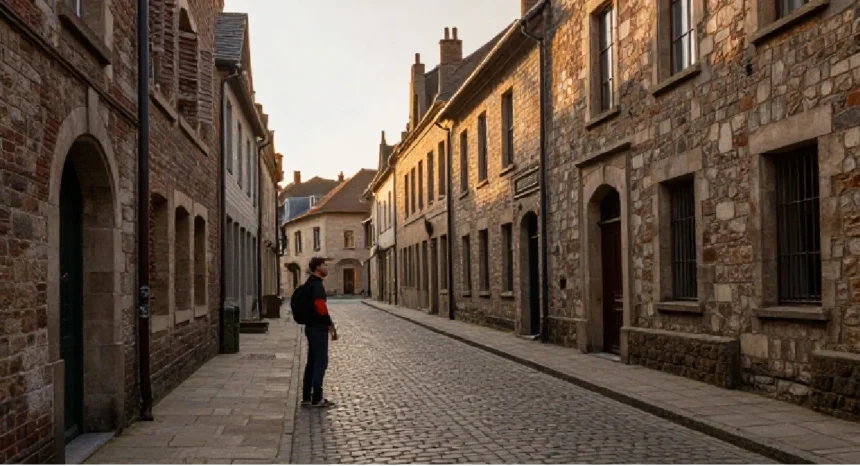
Paris fills up every August. Rome’s Trevi Fountain draws thousands before noon. And Barcelona’s most-photographed street, La Rambla, has become less a promenade and more a slow-moving crowd. If you’ve done the circuit, you already know: the best off-the-beaten-path European destinations often reward you in ways the famous ones can’t.
- What Makes a European Destination Truly Off the Beaten Path?
- Hidden Destinations in Eastern Europe Worth the Journey
- Less-Crowded Places in Europe That Most Travelers Skip
- Unique Travel Spots in the Balkans Few People Consider
- Northern and Atlantic Europe’s Most Overlooked Destinations
- How to Plan a Trip Around Lesser-Known European Destinations
- Off the Beaten Path European Destinations — How to Choose the Right One for You
- Conclusion
This isn’t about avoiding Europe’s great cities. It’s about knowing what sits beyond them. The continent has medieval towns with fewer than a hundred visitors on a Tuesday, lake regions with dual UNESCO status that most travelers can’t name, and Atlantic island chains with striking landscapes and almost no queues.
This article covers the destinations worth making a detour for, how to get there, and how to decide which one suits the way you actually travel.
What Makes a European Destination Truly Off the Beaten Path?
“Off the beaten path” has become a phrase travel brands use to sell very crowded places. A destination with 800,000 annual visitors is not hidden. A village with a boutique hotel that charges premium rates for “authentic” experiences is not undiscovered. The label has been stretched far enough that it needs a clear definition before it becomes meaningless.
A genuinely lesser-known destination tends to share a few measurable traits. Annual tourist arrivals are low relative to the size or significance of the place. The ratio of visitors to residents stays low enough that local life continues on its own terms. And the destination doesn’t appear on the top ten lists of major travel publications.
UNESCO sites are a useful comparison point. Dubrovnik’s old city receives roughly 1.5 million visitors per year. Ohrid in North Macedonia holds equal UNESCO status and receives a fraction of that. Both are remarkable. Only one of them still feels like a town people actually live in.
Seasonality matters too. Some destinations are mobbed in July and genuinely empty in April. That doesn’t make them off the beaten path year-round. It makes them good candidates for shoulder season travel, which is a different consideration entirely.
How to Tell the Difference Between Undiscovered and Overlooked
Not every quiet destination is quiet for good reasons. Some places are hard to reach and reward the effort with extraordinary experiences. Others are hard to reach and offer very little once you arrive.
The distinction usually comes down to two questions: Is the infrastructure adequate for independent travel? And does the place have enough substance to justify the logistics?
A destination like Maramures in Romania requires effort to reach but delivers something genuinely rare. A small town with poor transport and nothing to see is simply inconvenient. Experienced travelers learn to read the difference quickly. The best indicator is local tourism activity rather than international tourist volume. If a place has a functioning local economy, working guesthouses, and regional visitors who return annually, the experience is usually worth it.
Hidden Destinations in Eastern Europe Worth the Journey
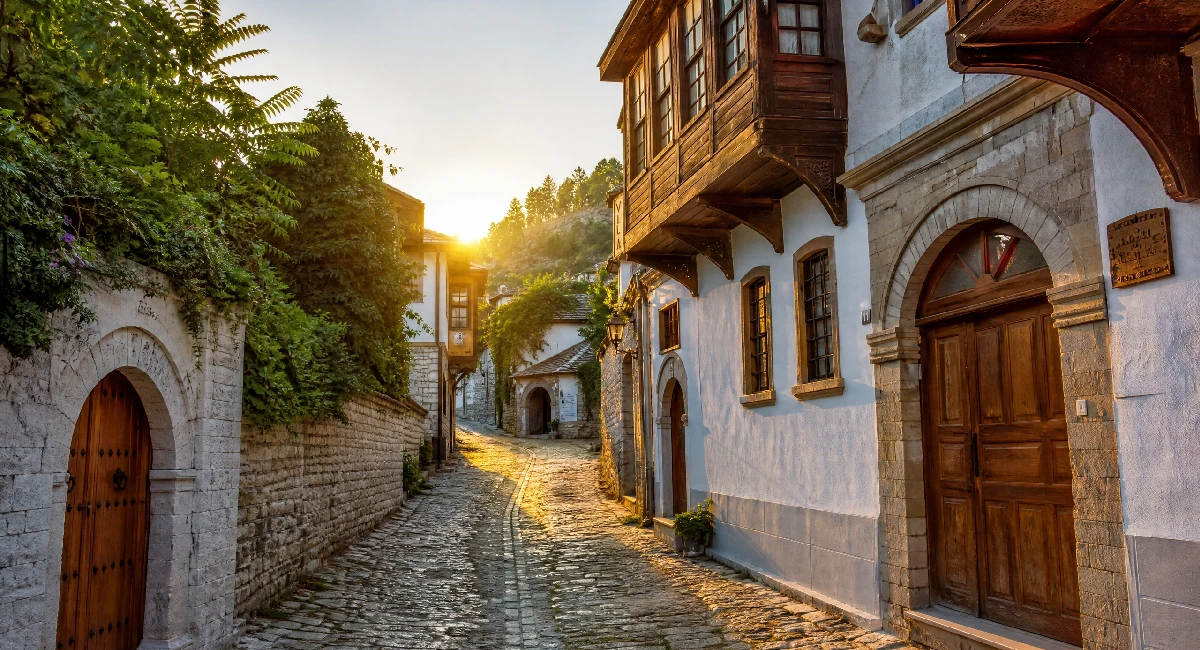
Eastern Europe remains the most consistently under-visited part of the continent relative to what it offers. Countries like Bulgaria, Romania, and Montenegro have built solid tourism infrastructure without attracting the volumes that make Western European sites hard to enjoy. For travelers looking for hidden European destinations with real historical depth, this region is the most logical starting point.
Plovdiv, Bulgaria — Europe’s Oldest Continuously Inhabited City
Plovdiv has been inhabited for at least 8,000 years, which makes it older than Rome, older than Athens, and older than most cities European travelers visit on a standard itinerary. Its Old Town sits on three hills above the Maritsa River and contains a Roman amphitheater that still hosts concerts, a well-preserved Ottoman quarter, and the Kapana creative district, full of independent cafes, galleries, and small restaurants that feel nothing like tourist infrastructure.
In 2019, Plovdiv held the title of European Capital of Culture alongside Matera in Italy. The designation brought attention without triggering a sustained surge in visitor numbers. International arrivals remain modest.
Getting there is straightforward. Sofia is roughly two hours by train or bus, and both options run frequently. From Sofia, international flights connect to most European hubs. Plovdiv works well as either a standalone destination or a two-night extension of a Sofia trip.
Maramures, Romania — Wooden Churches and Unchanged Villages
In the far north of Romania, near the Ukrainian border, Maramures moves at a pace that most of Europe abandoned several decades ago. Horse-drawn carts are still a common sight on village roads. Local festivals follow the Orthodox calendar. Farmers work land that has been in the same families for generations.
The region contains eight UNESCO-listed wooden churches, built in the 17th and 18th centuries using traditional techniques and without a single nail. The Merry Cemetery of Sapanta is an unusual landmark worth the detour: its painted wooden crosses use folk art and short verses to record the life stories of those buried there, often with dry humor that surprises visitors expecting solemnity.
Reaching Maramures requires effort. The nearest significant city is Cluj-Napoca, roughly four to five hours by road. Car rental is the most practical approach for exploring the villages. That barrier is precisely why the region remains intact.
Kotor’s Surroundings, Montenegro — Beyond the Bay’s Famous Walls
Kotor itself is not a secret. Its walled old city, built into a steep hillside above the Bay of Kotor, shows up on enough travel feeds that “crowded” is increasingly accurate in summer. But most visitors arrive by cruise ship, walk the main streets for a few hours, and leave. The bay’s wider landscape and Montenegro’s interior remain almost untouched.
The villages of Prcanj and Dobrota sit along the bay road just minutes from Kotor and see almost no independent travelers. The inland town of Cetinje, Montenegro’s former royal capital, has palace museums and a monastery with almost no queues. And the Durmitor mountain plateau, a national park about two hours north, offers glacial lakes and canyon hiking that would be overrun if it sat in Switzerland. The infrastructure exists. The crowds have not followed.
Less-Crowded Places in Europe That Most Travelers Skip
Western and Southern Europe are not fully explored, even by frequent visitors. The assumption that these regions are uniformly crowded is wrong. Many of the least-visited places on the continent sit within countries that travelers think they already know. Sometimes the best choice is simply the next town over.
Matera, Italy — The Cave City That Predates Rome
Matera sits in the Basilicata region of southern Italy, far from the main tourist corridors. Its Sassi districts, cave dwellings carved directly into a ravine, have been inhabited since the Palaeolithic period, making Matera one of the oldest continuously occupied urban settlements in the world. The same caves that were declared a national disgrace and forcibly evacuated in the 1950s now house hotels, restaurants, and small museums.
Unlike Cinque Terre, where the path between villages fills with people shoulder-to-shoulder in summer, Matera’s streets stay walkable even at peak season. It shared the 2019 European Capital of Culture designation with Plovdiv, and like Plovdiv, the attention did not translate into overcrowding.
The practical note: Matera is not on the main Italian rail network. The nearest train station is Potenza, about an hour away by bus. Travelers usually approach from Naples (roughly three hours by road) or Bari (about one hour). The inconvenience keeps the numbers down.
Alentejo, Portugal — Wine, Wheat, and Almost No Crowds
While the Algarve receives millions of visitors every year and Lisbon’s historic neighborhoods increasingly resemble theme parks in July, Alentejo sits just to the north and east of both, gathering almost none of the overflow. It is the largest of Portugal’s regions by area and one of the quietest.
The landscape is open and agricultural, covered in cork oak forest, wheat fields, and vineyards. The Almendres Cromlech, a megalithic stone circle near Évora, predates Stonehenge and receives a few thousand visitors a year rather than the hundreds of thousands that similar sites in Western Europe attract. The hilltop town of Monsaraz, completely intact within its medieval walls, looks out over a reservoir and sees a fraction of the visitors that Sintra or Óbidos handle on a single weekend.
Alentejo also produces some of Portugal’s best red wines, and many estates offer tastings without booking. Évora, the region’s main city, is a UNESCO World Heritage Site with a Roman temple in its center and enough restaurants and guesthouses to make it a comfortable base.
Alsace Villages, France — Beyond Strasbourg and Colmar
Colmar is beautiful and increasingly well-known. Strasbourg draws visitors year-round. But the Alsace wine route that connects them passes through villages that most travelers skip entirely, partly because they don’t appear on major tourist maps and partly because they require a car to reach comfortably.
Villages like Hunawihr, Bergheim, and Mittelbergheim have the same half-timbered architecture and geranium-draped window boxes that make Alsace famous. They also have working vineyards, local restaurants with no English menus, and streets where residents outnumber tourists by a wide margin even in August.
The wine route runs roughly 170 kilometers from Marlenheim in the north to Thann in the south. Both Strasbourg and Colmar have train connections from Paris and other European cities, making access easy. The key is renting a car and leaving the main stops behind.
Unique Travel Spots in the Balkans Few People Consider
The Balkans carry outdated associations that continue to keep visitor numbers low relative to the region’s actual appeal. Travelers who have spent time in Albania, North Macedonia, or Bosnia consistently report that the experience exceeded expectations in almost every category — affordability, hospitality, food quality, and the depth of things to see. This is the most undervalued region in Europe.
Berat, Albania — The City of a Thousand Windows
Berat earned its UNESCO World Heritage listing for the distinctive Ottoman-era architecture that climbs its hillside: white-painted houses with rows of large windows stacked one above the other, which gave the city its nickname. The hilltop neighborhood of Kala is a living settlement, not a museum. People still live within the castle walls, and a walk through the lanes between the churches and mosques takes you past residents hanging laundry and tending small gardens.
The visitor numbers tell the real story. Berat receives fewer than 70,000 international visitors per year. Dubrovnik, by comparison, was receiving that number in a single month before its visitor cap was introduced. Albania’s tourism infrastructure has grown noticeably over the past decade, but it has not reached the point where the experience feels packaged or managed.
Ohrid, North Macedonia — A Lake Town with 365 Churches
Ohrid sits on the southwestern edge of North Macedonia beside a lake so old and deep that it contains species found nowhere else on Earth. Lake Ohrid is one of only two sites in the world to hold both UNESCO Natural Heritage and UNESCO Cultural Heritage status simultaneously. The cultural designation covers a town with over 365 churches, medieval frescoes that influenced Byzantine art across the region, and an ancient theater built into the hillside above the lake.
Travel costs in North Macedonia remain among the lowest in Europe. Accommodation, food, and local transport are priced for a domestic market that earns well below Western European wages. A week in Ohrid costs a fraction of a comparable week in Croatia, with a travel experience that is every bit as rich.
Budget airline routes into Skopje have made the country more accessible in recent years, and the drive from Skopje to Ohrid takes roughly two and a half hours.
Mostar Beyond the Bridge — Bosnia’s Lesser-Seen Interior
The Stari Most bridge in Mostar is one of the most photographed structures in the Balkans, and the old city around it justifiably draws visitors. But most itineraries end there, leaving the wider Herzegovina region almost entirely unexplored.
The Kravice Waterfalls, roughly 40 kilometers southwest of Mostar, are a series of tufa falls that drop into a natural pool surrounded by greenery. They attract local visitors on summer weekends but almost no international tourists outside of organized day trips. The medieval village of Pocitelj, a short drive south, is a remarkably intact Ottoman settlement built into a cliff. And Blagaj’s tekke, a Dervish monastery built into a rock face at the source of the Buna River, is the kind of place that stays in your memory long after you leave. All three are within an hour of Mostar, yet almost nobody on a standard Balkan itinerary sees any of them.
Northern and Atlantic Europe’s Most Overlooked Destinations
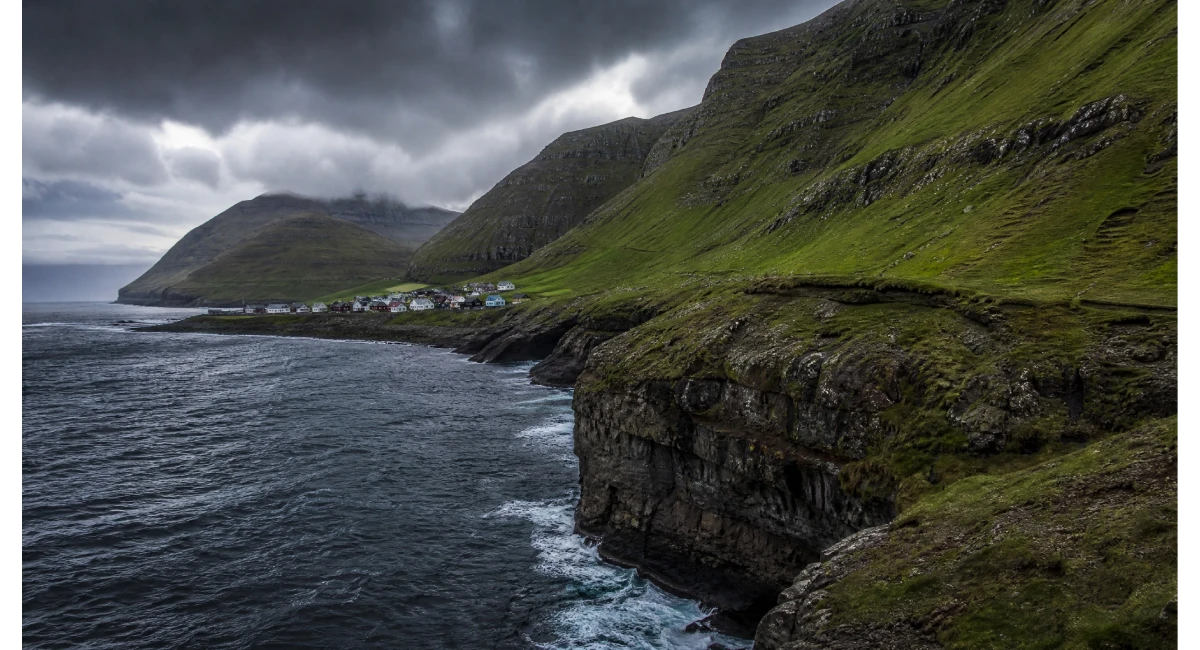
The northern and Atlantic edges of Europe work on a different logic from the Mediterranean. Crowds are never really the problem. The challenge is distance, cost, and climate. But travelers willing to work with those factors tend to find landscapes and communities that are genuinely unlike anything the warmer south offers.
The Faroe Islands — Remoteness With Modern Infrastructure
The Faroe Islands are eighteen volcanic islands in the North Atlantic, sitting roughly equidistant between Iceland and Norway. The landscape is extraordinary in the specific way that places shaped entirely by wind, water, and geology tend to be. Grass-roofed houses, sea cliffs that drop several hundred meters into the ocean, and fjords that cut deep into the interior characterize almost every island.
The common assumption is that getting there is complicated. In practice, Atlantic Airways operates direct flights from Copenhagen, and there are connections from several UK airports. The islands have modern accommodation, good road infrastructure, and a capital, Tórshavn, with restaurants that have drawn serious critical praise.
The government introduced a visitor management system that requires paid permits for some of the most sensitive natural sites. The goal is to keep numbers manageable without closing access. For independent travelers who plan, the extra step is minor.
Ålesund and Sunnmøre, Norway — Art Nouveau Architecture in a Fjord Town
Bergen is Norway’s second city and one of its most-visited. The Geirangerfjord, a few hours northeast, fills with cruise ships through the summer months. Ålesund, roughly halfway between Bergen and Geiranger by road, receives a fraction of the visitors despite offering something neither of the other two can match.
After a fire destroyed most of the town in 1904, Ålesund was rebuilt almost entirely in the Art Nouveau style, with financial and practical help from Kaiser Wilhelm II of Germany, who had a particular fondness for the area. The result is one of the most architecturally consistent towns in northern Europe — all towers, curved facades, and decorative details in pale stone above a working harbor.
The nearby Hjørundfjord, accessible by local ferry or road, is a legitimate alternative to the Geirangerfjord with a fraction of the boat traffic. Sunnmøre as a region has hiking, kayaking, and island access that most Norway itineraries never reach.
The Azores, Portugal — Volcanic Islands in the Mid-Atlantic
The Azores archipelago sits roughly 1,500 kilometers west of Lisbon, closer geographically to North America than to continental Europe. The nine islands are entirely volcanic in origin, and the landscape reflects that: crater lakes, hot springs, black sand beaches, and calderas you can walk around in a few hours.
São Miguel is the largest and most accessible island, with direct flights from Lisbon, London, and several other European cities. The Sete Cidades caldera, a twin crater lake visible from a viewpoint on the rim, is the island’s most iconic sight. The Furnas valley has active geothermal fields, local restaurants that cook stew underground using volcanic heat, and thermal pools fed by mineral springs.
Flores, at the western end of the archipelago, is for travelers who want something genuinely remote. It receives few visitors, has limited accommodation, and requires either a connecting flight or a ferry. The waterfalls, crater lakes, and hydrangea-covered roads make the logistics worthwhile for the right kind of traveler.
How to Plan a Trip Around Lesser-Known European Destinations
The destinations covered in this article are accessible. None of them require specialist expedition planning. But they do require a different approach from booking a flight to Paris and following a standard tourist trail. The logistics are manageable, and working them out in advance makes the difference between a smooth trip and a frustrating one.
Getting There When There Are No Direct Flights
The hub-and-connect approach is the standard solution for destinations without direct international service. Most of the places in this article are within two connections of any major European airport.
For Berat in Albania, the route is straightforward: fly into Tirana’s Mother Teresa Airport, which has direct connections from most European hubs, then take a two-hour bus or shared taxi south. For Maramures in Romania, the hub is Cluj-Napoca, which has growing direct service from Western Europe and connects to the region by road. For Ohrid, Skopje is the entry point, with budget airline service now available from several Western European cities.
Regional bus networks fill the gaps that trains do not cover. FlixBus operates routes across much of Central and Eastern Europe. BlaBlaCar, the ride-sharing platform, is widely used in France, Spain, and Eastern Europe and often covers routes that formal bus operators do not. Reading European rail maps for indirect routes is a learnable skill. The Seat61 website remains the most reliable free resource for understanding cross-border train options.
When to Visit to Avoid Crowds Without Sacrificing Access
The Balkans and Mediterranean destinations in this article are best visited in April and May or September and October. These windows give you good weather, functional services, and visitor numbers that are a fraction of what July and August bring.
The northern Atlantic destinations follow different logic. The Faroe Islands are most accessible between May and August, when daylight is long and weather, while never guaranteed, is at its most cooperative. The Azores have a more even climate year-round, with spring being particularly good for whale watching. Visiting Norway outside of summer requires more planning for daylight hours but can deliver extraordinary winter light in the south and the northern lights further north.
The blanket advice of “avoid summer” is not useful. Some destinations are perfectly manageable in July. Others are overcrowded no matter when you visit. The better approach is to research the specific destination, look at monthly visitor data where available, and identify the window where services are open but crowds are thin.
Off the Beaten Path European Destinations — How to Choose the Right One for You
Finding the right destination is less about which place is the most obscure and more about which place fits the way you actually travel. Every destination in this article rewards a specific type of traveler. Knowing your own preferences before you plan narrows the options quickly.
Think about what you want from a trip. If it’s primarily historical depth and architectural detail, Plovdiv, Berat, and Matera are the strongest options. If you want landscapes that feel physically overwhelming, the Faroe Islands and the Azores are in a different category. If food and wine matter as much as sightseeing, Alentejo and Alsace offer the best combination.
Budget shapes the decision too. North Macedonia, Albania, and Bosnia are among the most affordable destinations in Europe for accommodation, food, and transport. Norway and the Faroe Islands require significantly more financial planning.
Matching Destination to Travel Style
The table below maps travel preferences to specific destinations from this article.
| Travel Priority | Best Match |
|---|---|
| History and archaeology | Plovdiv, Matera, Ohrid |
| Dramatic natural landscapes | Faroe Islands, Azores, Durmitor |
| Authentic rural life | Maramures, Alentejo, Alsace villages |
| Architecture and urban design | Ålesund, Berat, Matera |
| Affordability | North Macedonia, Albania, Bosnia |
| Remote adventure | Faroe Islands (Flores), Azores |
| Food and wine | Alentejo, Alsace, Montenegro coast |
No destination is perfect for every traveler. But every destination on this list is genuinely worth choosing for the right reasons.
Conclusion
Europe’s famous cities are famous for good reasons. But the places covered in this article offer something that popularity, by its nature, cannot preserve: the feeling of arriving somewhere that has not yet been shaped around the expectation of your arrival.
From Maramures to the Azores, from Berat to Ålesund, each of the off-the-beaten-path European destinations in this guide has enough substance to justify the extra planning it takes to reach. The logistics are manageable. The rewards are real.
If this is your first time planning beyond the standard circuit, the parent article on what to expect when visiting a country for the first time covers the practical and cultural preparation that makes these trips work. Start there, then come back and choose your destination.