


You wake up, drink your coffee, power through the morning, and then hit a wall around 2 pm. Sound familiar? For most busy people, low energy feels like a fixed part of life — something to manage with caffeine and willpower rather than something to actually fix.
- Why Your Energy Levels Are Connected to What You Eat
- Small Nutrition Changes for More Energy That Actually Stick
- The Best Foods for Energy You Should Eat More Often
- How to Improve Energy Naturally Through Daily Eating Patterns
- Common Nutrition Habits That Are Quietly Draining Your Energy
- Easy Food Swaps You Can Make Starting This Week
- How Long Before Small Nutrition Changes Actually Show Results
- Conclusion
But your food choices are one of the most direct levers you have over how you feel each day. Making small nutrition changes for more energy does not mean eating perfectly or following a strict plan. It means making a handful of smarter swaps that your body can actually feel.
This article walks you through exactly what those changes look like — which foods to eat more of, which habits to drop, and how long it realistically takes before you notice a difference.
Why Your Energy Levels Are Connected to What You Eat
Food is your body’s fuel source. That is not a metaphor — it is how your biology works. Every cell in your body runs on energy produced from the food you eat. Carbohydrates break down into glucose, fats provide long-burning fuel, and proteins supply the raw materials for cellular repair and function.
When you eat well, your body produces steady, consistent energy throughout the day. When you eat poorly — skipping meals, leaning on sugar, or eating mostly processed food — your energy output becomes unpredictable. You get short bursts followed by crashes, brain fog, irritability, and that desperate reach for a second cup of coffee.
Poor nutrition habits do not just make you feel physically tired. They affect mental clarity, mood, and concentration too. These are not separate systems. What you put in your body determines what your brain and muscles have to work with.
You do not need a complete diet overhaul to start feeling the difference. Small, consistent changes — made one at a time — add up faster than most people expect.
The Role of Blood Sugar in Daily Energy Swings
If you have ever felt sharp and focused at 10 am and completely flat by 2 pm, blood sugar is almost certainly involved.
When you eat refined carbohydrates like white bread, sugary cereal, or sweetened drinks, your blood sugar rises sharply and then drops just as fast. That drop is what triggers the afternoon slump — the foggy, tired, can’t-focus feeling that sends people to the vending machine or the coffee pot.
Compare that to a breakfast built around whole-grain toast or oats. These foods release glucose gradually, which means your blood sugar stays more stable and your energy levels stay more consistent throughout the morning.
A simple swap from white bread to whole-grain bread at breakfast is one of the easiest first steps you can take. It costs the same, takes no extra time, and the difference in how you feel by mid-morning is noticeable within a few days.
How Dehydration Masquerades as Fatigue
Before you reach for another coffee, drink a glass of water.
Mild dehydration is one of the most common — and most ignored — causes of low energy. Even a 1- to 2-percent drop in hydration levels reduces concentration, increases perceived effort during tasks, and makes you feel sluggish for no obvious reason.
The tricky part is that thirst and fatigue can feel almost identical. Your brain registers both as a kind of low-grade discomfort, and most people interpret that signal as a need for caffeine rather than water.
Consistent water intake throughout the day is one of those nutrition habits that costs nothing and requires no planning — but most busy people forget it entirely. Keep a water bottle on your desk. Start every morning with a full glass before anything else. It is one of the smallest changes with one of the fastest payoffs.
Small Nutrition Changes for More Energy That Actually Stick
Most nutrition advice fails busy people for one reason: it asks too much at once. The changes that actually stick are the ones that fit into your existing routine without adding friction.
This section covers three starting points. Pick one, try it for a week, and build from there. You do not need to do all three at once. Consistency with one change beats perfection attempted and abandoned across twelve.
Swap Refined Carbs for Slow-Release Alternatives
Refined carbs are the fastest route to an energy crash. White rice, white bread, instant noodles, and most packaged breakfast cereals digest quickly, spike your blood sugar, and leave you running on empty within an hour or two.
Slow-release carbohydrates work differently. Oats, brown rice, whole-grain bread, and legumes break down gradually, providing a steadier stream of fuel that your body can actually use over several hours.
You do not need to cut anything out completely. Just swap one refined carb per meal. Switch your morning cereal for oatmeal. Choose brown rice over white when you are ordering out. Pick whole-grain bread for your lunchtime sandwich.
One practical time-saver: cook a large pot of oats or brown rice at the start of the week. Store it in the fridge and reheat in minutes. Slow-release carbs require zero extra effort once you have them ready to go.
Add Protein to Every Meal — Even Breakfast
Most people eat very little protein at breakfast and too much at dinner. Flipping that pattern can significantly improve how your energy holds up through the morning and early afternoon.
Protein slows digestion, which keeps blood sugar more stable and reduces the likelihood of a mid-morning energy drop. It also keeps you fuller for longer, which means fewer impulsive snack grabs driven by hunger rather than actual craving.
You do not need to cook a full meal to add protein. Here are some realistic options for busy mornings:
- Two boiled eggs prepared the night before
- Greek yogurt with a handful of oats stirred in
- A small handful of mixed nuts alongside whatever you already eat
- Peanut butter spread on whole-grain toast
None of these takes more than two minutes. None require cooking skills. But adding any one of them to your breakfast can change how you feel by 11 am.
Replace Sugary Snacks With Smarter Options
The snack you reach for at 3 pm matters more than most people think. A candy bar or a packet of crisps sends blood sugar up fast and brings it crashing down within 30 to 45 minutes, which makes the afternoon slump worse, not better.
Smarter snack choices provide energy that lasts. Some easy swaps:
- Trail mix (nuts and dried fruit) instead of a chocolate bar
- Apple slices with almond or peanut butter instead of crisps
- A hard-boiled egg instead of a packaged biscuit
- A small portion of roasted chickpeas instead of chips
These are genuinely satisfying, easy to carry in a bag or keep in a desk drawer, and among the best foods for energy because they combine protein, healthy fat, and fibre in one snack.
The Best Foods for Energy You Should Eat More Often
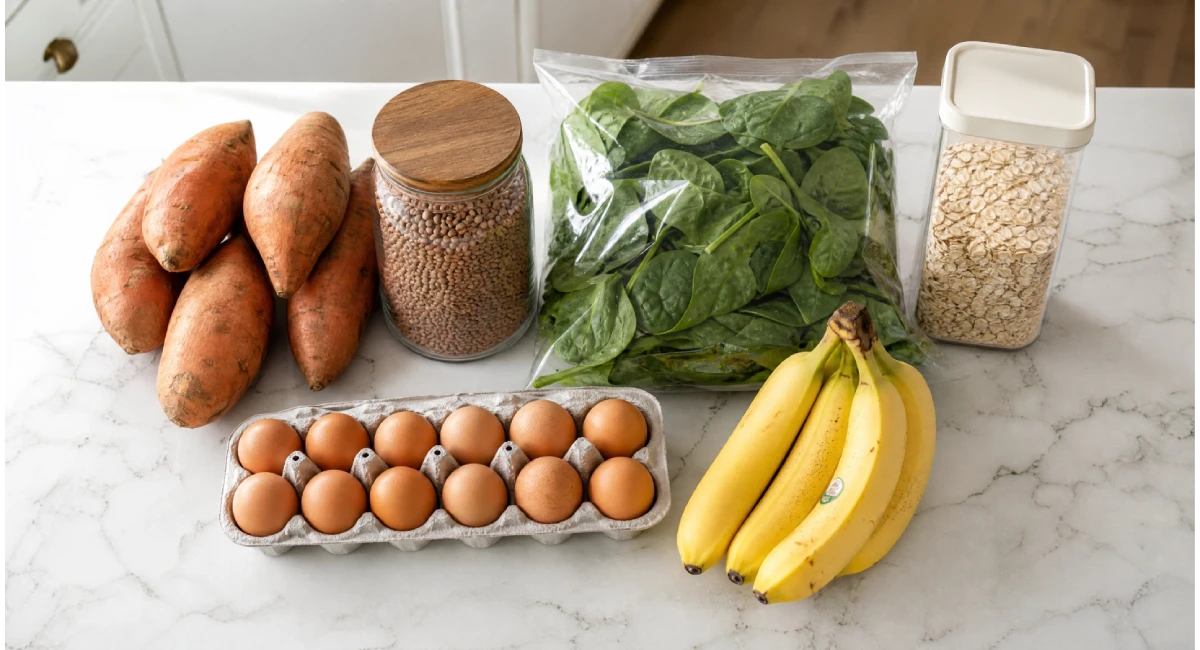
You do not need a complicated grocery list to eat for better energy. The foods that support consistent, all-day fuel are largely the same whole foods that have been around forever. Here is a practical breakdown of what to eat more of and why.
Complex Carbohydrates That Keep You Going
Complex carbohydrates are the cornerstone of sustained energy. Unlike their refined counterparts, they contain fibre and take longer to digest, which means they release energy at a pace your body can work with.
The best options to add to your regular rotation:
- Oats: Quick to prepare, extremely filling, and one of the most reliable breakfast choices for steady morning energy.
- Sweet potatoes: Easy to roast in bulk, versatile, and rich in both complex carbs and potassium.
- Quinoa: A complete protein and a complex carb in one ingredient, which makes it exceptionally good for sustained energy.
- Lentils and legumes: Cheap, easy to add to soups or salads, and one of the best combinations of slow-release carbs and plant protein available.
None of these requires advanced cooking. A batch of roasted sweet potatoes takes 25 minutes in the oven. A portion of lentils can go straight into a store-bought soup to make it more filling.
Iron-Rich Foods That Fight Fatigue From the Inside
Iron deficiency is one of the most common nutritional gaps in adults — particularly women — and one of the most overlooked causes of persistent tiredness. Low iron reduces your blood’s ability to carry oxygen efficiently, which means your cells, including your brain cells, run short on what they need to function.
Foods high in iron include:
- Spinach and dark leafy greens
- Lentils and kidney beans
- Lean red meat (two to three times per week is sufficient)
- Fortified breakfast cereals
One practical tip worth knowing: pairing iron-rich plant foods with a source of vitamin C significantly improves absorption. Squeeze lemon over spinach. Add a few tomato slices to your lentil dish. Eat an orange alongside your fortified cereal. These small additions make a measurable difference in how much iron your body actually absorbs.
Magnesium and B Vitamins — The Quiet Energy Supporters
Magnesium and B vitamins rarely get the attention they deserve, but they are both directly involved in how your body produces and uses energy at a cellular level.
Magnesium supports over 300 enzymatic reactions in the body, including those responsible for converting food into usable fuel. B vitamins, particularly B6 and B12, play a key role in red blood cell production and nervous system function.
Many busy adults are low in both without realizing it, especially if their diet leans heavily on packaged or processed food.
Foods that supply both:
- Bananas, avocados, and dark chocolate (magnesium)
- Nuts and seeds, especially pumpkin seeds and almonds
- Eggs and leafy greens
- Fortified plant milks if you do not eat animal products
You do not need to track grams or count milligrams. Just make sure these foods appear somewhere in your weekly meals, and you will likely cover your baseline needs through food alone.
How to Improve Energy Naturally Through Daily Eating Patterns
Individual food choices matter, but the pattern of how you eat across the day matters just as much. When you eat, how often you eat, and how you structure your meals all directly affect whether your energy holds steady or swings wildly.
This section is about the bigger picture of daily eating behaviour, particularly for people whose schedules make structured meals feel unrealistic.
Why Skipping Meals Backfires on Your Energy
Skipping meals feels like a time-saving shortcut. In practice, it costs more time than it saves, because the cognitive and physical slowdown that follows an extended gap without food is significant.
When you go too long without eating, blood sugar drops below the range where your brain and body function well. Your body responds by releasing cortisol, a stress hormone that helps mobilize energy reserves but also increases irritability, anxiety, and difficulty concentrating.
By the time you finally eat, you are likely to overconsume quickly digested foods because hunger overrides any intention to eat well. The result is a sharp blood sugar spike followed by another crash, which keeps the cycle going.
A realistic alternative: keep easy snacks at your desk or in your bag. A small handful of nuts, a piece of fruit with nut butter, or even a protein bar with a short ingredient list can bridge the gap between meals and prevent the blood sugar crash that derails your afternoon.
The Right Way to Structure Meals for All-Day Energy
You do not need a meal plan or a rigid schedule. You just need a loose pattern that your body can count on.
Here is a general framework that works for most busy people:
Morning: A combination of protein and a complex carbohydrate. This anchors your blood sugar for the first half of the day and prevents the mid-morning crash. Example: eggs on whole-grain toast, or oats with Greek yogurt.
Midday: A balanced plate with a mix of protein, complex carbs, and vegetables. This does not need to be elaborate. A grain bowl, a lentil soup, or a chicken and vegetable wrap all qualify.
Mid-afternoon: A small, smart snack if you have more than three hours before dinner. Nuts, fruit, or a small portion of Greek yogurt work well here.
Evening: A lighter meal that is easier to digest. Heavy, calorie-dense dinners eaten close to bedtime can disrupt sleep quality, which directly affects how energetic you feel the next morning.
This is not about eating perfectly. It is about giving your body a predictable rhythm that keeps blood sugar, hunger, and energy in a manageable range.
Common Nutrition Habits That Are Quietly Draining Your Energy

Sometimes the reason you feel tired has less to do with what you are missing and more to do with what you are consistently doing wrong. These are the habits most people do not connect to their energy levels — until they change them.
The Caffeine Trap — More Coffee Is Not the Answer
Caffeine works. In the short term, it blocks the brain receptors that signal fatigue and produces a temporary sense of alertness.
The problem is what happens when caffeine becomes the primary way you manage your energy. Excess caffeine, particularly in the afternoon or evening, disrupts sleep architecture. You may fall asleep fine, but the quality and depth of your sleep suffer, which means you wake up less restored. The next day, you need more caffeine. The cycle repeats.
Cutting back gradually is far easier than going cold turkey. A practical first step: replace one of your afternoon coffees with green tea, which contains enough caffeine for mild alertness but also contains L-theanine, a compound that promotes calm focus without the sharp spike and drop of espresso.
If the afternoon dip is your main problem, a small protein-rich snack is often more effective than a cup of coffee — and it does not cost you sleep quality later.
Ultra-Processed Foods and the Energy Tax They Charge
Ultra-processed foods are not just nutritionally empty. They actively work against stable energy by promoting low-grade inflammation, disrupting gut health, and causing the kind of erratic blood sugar swings described earlier.
These include packaged snacks, fast food, most convenience meals, heavily sweetened drinks, and anything with an ingredient list longer than your arm.
A useful rule of thumb: if you can identify every ingredient in your meal without needing a chemistry degree, it is probably a reasonable choice. If the ingredient list includes emulsifiers, flavour enhancers, and preservatives you cannot pronounce, it is likely costing you more energy than it provides.
You do not need to eliminate these foods. Just shifting the balance — eating them less often and replacing them with whole food alternatives more often — tends to produce a noticeable difference in energy within one to two weeks.
Easy Food Swaps You Can Make Starting This Week
No special ingredients, no cooking skills required, no expensive products. These are direct comparisons — what to reduce and what to replace it with. Start with one. Build from there.
Morning Meal Swaps for a Better Start
Sugary breakfast cereal → Oatmeal with banana and a handful of walnuts. Oats provide slow-release carbohydrates, the banana adds natural sweetness and potassium, and the walnuts bring protein and healthy fat. You get all-morning energy from one bowl instead of a 90-minute burst followed by a crash.
Pastry or muffin → Whole-grain toast with two eggs. This swap adds protein and fibre to your morning in the same amount of time it takes to pop bread in a toaster. Boil the eggs the night before if your mornings are rushed.
Flavoured latte with sugar → Black coffee or plain latte with a side of Greek yogurt. Cutting the added sugar from your morning drink removes a blood sugar spike you probably never noticed you were creating. The Greek yogurt adds protein that the latte alone does not provide.
Afternoon and Evening Swaps for Consistent Energy
Crisps or chips → Roasted chickpeas or a small mixed nut portion. Chickpeas and nuts provide protein, fibre, and healthy fat. They are just as satisfying as crisps but sustain your energy through the rest of the afternoon rather than adding to the 3 pm slump.
White pasta → Whole-wheat or lentil-based pasta. The texture and taste difference is minimal. The difference in how long your energy lasts after the meal is not. Lentil pasta in particular adds a meaningful amount of protein per serving.
Soda or sugary drink → Sparkling water with a slice of lemon or lime. The carbonation satisfies the craving for something interesting to drink. The citrus adds flavour without sugar. And you are improving hydration rather than adding to the blood sugar rollercoaster.
How Long Before Small Nutrition Changes Actually Show Results
One of the biggest reasons people give up on eating better is that they expect results in 24 hours and feel disappointed when nothing dramatic happens. Understanding the realistic timeline helps you stay consistent long enough to reach the point where the changes actually compound.
What to Expect in the First Week
The first improvements tend to appear within three to seven days, and they are usually subtle. Your mid-afternoon energy crash may be slightly less severe. You might fall asleep a little more easily. You may notice fewer strong sugar cravings in the late afternoon.
These are early signals that your blood sugar is stabilizing and your body is responding to better hydration and more consistent fuel. They are not the finish line — they are confirmation that what you are doing is working. Pay attention to them rather than dismissing them as too small to matter.
If you are keeping a phone note or a simple notebook, this is the week to jot down how you feel in the afternoon. Even a one-word note each day gives you something to look back on.
Building Momentum Beyond the First Month
After four to six weeks of consistent changes, the improvements become harder to ignore. Better gut health, more stable mood throughout the day, sharper concentration in the late afternoon, and noticeably better sleep quality are all common outcomes reported by people who have shifted their nutrition habits gradually rather than all at once.
The reason for this is biological: gut microbiome improvements, reduced systemic inflammation, and more consistent nutrient availability all take several weeks to build. The body responds slowly, but it responds reliably.
Tracking your energy levels does not need to be sophisticated. A simple 1 to 5 rating each afternoon, logged on your phone, gives you a clear picture of progress over time. Most people who do this find that looking back at four weeks of data is one of the most motivating things they can experience.
Conclusion
Low energy is not your default setting. It is a feedback signal from your body telling you that something in your routine needs adjusting, and food is one of the most direct and practical places to start.
The small nutrition changes for more energy covered in this article are not about perfection. They are about consistent adjustments that fit into real life with a real schedule. Swap one refined carb. Add protein to your breakfast. Drink more water before reaching for coffee. Eat a smarter snack in the afternoon.
None of these changes requires a nutritionist, a meal plan, or an overhaul of your kitchen. They just require picking one and starting today.
If this article gave you even one idea worth trying, go try it this week. And if you want to take the next step, read our guide on what a balanced meal actually looks like in real life — it pairs directly with everything covered here and gives you a practical visual framework to build from.