
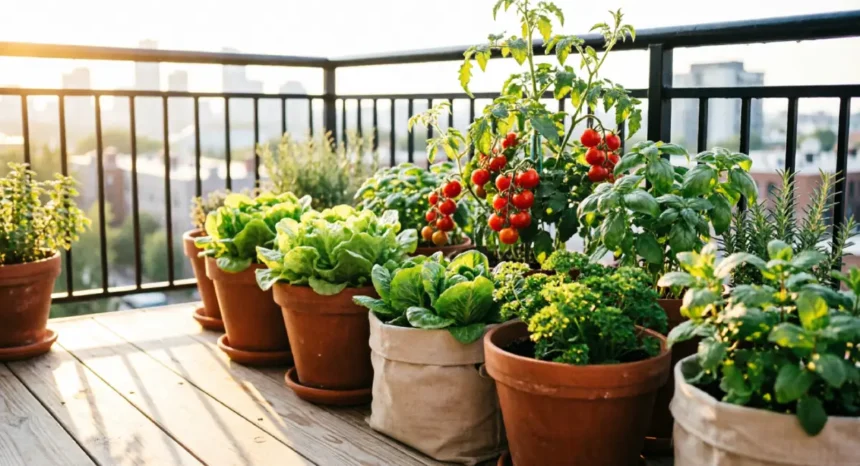
Most people think you need a garden plot, a trowel, and a sprawling backyard before you can grow your own food. You do not. A sunny balcony, a few containers, and the right crop choices are all it takes.
- Why Small-Space Gardening Works Better Than You Think
- The Best Vegetables for Beginners in Small Spaces
- Choosing the Right Container for Each Crop
- Easy Vegetables to Grow: Ranked by Difficulty Level
- Small Garden Crops: Soil, Watering, and Feeding Basics
- Setting Up a Beginner Edible Garden: A Simple First-Season Plan
- Conclusion
If you have been putting off gardening because your space feels too small, this guide is for you. The vegetables covered here are chosen for one reason: they work in tight spots, with limited tools, and without prior experience.
You will learn which crops to start with, how much space each one needs, what containers to use, and how hard each one is to manage. By the end, you will have a clear starting plan — not a vague wish list.
Why Small-Space Gardening Works Better Than You Think
You might assume productive food growing needs a large outdoor space. It does not. Container gardening has surged over the past decade, especially among urban residents growing food on balconies, patios, rooftops, and windowsills.
Vertical growing, where plants climb upward rather than spreading outward, frees up floor space that most people assume they do not have. Compact planting methods, where crops share containers or are spaced more tightly than traditional row gardening, allow a surprising variety of food to grow in a very small footprint.
The National Gardening Association reports that food gardening participation in the U.S. grew by millions of households in the early 2020s, with container gardening cited as the most accessible entry point. You do not need a ground plot. You need the right setup.
How Much Space Do You Actually Need to Grow Food?
Less than you think. Here is what different amounts of space can realistically produce:
- A single 10-gallon bucket can grow a cherry tomato plant that produces fruit for months
- A 2×4 ft raised bed can hold lettuce, radishes, chives, and a compact bean plant simultaneously
- A sunny windowsill supports herbs, salad greens, and even green onions year-round
The key is matching the crop to the container. A small space managed well out-produces a large space managed poorly. Start with one or two containers and build from there.
Sunlight Is the One Non-Negotiable Factor
Everything else in small-space gardening is flexible. Sunlight is not.
Before you choose a single crop, spend one day counting how many hours of direct sunlight your space receives. Here is what the numbers mean:
- Full sun: 6 to 8 hours of direct sunlight daily. Required for tomatoes, beans, and peas.
- Partial sun: 3 to 6 hours. Sufficient for lettuce, spinach, and herbs like parsley.
- Shade: Fewer than 3 hours. Very few food crops thrive here, though some salad greens can manage.
A south-facing or west-facing balcony in the northern hemisphere generally receives the most light. If your space gets only partial sun, that is fine — just pick crops accordingly.
The Best Vegetables for Beginners in Small Spaces
Picking the right crops is the most important decision you will make as a beginner. The vegetables on this list were chosen based on four criteria: they grow quickly, need minimal daily attention, stay compact, and produce a meaningful amount of food relative to the space they occupy.
This is not a list of everything that can technically grow in a pot. It is a focused selection of what works with limited space and zero experience.
Lettuce and Salad Greens: Fast, Cut-and-Come-Again Crops
Lettuce is the single best starting point for any beginner. It grows fast, tolerates partial sun better than most vegetables, and uses a harvesting method called cut-and-come-again, which means you cut the outer leaves and the plant keeps producing new ones.
Loose-leaf varieties work better than head lettuce in containers because they do not need as much root depth. Spinach and arugula follow the same cut-and-come-again logic and can share a container with lettuce easily.
What you need to know:
- Container depth: 6 to 8 inches is sufficient
- Sunlight: Partial sun is fine — 3 to 4 hours works well
- Days to first harvest: 30 to 45 days from seed
- Difficulty: Very easy
One 12-inch container of mixed salad greens can supply a household for weeks before plants bolt (go to seed) in hot weather. In cooler seasons, it can produce for months.
Radishes: The Beginner’s Confidence Builder
Radishes are ready to eat in 20 to 30 days from direct sowing, which is uniquely satisfying when you have never grown food before. You plant a seed and have something edible in under a month.
They grow well in containers as shallow as 6 inches, which means almost any pot or window box can work. Sow seeds about 2 inches apart, thin them to one plant per 2 to 3 inches once they sprout, and water consistently.
Radishes also make excellent companion plants. Tuck them around the edges of a tomato or bean container, and they will fill the unused space without competing heavily for resources. Cherry Belle and French Breakfast are both reliable beginner-friendly varieties.
Cherry Tomatoes: The Most Rewarding Container Crop
Cherry tomatoes take more effort than lettuce or radishes, but the payoff is real. A single well-managed container plant can produce hundreds of small tomatoes over a growing season.
Full-size varieties are not suitable for small spaces — their root systems and size demand too much room. Varieties bred for containers are a different story. Look for:
- Tumbling Tom (cascades over the edge of a pot, no staking needed)
- Tiny Tim (stays under 12 inches tall, works in a 5-gallon container)
- Patio (compact, upright, reliable producer)
What you need to know:
- Container size: Minimum 5-gallon (larger is better)
- Sunlight: Full sun required, 6 to 8 hours minimum
- Watering: Keep soil consistently moist, not waterlogged — irregular watering causes cracking
- Difficulty: Moderate
Even compact varieties benefit from a simple support stake. One bamboo stake and a soft tie are all you need for most container types.
Green Onions and Chives: Grow Them Anywhere
Green onions are the most space-efficient crop a beginner can grow. A standard window box or a single 6-inch deep pot holds enough green onions to supply your kitchen for months.
You can start them in two ways. The first is to regrow them from kitchen scraps: place the white root ends of store-bought green onions in a glass of water on a sunny windowsill, and they will regrow within a week. The second is to direct-sow seeds into a container, which produces a larger and longer-lasting harvest.
Chives follow the same logic. They are hardy, low-maintenance, and tolerate partial sun well. Both need little attention once established, making them ideal for beginners who travel or have irregular schedules.
Bush Beans: Productive Without Taking Up Ground Space
Bush beans are the container-friendly version of the garden bean. Unlike pole beans, which climb upward and need a tall trellis, bush bean plants stay compact at around 18 to 24 inches tall. No staking required.
One 12-inch-wide container planted with five or six bush bean seeds can produce enough beans for several generous servings once the plants reach maturity at around 50 to 60 days.
What you need to know:
- Container depth: 8 to 12 inches minimum
- Sunlight: Full sun preferred, 6 hours minimum
- Watering: Regular and consistent — beans do not recover well from drought stress
- Difficulty: Easy to moderate
Bush beans suit small yards or patios where containers sit on the ground — the plants get wide and do not fit narrow balcony railings or tiered shelving.
Herbs Worth Treating as Vegetables: Basil, Mint, and Parsley
Beginners often dismiss herbs as an afterthought. In practice, they deliver more flavor per square inch than almost any other crop.
Three herbs stand out for small-space beginners:
- Basil thrives in full sun and pairs naturally in a container with cherry tomatoes. It bolts (turns bitter and flowers) in hot weather, so pinch off flower buds to extend the harvest.
- Mint grows aggressively and will take over any shared container. Always grow it in its own dedicated pot. Once established, it needs almost no attention.
- Parsley tolerates partial shade better than most herbs, which makes it one of the few productive crops for low-light balconies. It takes 70 to 90 days from seed to harvestable size, so buy a small transplant from a nursery to save time.
Peas: Vertical Growers That Save Floor Space
Peas solve the small-space problem directly — they grow upward, not outward. A simple trellis of bamboo canes and twine, set in a container on a balcony, supports a productive pea plant in under one square foot.
Snap peas produce fat, sweet pods that you eat whole. Snow peas produce flatter pods that are harvested before the peas inside fully develop. Both are beginner-friendly.
What you need to know:
- Container depth: 8 to 12 inches
- Sunlight: Full sun to partial sun — 4 to 6 hours works
- Trellis: A simple bamboo frame or string tied to a balcony railing is enough
- Days to harvest: 60 to 70 days from seed
- Difficulty: Easy
Peas prefer cooler growing conditions, which makes them an excellent choice for spring or autumn planting in most climates.
Choosing the Right Container for Each Crop
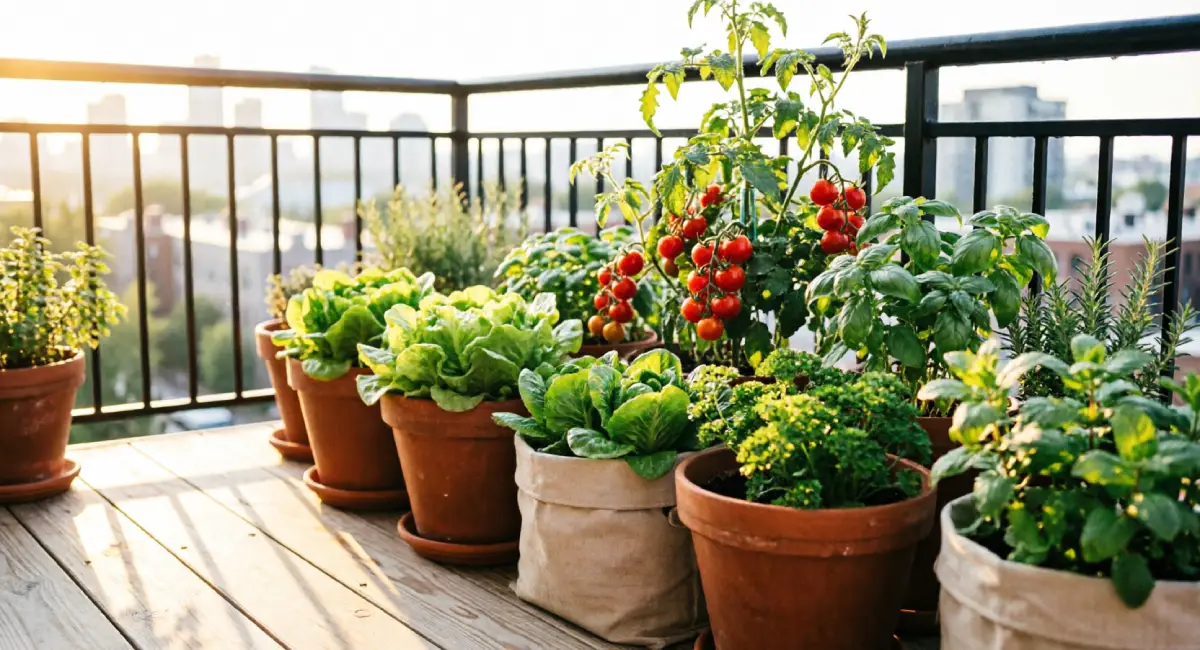
The most common reason beginner vegetable gardens fail has nothing to do with watering or sunlight. It comes down to container choice. A plant that cannot spread its roots will not thrive, no matter how carefully you tend it.
Container Size Guide by Crop Type
Use this before buying containers:
Shallow-rooted crops (6 to 8 inches deep): Lettuce, spinach, arugula, chives, green onions, basil, parsley, mint, and radishes. Any pot, window box, or tray with 6 to 8 inches of soil depth will work. A standard window box handles all of these well.
Medium-rooted crops (8 to 12 inches deep): Bush beans, peas, and Swiss chard. Use a standard 3 to 5-gallon container or a large window box with adequate depth.
Deep-rooted crops (12 or more inches / 5-gallon minimum): Cherry tomatoes and peppers. These need significant root depth. A 5-gallon container is the minimum; a 7 to 10-gallon container will produce noticeably better results.
Drainage is non-negotiable regardless of container size. Every container must have holes in the base. Without drainage, roots sit in water and rot quickly. If you buy a container without drainage holes, drill at least three to five holes in the base before planting.
The Best Container Materials for Small Gardens
The material your container is made from affects moisture retention, weight, and long-term durability.
Plastic containers are lightweight, inexpensive, and retain moisture well. Cheaper plastics can crack in frost or intense heat. They are a solid first choice for beginners.
Terracotta pots are attractive and breathable, which helps prevent overwatering. The trade-offs are weight and moisture loss — terracotta is heavy and dries out faster, meaning more frequent watering in summer.
Fabric grow bags deserve particular mention. They are affordable, fold flat for storage, and the fabric lets air reach roots, preventing root circling that occurs in hard-sided containers. They dry out faster than plastic, so you water more often, but they are one of the best budget options for beginners.
Repurposed containers — wooden crates, metal buckets, colanders — work well as long as they have drainage holes. Line wooden containers with plastic to extend their life.
Easy Vegetables to Grow: Ranked by Difficulty Level
Not every crop on this list demands the same level of attention. Knowing where each one sits helps you build confidence gradually rather than overcommitting in your first season.
The three tiers below are based on how forgiving each crop is, how fast it produces, and how much attention it needs.
Start Here: Crops That Rarely Fail
Radishes, lettuce, salad greens, green onions, chives
These crops share three qualities that make them ideal for a first attempt. Their harvest cycles are short, which means you see results quickly and learn faster. They have very few serious pest or disease problems in container growing. And they are forgiving about watering — missing a day or two will not destroy the plant.
If you have never grown anything before, plant at least one of these five crops first. Harvesting something you grew yourself changes how you approach the next planting.
Step Up: Crops That Reward a Little Attention
Bush beans, peas, spinach, basil
These are still well within beginner range, but they benefit from a slightly more consistent routine. Watering needs to happen on a regular schedule rather than whenever you remember. Light feeding with a balanced liquid fertilizer every two weeks during active growth helps.
The extra care is minimal — perhaps five to ten additional minutes per week. The results, however, are meaningfully better than the hands-off approach that works for radishes and lettuce.
Stretch Goals: Satisfying but Needing More Commitment
Cherry tomatoes, peppers
These are not hard crops, but they take longer to mature, need consistent full sun, and benefit from occasional pruning and support.
Cherry tomatoes, for example, produce better when you remove the suckers (small shoots that grow between the main stem and a branch), which redirects the plant’s energy into fruit production rather than excessive leafy growth.
Treat these as second-season crops. After a successful lettuce or radish harvest, you will approach cherry tomatoes with more confidence and patience.
Small Garden Crops: Soil, Watering, and Feeding Basics
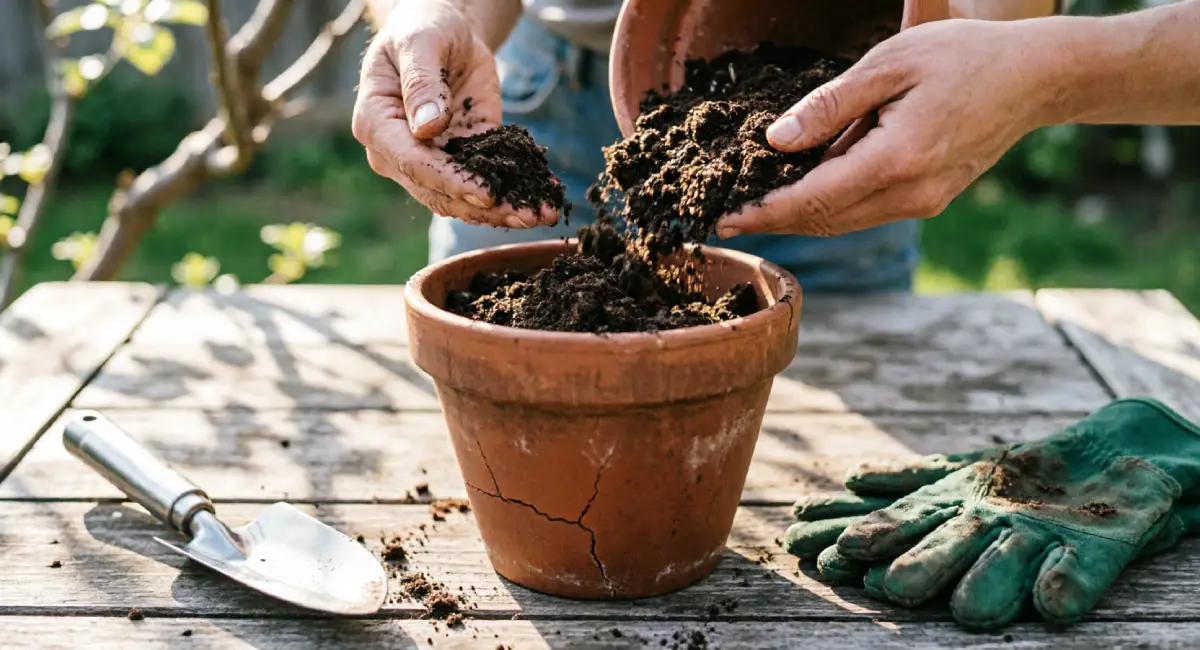
The right crop in the right container will still fail if the soil, water, or nutrients are off. These three factors are where many beginner gardens quietly fail — and all three are simple to get right.
What Soil Mix Works Best in Containers
Do not use garden soil in containers. This is the most important rule in container growing. Garden soil compacts heavily in pots, blocks drainage, and creates an airless environment that roots cannot penetrate. The result is slow growth, yellowing leaves, and poor yields.
Instead, use a purpose-mixed container growing medium. A reliable beginner mix is:
- 60% quality potting compost (the base — provides organic matter and nutrients)
- 30% perlite or coarse horticultural sand (improves drainage and aeration)
- 10% slow-release fertilizer granules (feeds plants for the first 6 to 8 weeks without any additional effort)
This mixture drains properly, holds enough moisture between waterings, and gives roots the air space they need. Pre-mixed container compost from a garden center works fine if you do not want to mix your own.
How Often to Water Small-Space Vegetables
Overwatering kills more container plants than underwatering does. Roots need oxygen as well as water, and saturated soil denies them both.
Use the finger test before every watering: push your finger one inch into the soil. If it feels dry at that depth, water thoroughly. If it still feels moist, wait and check the next day again.
General watering frequency as a starting point:
- Lettuce, spinach, herbs: Every 1 to 2 days in warm weather, every 2 to 3 days in cool weather
- Beans, peas: Every 2 days in warm weather
- Tomatoes: Daily or every other day in peak summer, especially in smaller containers
Containers dry out faster than ground soil, particularly fabric grow bags and terracotta pots. In midsummer heat, some containers may need watering twice daily. Always check before watering on a fixed schedule.
Feeding Your Container Plants Without Overcomplicating It
The slow-release fertilizer in your soil mix feeds plants for the first six to eight weeks. After that, a simple liquid fertilizer applied every two weeks is all most container vegetables need.
Use a balanced liquid fertilizer (one with roughly equal nitrogen, phosphorus, and potassium numbers on the label) for leafy crops like lettuce, spinach, and herbs. Switch to a fertilizer higher in potassium for fruiting plants like tomatoes and beans once flowers appear, as potassium supports fruit development.
Lettuce, radishes, and green onions rarely need extra feeding beyond the initial soil mix, especially in short growing seasons. Over-feeding leafy crops grows big leaves but weakens flavor. Less is more.
Setting Up a Beginner Edible Garden: A Simple First-Season Plan
This is not a complete garden-from-scratch guide. It is a starting point built on the crops, containers, and methods covered here. One focused first season builds more confidence than an elaborate plan that falls apart under pressure.
What to Plant First If You Have Absolutely No Experience
Start with three crops: lettuce, radishes, and chives. This combination covers the key bases for a first-time grower.
- Lettuce gives you consistent harvests across weeks without replanting
- Radishes give you fast results and the satisfaction of pulling something from the soil
- Chives are nearly indestructible and produce all season reliably
Suggested planting schedule:
- Spring (March to April in temperate climates): All three crops. Ideal starting conditions.
- Summer: Lettuce can struggle in high heat — switch to cherry tomatoes or beans once temperatures rise consistently above 25C (77F).
- Autumn (September to October): Return to lettuce, radishes, and chives. Excellent second-season conditions.
Start with one container per crop. Three containers are a manageable commitment that teaches you the core skills without creating excessive daily maintenance.
How to Arrange Multiple Containers in a Small Space
Placement matters more than most beginners realize. Poorly arranged containers shade shorter plants, block watering access, and waste space.
Two principles cover most small-space arrangements:
Taller crops go at the back (or north side if you are in the northern hemisphere). Tomatoes, peas on a trellis, and beans should not be positioned where they cast shade over lettuce or herbs. In a limited space, place tall containers against a wall or railing and shorter containers at the front.
Consider companion planting logic. Tomatoes and basil share a container well and benefit from proximity. Mint should always have its own container. Beans fix nitrogen in the soil, which benefits neighboring containers over time.
Keep pathways between containers wide enough to access each plant without disturbing others. On a narrow balcony, a row of containers along the outer railing with one or two pots in the center usually works best.
Common Beginner Mistakes and How to Avoid Them
Most first-season problems are predictable. Here are the five most common, with ways to avoid each.
1. Wrong container size. A tomato plant in a 6-inch pot will grow slowly, produce very little fruit, and likely become root-bound within weeks. Match container depth to crop type before you plant, not after.
2. Overwatering. Soggy soil is the most common cause of wilting — beginners often assume wilting means the plant needs more water. Use the finger test every time.
3. Not enough sunlight. A balcony with 2 hours of direct sun cannot support tomatoes or beans, no matter what else you do. Be honest about your light before choosing crops.
4. Planting too densely. Crowding plants into one container feels productive but reduces airflow, increases the risk of disease, and limits root space. Follow spacing recommendations on seed packets, even if the gaps look generous.
5. No drainage holes. A sealed container will slowly drown your plants. Check every container before use. If it has no holes, drill at least three in the base before adding soil.
Conclusion
Growing vegetables in small spaces is one of the most accessible things you can start this weekend. This guide has given you everything you need to begin. You now know which crops suit limited space, which containers to use, how much sunlight each plant needs, and which mistakes to avoid in your first season.
The most practical next step: choose one crop from the beginner tier, find one container of the right size, and plant it. Lettuce from seed to plate takes less than six weeks. Radishes take less than a month. Starting small and succeeding beats planning a big garden that never gets planted.
When you are ready to expand beyond individual containers and build a complete small garden from the ground up, the parent guide on this site covers everything from choosing your space to your first full planting plan: How Do You Start a Small Backyard Garden with No Experience?