
Nobody tells you how much you don’t know until you’re standing in an unfamiliar airport at midnight with a dead phone and a booking confirmation you can’t access. The solo travel mistakes beginners make are rarely about bad decisions — they’re about gaps in experience that nobody filled in ahead of time.
- Why First-Time Solo Travellers Set Themselves Up to Struggle
- Overpacking or Underpacking — Getting the Bag Wrong from Day One
- The Overpacker’s Trap — Carrying Everything Just in Case
- How to Build a Carry-On That Actually Works for Weeks
- Booking Everything in Advance Without Leaving Room to Breathe
- What Over-Scheduling Actually Costs You on the Road
- A Smarter Booking Approach for New Solo Travellers
- Ignoring Safety Research Before Arriving in a New Country
- The Information Gaps That Get NeTravellers Into Trouble
- Pre-Trip Safety Research That Takes Less Than One Hour
- Relying Too Heavily on a Single App or Payment Method
- What Happens When Your Only Plan Fails in an Unfamiliar City
- The Backup Systems Every Traveller Should Set Up Before Flying
- Underestimating Solo Travel Costs and Blowing the Budget Early
- Where Travellers Consistently Overspend While Realising It
- How to Build a Daily Travel Budget That Accounts for Real Life
- Avoiding Locals and Staying Exclusively in the Tourist Bubble
- Why the Tourist Bubble Feels Safe but Costs More and Delivers Less
- Low-Pressure Ways to Connect With Locals as a First-Time Solo Traveller
- Neglecting Health Prep and Travel Insurance Until It’s Too Late
- The Health Mistakes Beginners Dismiss as Unlikely
- What to Look for in a Travel Insurance Policy Before You Buy
- How to Avoid Travel Problems by Changing Your Mindset Before You Leave
- Why Trying to Control Every Variable Makes the Trip Worse
- Building a Problem-Solving Attitude That Serves You on Every Trip
- Conclusion
This article covers those gaps directly. No vague advice, no generic checklists. Just the real mistakes that trip up first-timers, honest examples of how they play out, and clear fixes you can apply before you leave.
If you’re preparing for your first trip alone, this is the briefing you actually needed.
Why First-Time Solo Travellers Set Themselves Up to Struggle
Most beginners prepare well for the parts of travel they can imagine. They research flights, pick hotels, and build rough itineraries. What they don’t prepare for is everything that falls outside that plan.
The trouble isn’t a lack of effort. It’s a lack of experience. You can’t anticipate problems you’ve never encountered, and first-timetravellerss haven’t yet built the mental library of “what can go wrong and what to do next.”
That gap between planning and reality is where most beginner travel mistakes live. The sections below break down exactly where those gaps show up and how to close them before they cost you time, money, or peace of mind.
Overpacking or Underpacking — Getting the Bag Wrong from Day One
Getting the bag wrong is one of the first things that goes sideways for new solo travellers. Too much and you’re dragging a rolling burden through cobblestone streets and paying checked bag fees at every turn. Too little and you’re hunting down a pharmacy in a city where you can’t read the labels.
Both mistakes come from the same place: packing for anxiety rather than practicality.
The Overpacker’s Trap — Carrying Everything Just in Case
Fear drives overpacking. The “what if it gets cold?” jacket, the backup pair of formal shoes, the full-sized toiletry bag, the first-aid kit that could supply a small clinic. It all feels reasonable at home. On day three of hauling it up a hostel staircase, it doesn’t.
A common real-world example: a traveller heading to Southeast Asia for two weeks who packs five pairs of shoes. Two get worn. The rest take up half the bag and strain their back on every transit day.
The rule of thumb is honest and simple: if you’re not sure you’ll need it, you won’t.
How to Build a Carry-On That Actually Works for Weeks
The one-bag approach works for most trips under three weeks. The 5-4-3-2-1 method is a practical starting point: five tops, four bottoms, three layers, two pairs of shoes, one formal option.
Choose items that can mix, layer, and work across different settings. A pair of neutral trousers that works for a day hike and a dinner reservation earns its place. Specialised items that only serve one purpose usually don’t.
Pack, then remove one third of what you’ve packed. That’s the real packing rule.
Booking Everything in Advance Without Leaving Room to Breathe
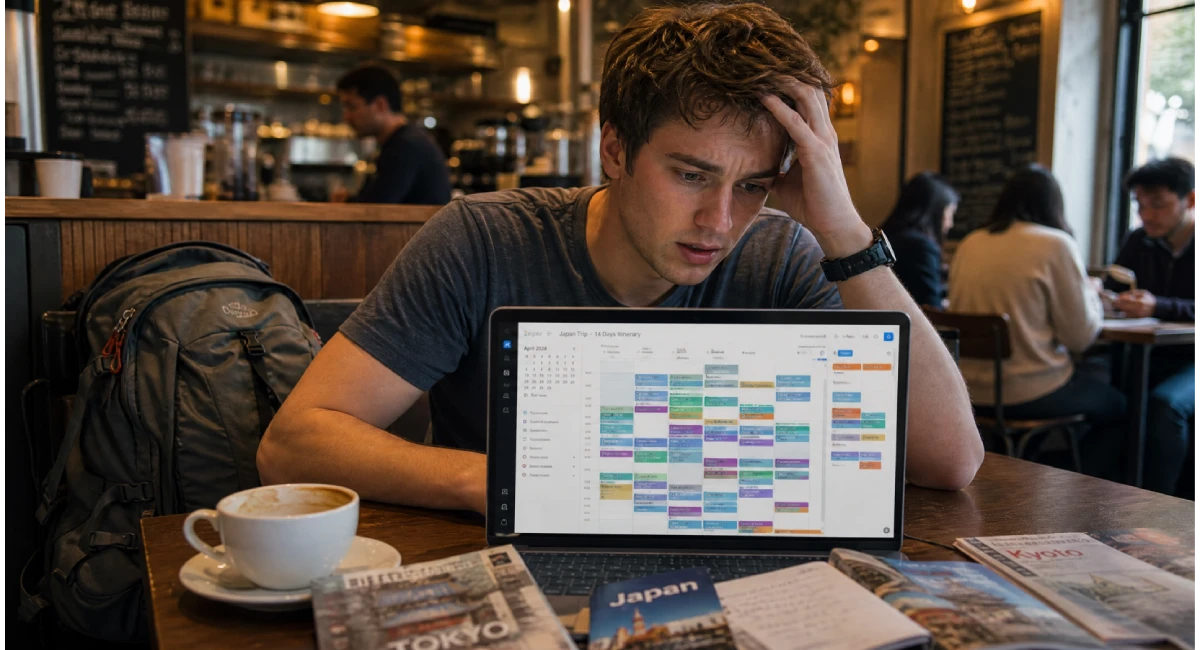
Over-scheduling is one of the most consistent beginner travel mistakes, and it often comes from the right instinct: wanting to make the most of the trip. The problem is that a fully locked schedule assumes everything will go exactly as planned. Travel doesn’t work that way.
When every night is pre-booked and every day is filled, a single delay collapses the whole structure.
What Over-Scheduling Actually Costs You on the Road
Non-refundable bookings are painful when a delayed bus means you miss check-in. Back-to-back activities create genuine burnout by day five. And there’s a subtler cost too: the frustration of being locked into a plan you no longer want to follow.
Some of the best travel moments happen when you have nowhere to be a3 pmpm on a Tuesday. Over-scheduling trades those moments for a to-do list.
A Smarter Booking Approach for New Solo Travellers
Book the first two nights at your destination and your return flight. That’s it to start.
In most destinations outside of peak season and major events, finding accommodation same-day or one day ahead is straightforward. Apps like Hostelworld, Booking.com, and Airbnb make it easy. This approach keeps your schedule loose enough to stay somewhere longer if you love it, or move on faster if you don’t.
Ignoring Safety Research Before Arriving in a New Country
Safety preparation is one of the areas where solo travel errors are most avoidable — and most commonly skipped. Not because travellers don’t care about safety, but because they assume they’ll figure it out when they arrive. That’s a gap worth closing before you land.
This isn’t about fear. It’s about not being the person who didn’t know that a particular area is best avoided after dark, or that a common scam operates right outside the main train station.
The Information Gaps That Get NeTravellers Into Trouble
There are specific blind spots that catch beginners repeatedly:
- Not knowing the common scam formats for a destination (fake taxi meters, “friendship bracelet” traps, distraction theft at busy sites)
- Assuming that tourist areas are automatically safe at all hours
- Not understanding local laws around photographing government buildings, religious sites, or police
- Being unaware of alcohol restrictions or local behaviour standards in conservative regions
None of this requires paranoia. It requires thirty minutes of reading before you arrive.
Pre-Trip Safety Research That Takes Less Than One Hour
Work through this before every trip:
- Check your government’s official travel advisory page (US State Department, UK FCO, Australian DFAT, or equivalent)
- Save the local emergency numbers for your destination — they are not always 112 or 911
- Use Google Maps Street View to preview the area around your accommodation before you arrive
- Register your trip with your country’s embassy portal if your destination is in a higher-risk region
- Search “[city name] tourist scams” and read the top two or three results
That’s it. An hour of reading before departure removes a significant amount of preventable risk.
Relying Too Heavily on a Single App or Payment Method
Beginners often build their entire travel system around one point of failure: a single navigation app, one bank card, or complete dependence on mobile data. When that one thing breaks down, a manageable inconvenience becomes a genuine problem.
This is one of the solo travel errors that’s entirely preventable and surprisingly common.
What Happens When Your Only Plan Fails in an Unfamiliar City
Picture this: your phone battery is at 2%. Your data roaming isn’t working because you haven’t sorted a local SIM. You have no cash, your one card is blocked because your bank flagged a foreign transaction, and you’re on a street you don’t recognise.
Each of those problems alone is solvable. Together, at night, in a city you don’t know, they become a stressful and potentially expensive situation. This exact scenario plays out for first-time travellers more often than people admit.
The Backup Systems Every Traveller Should Set Up Before Flying
Build redundancy into your system before you leave:
- Carry two cards from two different card networks (Visa and Mastercard, for example) and ideally from two different banks
- Download offline maps for your destination on Maps.me or via Google Maps offline before you lose wifi access
- Keep a small amount of local currency on you at all times — enough for a taxi or a meal
- Travel with a portable charger and keep it charged
- Notify your bank of your travel dates before departure so your card doesn’t get blocked on day one
None of this is complicated. It’s just preparation that most first-timers skip because it feels like overthinking.
Underestimating Solo Travel Costs and Blowing the Budget Early
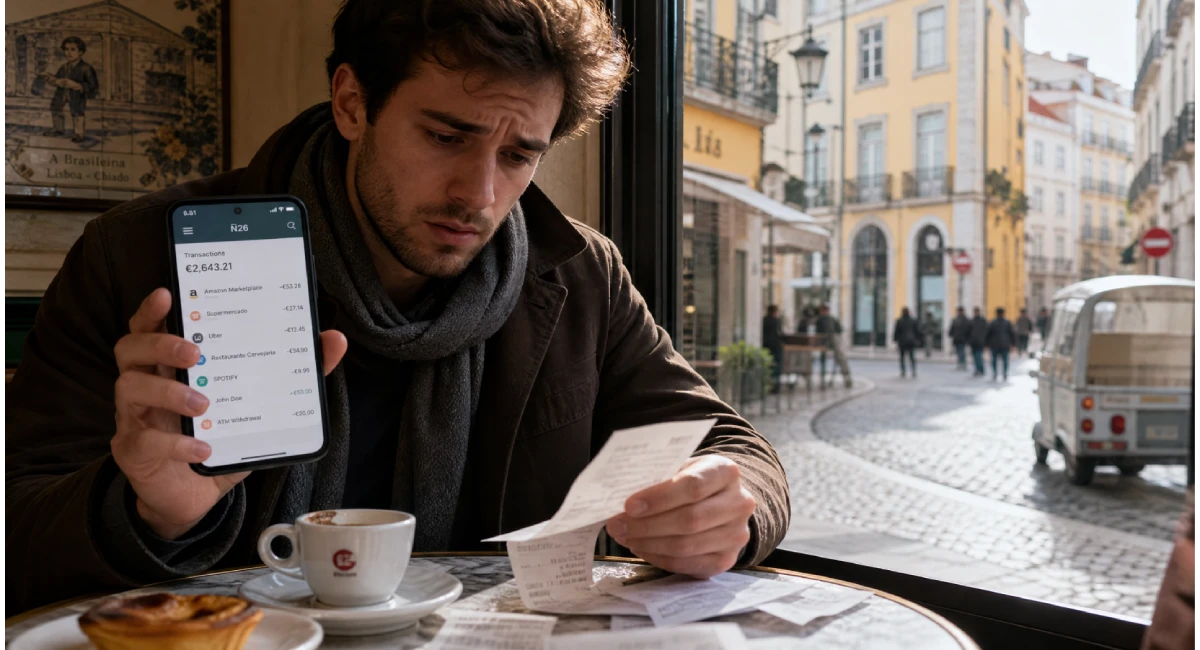
Budget miscalculations are one of the most consistent solo travel errors among first-timers. Most people budget for accommodation and flights. They forget about everything in between. The daily spending that adds up quietly and hits hard by week two.
Where Travellers Consistently Overspend While Realising It
The hidden costs that drain budgets are predictable once you know them:
- Airport meals and drinks, which are typically two to three times the street price
- Convenience purchases at midnight when the only option nearby is a tourist-priced shop
- Last-minute transport upgrades when the original option falls through
- Buying toiletries, adapters, or medication abroad at premium prices because they weren’t packed
- Entry fees, tips, and small activity costs that weren’t factored into the daily estimate
Individually, each of these feels minor. Collectively across a two-week trip, they can add several hundred dollars to your spending.
How to Build a Daily Travel Budget That Accounts for Real Life
Start with realistic daily averages. Numbeo provides city-level cost-of-living data that is genuinely useful for estimating food, transport, and activity costs. Budget travel blogs for your specific destination will give you ground-level numbers.
Once you have a daily number, add 20% on top as a buffer. Use Trail Wallet or a simple spreadsheet to track spending day by day. Checking your numbers daily takes two minutes and stops small overspending from turning into a crisis.
Avoiding Locals and Staying Exclusively in the Tourist Bubble
It’s understandable. Tourist-heavy areas feel familiar, signage is often in English, and the options are clearly laid out. For a nervous first-timer, staying in that zone feels like the safe choice. The honest reality is that the tourist bubble costs more, delivers less, and often cuts you off from the parts of a place that actually make it worth visiting.
Why the Tourist Bubble Feels Safe but Costs More and Delivers Less
Restaurants within sight of major landmarks typically charge 40 to 60% more than places two streets back. The menus are often adapted for foreign tastes, the staff interaction is scripted, and the atmosphere reflects tourism rather than local life.
The comparison is direct: a bowl of pasta outside the Colosseum in Rome versus the same quality meal at a small place locals use four blocks away. The price difference is real, the experience is different, and the second option is often safer and friendlier.
Low-Pressure Ways to Connect With Locals as a First-Time Solo Traveller
Stepping outside the tourist zone doesn’t require confidence you haven’t built yet. Start with low-stakes approaches:
- Ask your hotel or hostel staff where they actually eat — not what they recommend to tourists
- Eat at covered markets and food halls used by local workers
- Attend a Couchsurfing Meetup event, which is free and designed for exactly this kind of introduction
- Book a local cooking class or walking tour run by residents, not travel companies
- Walk one or two blocks away from the obvious tourist street and see what’s there
Every one of these opens a different layer of the place you’re visiting.
Neglecting Health Prep and Travel Insurance Until It’s Too Late
Health preparation gets skipped because nothing has gone wrong yet. Travel insurance feels like an unnecessary expense until the moment it becomes the only thing standing between you and a bill you can’t pay. This is one of the beginner travel mistakes with the most serious consequences.
The Health Mistakes Beginners Dismiss as Unlikely
The pattern is consistent:
- Skipping vaccinations that are recommended or required for the destination, then dealing with the consequences on arrival or after returning
- Packing prescription medication in checked luggage and losing access to it when the bag is delayed or lost
- Ignoring basic food and water safety in higher-risk regions because it “probably won’t happen”
- Not knowing the location of the nearest clinic, hospital, or pharmacy before needing one urgently
Most of these require almost no effort to prevent. A quick search before you leave handles the majority of them.
What to Look for in a Travel Insurance Policy Before You Buy
Cheap travel insurance is often cheap because it covers very little. Before buying any policy, check these specifics:
- Medical evacuation coverage: does it cover getting you home if you need advanced treatment?
- Pre-existing condition clauses: are you covered if a known health issue causes a problem abroad?
- Trip cancellation terms: what actually qualifies as a covered reason to cancel?
- Adventure activity coverage: if you’re hiking, diving, or renting a motorbike, standard policies often exclude these
Read the exclusions before the inclusions. The policy that costs twice as much but covers medical evacuation is a better purchase than one that only covers lost luggage.
How to Avoid Travel Problems by Changing Your Mindset Before You Leave
There’s a version of solo travel preparation that goes beyond logistics: the mental side. Beginners often arrive with a quiet expectation that everything will go to plan if they’ve prepared well enough. That expectation is the source of a significant amount of unnecessary stress.
Discomfort is not a sign of failure. It’s part of the experience for everyone, including people who have done this many times.
Why Trying to Control Every Variable Makes the Trip Worse
Over-planning and anxiety about mistakes create a specific problem: they lead to worse decisions in the moment. When something goes wrong, and you’re already stressed from trying to hold everything together, your problem-solving ability narrows.
A missed train in a small Italian town once forced a traveller to spend an unplanned night in a village they’d never heard of. That unplanned stop became the most memorable part of the whole trip. The story sounds nice in hindsight, but the point is real: the detour only became an experience worth having because the traveller stopped trying to recover the original plan and worked with the new situation instead.
Building a Problem-Solving Attitude That Serves You on Every Trip
These tools are practical, not philosophical:
- Give yourself a fixed window of ten minutes to feel stressed about a problem. After that, shift entirely to solutions.
- Keep a short mental list of fallback options for common scenarios: what do I do if accommodation falls through, if I miss a connection, if my card stops working?
- Accept before you leave that at least one thing will go wrong. Not as pessimism, but as a realistic baseline that removes the shock when it happens.
Every experienced traveller has a story that started as a disaster. That’s not a coincidence. It’s what travel actually looks like, and getting comfortable with that reality ahead of time is the most useful preparation you can do.
Conclusion
Most of what goes wrong on a first solo trip is predictable. The solo travel mistakes beginners make are not random — they follow patterns, and those patterns are well documented by everyone who has been through them. You’ve now read through the main ones.
The fixes are not complicated. Back up your payment methods. Leave gaps in your schedule. Do thirty minutes of safety research. Pack less than you think you need. Buy real travel insurance. Step two streets away from the obvious tourist zone.
None of this requires experience you don’t have yet. It just requires acting on it before you leave.
If this article helped you prepare, share it with someone else planning their first solo trip. And when you’re ready to go deeper, read the main guide: Is Solo Travel Safe for Beginners in Unfamiliar Countries? It covers the bigger picture that supports everything you’ve read here.