
Most people know Elon Musk as the founder of Tesla and SpaceX, the owner of X, and one of the most polarising figures in modern business. Far fewer know the full story of where he started.
- Who Is Elon Musk Before the Headlines?
- What Was South Africa Actually Like in the 1970s and 1980s?
- Where Did Elon Musk Grow Up — The Specific Places and What They Meant
- Elon Musk’s Relationship With His Father, Errol Musk
- Books, Computers, and the Escape Into Ideas
- Why He Left South Africa — and What That Decision Reveals
- From South Africa to Silicon Valley — The Adult Behaviors That Trace Back
- What Honest Observers Say About His Childhood’s Long Shadow
- Conclusion
The truth about elon musk childhood south africa, how it shaped him, is more complicated than most coverage suggests. It involves a country under political siege, a genuinely brutal school environment, a father he later described in words that are hard to forget, and a decision at 17 to leave everything behind.
This article does not treat his early life as a feel-good origin story. It treats it as evidence — specific events that connect directly to specific adult behaviors. If you want to understand why Musk operates the way he does, the answer starts in Pretoria.
Who Is Elon Musk Before the Headlines?
Before the rockets, the acquisitions, and the political controversy, Elon Musk was a skinny, bookish kid in South Africa who did not fit in anywhere and knew it.
That detail matters. A lot of coverage skips from “born in Pretoria” to “founded Zip2 in Silicon Valley” as though nothing significant happened in between. But the years between those two facts are where the actual formation took place.
This is not a story about a genius who was always destined for greatness. It is a case study in how specific environments produce specific psychological outcomes. The social isolation, the physical bullying, the emotional climate at home, the political reality of the country around him — none of it was incidental. All of it left marks that you can trace directly to how he runs companies, treats people, and makes decisions today.
Understanding where he came from does not excuse his more controversial behavior. But it does explain a great deal of it.
What Was South Africa Actually Like in the 1970s and 1980s?
To understand Musk’s childhood, you need to understand the country he grew up in — and apartheid-era South Africa was not a normal place to be a child.
The apartheid system, formally in place since 1948, legally separated South Africans by race across every dimension of life: where you lived, where you went to school, which hospital treated you, which bench you sat on. By the 1970s and 80s, the system was under serious internal pressure. There were boycotts, strikes, and uprisings. The government’s response was increasingly violent. The whole country operated under a low-level hum of instability and authoritarian control.
For white South Africans, life looked comfortable on the surface. Good homes, good schools, domestic workers. But underneath that material ease was a society built on coercion — and children absorb the logic of the environment they grow up in, even when no one spells it out for them.
Pretoria in the 80s — A City of Privilege and Tension
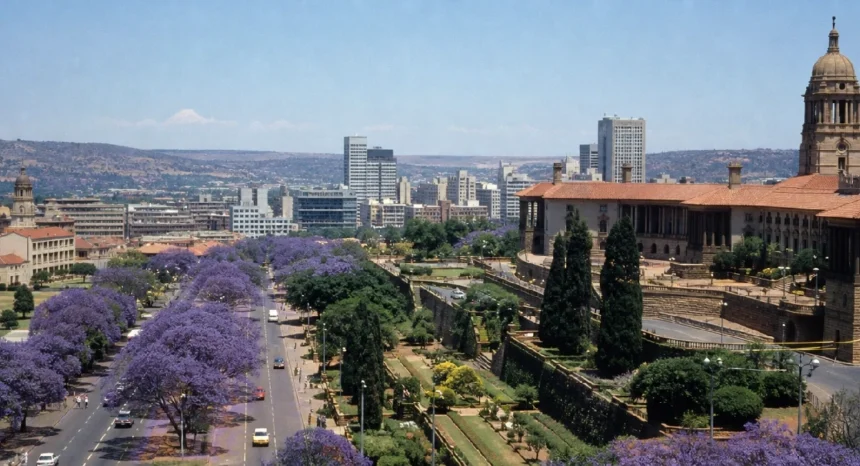
Pretoria was the administrative capital of apartheid, South Africa. It was an Afrikaner city at its core — conservative, hierarchical, proud of its political identity, and deeply suspicious of outside influence.
The white community Musk grew up in was insulated in a very specific way. There was material comfort, yes. But the culture rewarded toughness, conformity, and a certain contempt for weakness. Social hierarchies were enforced early and enforced hard. Boys who did not fit the physical or social mold — and Musk clearly did not — paid a real price for it.
Growing up in that environment tends to produce one of two outcomes: you internalize the hierarchy and learn to dominate, or you reject it entirely. The evidence from Musk’s life suggests he eventually did both, at different times and in different contexts.
How Apartheid’s Shadow Falls on an Affluent Childhood
Musk’s family was not architects of apartheid. But they benefited from it in the way all white South Africans of that era did — access to better schools, better infrastructure, cheaper domestic labor, and a legal framework that protected their position.
Biographers and scholars who have written about Musk’s early life note that growing up inside a privileged minority in a visibly unjust society produces specific psychological patterns. You learn early that the rules of the world are not natural — they are constructed by people with power. You develop an awareness of systems that most children never have to develop. You also learn to live with a certain amount of moral compartmentalization, the ability to acknowledge something is wrong while continuing to benefit from it.
Whether consciously or not, those cognitive habits show up throughout Musk’s adult career.
Where Did Elon Musk Grow Up — The Specific Places and What They Meant
The short answer is Pretoria, then Johannesburg, then briefly Cape Town before he left for North America. But each location meant something different, and each one contributed something specific to who he became.
The Pretoria Years — Early Childhood and First Signs of Intellectual Isolation
Elon Reeve Musk was born on June 28, 1971, in Pretoria. His mother, Maye, was a Canadian-born model and dietitian. His father, Errol, was an engineer and property developer. By South African standards, the family was upper-middle class.
From an early age, Musk was noticeably different. Teachers described him as difficult to reach — not because he was slow, but because he was somewhere else entirely. He reportedly read through the entire Encyclopaedia Britannica before the age of nine and asked for more. His absorption in ideas was so complete that adults sometimes mistook it for hearing problems or social difficulty.
In a different environment, that quality might have been recognized and encouraged earlier. In Pretoria in the late 70s, it mostly made him strange.
Johannesburg and the School Years That Left Marks
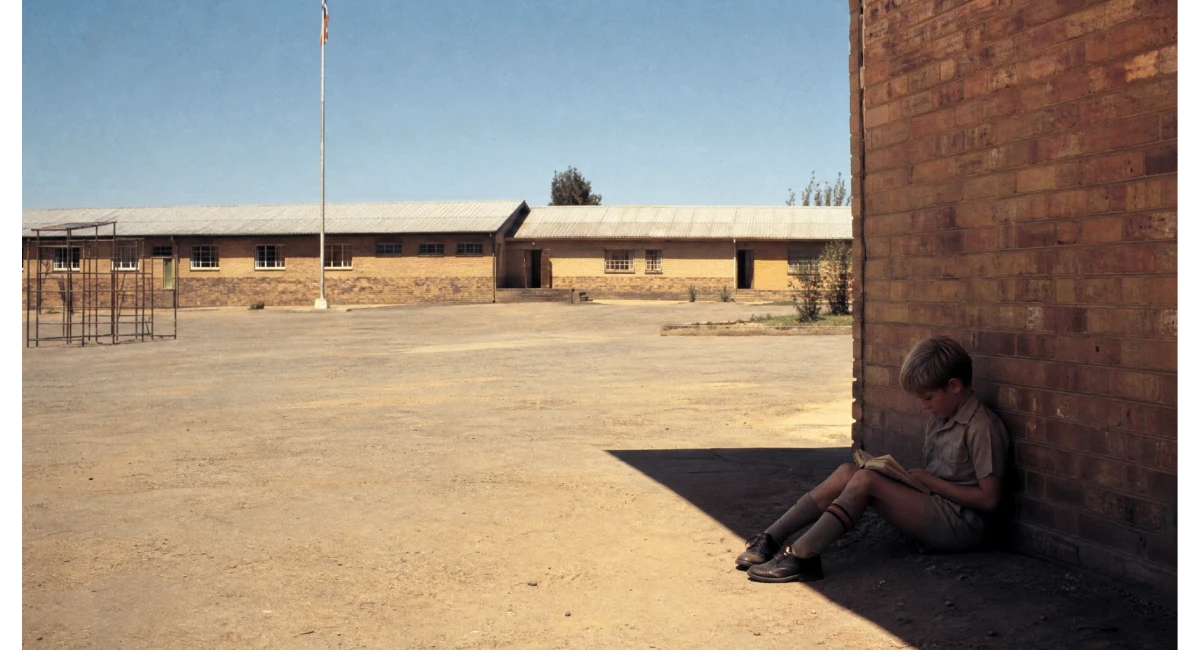
After his parents divorced, Musk ended up moving around between households and schools. The Johannesburg years are where the bullying became serious.
He was small for his age, socially awkward, and had an intensity that other children found off-putting. In a school culture that respected physical dominance above almost everything else, that combination made him a target. The most documented incident involves a group of boys throwing him down a staircase and beating him until he was hospitalized. He has described it himself in interviews. Walter Isaacson’s biography includes his account.
This was not one bad day. It was a prolonged period of social exclusion and physical intimidation that lasted years.
Developmental psychology research is consistent on what this kind of experience does. Extended social rejection during adolescence is associated with heightened threat sensitivity, difficulty with trust, strong drives toward achievement as a form of social proof, and sometimes a reduced capacity for the kind of easy, reciprocal empathy that makes relationships smooth. You do not come through years of that experience and emerge unchanged.
Elon Musk’s Relationship With His Father, Errol Musk
Of everything in Musk’s early life, his relationship with his father may be the most psychologically significant — and the least honestly examined in mainstream coverage.
Errol Musk is an engineer, property developer, and by most accounts a dominant, difficult man. Elon has described him publicly in stark terms. In a 2017 Rolling Stone interview, he said: “He was such a terrible human being. You have no idea.” In other conversations, he has described the household as one of relentless criticism and psychological pressure. His sister Tosca and mother Maye have made similarly dark references over the years.
What makes this more complicated is that after his parents divorced, Elon chose to live with Errol. He was around nine or ten. It is a decision he has since said he regrets deeply.
The Divorce, the Choice, and What It Cost Him
When Maye and Errol divorced around 1979 to 1980, the children initially stayed with their mother. But Elon, in what he has described as a misguided attempt not to leave his father alone, chose to move in with Errol. His siblings later joined him.
Isaacson’s biography and Musk’s own public statements give a consistent picture of what that household was like. Errol was not physically abusive in any documented way, but the emotional environment was cold and critical. Praise was not a feature. Achievement was expected, not acknowledged. The message, delivered implicitly and consistently, was that you were never quite enough.
Musk has said he cannot remember a single week of his childhood that he would describe as happy. That is a specific, considered statement from someone who chooses his words carefully in interviews, at least when the topic is personal.
What Errol Gave Him — Intentional or Not
There is a difficult truth here: the same environment that caused evident psychological damage also produced some of the traits most associated with Musk’s professional success.
Errol was technically minded. He exposed his son to engineering problems, business logic, and a complete intolerance for excuses or emotional reasoning. The expectation was performance. Feeling bad was irrelevant. Getting the answer right was everything.
You can draw a straight line from that household to the management culture Musk has built at every company he has run. The extreme work demands. The impatience with people whom he perceives as making excuses. The stated belief, repeated in multiple interviews, that adversity is not a problem to be managed but a condition that produces better results.
Whether that belief is correct is a separate question. Where it came from is not.
Books, Computers, and the Escape Into Ideas
When the outside world is hostile, and the home environment is cold, you go somewhere else. For Musk, that somewhere was ideas.
By his own account, reading became less a hobby and more a refuge. He read everything he could find — encyclopedias first, then science fiction, then technical texts. By the time he was a teenager, he was moving through material that most adults would find challenging. This was not casual reading. It was the kind of obsessive immersion that comes from someone who genuinely prefers the world inside books to the one outside.
He also found computers. In the early 1980s, home computing was new enough to feel like genuine discovery. Musk taught himself to code using the manual that came with a Commodore VIC-20. When he had finished the exercises that were supposed to take months, he was done in three days.
The Books That Built His Worldview
Musk has been specific, in interviews and public conversations, about which books mattered most to him.
The Hitchhiker’s Guide to the Galaxy by Douglas Adams gave him a framework he has returned to throughout his adult life: the idea that the right question is more valuable than any given answer, and that the scale of your ambition should match the scale of the actual problem. He has cited it directly when explaining why he thinks about civilizational risk rather than quarterly revenue.
Isaac Asimov’s Foundation series gave him something more structural: the idea that a small group of people, working with enough foresight and enough commitment, can preserve and extend civilization across vast timescales. He has said explicitly that this influenced his thinking about why space colonization matters.
Technical manuals and engineering texts he read for pleasure. Most people do not do this. The habit points to someone for whom the boundary between intellectual work and relaxation simply does not exist.
Blastar and the First Proof of Concept
At 12, Musk wrote a space-shooting video game called Blastar in BASIC, a programming language he had taught himself. He sold the code to a South African computer magazine called PC and Office Technology for approximately $500.
The game itself was not sophisticated. What is worth noting is the sequence of behaviors: he built something, he packaged it, he found a buyer, and he got paid. At 12 years old.
That sequence — build, ship, monetize, validate — is exactly what he repeated with Zip2, with X.com, with SpaceX, with Tesla, and with every significant venture since. The pattern was already running before he was a teenager. South Africa gave him the adversity. The books gave him the framework. Blasterar was the first output.
Why He Left South Africa — and What That Decision Reveals
Musk left South Africa in 1989, at 17, using a Canadian passport he was entitled to through his mother. He arrived in Canada with almost no money and no guaranteed path forward. He has described leaving as something he had been planning for years.
His stated reasons cover two things: the moral problem of mandatory military service in the apartheid-era South African Defence Force, and a clear-eyed belief that North America, specifically Silicon Valley, was where technological progress actually happened.
But there is a third dimension that gets less coverage. He was leaving a place where he had been miserable, where he had never belonged, and where the social structure felt like it had no room for what he actually was. Leaving was not just strategic. It was also an escape.
Avoiding the South African Military — What It Would Have Required
Under apartheid law, white male South Africans faced mandatory conscription into the South African Defence Force. In the 1980s, this meant potentially active service enforcing apartheid policies, including operations in neighboring countries and internal suppression of resistance.
Musk has never publicly endorsed apartheid or its defense. The idea of being conscripted into that system, he has suggested, was not something he was willing to accept. This is not a complicated position — it is a refusal to participate in institutional violence in service of a system he did not believe in.
The significance for understanding his adult behavior is this: from a very young age, Musk’s response to institutional constraints he disagrees with is not negotiation. It is exit. That pattern has repeated itself throughout his career in ways both admirable and controversial.
Canada, Queen’s University, and the Transition Period
Musk arrived in Canada and stayed first with a distant relative in Saskatchewan. He worked manual labor jobs — shoveling grain out of storage bins, cutting logs — jobs that paid by the hour and involved real physical difficulty.
He eventually made his way to Queen’s University in Ontario, then transferred to the University of Pennsylvania, where he completed degrees in economics and physics. The transition period was not glamorous. He was not a trust fund kid who moved effortlessly into an Ivy League setting. He arrived with limited money, worked his way through, and built from there.
That context matters when evaluating the myth-versus-reality of his early success.
From South Africa to Silicon Valley — The Adult Behaviors That Trace Back
The synthesis is not subtle. You do not have to stretch to connect what happened to Musk in South Africa to what he does as an adult. The connections are specific, and they are documented.
The Bullying Years and His Management Style
Former Tesla and SpaceX employees, in accounts gathered by journalists and biographers including Isaacson and Vance, describe a management environment built on extreme pressure, public criticism, and an expectation that personal limits are obstacles rather than legitimate boundaries.
Musk himself has described his management philosophy in terms that map directly back to what he experienced in school: hardship is not something to protect people from. It is something that, when applied correctly, produces better outcomes.
This is not a universally accepted management theory. Many organizational psychologists argue the opposite. But it is a comprehensible one when you know where it came from. Someone who survived years of social brutality and came out of it having built something extraordinary has a particular kind of evidence for their worldview. Whether that evidence generalizes is a different argument.
His Father’s Household and His Own Parenting and Relationship Patterns
Musk has 12 known children with multiple partners, including Grimes, Shivon Zilis, and his first wife Justine Wilson.
His relationship with his eldest child, Vivian Jenna Wilson, is publicly fractured. Vivian, who transitioned and changed her name, has publicly stated she cut off contact with her father and described his household as emotionally absent. She has said she does not wish to be associated with him in any way.
Commentators have drawn parallels between the emotional climate Musk describes in Errol’s household and what some of his own children and former partners have described in his. Those parallels are reported by journalists and biographers, not invented. Whether Musk has reflected on them is not clear from the public record.
South Africa’s Toughness Culture and His Risk Tolerance
Growing up in apartheid South Africa in the 1980s meant growing up inside a society that was visibly, structurally unstable. Political violence was real. The future was genuinely uncertain. Caution was not rewarded in the way it might be in a stable suburban environment.
There is documented research on how chronic low-level instability calibrates risk tolerance differently. People who grow up without a safety net — social, financial, or political — develop a different relationship with downside scenarios. The worst case is something they have already imagined and lived near.
When Musk put his entire PayPal fortune virtually into SpaceX and Tesla simultaneously in 2008, both companies were close to failure. He has described the period as the most painful of his adult life. But he did not stop. The ability to hold a catastrophic downside scenario in view and keep going anyway is not simply personality. It is a learned response to an environment that trained him to do exactly that.
What Honest Observers Say About His Childhood’s Long Shadow
The most thorough account of Musk’s early life comes from Walter Isaacson’s 2023 biography, based on years of close access. Isaacson describes a man whose adult behaviors are almost directly traceable to his South African years — the emotional detachment, the extreme standards, the binary thinking, the difficulty with loyalty and warmth in relationships.
Ashlee Vance’s earlier biography, published in 2015, covered similar ground with less psychological detail but consistent factual conclusions: the bullying was serious, the home environment was hard, and Musk himself connects those experiences to his drive.
What developmental psychologists note, more broadly, is that the combination of chronic peer rejection, an emotionally cold home, and high intellectual ability in a physically hostile environment produces a recognizable profile. Achievement becomes the primary language of worth. Intellectual dominance substitutes for social belonging. Sensitivity to criticism is both heightened and concealed behind aggression.
Not every psychologist applies that framework to Musk specifically — doing so responsibly requires clinical access, not biographical reading. But the frameworks exist, the documented experiences fit them, and more than one journalist and biographer has noted the consistency.
What is not in serious dispute is the fact that the experiences were real, the marks they left are visible, and any honest account of who Elon Musk is today has to begin in South Africa.
Conclusion
Elon Musk is not a self-made man in the way that phrase is usually meant. He came from material comfort, and that matters. But he is also not someone whose success was handed to him. The years between his birth in Pretoria and his departure at 17 were genuinely difficult, and they produced something in him that easy childhoods typically do not.
The social brutality of his school years gave him both an engine and a wound. His father’s household gave him standards and a deficit of warmth in roughly equal measure. The political reality of South Africa gave him an early education in how power works and what it costs to accept it uncritically. The books and the computers gave him an exit.
When you ask about elon musk childhood south africa how it shaped him, the honest answer is: almost completely. Not in a deterministic way that removes his agency, but in the way that all of us are shaped by the specific pressures of the specific worlds we grow up in.
If you found this examination of how early experience builds adult character useful, the broader series continues with a look at how Oprah Winfrey escaped genuine poverty to become one of the most influential figures in modern media — a very different origin story with some striking parallel lessons.