

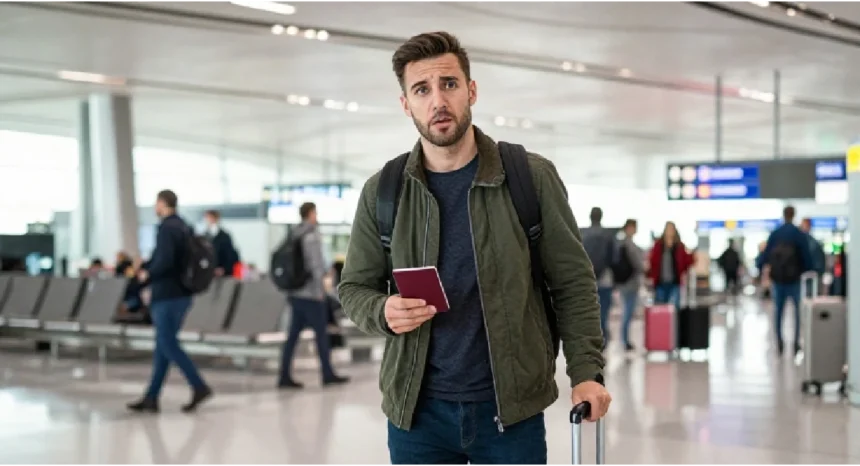
Most people plan their first international trip based on what they have seen online. A perfectly lit photo of a quiet canal. A travel vlog where everything goes smoothly. A highlight reel that skips the 40-minute immigration queue, the confusing bus system, and the meal that did not sit well.
- Why Your Expectations About a New Country Are Probably Wrong
- First Time Travel Tips for the Days Before You Depart
- What to Expect at the Airport and Border Control
- Culture Shock Is Real: Here Is What It Actually Feels Like
- New Country Advice on Food, Water, and Staying Healthy
- What to Expect Visiting a New Country When You Do Not Speak the Language
- Expectations vs Reality Travel: Safety, Scams, and Street Sense
- The Most Common Scams Targeting First-Time Visitors
- How to Carry Money and Documents Without Becoming a Target
- Managing Accommodation, Jet Lag, and Travel Fatigue
- What Budget, Mid-Range, and Higher-End Accommodation Actually Looks Like
- Recovering From Jet Lag and Pacing Yourself
- How to Respect Local Culture Without Overthinking It
- You Are Ready for the Real Thing
Knowing what to expect when visiting a new country before you go is the difference between a trip that surprises you in good ways and one that knocks you off balance. This guide covers the real picture, from the moment you land to how you get around, stay safe, eat well, and connect with the place you came to see.
No glossy filters here. Just honest, practical information that helps you travel with your eyes open.
Why Your Expectations About a New Country Are Probably Wrong
The version of a country that lives in your head before you visit rarely matches the one you step into. That gap has a name in psychology: expectation mismatch. It happens when the mental image you have built, through travel content, recommendations, and social media, collides with the actual sensory experience of a place.
The mismatch itself is not the problem. The problem is that most first-time travelers do not know it is coming, so when reality looks different from the preview, it feels like something has gone wrong. It has not. Your expectations were just built on incomplete information.
Understanding this before you leave saves you from a lot of unnecessary disappointment.
The Social Media Travel Trap
Instagram and YouTube do not show you a country. They show you the best available version of it, captured on the best available day, edited for maximum visual appeal.
The Eiffel Tower is real and impressive, but the area immediately surrounding it is loud, crowded, and full of persistent souvenir sellers. Venice is genuinely beautiful, but in summer the main streets feel less like a romantic escape and more like a slow-moving theme park queue. Bali has rice terraces that look exactly like the photos, but getting between them means sitting in heavy traffic on narrow roads with no pedestrian infrastructure.
None of this makes these places bad. It just means the experience is fuller and more layered than a curated feed suggests.
What Travel Brochures Leave Out
Official tourism marketing has one job: to make you want to visit. It does that job well by showing you the best weather, the cleanest beaches, and the friendliest faces. What it quietly skips is equally important.
Seasonal weather is one of the most overlooked factors. Many popular destinations have a rainy season, an extreme heat period, or a monsoon window that can significantly change what activities are available. Language barriers are another. Outside major cities and tourist zones, English is often not spoken at all. Hygiene standards and infrastructure quality also vary in ways that no brochure will tell you upfront.
None of this should stop you from going. It should stop you from being surprised when you get there.
First Time Travel Tips for the Days Before You Depart
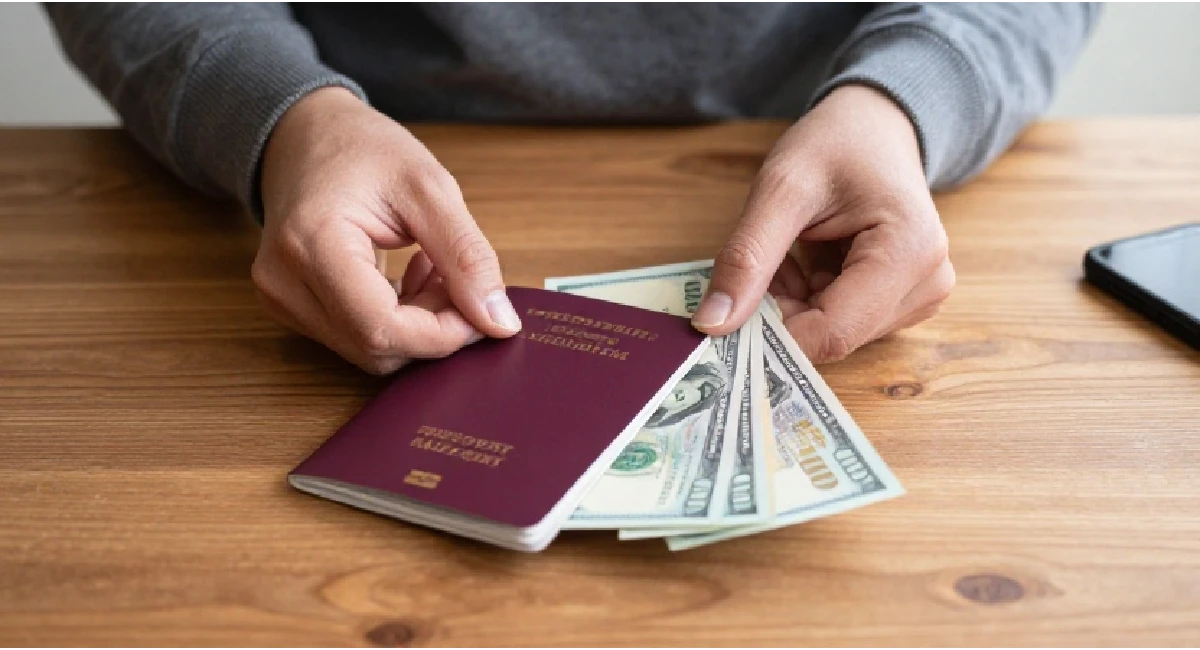
The week before your departure is where most first-time international trips are either set up for success or quietly undermined. Waiting until the last moment to sort out documents, money, and health requirements is one of the most common mistakes, and one of the most preventable.
Good preparation is not about covering every possible scenario. It is about making sure the basics are in order so you can focus on the experience once you arrive.
Documents, Visas, and Entry Requirements
Entry requirements are not standard across all destinations. What your passport allows you to do, how long you can stay, and what documentation you need at the border depends on a combination of your citizenship, the destination country, and sometimes even your recent travel history.
Most countries require your passport to be valid for at least six months beyond your intended departure date. Some require a return ticket. Others require proof of accommodation bookings or a minimum amount of funds available. Visa requirements range from visa-free entry and visa-on-arrival to full advance applications that can take weeks to process.
Rules also change. A destination that was visa-free last year may not be this year. Always check the official embassy or consulate website of your destination country, not a third-party travel blog, before finalizing your plans.
If vaccinations or health documentation are required for entry, the same rule applies: go to the official source.
Money, Currency, and Payment Realities
The idea that a card works everywhere is one of the more damaging assumptions a first-time traveler can carry. In major cities and tourist areas, contactless payments and international cards are often accepted without any issue. Outside those areas, cash remains the only practical option in many destinations.
Currency exchange rates vary significantly between airport counters, high-street exchange offices, and local ATMs. In most cases, withdrawing local currency from a reputable ATM at your destination gives a more competitive rate than exchanging before you leave. However, ATM availability is not guaranteed in rural areas, so arriving with some local cash is always a sensible backup.
Watch out for dynamic currency conversion at point-of-sale terminals. When a machine asks whether you want to pay in your home currency or the local currency, always choose the local currency. The conversion rate applied by the merchant or terminal is rarely in your favor.
What to Expect at the Airport and Border Control
Arriving at a foreign airport for the first time is one of the most disorienting parts of international travel. Everything is unfamiliar: the signage, the process, the language, the layout. Knowing roughly what to expect before you land makes the whole experience significantly less stressful.
From the moment your plane doors open, you are usually looking at a minimum of 45 minutes before you are outside the terminal. In busy airports or during peak arrival periods, it can be significantly longer.
Immigration and Customs: What Actually Happens
After landing, you will follow signs to immigration or passport control. You will join a queue, present your passport and any arrival documentation, and answer basic questions from an officer. These are typically about the purpose of your visit, how long you plan to stay, and where you will be staying.
Answer clearly and honestly. If you are asked to step aside for additional questioning, remain calm. This is a routine part of border control and happens regularly even to experienced travelers. It does not mean you have done anything wrong.
After immigration, you collect your checked bags and pass through customs. Most countries operate a red/green channel system: green for nothing to declare, red if you are carrying items above duty-free limits, restricted goods, large amounts of currency, or fresh food. When in doubt, take the red channel and declare. Customs officers respond far better to honesty than to items discovered during a bag search.
Getting From the Airport to Your Accommodation
The space between the arrivals exit and your accommodation is where many first-time travelers get taken advantage of. Unofficial taxi drivers target new arrivals, offering rides that seem convenient but cost significantly more than the official rate or are simply unsafe.
Before your trip, research the reliable transport options for your specific airport. Most major international airports have official taxi counters, clearly marked bus or train connections, and popular rideshare apps available. Stick to these. If you are unsure which option to take, ask at the official information desk inside the arrivals hall.
Knowing the approximate journey time and cost in advance also helps. If a driver quotes you three times the expected fare, you have the information to walk away.
Culture Shock Is Real: Here Is What It Actually Feels Like
Culture shock gets dismissed as something that only happens to people who are particularly sensitive or unprepared. That is not accurate. It happens to most people who spend meaningful time in a country that operates differently from their own, regardless of how well-traveled they are.
It moves through four broad stages. The first is genuine excitement and fascination. Everything feels new and interesting. The second is disorientation, where the novelty wears off, and the unfamiliarity starts to feel tiring. The third is gradual adjustment, as routines form and confusion decreases. The fourth is adaptation, where the new environment starts to feel normal.
On a short trip, you may only experience the first two stages. That is completely normal.
The Honeymoon Phase and When It Ends
The first day or two in a new country often feels like a sensory highlight reel of your own. New smells, new sounds, a menu you cannot read, streets that do not follow the logic of home. It is exciting, and that excitement is real and worth enjoying.
Then something shifts. Maybe you cannot figure out how to pay for a bus ticket and miss three in a row. Maybe the food you ordered looks nothing like what the table next to you received, and you cannot ask why. Maybe the noise from the street outside your accommodation starts at 5 a.m. and does not stop.
These moments do not mean the trip is failing. They mean you are actually in a different country, not just viewing a version of it from behind a screen.
Cultural Norms You May Not Know You Are Breaking
Every country has unspoken rules that locals follow without thinking and that visitors regularly break without knowing. Most locals understand this and respond with patience. Still, doing some basic research beforehand avoids situations that create unnecessary friction.
Tipping is one of the most variable customs. In some countries it is expected and not tipping is considered rude. In others, leaving money on the table after a meal is considered strange or even offensive. Dress codes at religious sites are another area where first-time travelers frequently get caught off guard. Covering shoulders, removing shoes, or wearing specific items is not optional at many sites, regardless of the temperature outside.
Dining etiquette, the acceptable volume of conversation in public spaces, and how to greet someone appropriately all vary by destination. A quick 20-minute read before you arrive goes a long way.
New Country Advice on Food, Water, and Staying Healthy
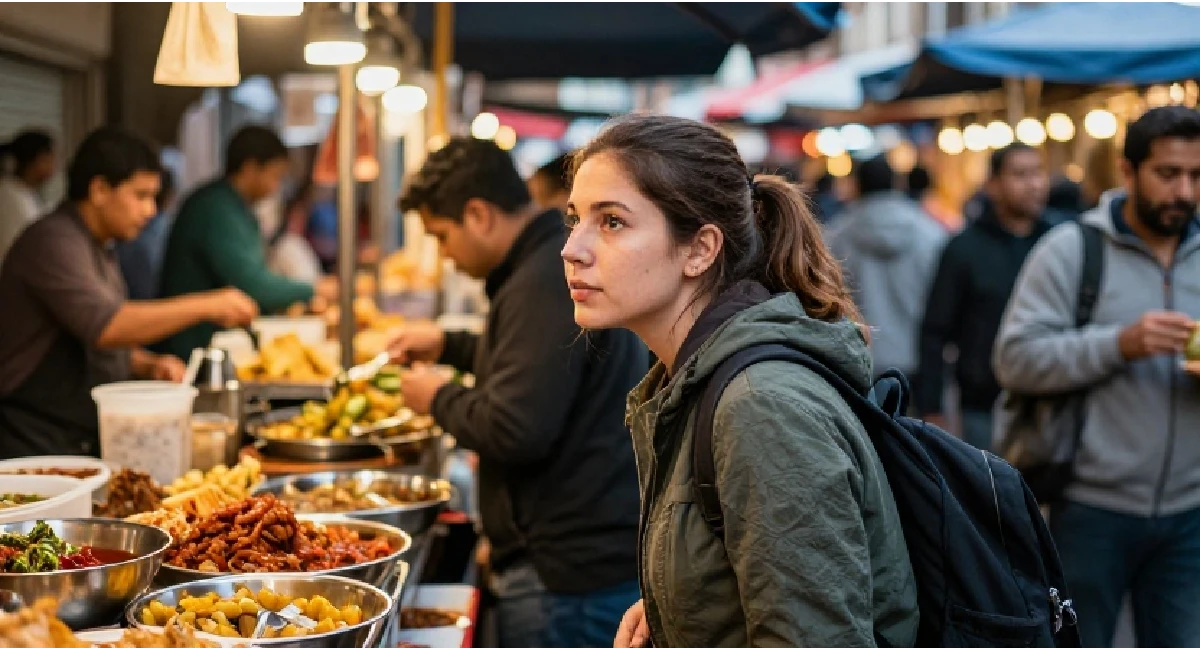
Food is one of the genuine pleasures of visiting a new country. It is also one of the areas where poor judgment leads to the most common travel setbacks. Getting sick in a foreign country is miserable in ways that are difficult to overstate, but the answer is not to avoid local food entirely. The answer is to make smarter choices.
The same applies to water, medical preparation, and knowing what your insurance actually covers before you need it.
Food Safety and Eating Street Food Responsibly
Street food is often the most authentic, affordable, and genuinely delicious food a destination has to offer. It is also unfairly blamed for making travelers sick, when the real issue is usually not the food itself but avoidable choices around it.
The practical rule is to watch where locals eat. A street stall with a queue of local customers is a far safer bet than an empty one in a tourist zone offering familiar comfort food at a premium. Food cooked to order at high heat is generally safe. Raw salads, fruit that has been pre-cut and left out, and cold dishes that have been sitting for an unknown period are the higher-risk options, particularly in destinations where tap water is not safe for drinking.
When in doubt, eat things that have been visibly cooked in front of you.
Water Quality, Medications, and Travel Insurance
Tap water safety varies significantly by destination and sometimes by region within the same country. In many parts of the world, drinking tap water as a first-time visitor causes digestive problems even when the water is technically treated, because your system is not used to the local microorganism profile. A quick search for your specific destination is worth doing before you arrive.
Pack a basic travel health kit: rehydration sachets, antihistamines, a pain reliever, and any prescription medication you take regularly with documentation. Carry more of any essential medication than you think you will need, as the same brand or formulation may not be available locally.
Travel insurance is worth purchasing before every international trip. Read the policy before you buy, not after something goes wrong. Understand what medical expenses are covered, whether emergency evacuation is included, and what the process is for making a claim abroad. Also locate the nearest clinic or hospital to your accommodation when you check in. You may never need it, but knowing in advance takes one decision off the table during a stressful moment.
What to Expect Visiting a New Country When You Do Not Speak the Language
One of the most consistent expectations that first-time international travelers carry is that English will get them through most situations. In some destinations, it will. In many others, it will not, and the gap between expectation and reality can be the most frustrating part of the trip.
This is not a criticism of any destination. Most of the world does not owe travelers an English-language experience. The responsibility to adapt sits with the visitor, and the good news is that adapting does not require learning a new language before your trip.
Where English Works and Where It Does Not
In most major international airports, hotels in tourist areas, and popular tourist attractions, some level of English is reliably available. Staff at large hotels are typically trained for it. Menus in central tourist districts often include English translations.
Outside these zones, the picture changes. At local markets, on regional bus routes, in smaller towns, at government offices, and in rural areas, English is often not spoken at all. This is worth knowing not to avoid those places, which are frequently the most interesting parts of any trip, but to go in prepared.
In Japan, for example, English signage in Tokyo is common, but small regional towns may have none. In Morocco, French is far more useful than English in many everyday situations. In rural Portugal, English speakers are much rarer than in Lisbon. The point is that the destination matters: blanket assumptions do not hold.
Translation Tools, Gestures, and Asking for Help
Offline translation apps are one of the most underused travel tools available. Download the relevant language pack for your destination before you leave, since you will not always have reliable internet access when you need it. Google Translate’s camera mode, which translates text in real time through your phone camera, is particularly useful for reading menus, signs, and product labels.
Beyond apps, a small paper phrasebook still has practical value in situations where phone battery or signal is an issue.
The social dimension matters as much as the tools. Attempting even a basic greeting in the local language, even if your pronunciation is far from perfect, signals respect and usually generates goodwill. Most people respond warmly to the effort, regardless of the result. Pointing, drawing, and using gestures remain universally effective communication tools when language fails.
Expectations vs Reality Travel: Safety, Scams, and Street Sense
Safety is the topic first-time travelers either over-worry about or dismiss entirely, and both extremes cause problems. Over-worry leads to anxiety that gets in the way of genuinely engaging with a destination. Dismissiveness leads to avoidable situations that ruin a trip.
The realistic middle ground is practical street awareness. Most tourist-targeted problems are not violent or dramatic. They are clever distractions designed to separate you from your valuables, and they work primarily because new arrivals are unfamiliar with them.
The Most Common Scams Targeting First-Time Visitors
These are the patterns that appear repeatedly across tourist destinations worldwide:
- The friendship bracelet: Someone approaches you, places a bracelet or string on your wrist, ties it before you can decline, and then demands payment. Declining the initial contact is the only reliable prevention.
- The dropped item: Someone drops money or a valuable item near you, and when you both reach for it, an accomplice picks your pocket. Do not bend down for items dropped by strangers.
- Fake taxi meters: Drivers use tampered meters or simply agree on a price and then claim it was per-person, per-bag, or for a different route. Agree on the fare before getting in, or use a ride-hailing app with a fixed price.
- Fake police officers: Someone in a uniform approaches you on the street, asks to check your wallet for counterfeit currency, and steals from it during the inspection. Real police do not do this. Ask to be taken to an official station if approached this way.
- Overpriced menus: A menu shown at the entrance of a restaurant differs from the one delivered to the table, or items not ordered appear on the bill. Always confirm prices before ordering and check the bill line by line.
- Distraction pickpocketing: Someone causes a scene, blocks your path, or asks a question while a partner removes something from your bag or pocket. Stay aware of your surroundings in crowded areas.
Knowing how these work means you can recognize them early and step away before anything happens.
How to Carry Money and Documents Without Becoming a Target
The simplest habit is to not carry everything in one place. Split your cash between at least two locations on your person. Keep a small amount in an easily accessible pocket for small purchases, and keep the rest secured.
A money belt worn under clothing works well for passports and the majority of your cash. Most hotels and hostels provide an in-room safe: use it for your passport once you have checked in and keep a digital photo of the key pages on your phone as a backup. Leave unnecessary cards and documents at your accommodation rather than carrying them all day.
The goal is not to eliminate all risk. It is to make sure that if something does go wrong, the damage is limited and recoverable.
Managing Accommodation, Jet Lag, and Travel Fatigue
Arriving in a new country takes more out of you physically than most first-time travelers anticipate. Even without a long flight, the mental load of navigating an unfamiliar environment is genuinely tiring. Add a significant time zone difference and a substandard first night of sleep, and the first few days of a trip can feel far harder than expected.
What Budget, Mid-Range, and Higher-End Accommodation Actually Looks Like
Accommodation categories mean different things in different parts of the world. A budget hostel in Scandinavia may be cleaner and better equipped than a mid-range hotel in some other regions. Star ratings are inconsistently applied and regulated across countries.
The most reliable signal is recent traveler reviews, specifically those posted within the last three to six months. Look for comments about noise levels, actual cleanliness, check-in times, and whether the location matches what was advertised. Pay particular attention to consistent complaints: a single bad review may be an outlier, but four reviews mentioning the same problem almost certainly are not.
One practical note: check-in times vary widely. Many properties do not allow early check-in before 2 or 3 p.m. If you arrive in the morning after a long flight, arrange in advance to at least leave your bags, even if your room is not ready.
Recovering From Jet Lag and Pacing Yourself
Jet lag is a real physiological response to rapid time zone crossing. Your body’s internal clock is out of sync with local time, which disrupts sleep, digestion, concentration, and energy levels. The severity depends on how many time zones you cross and the direction of travel: eastward journeys tend to cause more difficult adjustment than westward ones.
The most effective recovery approach involves getting exposure to natural daylight during local daytime hours as soon as possible after arrival, which helps reset your body clock faster than staying indoors. Avoid sleeping during local daytime if you can manage it, keep yourself hydrated, and eat at local meal times rather than when your body tells you it is hungry.
Most importantly, do not pack your first two days with back-to-back activities. Permit yourself to move slowly at first. A traveler who is rested and adjusted on day three will enjoy the rest of the trip far more than one who pushed hard on day one and spent day two unable to function.
How to Respect Local Culture Without Overthinking It
Worrying about accidentally offending people is one of the quieter anxieties that runs through many first international trips. It is a reasonable concern and comes from a good place. The answer to it is not to memorize every cultural rule of every destination you visit. It is to approach every new place with visible curiosity and a genuine willingness to follow local cues.
Most people around the world respond to that combination far better than to someone who has memorized the etiquette but treats it as a compliance checklist.
Dress Codes, Photography, and Religious Sites
Religious and traditional sites typically have explicit dress requirements that are posted at the entrance. Covering your shoulders, wearing long trousers or a skirt below the knee, removing your shoes, or covering your hair are common requirements across many different faiths and regions.
These are not suggestions. They are conditions of entry, and ignoring them is disrespectful regardless of what you personally believe. Many sites keep spare wraps or scarves available to borrow. If you are visiting multiple religious sites, wearing or carrying modest clothing that meets these requirements avoids the need to find an alternative each time.
Photography is a separate consideration. Even where photography is technically permitted, photographing people, particularly in religious settings or traditional communities, without clear permission is generally unwelcome. A gesture toward your camera and a questioning look is understood almost universally. If the answer is no, accept it without argument.
Interacting With Locals: What Builds Goodwill
The single most consistent positive response across cultures is a genuine attempt to use the local language, even briefly. Learning how to say hello, thank you, and please in the language of the country you are visiting requires about ten minutes of effort and is noticed and appreciated in almost every context.
Beyond that, a few habits go a long way: asking permission before photographing individuals, not bargaining aggressively at small family-run stalls where margins are already narrow, waiting your turn in queues even when it is not strictly enforced, and being patient when things move at a different pace than you are used to.
These are not complicated behaviors. They are the same basic courtesies you would hope a visitor to your own country would show.
You Are Ready for the Real Thing
Knowing what to expect when visiting a new country does not take the adventure out of travel. It gives you a foundation solid enough to actually enjoy it. When you are not blindsided by immigration queues, language barriers, unfamiliar food, or a street scam that targets every distracted first-timer who walks past, you have more attention left for everything that makes a new country worth visiting in the first place.
Take the first-time travel tips in this guide and build them into your pre-trip routine. Do the paperwork early, carry cash as a backup, research the local transport from the airport, and give yourself time to adjust when you arrive. The rest, including the unexpected parts, is what travel is actually made of.
If this guide helped you prepare, share it with someone else planning their first international trip. Or leave a comment below with a destination you are planning to visit. You might find someone who has been there already and can add to what is here.