

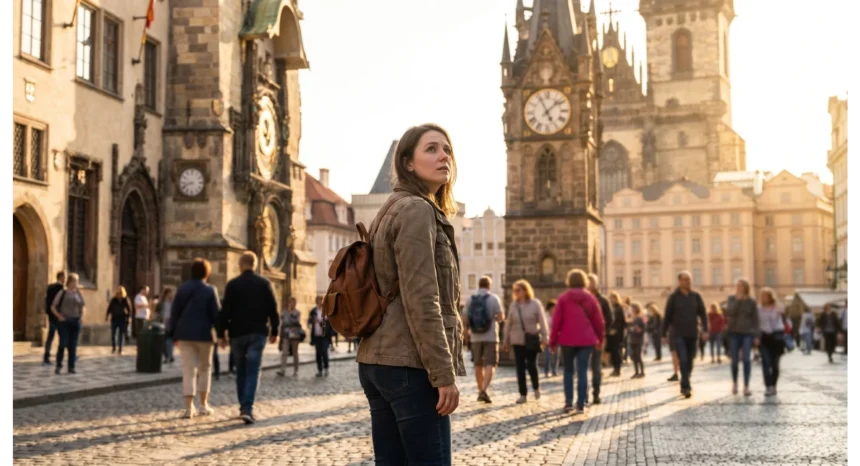
Every traveler hits this moment eventually. You are staring at a list of flights, and the most obvious choice is the city everyone goes to — Paris, Barcelona, Bangkok, Rome. But something makes you pause. You have seen the photos a thousand times. You have heard people say it was “too crowded” or “not what they expected.” So the question feels real: are tourist cities worth visiting, or are you just following a script someone else wrote?
- What Makes a City a “Tourist City” in the First Place
- Are Tourist Cities Worth Visiting? The Honest Case for Going
- World-Class Infrastructure That Just Works
- The Icons Are Famous for a Reason
- Variety and Convenience Under One Roof
- The Real Downsides of Visiting Crowded Destinations
- Crowds, Queues, and the Battle for Space
- The Cost Premium of Popularity
- The Authenticity Question — What Gets Lost
- Tourist Cities vs Local Travel — Understanding the Real Difference
- What “Traveling Like a Local” Actually Means
- When Tourist Infrastructure Is Actually the Better Choice
- How to Make the Right Travel Decision for Your Trip
- Questions to Ask Before Booking a Popular Destination
- Timing Strategies That Change the Experience Entirely
- Cities That Divide Traveler Opinion — And Why
- Venice — Sinking Under the Weight of Its Own Fame
- Marrakech — Chaotic, Colourful, and Completely Divisive
- Dubrovnik and the Limits of a Small City Under Heavy Tourism
- Alternatives Worth Considering Without Abandoning Popular Regions
- Secondary Cities That Sit in the Shadow of Famous Ones
- Combining Popular and Quiet Destinations in One Trip
- Conclusion
This is not a simple yes-or-no. The honest answer depends on who you are as a traveler, what you want from a trip, and how much you are willing to pay — in money, patience, and expectations.
This article lays out both sides without cheerleading for either. By the end, you will have a clear enough picture to make the call for yourself.
What Makes a City a “Tourist City” in the First Place
Not every city with tourists qualifies as a tourist city. The label applies to destinations where tourism has become a defining part of the city’s identity and economy. Think Paris, Barcelona, Amsterdam, Bangkok, or Rome. These cities share a few common traits: millions of annual visitors, internationally recognized landmarks, extensive hospitality infrastructure, and a well-worn path that millions follow year after year.
Being a tourist city is not an insult. It is a description. It means the city has been built, adapted, and in some cases reshaped around the experience of outsiders. That comes with real advantages and real costs, which we will get into shortly.
What it signals most clearly is that you are stepping into a specific type of travel experience — one with a defined playbook, predictable comforts, and a crowd that has also read that playbook.
The Scale of Tourism in Major Cities
The numbers help put this in perspective. Paris regularly receives over 40 million visitors per year, making it one of the most visited cities on the planet. Venice, which has a permanent population of under 250,000, sees somewhere between 25 and 30 million tourists annually — a ratio that has triggered serious political debate and led to a day-visitor entry fee introduced in 2024.
Bangkok, before the disruptions of recent years, was pulling in over 22 million international arrivals per year. Barcelona has spent years managing the tension between resident quality of life and the 12 to 15 million tourists who arrive annually.
These figures matter because they shape what you will actually encounter on the ground.
Are Tourist Cities Worth Visiting? The Honest Case for Going
Skepticism toward popular destinations is understandable. But dismissing them entirely often means ignoring real and practical benefits that matter — especially if you are still building your travel experience.
World-Class Infrastructure That Just Works
Tourist cities invest heavily in the systems that make travel easier. Reliable metro networks, airport connections, signage in multiple languages, tourist information offices, well-mapped walking routes, and accommodation options across every budget tier — these things exist because millions of people need them to work.
For a first-time international traveler, or anyone visiting a country where they do not speak the language, this infrastructure is genuinely valuable. Getting lost in a city with a functioning metro and English signage is a minor inconvenience. Getting lost somewhere with no clear transport options and no multilingual support can turn a bad afternoon into a very stressful one.
Practical systems are not glamorous, but they remove a significant amount of friction from travel.
The Icons Are Famous for a Reason
There is a tendency in experienced travel circles to dismiss the major landmarks as overrated. Some of that skepticism is earned. But a lot of it is posturing.
Standing inside the Colosseum and understanding that it has held crowds for nearly two thousand years is not the same as reading about it. Walking across a canal bridge in Venice at six in the morning before the crowds arrive carries a specific feeling that no photograph captures. Watching the sun set behind the Eiffel Tower from a distance is, whether you want it to be or not, genuinely moving.
The icons earned their reputation. The problem is rarely the place itself — it is the conditions under which most people experience it.
Variety and Convenience Under One Roof
Major tourist cities pack an enormous amount into a walkable or easily navigable area. World-class museums, street food and fine dining, historical neighborhoods, day trips to surrounding regions, live events, markets, and galleries — all within reach.
If you have five days and want to get the most out of them, a tourist city is a reasonable answer. The concentration of quality experiences per square kilometer is hard to match in smaller or less-developed destinations. That convenience has real value, particularly for travelers with limited annual leave or those traveling with others who have different interests.
The Real Downsides of Visiting Crowded Destinations
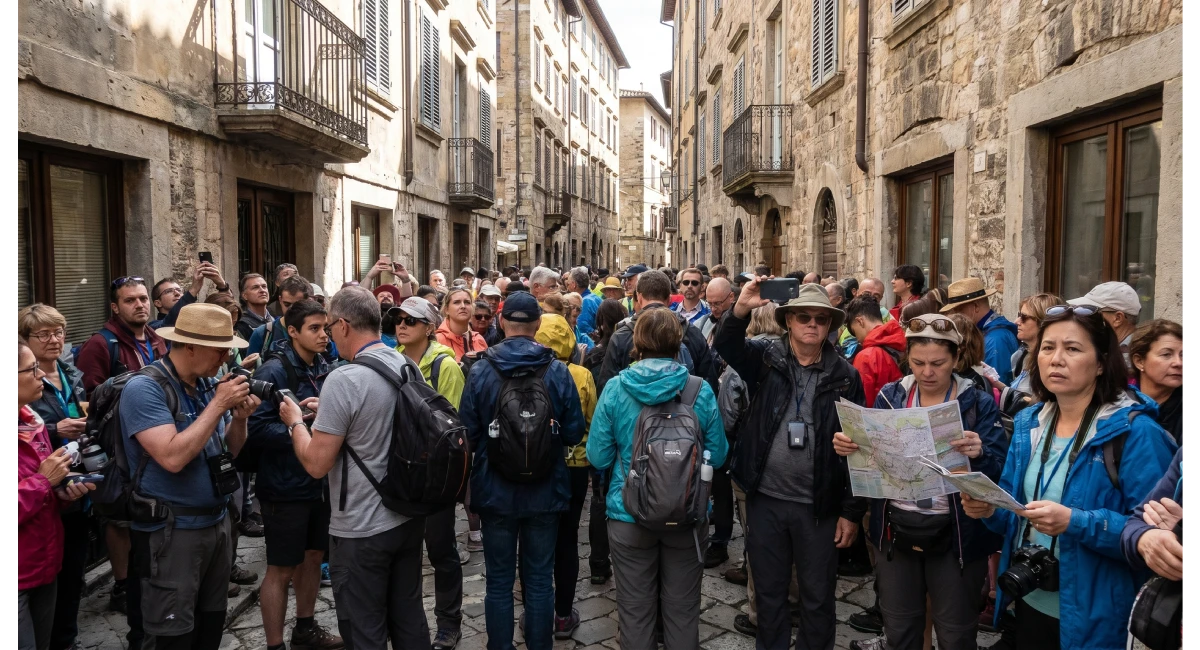
The case against popular destinations is just as real. Here is what actually happens when you arrive.
Crowds, Queues, and the Battle for Space
In August, Santorini becomes a very different place from the one in the travel magazines. The caldera-view paths are packed shoulder to shoulder. The restaurants with sunset views are booked weeks in advance. The blue-domed churches that look peaceful in photos require patience and positioning to photograph without twenty other tourists in the frame.
The Louvre in Paris during peak summer operates on a similar logic. Even with timed-entry tickets, the crowds around the Mona Lisa make it difficult to spend more than a minute in front of the painting before the flow of people moves you along.
This is not a niche complaint. It is the standard experience for millions of visitors who arrive during peak season without planning around it. The mental fatigue of navigating dense tourist zones for several days in a row is a genuine factor worth considering.
The Cost Premium of Popularity
Popular cities cost more, and the gap is not trivial. A mid-range hotel in Venice during summer can run two to three times the price of a comparable room in Bologna, two hours away by train. Street food in the tourist-facing zones of Bangkok’s old city costs noticeably more than the same dish bought two streets off the main tourist track.
Entry fees at major sites continue to rise. Museum tickets, landmark access, guided tours, and even city taxes add up quickly in destinations where tourism is a primary revenue source.
This does not mean tourist cities are out of reach on a modest budget. But it does mean you need to account for the premium honestly when planning — and that the “affordable Europe” or “cheap Southeast Asia” framing often applies less and less to the most visited cities in those regions.
The Authenticity Question — What Gets Lost
This is the most complicated downside, and it is worth treating carefully. Heavy tourist traffic over time changes cities. Local grocery stores get replaced by gelato shops. Residential neighborhoods shift toward short-term rental accommodation. Restaurants near landmarks start pricing and designing their menus for visitors rather than residents.
The tourist vs local travel divide shows up most clearly here. What you are experiencing in the most visited parts of a tourist city is often a version of that city designed to be consumed, not lived in. That is not necessarily dishonest, but it is a different thing from the city’s actual daily life.
Some travelers find this acceptable — they came for the experience, not an anthropology lesson. Others find it hollow after a day or two. Knowing which type you are before you go helps set expectations.
Tourist Cities vs Local Travel — Understanding the Real Difference
This is not really a debate between good travel and bad travel. It is a question of what kind of experience you are after.
What “Traveling Like a Local” Actually Means
Traveling like a local means making deliberate choices to experience a city the way its residents do. Staying in a residential neighborhood rather than the hotel district. Using the city’s public transport instead of tourist shuttles. Eating at places with menus that have not been translated into four languages. Spending time in parks, markets, and streets where tourists are a minority.
The appeal is real. These experiences often feel more genuine, less expensive, and more memorable than the polished tourist circuit.
But it requires honest preparation. You need to research the neighborhoods, understand enough of the language to manage basic interactions, accept that you may not find what you are looking for on the first try, and be comfortable navigating uncertainty. For some travelers, that is the point. For others, it becomes exhausting quickly, especially on a short trip.
Local travel is not automatically superior. It is a different contract.
When Tourist Infrastructure Is Actually the Better Choice
There are situations where the well-worn tourist path is clearly the better option, and treating it as a compromise misses the point.
If this is your first time in a country and you are still building your confidence with international travel, the support systems of a major tourist city are genuinely helpful. If you are traveling with elderly family members or young children, the accessibility and convenience of tourist infrastructure matters more than it would for a solo traveler with flexibility. If you have five days and a list of specific things you want to see, tourist cities deliver on that agenda more reliably than anywhere else.
Safety is also a factor that gets glossed over in the local travel conversation. Well-traveled tourist cities are generally better mapped, better policed in visitor areas, and better documented for travelers seeking advice on where to avoid. That context matters for solo travelers, and particularly for women traveling alone.
How to Make the Right Travel Decision for Your Trip
At this point, the decision should feel less like a binary choice and more like a matching exercise. Here is how to approach it practically.
Questions to Ask Before Booking a Popular Destination
Before committing to a well-known city, work through these honestly:
- Is this my first time visiting this country, or do I already have a baseline understanding of how it works?
- Do I have at least five to seven days, or am I rushing through in two or three?
- Am I traveling with people who have specific needs — mobility considerations, dietary requirements, safety preferences?
- Is this destination on my genuine list, or is it on my list because it is on everyone else’s?
- Am I prepared to pay the price premium that comes with popularity?
- Would I still want to visit if I knew the main sites would be crowded every day?
None of these questions have a correct answer. They are filters. If your answers point toward the tourist city, go. If they do not, that is useful information too.
Timing Strategies That Change the Experience Entirely
The experience of a tourist city is not fixed. Timing and approach change it significantly.
Shoulder season travel — typically April to May and September to October in Europe, or the quieter months in Southeast Asian destinations — cuts crowd levels noticeably and brings prices down. The weather is often still good, and the city feels more like itself.
Arriving at major landmarks before 8 AM, when the organized tour groups have not yet arrived, is one of the most effective ways to experience an iconic site without the pressure of bodies around you. The Alhambra in Granada, the Trevi Fountain in Rome, the old town in Dubrovnik — all of these change completely in the early morning.
Spending more time in one place also matters. Three days in a tourist city will keep you on the main circuit. Six or seven days forces you into quieter neighborhoods simply because you have run out of obvious things to do, and that is often where the better experiences are.
Cities That Divide Traveler Opinion — And Why
Some cities generate genuinely divided opinions among experienced travelers. Not because one group is right and the other is wrong, but because these places expose the trade-offs more sharply than most.
Venice — Sinking Under the Weight of Its Own Fame
Venice is one of the most architecturally extraordinary cities in the world. The canals, the Gothic and Byzantine buildings, the absence of cars, the way the light hits the water in the morning — it is unlike anywhere else on earth. That is not hype. It is accurate.
It is also a city that receives millions of day-trippers who arrive by cruise ship or train, spend four hours walking the same route between San Marco and the Rialto, buy a souvenir, and leave. The permanent population has fallen sharply over decades as housing costs make residency difficult and short-term rentals dominate the market.
Since 2024, Venice has charged a day-visitor fee on peak days to manage this pressure. The debate about whether it works is ongoing.
The calculation shifts considerably if you stay overnight. Once the day-trippers leave in the evening, Venice becomes quieter, stranger, and more compelling. If you visit, staying at least two nights is not a luxury — it changes what you actually experience.
Marrakech — Chaotic, Colourful, and Completely Divisive
Few cities split traveler opinion as sharply as Marrakech. People either love it deeply or leave frustrated after two days. Both reactions are understandable.
The medina is genuinely historic. The architecture, the souks, the food, the sensory texture of the place are extraordinary. Travelers who approach it with patience, a willingness to get lost, and no rigid agenda tend to find it one of the most memorable trips they have taken.
Travelers who want clear prices, quiet streets, and low-pressure interactions often find the tourist-facing areas of Jemaa el-Fna and the surrounding souks exhausting. Aggressive vendor culture in the high-traffic zones is real, and it wears on people who are not prepared for it.
The city’s residential quarters, away from the tourist circuit, are a different experience entirely. Whether you find your way there often determines which camp you end up in.
Dubrovnik and the Limits of a Small City Under Heavy Tourism
Dubrovnik is genuinely beautiful. The Old Town walls, the Adriatic views, the quality of the light — the photographs are not lying. But the city’s small footprint makes the crowd problem more acute than in a larger destination.
On days when multiple cruise ships dock simultaneously, the narrow streets of the Old Town become nearly impassable. Peak-season accommodation prices are among the highest in Croatia by a significant margin. The local government has been actively trying to manage visitor numbers, with mixed results.
The surrounding Dalmatian coast — Split, Hvar, Korcula, the Peljesac peninsula — offers much of the same visual quality with considerably less pressure. Dubrovnik works well as a one or two-night stop at the end of a broader Dalmatian trip, rather than as a destination you build an entire itinerary around.
Alternatives Worth Considering Without Abandoning Popular Regions
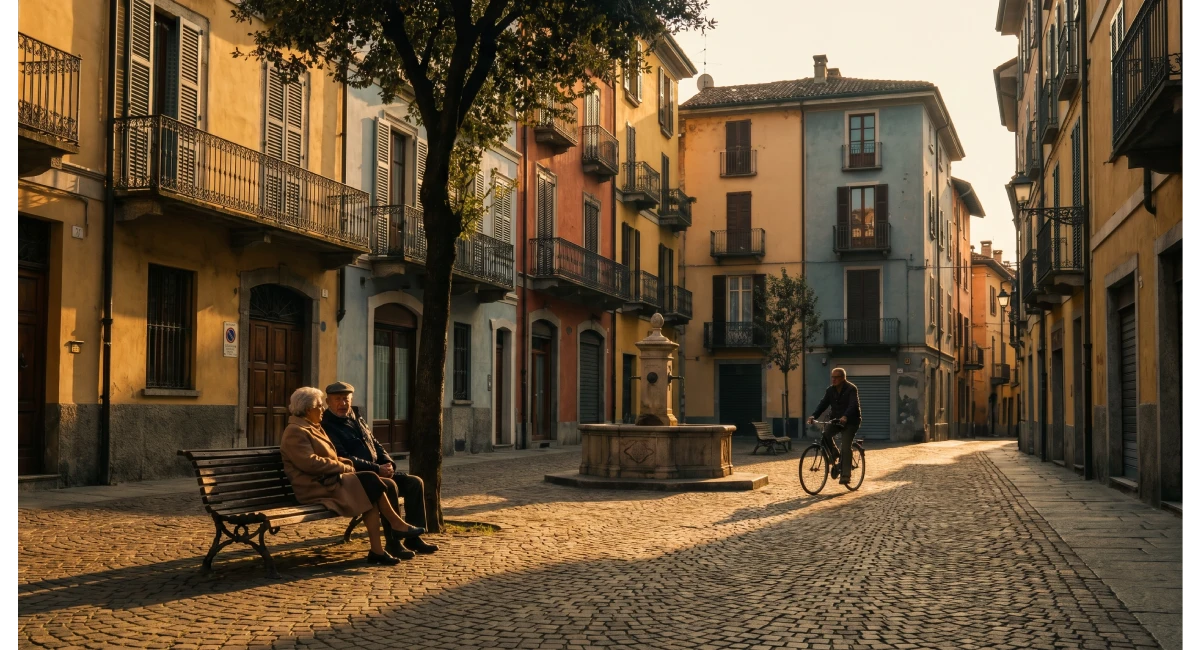
You do not have to choose between the most famous city in a region and an obscure location most people have never heard of. The middle ground is where some of the most satisfying travel happens.
Secondary Cities That Sit in the Shadow of Famous Ones
Most of Europe’s major tourist cities have a lesser-known neighbor that offers substantial cultural depth without the crowd levels:
- Bologna instead of Florence: exceptional food, beautiful medieval arcades, a genuine university city atmosphere, and far fewer organized tour groups.
- Porto instead of Lisbon: comparable beauty, a strong culinary identity, wine culture, and a city that still feels like it belongs to the people who live there.
- Ghent instead of Bruges: medieval architecture, a lively arts scene, and a fraction of the tourists that Bruges manages on a summer weekend.
- Chiang Mai instead of Bangkok for a longer stay: slower pace, excellent food, easier access to northern Thai culture, and a city that rewards a week rather than a rushed three-day visit.
None of these are hidden secrets. But they operate at a human scale that their more famous neighbors often no longer do.
Combining Popular and Quiet Destinations in One Trip
The hybrid approach solves the problem practically. Spend two or three days in the major tourist city — enough time to see what you came for without staying long enough to feel trapped by the crowds. Then move to a smaller town, a rural area, or a secondary city for the remainder of the trip.
This structure gives you the satisfaction of seeing the famous places while leaving room for the kind of slower, less scripted travel that tends to produce the most memorable experiences. A trip that opens in Rome and closes in a small town in Umbria covers both without sacrificing either. Bangkok for three days followed by a week in Chiang Mai or northern Thailand is a well-tested combination for the same reason.
The goal is not to avoid popularity. It is to build a trip around what you actually want.
Conclusion
Whether tourist cities are worth visiting is, in the end, a personal calculation. The honest answer is: sometimes yes, sometimes no, and usually it depends on how you approach them.
The major tourist cities of the world offer real value — reliable infrastructure, genuine historical and cultural weight, and a concentration of experiences that is hard to match. They also come with crowds, high prices, and an atmosphere that can feel more like a managed visitor attraction than a living city.
The mistake is treating popularity as either a recommendation or a disqualification. A city’s visitor numbers tell you almost nothing about whether it is right for you specifically. What matters is matching the destination to your actual travel goals, your travel style, and your honest expectations.
If you are still building your understanding of what to expect when traveling internationally for the first time, this decision fits into a broader set of questions about how to prepare, what to prioritize, and what trade-offs are worth making. The parent guide on what to expect when visiting a country for the first time covers that larger picture in full.
Pick your destination with clear eyes. The crowds will be there either way. The question is whether you have made peace with that before you arrive.