


You land in a new country, excited and ready. Then someone does something that makes absolutely no sense to you. A vendor haggles aggressively when all you want is a simple price. Your host serves dinner at 10 pm. A stranger stands close enough that you can feel their breath. Nobody on the train makes a sound.
- What Does Culture Shock Actually Mean for Travelers?
- The Most Common Culture Shocks Travelers Experience Abroad
- Food Culture and Mealtime Expectations
- Personal Space, Physical Contact, and Greetings
- Attitudes Toward Time and Punctuality
- Noise Levels, Public Behavior, and Social Energy
- Gender Roles and Social Expectations
- Why Does Culture Shock Hit Harder in Some Countries Than Others?
- Travel Shock Examples Most First-Time Travelers Are Not Prepared For
- Bathroom and Hygiene Norms That Catch Travelers Off Guard
- Shopping, Haggling, and Price Culture
- How Bureaucracy and Service Pace Varies Globally
- The Emotional Side of Adapting Abroad — What No One Warns You About
- Adapting Abroad Tips That Actually Work
- Research the Culture Before You Land, Not After
- Building a Daily Routine to Stay Grounded Abroad
- Learning Key Local Phrases and Social Signals Early
- How Long Does Culture Shock Last and When Does It Get Better?
- Conclusion
These moments are not random. They are the most common culture shocks traveling abroad that catch first-time travelers completely off guard — and nobody warned them they were coming.
This post breaks down exactly what those shocks look like, where they come from, and what you can actually do about them. By the time you finish reading, you will know how to spot cultural friction before it turns into real frustration.
What Does Culture Shock Actually Mean for Travelers?
Culture shock is not a breakdown. It is not a sign that you made a mistake by traveling. It is simply what happens when your brain encounters a set of rules it was never taught.
Every culture has invisible agreements about how life works — how you greet people, how you eat, how you queue, how you show respect. When you travel, those agreements are suddenly different, and your brain registers the mismatch as stress.
Psychologist Kalervo Oberg first described culture shock in 1960, and researchers have since identified four stages most travelers move through:
- Honeymoon: Everything feels exciting and new. You are charmed by the differences.
- Frustration: The differences stop being charming and start feeling exhausting or confusing.
- Adjustment: You begin to understand the local logic and build small routines.
- Adaptation: The new culture starts to feel normal. You function comfortably within it.
Most first-time travelers only read about the honeymoon phase. The frustration stage is the one that actually shapes the trip.
The Most Common Culture Shocks Travelers Experience Abroad
Not every culture shock hits the same way. Some come through the stomach. Others come through silence. Understanding the specific areas where culture differences in travel tend to cluster helps you prepare for the right things.
Food Culture and Mealtime Expectations
Food is usually the first place culture shock lands, and it hits harder than most people expect.
In Spain, lunch happens around 2 or 3 pm and can last two hours. Dinner rarely begins before 9 pm. A traveler from North America who shows up hungry at 6 pm will find half the restaurants closed or empty. In Japan, slurping noodles loudly is a compliment to the cook — doing the same in a British restaurant would earn sharp looks.
In many parts of the Middle East and South Asia, refusing food when it is offered to you as a guest is genuinely offensive. Your host may have spent hours preparing that meal. Saying “no thank you” politely does not land the way it does back home.
Then there are the ingredients themselves. Century eggs in China, fermented shark in Iceland, durian in Southeast Asia — these are considered delicacies, not dares. Reacting with visible disgust can feel dismissive to locals who grew up eating them.
Food confusion is one of the earliest travel shock examples people report, and it tends to surface before any other cultural friction does. Eat before exploring if timing is an issue, and approach unfamiliar food with curiosity rather than reluctance.
Personal Space, Physical Contact, and Greetings
What counts as a normal greeting in one country can feel startling or even rude in another.
In France, a greeting between acquaintances often involves kisses on both cheeks. In Japan, a respectful bow replaces any physical contact entirely. In many parts of Latin America and the Middle East, men greet each other with warm embraces even on a first meeting. In Finland or Norway, standing at arm’s length and offering a firm handshake is already considered quite friendly.
Personal space works the same way. In Egypt, India, or Morocco, crowded public spaces mean people stand very close to each other during conversations or while waiting in line. This is completely normal and carries no aggressive or intrusive intent. For travelers from Northern Europe, Canada, or Australia, where personal distance is wider by default, it can feel uncomfortable without any reason to be.
The confusion goes both ways. A traveler who steps back repeatedly during a conversation in a close-contact culture may come across as cold or dismissive, even if they are just trying to feel comfortable. Neither side is wrong. They are just working from different defaults.
Attitudes Toward Time and Punctuality
In Germany or Switzerland, arriving five minutes late to a meeting is noticed and remembered. In Argentina or Morocco, arriving exactly on time to a dinner party may mean you are the only guest for the next forty-five minutes.
Researchers describe this as the difference between monochronic and polychronic time cultures. Monochronic cultures treat time as a fixed resource to be scheduled and respected. Polychronic cultures treat time as fluid, with relationships and context taking priority over the clock.
This is not laziness or disorganization. It is a fundamentally different philosophy about what matters most. In many parts of West Africa and the Arab world, rushing a conversation to keep to a schedule would be seen as disrespectful — it signals that your appointment matters more than the person in front of you.
If you are traveling somewhere with a polychronic time culture, build buffer time into everything and resist the urge to interpret lateness as a slight.
Noise Levels, Public Behavior, and Social Energy
Step into a market in Marrakech, Bangkok, or Mumbai and the sound alone can feel physically overwhelming. Vendors call out, music plays from multiple directions, motorbikes weave through foot traffic, and everyone seems to be talking at full volume.
Step onto a commuter train in Tokyo, and the silence is so complete that a phone ringing feels like an intrusion.
Neither environment is more civilized than the other. They reflect different cultural norms about what public space is for and how people are expected to use it. Travelers from quieter cultures often describe busy markets as chaotic. Travelers from louder cultures often describe Japanese or German public transit as tense or cold.
This perception gap is one of the subtler travel shock examples, because it is not about a specific rule being broken. It is about a general atmosphere that simply does not match what you were raised in.
Gender Roles and Social Expectations
This is one of the most practically important areas of cultural preparation, particularly for solo female travelers.
In parts of the Middle East, South Asia, and North Africa, dress codes for women in public are not just suggestions. Uncovered shoulders or hair in certain spaces can draw unwanted attention or create genuine social friction. These expectations vary significantly by country and even by city within the same country.
Mixed-gender socializing in public can also carry different weight than it does in most Western contexts. A woman making direct, sustained eye contact with a male stranger in some conservative settings may unintentionally communicate interest she does not intend.
Understanding these norms is not about agreeing with them. It is about traveling informed. A quick search on what is considered respectful dress and behavior for your specific destination will save you unnecessary discomfort.
Why Does Culture Shock Hit Harder in Some Countries Than Others?
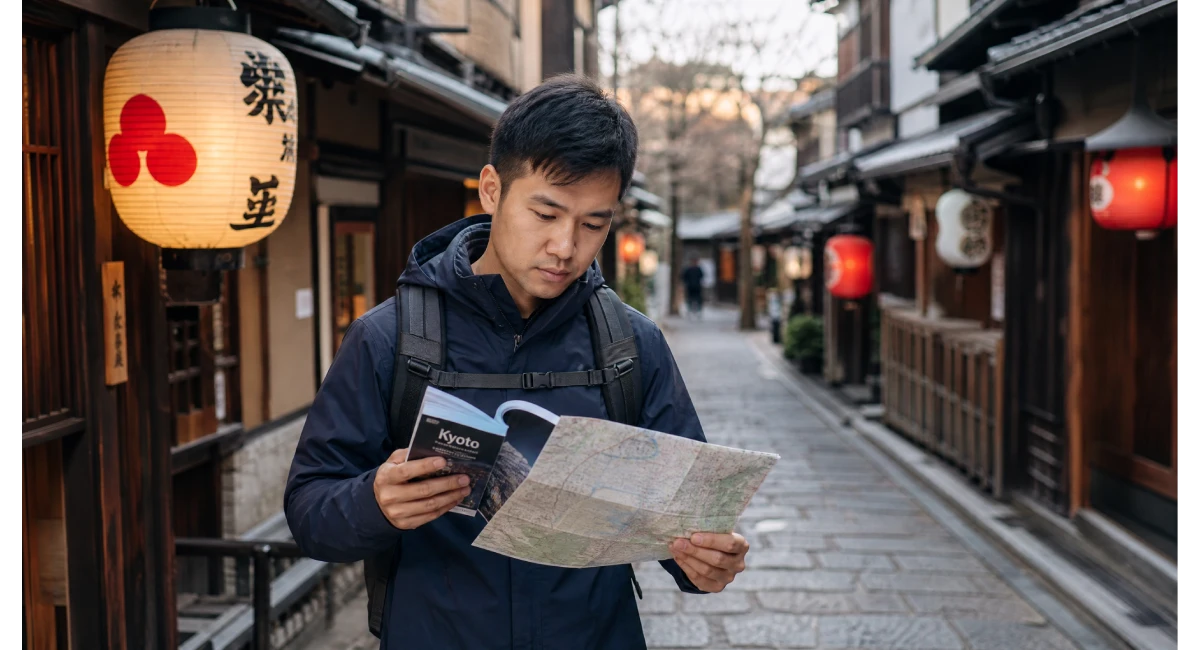
A British traveler in Australia will adjust quickly. The language is nearly the same, the humor overlaps, and most social norms are familiar enough that the differences feel minor. The same traveler in Japan, Saudi Arabia, or rural Ethiopia is navigating a much larger gap.
This gap is sometimes called cultural distance, and it is one of the most reliable predictors of how intense your adjustment period will be.
Dutch social psychologist Geert Hofstede spent decades measuring cultural values across countries and identified key dimensions that explain where cultures differ most. Two are especially relevant for travelers:
Individualism versus collectivism. Cultures like the United States or the United Kingdom place high value on individual goals, privacy, and personal space. Collectivist cultures like Japan, Indonesia, or many African nations prioritize group harmony, family loyalty, and community needs. A traveler from an individualist culture can misread collectivist behavior as intrusive, while a traveler from a collectivist culture can find individualist norms cold and isolating.
Uncertainty avoidance. Some cultures are deeply uncomfortable with ambiguity and have strong rules, schedules, and social scripts. Others are comfortable with looseness, improvisation, and flexibility. When a low uncertainty avoidance traveler meets a high uncertainty avoidance culture (or vice versa), the friction is real even when everyone is being perfectly polite.
The greater the cultural distance, the longer and more intense the adjustment tends to be. Knowing this before you travel helps you set honest expectations for yourself.
Travel Shock Examples Most First-Time Travelers Are Not Prepared For
Guidebooks cover the landmarks. They rarely cover the bathroom situation.
Here are the culture differences in travel that show up constantly in travel forums and first-hand accounts — the ones nobody thinks to mention until you are already there.
Bathroom and Hygiene Norms That Catch Travelers Off Guard
Across much of Asia, the Middle East, and parts of Southern Europe, squat toilets are standard. There is no seat. You crouch. If you have never done it before, the first time is disorienting.
In many countries, toilet paper is not used at all. Water (via a hose or bidet) is the norm, and putting paper in the toilet may not even be possible if the plumbing cannot handle it. In Greece and several other countries, even standard toilet paper goes into a bin beside the toilet, not into the bowl.
Public toilets in Western Europe are often pay-to-use. In parts of Southeast Asia, toilet facilities in rural areas may be shared and very basic.
None of this is a health or hygiene problem. It is simply different infrastructure. Pack a small travel tissue pack, carry some local coins, and look up the bathroom situation for your destination before you need it.
Shopping, Haggling, and Price Culture
In markets across Morocco, Egypt, India, and much of Southeast Asia, the display price is a starting point, not a final offer. Haggling is expected, and in some cases, walking away without negotiating can actually come across as dismissive of the whole exchange.
The opposite is equally true. Attempting to negotiate the price of a train ticket in Japan, a coffee in Germany, or a product in a Swedish supermarket will create instant awkwardness. Fixed-price cultures treat negotiation as inappropriate or even disrespectful in retail settings.
The easiest way to read the room: if there is no price tag and the vendor names a price verbally, negotiation is almost certainly expected. If there is a price tag, scanner, or receipt, it is not.
How Bureaucracy and Service Pace Varies Globally
In countries like Germany, Japan, and Singapore, public services tend to run on precise schedules, with clear queues and efficient processing. In parts of Latin America, South Asia, and Sub-Saharan Africa, the same processes can involve long waits, multiple offices, unclear queuing systems, and outcomes that seem to depend on who you know.
This is not a measure of development or efficiency. It reflects different cultural priorities and different systems built around them. A slow government office in a country where relationships matter more than paperwork is functioning exactly as its culture designed it.
If you are doing anything administrative abroad, build significantly more time than you think you need, and treat patience as part of the task itself.
The Emotional Side of Adapting Abroad — What No One Warns You About
The practical shocks are manageable once you know they are coming. The emotional ones catch people off guard because they feel more personal.
After the first few days of excitement, many travelers hit a quieter, stranger feeling. The food is unfamiliar. The language is not yours. The social rules keep catching you out. And suddenly you are the outsider in every room you walk into.
That feeling is real, and it matters. Loneliness, mild identity confusion, and a persistent sense of not quite fitting in are among the most honest parts of traveling, but almost nobody talks about them.
Validating these feelings does not mean dramatizing them. It means recognizing that being far from everything familiar takes more energy than people expect.
Why Even Confident Travelers Experience Frustration
Culture shock does not skip experienced travelers. It just sometimes surprises them because they expected to be past it.
A traveler who has visited fifteen countries can still hit a wall in country sixteen, especially if the cultural distance is larger than anything they have encountered before. The frustration stage is not a sign of failure or naivety. It is a predictable stage in a process that every human brain goes through when adapting to new social environments.
For people on longer stays, this stage typically peaks somewhere between two and six weeks in. Knowing that it has a timeline, and that it does pass, makes it significantly easier to sit with.
Reverse Culture Shock When You Return Home
Here is the part almost nobody mentions before the trip: going home can feel stranger than arriving abroad did.
After weeks or months of adapting to another culture, your home environment can suddenly feel too loud, too fast, too small, or oddly unfamiliar. The reverse culture shock is real, and it tends to catch returning travelers off guard precisely because they expected home to feel like a relief.
It fades. But knowing it exists in advance makes it far less alarming when it happens.
Adapting Abroad Tips That Actually Work

Awareness is a start. Action is what actually moves you through the adjustment period.
These are not motivational suggestions. They are specific things that consistently help travelers adapt faster and with less friction.
Research the Culture Before You Land, Not After
Real cultural preparation goes deeper than a Wikipedia summary of the country. It means consuming media that locals actually engage with.
A few approaches that work well:
- Watch YouTube channels created by locals or long-term expats in your destination country. These tend to cover daily life, social norms, and unwritten rules that no travel guide mentions.
- Read local English-language news outlets for a few weeks before you travel. You will pick up context about current events, social values, and what people care about.
- Join country-specific travel communities on Reddit or Facebook. Search for the subreddit of your destination and read through recent threads from first-time visitors. The questions people ask when they arrive tell you exactly what surprises people.
This kind of research does not take long, and it significantly shrinks the gap between what you expect and what you actually find.
Building a Daily Routine to Stay Grounded Abroad
During the adjustment stage of culture shock, small routines act as psychological anchors. They are a fixed point in an environment where almost everything else is unpredictable.
This does not need to be elaborate. A consistent morning walk, one familiar meal you cook yourself, a regular call with someone from home, or a specific time each evening to write about what you noticed that day. These habits give your brain a sense of structure when the external environment feels chaotic.
Research on expatriate adjustment consistently shows that people who establish even minimal daily routines adapt to new environments significantly faster than those who try to stay completely flexible and spontaneous. Your brain needs some predictability to feel safe enough to open up to the unfamiliar.
Learning Key Local Phrases and Social Signals Early
Go further than hello and thank you.
Learn how to apologize sincerely in the local language. Learn how to say you do not understand, how to ask someone to slow down, and how to express gratitude in a way that goes beyond a basic script.
Three examples of phrases that carry real social weight:
- In Japanese, learning the difference between a casual “sumimasen” (excuse me) and a formal apology signals cultural awareness that locals genuinely appreciate.
- In Arabic-speaking countries, responding to “how are you” with the full traditional exchange rather than a quick “fine” shows respect for social ritual that matters deeply to people there.
- In many Latin American countries, opening a conversation with a genuine inquiry about the other person’s family before getting to any practical request reflects the cultural priority of relationship over transaction.
These phrases do not just help with communication. They signal to locals that you are trying to meet them on their terms rather than expecting them to adapt to yours.
How Long Does Culture Shock Last and When Does It Get Better?
There is no single answer, but there is an honest range.
For short-term travelers on trips of one to three weeks, the frustration stage may never fully peak. The trip ends before the adjustment process has time to complete. Many travelers return home having experienced culture differences without ever moving through to genuine adaptation.
For people on longer stays of one to six months, the frustration stage typically peaks between weeks two and six. After that, most people begin moving into adjustment, where the new culture starts to make sense on its own terms rather than just feeling different from home.
For long-term residents, students studying abroad, or people relocating for work, the timeline stretches further. Full adaptation can take anywhere from six months to over a year, and it rarely happens in a straight line. You will have good weeks followed by hard ones, and that is entirely normal.
The key thing to understand is that discomfort is not stagnation. Feeling frustrated with an unfamiliar culture is actually part of learning it. The people who adapt fastest are not the ones who feel the least discomfort. They are the ones who keep engaging despite it.
Conclusion
Culture shock is not a travel problem. It is a travel experience.
Every moment of confusion, every mealtime that felt wrong, every greeting that caught you off guard, every silent train ride that made you feel like you were missing something- those are the moments where real learning happens. Travelers who understand the common culture shocks traveling abroad before they leave are not just more comfortable abroad. They are more open, more curious, and more respectful of the places they visit.
The practical takeaway is simple: prepare for the friction, not just the highlights. Research the social norms, not just the landmarks. Give your brain time to adjust, not just your schedule.
If you want to go deeper on what to expect before your first international trip, read the full guide on what you should expect when visiting a country for the first time. It covers everything from arrival logistics to long-term adjustment in one place.