
Most new gardeners pick a spot because it looks available. A spare patch of lawn, a strip beside the fence, a corner near the house. Then they plant, water, wait — and nothing does what it should.
- Why Sunlight Is the First Decision You Should Make
- What “Full Sun,” “Partial Shade,” and “Full Shade” Actually Mean
- How to Track the Sun in Your Yard Before You Plant Anything
- The Best Place for a Garden for Sunlight — What to Look For
- Common Garden Spots That Look Good but Underperform
- How to Match Your Plants to the Light You Actually Have
- Improving Sunlight Access When Your Options Are Limited
- Sunlight and Soil — Why Location Affects More Than Just Light
- Conclusion
The real problem is almost always sunlight. Specifically, not enough of it where it counts.
Finding the best place for a garden for sunlight is the most important decision you will make before you buy a single seed. Get this right, and most other beginner mistakes become easier to recover from. Get it wrong, and even healthy soil and careful watering will not save your plants.
This article walks you through how to read your yard’s light, how to track where the sun actually falls, which spots to avoid, and how to match what you grow to the light you genuinely have.
Why Sunlight Is the First Decision You Should Make
Before you think about soil, seeds, or watering, think about light. Plants make food through photosynthesis, and photosynthesis runs on sunlight. Without enough of it, a plant cannot produce the energy it needs to grow, flower, or set fruit.
A tomato plant growing in full sun — six or more hours of direct light daily — will produce fruit steadily through the season. The same tomato plant in a spot that only gets three hours of sun will grow slowly, produce little, and become far more vulnerable to disease. Same plant, same care, completely different results.
New gardeners often blame their soil, their watering habits, or bad luck. In most cases, the real issue is location.
Sunlight shapes other parts of your garden too. A sunny spot warms the soil faster in spring, which helps seeds germinate. It dries the foliage between waterings, which reduces fungal problems. It gives vegetables and herbs the conditions they evolved to grow in.
Every other decision — what to plant, when to water, how to arrange your beds — gets easier once you know your light. That is why this comes first.
What “Full Sun,” “Partial Shade,” and “Full Shade” Actually Mean
Garden labels throw around terms like “full sun” and “partial shade,” but the meanings are not always clear. Before you track your yard or choose plants, it helps to know exactly what these categories refer to.
They are not just about how many hours of light a spot receives. The quality and timing of that light matter too. Morning sun is gentler and cooler. Afternoon sun, especially in summer, is more intense and carries more heat. A plant that needs full sun in a cool climate may actually prefer morning sun with some afternoon relief in a hotter region.
Full Sun — What It Means and Which Plants Need It
Full sun means a minimum of six hours of direct, unobstructed sunlight per day. Most productive plants need this to thrive.
Common full sun plants include tomatoes, peppers, zucchini, basil, cucumbers, and most roses. These are plants that evolved in open, exposed conditions. Anything less than six hours will reduce their output noticeably.
One thing beginners often miss: afternoon sun hits harder than morning sun. If your plot gets three hours in the morning and three hours in the afternoon, that is six hours total — but a heat-sensitive plant like lettuce may struggle in that afternoon heat even though the hour count looks fine. For most vegetables and herbs, though, six hours of any direct sun is a strong starting point.
Partial Sun and Partial Shade — Yes, They Are Different
Both terms describe three to six hours of direct sunlight per day, but they lean in opposite directions.
Partial sun means a plant prefers to be closer to the six-hour end of the range. Partial shade means it would rather stay closer to three. When you see them used interchangeably on plant labels, the practical difference is small, but it matters for placement.
Crops that work well in partial sun include lettuce, chard, and some bush beans. They appreciate some direct light but do not need it all day. True partial shade plants — ferns, impatiens, astilbe — prefer the cooler, lower-light end of that range and may struggle if they get too much afternoon sun.
Full Shade — What Can Still Grow There
Full shade means fewer than three hours of direct sunlight per day. This does not mean nothing will grow, but it limits your options.
Shade-tolerant plants like hostas, certain ferns, mint, and some ground covers can do well in full shade. If you are gardening for beauty or ground cover, a shady corner can still be productive.
For vegetables, though, full shade is generally a dead end. Most edible crops need more light than that to produce anything worth harvesting. If your only available space is in full shade, grow ornamentals there and focus your edible garden wherever the light is better.
How to Track the Sun in Your Yard Before You Plant Anything
Knowing the light categories is one thing. Knowing where those categories actually fall in your specific yard is another. Your neighbor’s fence, your roof overhang, a large tree three houses over — these all create shadows you have not thought about yet.
The only reliable way to know your yard’s light is to observe it. One full day of attention will tell you more than any gardening book can.
The One-Day Sun Tracking Method
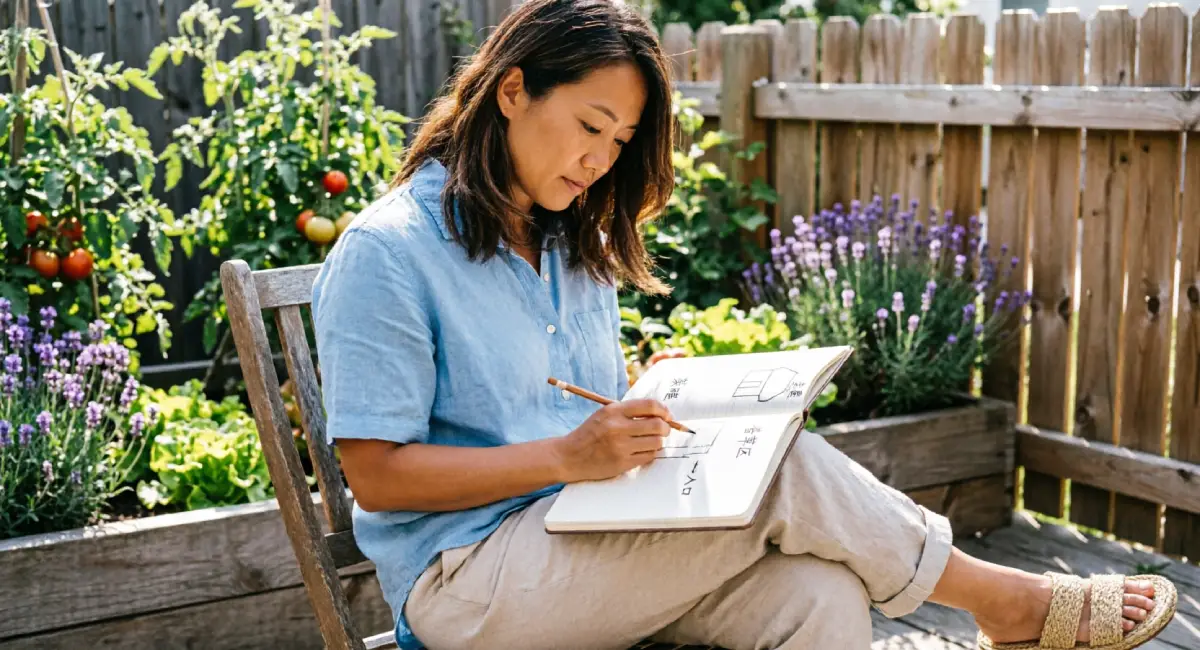
Pick a clear, sunny day. Set a reminder for every two hours. Go outside at 8 AM, 10 AM, 12 PM, 2 PM, and 4 PM and look at your yard.
Before you start, sketch a rough map of your outdoor space on a piece of paper. It does not need to be precise — just mark the house, any fences, trees, sheds, and the approximate areas where you might want to garden.
At each check-in, mark which areas are in direct sun and which are in shade. Use a simple S for sun and SH for shade. After five check-ins, you will have a clear picture of which zones get full sun, which get partial sun, and which stay shaded for most of the day.
No apps, no equipment, no guessing. Just direct observation. It is the most accurate method for a beginner, and it costs nothing.
Using Free Tools and Apps to Track Sunlight
If you want a digital assist, a few free tools can help.
Sun Surveyor and Lumy are apps that use your phone’s camera and GPS to show you where the sun will be at any time of day or year. You can point your phone at your yard and see a sun arc overlaid on the real scene. This is especially helpful for planning in a new space before the growing season starts.
Google Maps satellite view can also help. Look at your yard from above and identify large trees, roof lines, or neighboring buildings that might cast shade. This does not replace physical observation, but it gives you useful context before you go outside.
For direction, a basic compass (or your phone’s compass app) helps you identify south-facing areas quickly. In the Northern Hemisphere, south-facing ground receives the most sun exposure throughout the day.
How Seasons Change Your Sun Patterns
Here is something many beginners do not realize until it is too late: the sun’s angle changes significantly between seasons.
In summer, the sun sits high in the sky and reaches deep into yards, over fences, and past tree canopies. In winter, the sun sits low and casts long shadows across the same spaces. A spot that looks fully sunny in July may be in shadow for most of the day in March or October.
This matters because a shadow-free patch in midsummer may be in shade when you plant in spring.
Track your sun as close to your actual planting season as possible. A clear day in early spring, right before you plan to plant, will show you far more accurate conditions than a summer observation from the year before.
The Best Place for a Garden for Sunlight — What to Look For
Now that you know how to observe your yard, here is what you are looking for. The best spot for sunlight shares a few consistent traits, regardless of climate or yard size.
What to look for:
- Open sky overhead with no large obstructions
- South-facing orientation (Northern Hemisphere) or north-facing (Southern Hemisphere)
- At least six clear hours of direct sun during your growing season
- Good air movement — not a completely enclosed or wind-blocked corner
- Reasonable proximity to a water source
What to avoid:
- Ground directly under or near large trees
- Areas that stay in shadow because of fences, walls, or neighboring structures
- Low-lying corners where cold air and moisture pool
- The narrow strip running directly along your house wall
South-Facing Spots and Why They Catch the Most Sun
In the Northern Hemisphere, the sun travels across the southern sky. A south-facing garden bed receives direct light for more of the day than any other orientation. East-facing beds get morning sun and afternoon shade. West-facing beds get the reverse. North-facing beds often miss direct sun almost entirely.
This does not mean a north-facing yard is hopeless — it means you need to be strategic. A raised bed placed in the most open, least obstructed part of a north-facing yard may still catch useful sun. But the south-facing corner of the same yard will almost always produce more.
For readers in the Southern Hemisphere, reverse this entirely. North-facing slopes and open areas receive the most sun there.
How Far From Trees and Structures Should Your Garden Be?
A practical rule worth remembering: place your garden at least as far from a tree or fence as that object is tall.
A two-metre fence casts a shadow that extends roughly two metres at midday and much further in morning and evening. A ten-metre tree can shade a surprisingly wide area. By keeping that distance, you avoid the worst of the shadow.
Trees also compete underground. Their root systems spread wide and deep, pulling water and nutrients from the soil across a larger area than most people expect. Even if a nearby tree does not cast direct shade on your bed, its roots may reach your planting zone and outcompete your vegetables.
Sloped Ground, Drainage, and Sun — How They Interact
Slopes affect light and drainage — worth thinking through before you commit to a spot.
A south-facing slope in the Northern Hemisphere is often the best garden spot you can find. The ground tilts toward the sun, which means plants receive light at a more direct angle. It also means the soil warms up faster in spring, which extends your growing season.
Flat ground is more neutral. It receives average light exposure based on its orientation and is easier to work with, but it can hold water if drainage is poor. Waterlogged soil suffocates roots as effectively as full shade does.
A north-facing slope, by contrast, stays cooler and shadier than flat ground. If your only available space sits on a north-facing slope, raised beds can partially compensate, but that location will always produce less than a more open alternative.
Common Garden Spots That Look Good but Underperform
Some spots feel like obvious garden locations — they are near the house, they look tidy, they are already somewhat defined. But looks and practicality are different things. These are the placements that routinely disappoint new gardeners.
The Strip Along the House — Usually the Wrong Choice
The narrow bed that runs directly against a house wall is one of the most common beginner choices, and one of the most disappointing.
Several things work against it. The roof overhang blocks a portion of direct sunlight even when the sky above is clear. Walls reflect heat unevenly, creating hot spots that stress plants. The soil in this zone is often compacted from foot traffic and construction, and it may have a different pH than the rest of your yard due to building materials leaching into the ground over time.
Air circulation is also reduced in a tight strip between a wall and a path. Poor airflow increases the risk of fungal problems, which new gardeners rarely expect to deal with.
That said, if you have a south-facing wall that receives good morning sun (in the Northern Hemisphere), it can work for certain shade-tolerant herbs — mint, parsley, or chives. Just do not expect vegetables to perform well there.
Under or Near Large Trees — More Problems Than Sun
A large tree does not just block light. It creates other problems that most vegetables cannot handle.
The root system draws moisture and nutrients from a wide area. During dry spells, tree roots will outcompete your vegetable plants for whatever water is available. The drip zone — the area beneath the outer reach of the branches — also receives uneven rainfall, since leaves deflect water away from the trunk during rain.
Leaf litter adds more problems. Fallen leaves break down slowly and can mat down, suffocating seedlings and altering soil chemistry. Even the gaps in a tree canopy, which might seem like usable light pockets, shift constantly as the sun moves. The flickering, inconsistent light they produce is far less useful to plants than steady, direct sun.
Low-Lying Areas and Shaded Corners
Low spots in a yard collect two things you do not want in a garden: cold air and standing water.
Cold air drains downhill and settles in low-lying areas overnight. These are called frost pockets, and they can keep temperatures several degrees colder than higher ground nearby. In spring and autumn, frost pockets experience damaging frosts even when the rest of the yard is fine.
Combine that with shade from a fence or neighboring structure, and you have a location that stays cold, wet, and dark for much of the growing season.
If a low spot is your only option, raised beds can help by lifting your soil above the waterlogged ground. Pair them with shade-tolerant plants suited for cooler conditions.
How to Match Your Plants to the Light You Actually Have
Not every yard has six hours of open sun. That is fine. The goal is not to have a perfect yard — it is to match what you grow to the conditions that actually exist. This is the shift that makes everything else work.
Reading Plant Tags and Seed Packets for Light Requirements
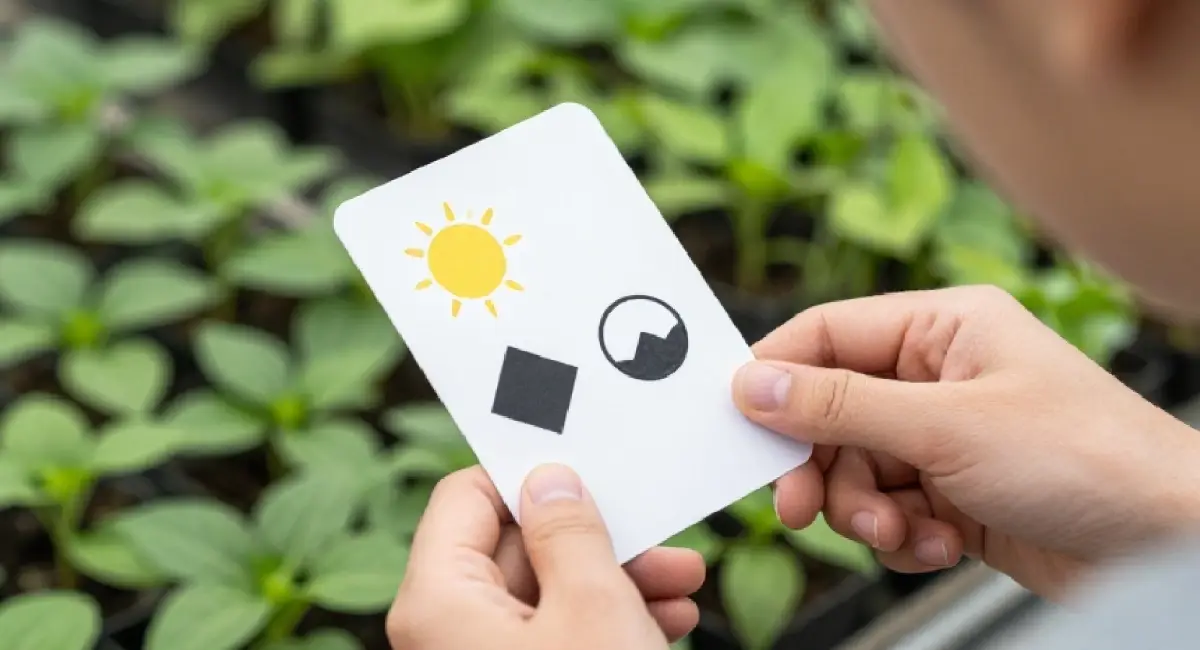
Every plant label and seed packet gives you light information, often with small icons. A full sun symbol is a solid circle or bright sun icon. A partial shade symbol typically shows a sun partly covered. Full shade shows a solid dark shape.
Beyond the icons, look for the written description. It will say something like “plant in full sun” or “prefers partial shade.” These are not suggestions — they are the conditions the plant was bred for.
Take two common examples. Basil needs full sun. It will grow in partial sun but will be less fragrant, less productive, and more prone to disease. Spinach, on the other hand, actually benefits from some shade, especially in summer, because it bolts quickly in heat. Same garden, different zones, different plants. That is the logic you are building toward.
Building a Simple Garden Map Based on Light Zones
Take the tracking notes you made using the one-day sun method and divide your space into zones.
- Zone A: Full sun (6+ hours of direct sun)
- Zone B: Partial sun or partial shade (3–6 hours)
- Zone C: Full shade (fewer than 3 hours)
Write these zones on your rough yard map. Now you have a planting guide. Zone A gets your tomatoes, peppers, and cucumbers. Zone B gets your lettuce, chard, and herbs that tolerate some shade. Zone C gets your ornamentals or shade-loving ground covers.
Instead of placing plants where they fit spatially, you place them where the light fits. This single shift in approach changes your results as a beginner.
What to Grow in Less-Than-Ideal Light
If your yard leans heavily toward partial shade, you still have strong options.
Leafy greens are the most forgiving. Lettuce, spinach, kale, and arugula all produce well in three to five hours of sun and actually prefer it in warmer months. Many herbs — mint, parsley, chives, and cilantro — do well in partial shade too.
Root vegetables like radishes and beets can manage in lower light, though they produce less than they would in full sun. Peas do surprisingly well in partial sun as long as they have a frame to climb and are planted in cooler conditions.
A partially shaded garden focused on greens and herbs is both productive and rewarding. It is a different type of garden that suits a different type of space.
Improving Sunlight Access When Your Options Are Limited
If your yard does not offer the ideal location, there are practical steps you can take to make the most of what you have.
Raised Beds — Getting Your Plants Above Ground-Level Shade
A raised bed changes how your plants reach the light. By lifting the soil surface twelve to eighteen inches above ground level, you raise the plants closer to direct sunlight and above the worst of any ground-level shadow cast by low fences or nearby structures.
Raised beds also give you complete control over the soil you are using, which avoids compacted or poor-quality native soil. They drain better, warm up faster in spring, and are easier to manage. For a beginner working with a less-than-ideal yard, a raised bed is often the most useful first step.
Container Gardening for Flexible Sun-Chasing
Containers solve a problem that raised beds cannot: they move.
If your garden receives three hours of morning sun in one spot and two hours of afternoon sun in another, containers let you follow the light. You can shift pots as the season progresses and the sun angle changes. This is especially useful in spring and autumn when light patterns differ noticeably from summer.
Herbs are ideal for containers. Basil, rosemary, thyme, and parsley grow well in relatively small pots and can be moved easily. Peppers and cherry tomatoes work well in larger containers — five gallons is the minimum for tomatoes to give the roots enough space. The key with containers is watering consistently, since they dry out faster than ground beds.
Trimming, Pruning, and Removing Obstacles
Sometimes the simplest fix is removing what is blocking the light.
Overhanging branches from a tree or large shrub can be trimmed back significantly without harming the plant. The difference in light reaching your garden below can be substantial. For smaller shrubs and hedges, a seasonal trim may free up enough light to move a partial shade zone into partial sun territory.
For large trees, consult a professional arborist before removing or significantly pruning. In many areas, local regulations govern what can be removed, especially for trees above a certain size or on shared boundaries. Check before you cut — it can save a costly dispute with a neighbor.
Sunlight and Soil — Why Location Affects More Than Just Light
Choosing a sunny spot does more than just deliver light. Sunlight affects soil temperature, moisture levels, and how your garden functions in ways worth understanding before you plant.
How Sun Warms Soil and Why That Matters for Seeds
Seeds do not just need warmth in the air — they need warmth in the soil. Most vegetable seeds will not germinate reliably below a soil temperature of around 10 to 15 degrees Celsius, and some warm-season crops like beans and cucumbers prefer closer to 18 degrees before they will sprout.
Direct sunlight raises soil temperature noticeably compared to shaded ground. In early spring, a south-facing bed in direct sun can be several degrees warmer than a shaded bed just a few metres away. Those degrees matter when you are trying to get seeds to germinate early in the season.
Cold, shaded soil does not just delay germination — it creates conditions where seeds rot before they sprout, or where seedlings grow so slowly they become vulnerable to disease and pest damage. Placing your garden in a sunny spot is an investment in soil warmth.
Wind Exposure in Open Sunny Spots
The sunniest locations in most yards tend to be the most open ones — and open spaces are often also the windiest.
Strong, persistent wind damages young plants, snaps stems, and dries out soil far faster than calm conditions do. Young seedlings are especially vulnerable to wind stress.
A simple windbreak helps. A low fence, a row of taller companion plants on the windward side, or a temporary screen can reduce wind speed across your bed without blocking meaningful sunlight. The goal is to break the force of the wind at plant level, not to enclose the garden entirely. Maintaining good air circulation is still important — still air encourages fungal growth. Reduce wind without eliminating airflow.
Conclusion
The best place for a garden for sunlight is rarely the first spot you look at. It is the one you find after watching how light moves across your yard, noting where shadows fall, and paying attention to what your space can actually support.
This process is straightforward. One clear day of observation, a rough sketch of your yard, and a basic understanding of what your plants need will take you most of the way there.
Match what you grow to the light you have, rather than the light you wish you had. Use raised beds, containers, and simple pruning to improve conditions where you can. And remember that a partially shaded garden planted with the right crops will produce more than a sunny garden planted carelessly.
Start with the sun. Everything else in your garden follows from there.
If you are ready to take the next step, head to the main guide on how to start a small backyard garden with no experience. It covers everything from soil preparation to choosing your first plants — and now that you know where to put your garden, you are already a step ahead.