
You look around your home, and something feels off. Not bad exactly — just not yours anymore. The walls are the same. The furniture has not moved in years. And fixing it feels like it would cost more than you can afford.
- Why a Small-Budget Home Refresh Works Better Than You Think
- Plan Your Budget Home Makeover Before You Spend a Dollar
- Living Room Ideas That Make a Big Visual Difference for Less
- Bedroom Upgrades That Improve Both Look and Sleep Quality
- Low-Cost Decor Changes That Work in Any Kitchen
- Affordable Bathroom Upgrades That Feel Surprisingly Luxurious
- Simple Home Refresh Ideas for Entryways and Hallways
- Where to Find Affordable Decor Without Compromising on Quality
- How to Use Color Strategically Across Your Whole Home
- Mistakes to Avoid When Doing a Budget Home Makeover
- You Do Not Need More Money. You Need a Clearer Plan.
It won’t. You can refresh your home on a small budget and see a real difference — without a renovation crew, a designer, or a large credit card limit. You need a plan, a few well-chosen changes, and the willingness to start.
Below you will find practical ideas for every major room, with realistic cost estimates and upgrades any beginner can handle. Rent or own, there is something here for you.
Why a Small-Budget Home Refresh Works Better Than You Think
There is a common belief that making your home feel better requires a lot of money. It does not.
People consistently overestimate how much expensive changes improve their day-to-day satisfaction, and underestimate how much small, intentional ones do. A new sofa does less for your mood than you expect. A warmer light bulb, a clean shelf, and a plant you actually like? You feel those every single day.
The way a space feels is rarely determined by what it cost. Lighting affects how welcoming a room seems. Color affects energy levels. Furniture arrangement controls how naturally people move through a space. None of these requires large sums. They require attention.
The sections ahead cover the kitchen, bathroom, bedroom, living room, entryway, and hallway, with realistic price estimates so you can plan with confidence.
Plan Your Budget Home Makeover Before You Spend a Dollar
The biggest mistake people make is buying things before they have assessed what actually needs to change. Think first, then spend.
Walk through each room slowly. Ask yourself: what bothers me most in here? What would I notice immediately if it were fixed? What is working well enough to leave alone? Write it down. This room-by-room assessment takes twenty minutes and saves you from spending on the wrong things.
Then set a total number. A $200 budget can transform a room when spent wisely. Even $500 spread across an entire home creates a noticeable shift. The goal is not to spend as little as possible — it is to spend in the right places.
To make prioritization easier, try a simple “room impact score.” Rate each room on three things: how much time you spend in it, how much it currently frustrates you, and how much it would cost to fix. Score each from 1 to 5. The room with the highest combined score gets your attention first.
Which Rooms to Tackle First
Start with the room that affects your daily well-being the most.
A bedroom that disrupts your sleep or makes you feel anxious when you walk in deserves priority over a dining room you use twice a week. A living room where you spend four hours every evening will reward attention faster than a guest bathroom that sees occasional use.
Here is a quick comparison. Refreshing a living room with new cushion covers, a throw, and rearranged furniture might cost $150 and take one afternoon. Refreshing a bathroom with new towels, a toilet seat, and a matching accessory set might cost $80 and take two hours. Both are transformative. Start with the one you feel first.
Setting a Realistic Spending Limit by Room
Use these ranges as a starting point:
- Living room: $100 to $200
- Bedroom: $50 to $150
- Kitchen: $50 to $100
- Bathroom: $30 to $80
- Entryway or hallway: $30 to $60
For each room, divide the budget into three buckets: things to buy new, things to make or modify yourself, and changes that cost nothing (rearranging, decluttering, deep cleaning). Always start with the free bucket. You will often find that buying less is the right call once you see what the free changes achieve.
Living Room Ideas That Make a Big Visual Difference for Less
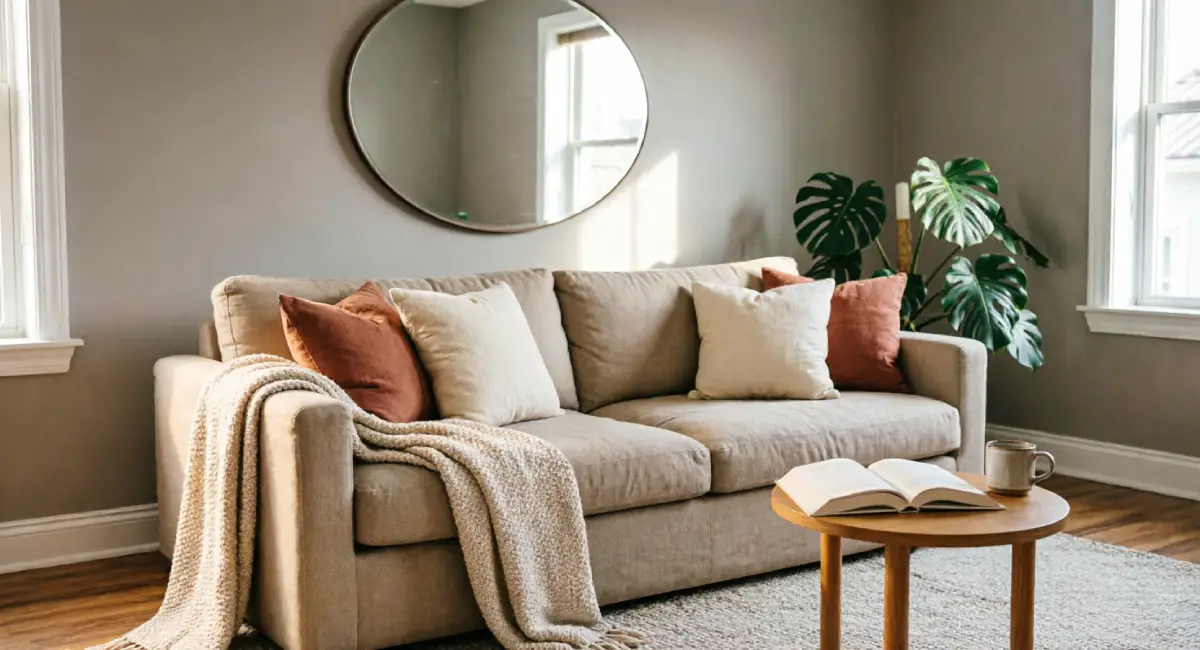
The living room is where you likely spend the most waking hours at home, which means it has the most to gain from a refresh — and it responds well to low-cost changes.
Four moves deliver the highest visual return: adding soft furnishings in a new color palette, using a mirror to open up the space, updating the lighting, and rearranging the furniture. None of these require tools, contractors, or large purchases.
Affordable Soft Furnishing Swaps That Change the Whole Mood
Cushion covers are one of the most underrated upgrades in home decorating. Swap out old covers for ones in a new color or texture and the entire room shifts tone.
Cushion covers typically cost $5 to $15 each. A throw blanket runs $15 to $40. An entry-level area rug — which anchors the seating area and adds warmth — starts around $30 and goes up to $80 for a decent size. Check thrift stores, end-of-season clearance sections, and online marketplaces before buying new.
Choose colors you will not tire of quickly. Warm neutrals (terracotta, warm cream, dusty sage) hold up over time better than trend-driven choices that feel dated within a year.
Using Mirrors and Lighting to Make Any Room Feel Larger
A large mirror on the wall does two things at once: it makes the room appear bigger, and it bounces light around the space. This is physics, not a trick — and it works every time.
A floor-length mirror leaning against a wall costs $30 to $70 at discount home stores, or far less second-hand. A gallery arrangement of smaller mirrors creates a similar effect with more visual interest.
Then look at your lighting. A single harsh overhead bulb kills the atmosphere of any room. Swap it for a warm-toned LED (2700K to 3000K) and the difference is immediate. Bulbs cost under $10 and take thirty seconds to change. Add a floor lamp or table lamp for layered light, and the room feels like a different space after dark.
Before: Flat, bright overhead light. Every corner feels equally exposed and slightly clinical.
After: Warm, layered light from two sources. The room feels relaxed and noticeably larger.
The Free Fix: Rearranging Furniture for Better Flow
Many living rooms feel awkward because the furniture layout fights the space instead of working with it.
The most common mistake is pushing every piece against the walls. It feels logical, but it makes rooms feel disconnected and harder to move through. Pull your sofa and chairs slightly inward and arrange them around a focal point — a television, a fireplace, or a window with a good view. Keep walkways clear: at least 36 inches between furniture pieces. This costs nothing and regularly surprises people with how much larger their room feels.
Bedroom Upgrades That Improve Both Look and Sleep Quality
The bedroom is the most personal room in your home and often the most neglected when budgets are tight. But you spend roughly a third of your life there, so even small improvements have a bigger impact on your daily mood and sleep than you might expect.
Focus on changes that improve both how the room looks and how it functions.
How New Bedding Transforms the Feel of a Bedroom
The bed is the visual center of any bedroom. If the bedding looks tired, the whole room looks tired.
A new duvet cover gives you more visual change per dollar than almost anything else. Duvet covers run $20 to $60. A matching pillowcase pair costs $8 to $20. You do not need to replace the duvet itself — just the cover.
One myth worth clearing up: thread count is not a reliable quality indicator above 400. A 300-thread-count set from a reputable brand will feel as comfortable as a 600-count set at double the price. Spend your budget on a design you love and a fabric that suits your climate rather than chasing higher thread counts.
Wall and Shelf Ideas That Add Character Without Painting
If you rent, you probably cannot paint. That does not mean your walls have to stay blank.
Removable wall decals, washi tape,e geometric patterns, and hanging fabric panels all add personality without damaging walls. Floating shelves mounted with adhesive strips (such as Command strips rated for the right weight) create a styled display area for $10 to $25 per shelf.
If you own your home, consider a single accent wall rather than the whole room. One wall in a deeper color (warm terracotta, slate blue, forest green) completely changes the mood. A single wall uses less than one liter of paint, which costs $15 to $30 — a significant visual change for a small investment.
Gallery walls work for renters and homeowners alike. A collection of framed prints, personal photos, and small mirrors grouped adds warmth. Frames from thrift stores cost $1 to $5 each. Prints can be downloaded and printed at home for next to nothing.
Low-Cost Decor Changes That Work in Any Kitchen
A full kitchen renovation is one of the most expensive projects in home improvement. A kitchen refresh is not. A renovation replaces structure; a refresh changes the surface. And in a kitchen, the surface is what you see every day.
Renters and budget homeowners have more options here than most people realize.
Swapping Cabinet Hardware: The Cheapest Kitchen Upgrade Available
Cabinet knobs and pulls do a surprising amount of visual work. They are one of the first things people notice and one of the first things that dates a space when they look worn.
A full set of replacement pulls for an average kitchen costs $20 to $60 total. Installation requires only a screwdriver and takes under an hour. The most current finishes are matte black, brushed gold, and brushed nickel. Match the finish to your appliances or faucet for a cohesive look, even if the cabinets themselves stay as they are.
Hardware replacement is consistently one of the first budget kitchen upgrades professionals recommend. The cost-to-impact ratio is hard to beat.
Styling Open Shelves and Countertops for a Cleaner Look
If your kitchen has open shelves, how you style them matters more than what is on them.
Use the rule of three: group items in sets of three at varying heights. A tall ceramic jar, a short stack of bowls, and a small potted herb. A wooden cutting board propped upright, an olive oil bottle, and a small dish. Grouped this way, everyday items read as intentional rather than cluttered.
Everyday kitchen objects double as decor when they share consistent materials or colors. Wooden utensils, clear glass jars filled with pasta or grains, and ceramic pieces in neutral tones all look good without trying.
Now look at your countertops. Clearing visual clutter from a countertop makes the kitchen feel noticeably larger and more functional. Remove appliances you use less than once a week. Tuck them in a cabinet. The open space you create is worth more visually than any object you could put there.
Affordable Bathroom Upgrades That Feel Surprisingly Luxurious
Bathrooms punch above their weight in how they affect the overall feel of a home. A clean, cohesive bathroom makes the whole place feel more put-together. One that looks tired or mismatched has the opposite effect.
The good news: bathrooms are the cheapest room to refresh because they are small. You can genuinely transform one for under $80.
How Matching Towels and Accessories Create a Hotel-Like Feel
The “matching set” principle is simple. When your towels, bath mat, soap dish, and toothbrush holder share the same color palette, the bathroom looks intentional even if nothing else has changed.
A 4-piece towel set (two bath towels, two hand towels) costs $20 to $45. A basic accessory set — soap dispenser, toothbrush holder, and soap dish — runs $15 to $35. Choose a two-color palette for the most versatile result. White with one accent color (sage green, warm grey, dusty blue) is the most timeless combination and the easiest to update later by swapping the accent.
Fold towels neatly and display them. That single habit makes a bathroom feel noticeably more put-together.
Replacing a Toilet Seat: The Overlooked $20 Fix
Old toilet seats are one of the biggest visual offenders in any bathroom. They yellow, the hinges loosen, and they make an otherwise clean bathroom look neglected. Yet replacing one takes ten minutes.
Replacement seats cost $15 to $40 for standard sizes. Soft-close seats, which eliminate the loud slam and feel more substantial, start around $25. To measure for fit, check whether your existing seat is round or elongated, then measure the distance between the bolt holes. Standard sizes are consistent enough that most seats fit.
D-shaped and soft-close seats are the most current styles and immediately update the look of any toilet. Visitors will not consciously notice, but you will stop ignoring an irritant you have been tolerating for years.
Simple Home Refresh Ideas for Entryways and Hallways
Your entryway is the first thing you see when you come home and the first thing guests see when they arrive. It sets the tone for everything behind it. Yet most people give it the least attention.
A pleasant, well-organized entry does not need much space or money. It needs a clear purpose and a few functional pieces that also look good.
Entryway Storage That Keeps the Space Tidy Without Spending Much
The biggest problem in most entryways is that there is nowhere logical to put things, so everything ends up on the floor or piled on a surface.
A wall-mounted coat hook rail solves this immediately. Basic rails with four to six hooks cost $10 to $25 and install with two screws. Add an over-the-door organizer for shoes or bags if floor space is tight. A simple bench with a lift-up seat or open shelf underneath adds seating while hiding clutter.
Here is a complete rental-friendly entryway setup for under $60:
- Wall hook rail: $15
- Doormat with a pattern or texture: $12
- Small plant in a simple pot: $10
- Three adhesive hooks inside the door for keys and bags: $8
- One small candle or diffuser on a surface: $10
That totals $55 and creates a space that feels entirely intentional.
Using Plants and Light to Make Narrow Hallways Feel Welcoming
A hallway without natural light feels like a corridor. One with a plant and a warm light source feels like part of a home.
A single potted plant at the end of a hallway draws the eye forward and adds life to an otherwise empty stretch. Low-maintenance varieties that tolerate low light include pothos, snake plants, and ZZ plants. All three cost $5 to $20 at a garden center or hardware store.
For lighting, a wall-mounted sconce adds warmth and character for $20 to $50. If that is not an option, replacing a cool-white overhead bulb with a warm-toned one (2700K) costs under $5 and makes the hallway feel immediately less clinical.
Where to Find Affordable Decor Without Compromising on Quality
Knowing what to buy is only half the challenge. Knowing where to buy it determines whether you spend $30 or $130 on the same result.
The most reliable rule: try second-hand sources first. Buy new only when quality genuinely matters — bedding, towels, and items with hygiene considerations. For everything else, the second-hand and discount market is full of excellent finds.
Thrift Stores and Second-Hand Markets: Where the Best Deals Hide
Thrift stores are one of the most reliable sources of quality home decor at very low prices. The key is knowing what to look for and what to skip.
Good finds: Solid wood furniture, large mirrors, ceramic vases, picture frames, artwork, glass items, candle holders, and decorative trays.
Approach carefully: Upholstered furniture (only if you can inspect it for odors and condition), electronics, and anything with mechanical parts.
One practical tip: thrift stores in higher-income neighborhoods tend to receive higher-quality donations. A large decorative mirror that would cost $120 new commonly sells for $8 to $20. A solid wood side table for $15 instead of $90. The savings are consistent.
Online marketplaces like Facebook Marketplace, eBay, and local buy-sell-trade groups also surface strong finds, especially for furniture. Search with specific terms and check listings frequently — good items move quickly.
DIY Upcycling: Turning What You Own Into Something New
You likely already own items that could look completely different with an hour of work and a few supplies.
Three beginner-friendly projects:
1. Paint an old side table. Chalk paint adheres to most surfaces without sanding and costs around $10 for a small tin. Two coats, a drying period, and the table looks deliberately chosen rather than inherited. Colors like warm white, sage green, and soft black all work well.
2. Recover a chair seat. Most dining chairs have a seat cushion attached with four screws underneath. Remove the seat, cut new fabric to size (allow a few extra inches on each side), stretch it over the foam, and staple it down. Fabric from a store or the remnants section costs $8 to $15. The result looks like a new piece.
3. Turn glass jars into styled storage. Clean jam jars or pasta sauce jars grouped on a bathroom shelf or kitchen counter look intentional when they hold cotton pads, toothbrushes, or cooking utensils. No cost if you already have the jars. One of the most reliable budget styling tricks around.
How to Use Color Strategically Across Your Whole Home
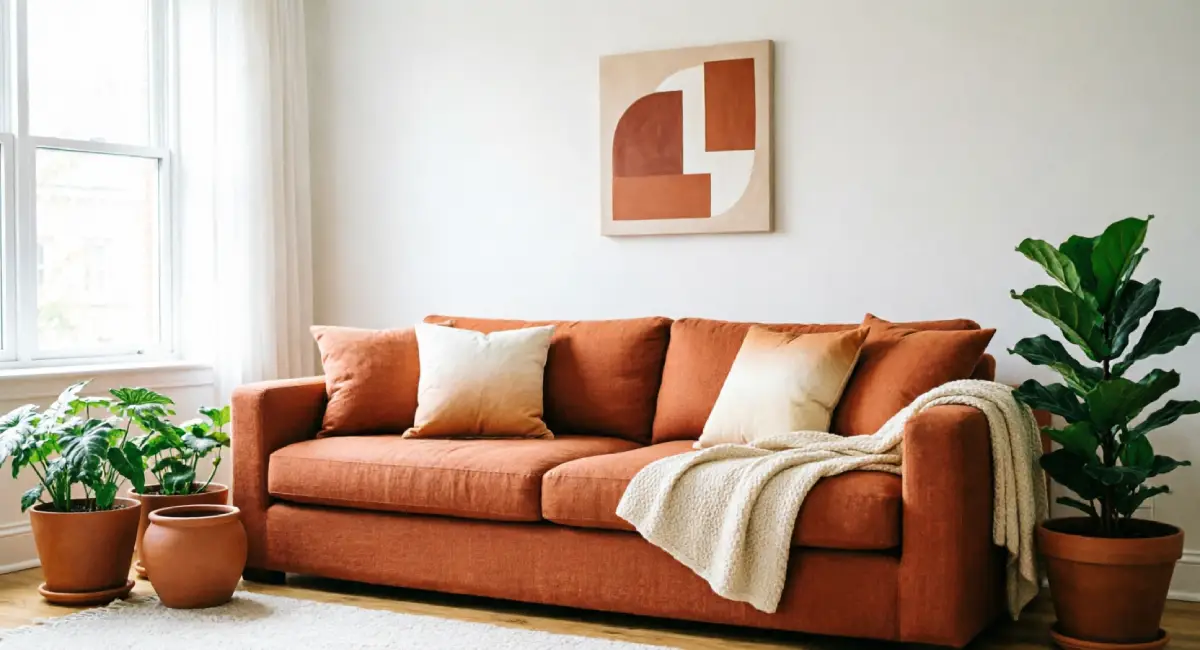
Color is the most powerful tool in home decorating, and it is also one of the cheapest. You do not need to paint a single wall to use it well.
The goal is cohesion: when the same color or palette shows up in multiple rooms, the home feels connected, polished, and larger than it is.
Choosing a Color Palette That Works Across Multiple Rooms
Start with a neutral base and build from there.
The three most forgiving neutral bases for home decor are warm white, soft grey, and warm beige. These work with almost every accent color and do not compete with natural light.
Then choose one or two accent colors to carry through the home. Two complete examples:
Palette 1 — Warm and natural: Warm white base, terracotta accent, natural wood tones. Use terracotta in cushions, a plant pot, and a candle. Let natural wood appear in frames, a tray, and a cutting board.
Palette 2 — Calm and fresh: Soft grey base, sage green accent, matte white accessories. Use sage green in a throw, a small piece of art, and a plant. Let matte white appear in ceramics, frames, and a lamp base.
When these colors appear in the kitchen, living room, and bedroom — even in small amounts — the entire home feels intentional. Visitors will say it “flows well” without being able to say exactly why.
Adding Color Through Plants, Art, and Textiles Instead of Paint
For renters or anyone not ready to paint, color is entirely achievable through objects.
Choose one accent color — terracotta, sage green, or navy work well — and let it appear in at least four places across your home. A cushion in the living room. A plant pot in the kitchen. A print on the bedroom wall. A soap dish in the bathroom. Small, inexpensive items individually, but together they create the impression of a designed space.
This approach costs $30 to $80 for a full home and has an added advantage: it is completely reversible. Swap a terracotta throw for a deep burgundy one in autumn and the whole home shifts with the season.
Mistakes to Avoid When Doing a Budget Home Makeover
A budget refresh can go wrong in a few predictable ways. Knowing these in advance saves money and frustration.
Why Decluttering Always Comes Before Decorating
Clutter cancels out good decor. You can spend $200 on new cushions and a throw, but if the surfaces around them are covered in stacked papers, charger cables, and random objects, the room will still feel chaotic.
Before buying anything new, work through each room with a three-box method: one box to keep, one to donate, and one to discard. The target is removing roughly 20% of visible objects from each room. That number consistently makes rooms feel more spacious and calmer — without spending a cent.
This is the highest-return action in any home refresh, and it is completely free.
How Buying Too Small Ruins an Otherwise Good Refresh
Scale is the most common mistake in budget decorating. People buy rugs that are too small, art that is too small, and furniture that is too small for the space — and the result feels accidental rather than styled.
A few sizing rules to follow:
- A living room rug should extend at least 18 inches beyond the sides of your sofa.
- Wall art above a sofa should be 60 to 75 percent of the sofa’s width.
- Bedside lamps should sit at roughly shoulder height when you are sitting upright in bed.
- A dining table should have at least 36 inches of clearance on all sides.
These rules cost nothing to follow and prevent the most common and most expensive decorating mistakes.
You Do Not Need More Money. You Need a Clearer Plan.
Most people do not need a larger budget to improve their home. They need to stop spending on the wrong things and start spending on the right ones.
When you refresh your home on a small budget with intention behind every decision — starting with decluttering, prioritizing by impact, matching colors across rooms, and choosing changes that improve daily life — the results beat expensive, unfocused renovation spending every time.
Start with one room. Pick the one that frustrates you most. Make one or two changes from this article, see how it feels, and build from there. You do not have to do everything at once.
Bookmark this guide and come back to it room by room. Your home is worth the attention.