
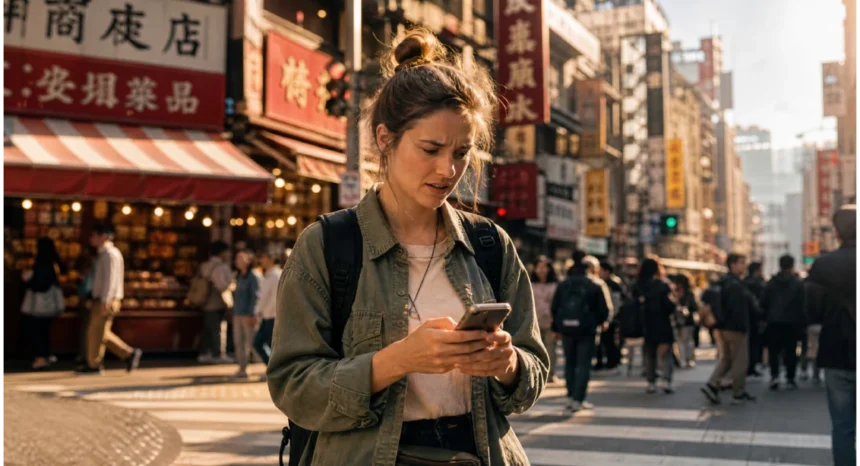
Every traveler has felt that moment. You turn a corner, look up, and nothing around you looks familiar. The street signs are in characters you cannot read. The people around you are speaking a language you do not recognize. Your phone signal is weak, and your last known landmark is somewhere behind you.
- Why Getting Lost in a Foreign Country Feels So Different
- Before You Travel: Preparations That Prevent Getting Stuck
- What to Do If Lost in a Foreign Country: Step-by-Step
- Using Technology as Your First Line of Support
- How to Communicate When You Share No Common Language
- What to Do If You Lose Your Phone, Wallet, or Both
- Safety Risks to Know About When Lost Abroad
- Real Scenarios and How Travelers Have Handled Them
- Conclusion
Knowing what to do if lost in a foreign country is not something most people think about until they are already in that situation. That is exactly the wrong time to figure it out.
The good news is that this is a solvable problem. Most travelers who get lost abroad find their way back safely, often faster than they expected. What separates those who recover quickly from those who spiral into panic is not luck. It is preparation, and knowing a handful of calm, practical steps to follow when your surroundings stop making sense.
This article gives you both.
Why Getting Lost in a Foreign Country Feels So Different
Getting lost at home is annoying. Getting lost abroad is something else entirely, and it helps to understand why before you can manage it.
At home, you have context. Even if you do not know a specific street, you recognize the language on signs, you understand how the transport system works, and you know who to approach for help. Abroad, most of that disappears at once.
Unfamiliar surroundings, an unreadable environment, and no obvious person to turn to create a kind of stress that is harder to shake than ordinary confusion. You are not just lost in a place. You feel cut off from the tools you normally use to solve problems.
The Language Barrier Makes Everything Harder
When you are lost at home, the fix is simple: ask someone. Abroad, that option can disappear when you do not share a language with the people around you.
Picture a traveler in rural Portugal, an hour outside Lisbon, where very little English signage exists, and most locals speak only Portuguese. They want to ask which bus goes back to the city. They cannot form the question. The person they approach smiles, shrugs, and walks on. That small failure to connect stacks on top of the disorientation, and the situation starts to feel worse than it actually is.
This is why learning a few key phrases before you travel matters so much. The gap between knowing zero words of a language and knowing five targeted phrases is enormous in an emergency.
Why Your Brain Struggles to Think Clearly Under Travel Stress
Stress does not just make you feel bad. It physically narrows your thinking. Under acute stress, the brain defaults to reactive mode, which is useful if a car is heading toward you, but not useful when you need to remember where you saved your hotel address.
This is not a personal weakness. It happens to experienced travelers too. Preparation matters because it removes the need to think clearly under pressure. If you have already saved an offline map and written down your hotel address, you do not need to come up with a plan on the spot. You follow the one you made earlier, when you were calm.
Before You Travel: Preparations That Prevent Getting Stuck
The most effective thing you can do about getting lost abroad happens before you leave home. A small amount of preparation turns a potential crisis into a minor inconvenience.
None of these steps takes more than thirty minutes combined.
Save Offline Maps and Your Accommodation Address
Open Google Maps or Maps.me before you travel and download the offline map for your destination city or region. This takes a few minutes on Wi-Fi and means your map works even without a data connection.
Beyond the map, save your accommodation address in two forms: in English and in the local script. If your hotel is in Tokyo, save the address in Japanese characters. If you are staying in Cairo, save it in Arabic. Why? Because the person you show it to may not read the English transliteration. A screenshot on your phone or a printed card with the local-script address is something any taxi driver or shopkeeper can act on immediately.
Build a Simple Emergency Contact Card
This is one of the most overlooked preparation steps, and one of the most useful. Create a small card, either physical or as a screenshot saved to your camera roll, that includes:
- Your accommodation name and address (in local script)
- The local emergency services number for your destination
- A trusted contact’s phone number (family member or travel companion)
- The phrase “Please help me, I am lost” in the local language
- Your country’s embassy phone number for that destination
Use Google Translate to draft the key phrases, then verify them with a quick search or a language forum before you travel. Getting the translation right matters more than getting it fast.
What to Do If Lost in a Foreign Country: Step-by-Step
These are the steps to follow, in order, when you realize you are lost abroad. Read them now, when you are calm, so they come to mind when you need them.
Step 1: Stop Moving and Find a Safe Spot
The instinct when you are lost is to keep walking, hoping the next street will look familiar. This almost always makes things worse. You move further from your last known point, burn mental energy, and can easily loop or double back without realizing it.
The first step is to stop. Find a well-lit, populated place to stand for a moment, somewhere you can think without feeling exposed. A café, a shop, a hotel lobby, a transit station, or a busy corner near other people all work well. Getting yourself physically settled is not wasting time. It is the foundation for every step that follows.
Step 2: Use Your Phone Before the Battery Dies
Once you are somewhere safe, your phone is your most important tool. Use it in this order:
First, open your offline map and find your current location. Most phones can locate you via GPS even without a data connection, as long as you have the offline map downloaded. Check where you are, find your accommodation address, and see how far apart they are.
If your battery is below 30 percent, switch to airplane mode immediately. GPS still works in airplane mode on most devices, and you stop burning battery searching for a signal. This alone can extend your battery life considerably.
Step 3: Ask the Right People for Help
Not everyone is equally safe or equally able to help. In an unfamiliar place, the safest people to approach are those working in a public-facing role: hotel staff (even if it is not your hotel), uniformed transit workers, staff behind a shop counter, or anyone at a tourist information point.
Approaching a stranger on the street is not automatically dangerous, but it carries more uncertainty than approaching someone working in a fixed location. A hotel receptionist, for example, almost certainly speaks some English, is used to helping confused travelers, and is not going anywhere in a hurry.
Step 4: Use Visual and Non-Verbal Communication
You do not need to share a language to get help. You need to communicate one clear piece of information: where you want to go.
Show your accommodation address as a screenshot or on a printed card. Open Google Translate’s camera feature and point it at a sign or menu to get a rough translation in real time. Use the voice input feature and speak your destination into the app. Draw a rough map if needed. Show a photo of your hotel’s exterior or a nearby landmark.
People are generally willing to help a confused traveler. You just need to give them something concrete to work with. A written address or a clear image is almost always enough.
Using Technology as Your First Line of Support
Technology does not replace common sense, but in a language barrier situation, the right apps can close the gap faster than anything else. The key is having them ready before you need them, not searching for them when you are already stressed.
Translation Apps That Work Without Wi-Fi
Google Translate is the most widely used option and supports offline packs for over 70 languages. To use it without data, go into the app’s settings before your trip and download the language pack for your destination. The offline version handles text translation, typed input, and basic conversation.
iTranslate and Microsoft Translator both offer similar offline functionality. Microsoft Translator also supports group conversation mode, where multiple people with different phones can type or speak into a shared session, which can be useful when a situation is urgent and communication is failing.
Download the pack on Wi-Fi before you travel. Trying to download a language pack when you are already lost and have a weak signal is not a reliable plan.
Navigation Apps for Offline Use
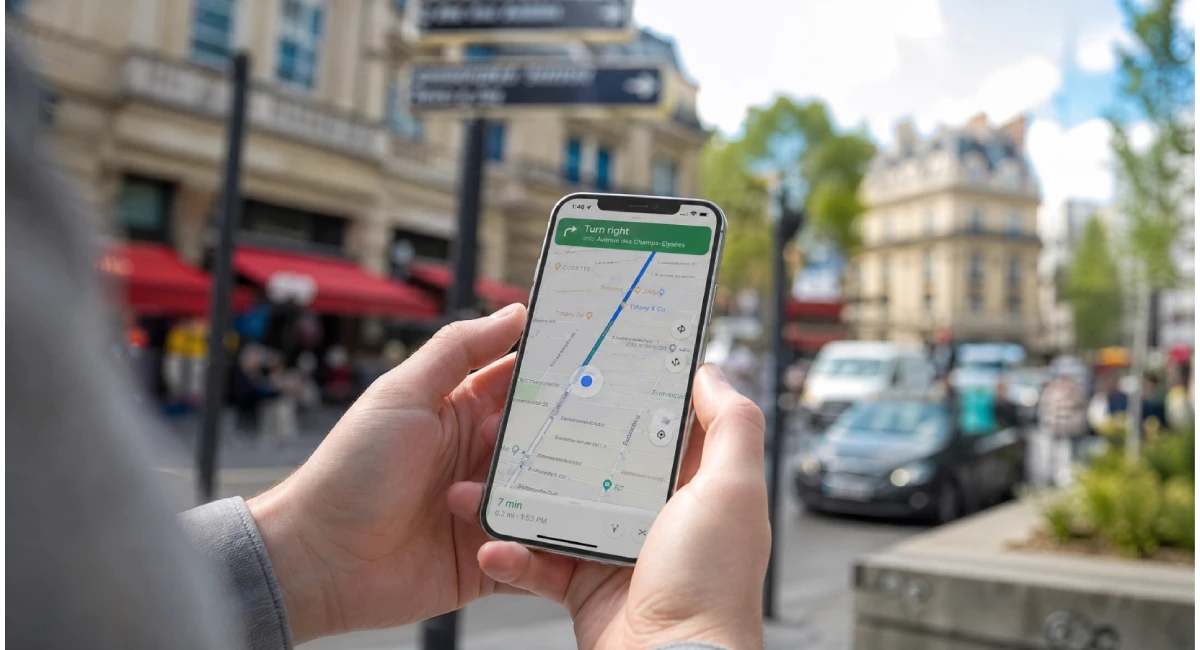
Google Maps offline is the most accessible option. Open the app while connected to Wi-Fi, search your destination city, and select “Download” from the map menu. The downloaded area gives you full navigation even without a data connection.
Maps.me is a strong alternative, built specifically for offline use, with detailed maps that often include smaller roads and trails that Google Maps offline does not cover. HERE WeGo is another solid option, particularly strong for driving directions in Europe and parts of Asia.
The rule is simple: download the map before you leave the airport or hotel on your first day. Do not assume you will have a reliable connection when you need it.
Emergency and Safety Apps Worth Installing
TripWhistle gives you local emergency numbers for over 200 countries, stored offline. This matters because emergency numbers vary significantly by country (911 is not universal), and looking this up during a crisis is difficult.
bSafe lets you share your real-time location with trusted contacts and includes an SOS alarm feature. It requires a data connection to share location, so it is most useful as a backup when you have some connectivity.
One number worth memorizing regardless of destination: 112. This is a recognized emergency number in most countries worldwide and connects to emergency services even without a local SIM card or active plan on your phone.
How to Communicate When You Share No Common Language
Most guides focus on apps. But practical, low-tech communication methods matter just as much, especially when technology fails or your battery dies.
The Phrase Card Method: Low-Tech but Highly Effective
A phrase card is a small set of key sentences in the local language, saved as a screenshot or written on paper. Five to eight phrases cover most emergency scenarios. Useful ones to include:
- “I am lost. Can you help me?”
- “I need to get to this address.” (followed by the written address)
- “Please call this number.” (followed by the number written out)
- “Where is the nearest police station?”
- “I need a taxi.”
- “I do not speak [local language]. Do you speak English?”
Use Google Translate to draft these, but take an extra step: verify them on a travel forum or a language subreddit before your trip. Machine translations are good but not always natural, and a native speaker can often catch a phrasing that would confuse rather than help.
Using Gestures, Drawings, and Images
Non-verbal communication goes further than most people expect. Pointing at a map screenshot and then pointing at yourself communicates “I am here and need to get there” without a single word. Drawing a rough shape of a building or a landmark on paper, then showing it to a shopkeeper, can be more effective than a long verbal explanation in a language they do not understand.
Showing a photo of your hotel’s exterior or lobby, saved to your camera roll, is particularly effective for getting your destination across to taxi drivers or locals. Most people can recognize a building from a photo even if they cannot read the name.
Miming a telephone for “please call,” pointing with both hands to show direction, or holding up fingers to indicate numbers all work across cultures. Combine these with your phrase card, and you have a communication toolkit that does not depend on signal or battery.
Finding Someone Who Speaks Your Language
English is taught in schools across most of the world, and in many countries, the younger population speaks it at a functional level, even if older residents do not. If you need help and cannot communicate with the first person you approach, try again with someone younger.
Hotel lobbies are one of the most reliable places to find English-speaking assistance globally, even if the hotel is not yours. Staff are trained to help guests and are generally comfortable with language-gap situations. Large shopping centers, airports, railway stations, and university campuses are similarly likely to have multilingual staff or visitors.
Other tourists are also a resource. In most popular travel destinations, you are never far from another traveler who may share your language, or at least a common third language.
What to Do If You Lose Your Phone, Wallet, or Both
This is the scenario travelers fear most, and for good reason. Losing your phone or wallet while already lost in a foreign country raises the stakes considerably. It is still manageable, but it requires a different set of steps.
Locate the Nearest Embassy or Consulate
Your country’s embassy is not just a building for visa paperwork. In a genuine emergency, embassies can help stranded citizens in concrete ways: assisting with lost or stolen passports, connecting you with emergency funds from family, providing a list of local legal and medical resources, and in some cases arranging temporary travel documentation.
To find your nearest embassy without a phone, walk into any hotel and ask the front desk. They can look it up or will have a list on hand. Alternatively, go to the nearest police station and ask. The address of the relevant embassy is something most police stations can provide or look up quickly.
Before every trip, write down your embassy’s local phone number on paper and keep it separate from your phone and wallet. A small piece of paper in a jacket pocket costs nothing and can be the most important thing you carry.
Use a Landline or Ask a Business to Make a Call
Most shops, cafés, and hotels will let you make a brief emergency call if you explain the situation. You do not need to share a language to communicate that you need help. Point at a phone, put your hands together in a pleading gesture, and the urgency comes through clearly in most places.
This is why memorizing one phone number matters. Do not rely on a contacts list saved only in your phone. Before any trip, memorize the number of one trusted person: your travel companion, a family member, or your accommodation. If your phone is gone, that number is still with you.
Emergency Money Options When You Have Nothing
If your wallet is gone, money can still reach you through several channels. Western Union and MoneyGram both operate globally, including in smaller cities, and allow someone at home to send funds you can collect in cash at a local agent, often within minutes.
Contact your bank’s international emergency line. Most major banks have 24-hour numbers for cardholders in distress and can sometimes arrange emergency card replacements or wire transfers. The number is usually on the back of your card, so write it down separately before traveling.
Travel insurance, if you have it, often covers emergency cash advances and repatriation costs. Keep your policy number and insurer’s emergency number written down alongside your embassy contact. If you do not currently have travel insurance, situations like this are exactly why it exists.
Safety Risks to Know About When Lost Abroad
Getting lost creates a window of vulnerability. You are distracted, possibly visibly confused, and potentially in an area you know nothing about. Knowing how to carry yourself and where to go can reduce that vulnerability significantly.
How to Avoid Becoming a Target When You Look Confused
Visible confusion attracts attention, and not always the helpful kind. In busy tourist areas, people who stop in the middle of a pavement, look around with uncertainty, and pull out their phone or wallet in the open are more likely to be approached by those with bad intentions.
A few adjustments change this. Walk with purpose even when you are unsure of your direction. Step into a shop or café to check your phone rather than doing it on the street. Keep your bag close and your valuables out of sight. Avoid making prolonged eye contact with people who approach you unprompted in a pushy way.
None of this requires paranoia. Most people around you are simply going about their day. But carrying yourself with calm confidence, even when you do not feel it, changes how you appear and how you experience the situation.
Neighborhoods and Areas to Avoid at Night
Most cities, even very safe ones, have areas that are less welcoming after dark. The best time to find out which areas these are is before you travel, not after you are already in one.
Government travel advisory websites are the most reliable source for this. The UK Foreign Commonwealth and Development Office, the US State Department travel portal, and Australia’s Smartraveller all maintain regularly updated destination guides with neighborhood-level safety information.
Travel forums and recent reviews on hostel and hotel booking platforms are also useful. Filter for reviews from the past three to six months and look for comments about the surrounding area. Combine both sources for a fuller picture. This is not about fear. It is about knowing where the sensible boundaries are before you cross them accidentally.
When and How to Contact Local Police
Many travelers feel uncertain about approaching police in a foreign country, particularly where there is a language gap or where trust in local authorities varies. In practice, police in most countries are a reasonable resource for a genuinely lost traveler.
In popular tourist destinations, dedicated tourist police units often operate in high-traffic areas. They are specifically trained for situations involving foreign visitors and commonly speak at least basic English. Look for them near major attractions, transit hubs, or city centers.
When approaching any police officer, carry a photocopy of your passport’s ID page rather than the original. Show your phrase card, your accommodation address, and, if possible, a business card from your hotel. You do not need a long conversation. You need to communicate one simple thing: where you are trying to go.
Real Scenarios and How Travelers Have Handled Them
General advice helps. Seeing it applied to a real situation makes it easier to remember when the time comes. These three scenarios cover the most common situations.
Lost in a Non-English-Speaking City With No Data
A traveler arrives in a mid-size city in Eastern Europe. The local SIM card they purchased at the airport is not connecting properly, and they realize, several streets from their hotel, that they never downloaded an offline map. Nothing around them is in the Latin alphabet.
The right move: walk into the nearest café or shop. Ask to use the Wi-Fi (gesture at your phone and the router if needed), re-download the offline map for the city, and locate the address you saved before leaving home. Once you have the map working, you can either navigate on foot or show the address to a taxi driver outside.
What would have prevented the entire situation: downloading the offline map before leaving the hotel, and having the accommodation address saved in the local script. Two steps, each taking under five minutes.
Separated From a Group in a Crowded Market
A traveler visiting a large market in Southeast Asia gets separated from their group. The market is loud, dense, and unfamiliar, and messaging is not getting through because of a patchy signal.
The most important thing is to stop and stay in one place rather than walking around searching. Moving makes you harder to find. Send a message as soon as a signal briefly appears. Ask a stall owner, with gestures and your phrase card, if you can stand near their stall for a few minutes while you wait.
The group should have agreed on a meeting point before entering the market, ideally a fixed landmark near the entrance. This is one of those preparation steps that feels unnecessary until it is not.
Lost at Night in an Unfamiliar Area
A traveler ends up in an unfamiliar neighborhood after dark, perhaps after taking a wrong turn, leaving a restaurant, or getting off public transit one stop too early.
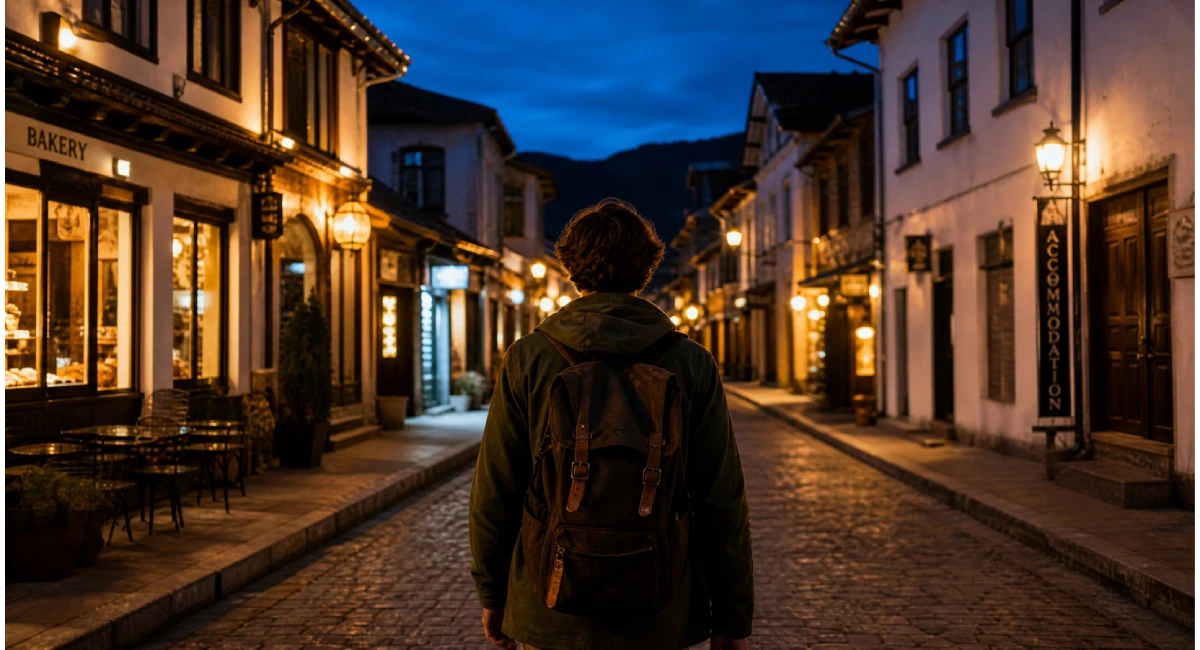
The first move is to get off the street and inside a lit business. A pharmacy, a convenience store, or any open shop works. Once inside, assess your situation: check your phone battery, locate yourself on the offline map, and identify the nearest main road or transit hub.
Keep valuables inside your bag. Use your phone with the screen dimmed if possible, rather than holding it up visibly. Ask the shop staff for help getting to a taxi, and show them your accommodation address. In most cities, this situation resolves within 15 to 20 minutes with calm and deliberate steps.
Conclusion
Getting lost abroad is not a sign that you are a bad traveler. It happens to people who have traveled for decades, in cities they have visited before. What changes with experience is not whether it happens but how quickly and calmly you move through it.
The steps in this article are not complicated. Stop, find a safe spot, use your phone wisely, communicate visually, and ask the right people for help. Most situations resolve from those five actions alone. The harder scenarios — losing your phone or wallet, finding yourself somewhere unsafe at night — require a few extra layers of preparation, but they are equally manageable when you know what to do.
The best time to think about what to do if lost in a foreign country is right now, before your next trip. Download one offline map. Write down one emergency number. Build one phrase card. Those three steps, each taking a few minutes, are the difference between a story you tell with a laugh later and one that puts you off traveling altogether.
This article sits alongside a broader guide on solo travel safety for beginners that covers everything from choosing destinations to managing emergencies on your own. That is worth reading before your first solo trip.